NVIDIA Gross Margin Guide Points to Memory Makers' Pricing Power
NVIDIA guides gross margin to 71-72% after a record $115.8 billion quarter, $390 billion in supply commitments led by memory, and costs it absorbed on booked orders, Tom's Hardware reported. Planned fiscal 2028 repricing is the test.
5 min read
Follows NVIDIA Supply Commitments Hit $390B, With $203B Due in FY2028
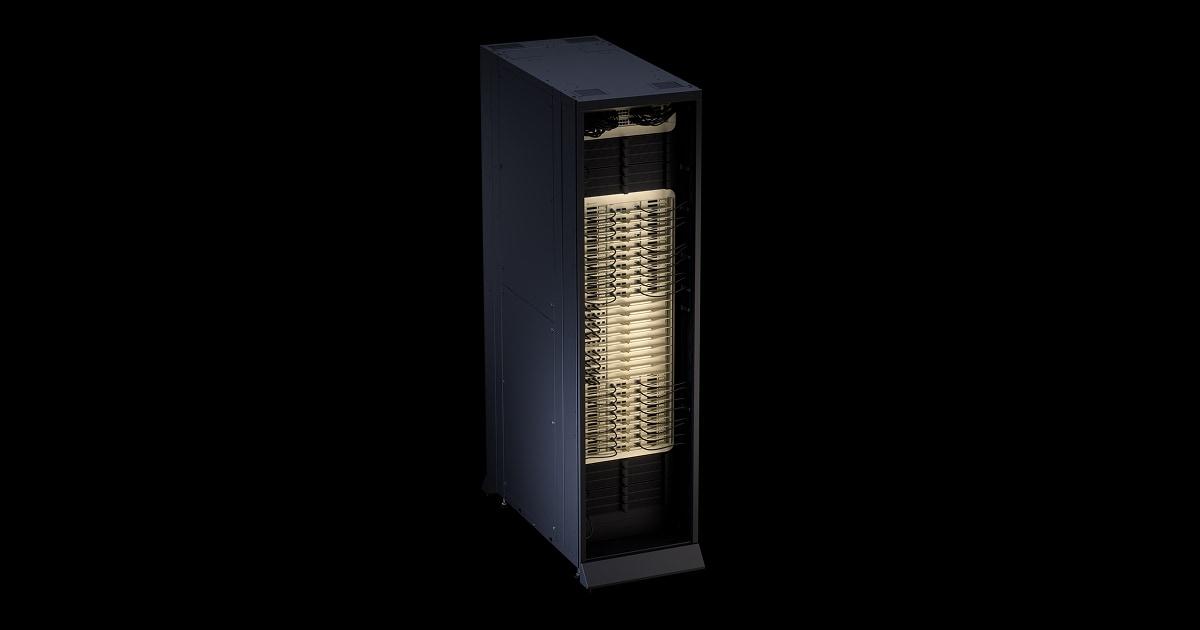
NVIDIA's Vera Rubin NVL72 rack; NVIDIA ties the quarter's margin dip to the initial Rubin ramp.
Image: NVIDIA
Source · Press image from the NVIDIA newsroom, used for news reporting.
NVIDIA reported record third-quarter fiscal 2027 revenue of $115.8 billion on Nov. 17, and guided its gross margin down to 71% to 72% for the fourth quarter. NVIDIA ties the dip to the initial Rubin ramp. Voltgrid reads the numbers as pointing to memory makers, not NVIDIA, holding the pricing power in this cycle: NVIDIA is paying to lock in supply now and appears to be betting it can pass that cost on to customers in fiscal 2028.
Voltgrid News reported earlier on the $390 billion in supply commitments. This analysis reads the margin, the commitments and the consumer segment together, using NVIDIA's release and CFO commentary filed with the SEC and the earnings-call remarks reported by Tom's Hardware. Voltgrid did not read a full transcript of the call.
What NVIDIA Reported for Q3 FY2027
Revenue rose 20% from $96.2 billion in the second quarter and 103% from a year earlier, NVIDIA's CFO commentary shows. Data Center brought in $107.6 billion, up 21% sequentially. Within it, Hyperscale grew 23% to $60.1 billion, and AI Clouds, Industrial and Enterprise grew 18% to $47.5 billion. Edge Computing, which holds workstations, PCs and physical-AI hardware, rose 14% to $8.2 billion.
Colette Kress, interim chief executive and chief financial officer, presented the first results without Jensen Huang. Kress said, as quoted by Tom's Hardware, that the Rubin platform made nearly $20 billion in its first quarter of production shipments, a company figure; NVIDIA's release calls it the fastest product ramp in the company's history. GAAP gross margin slipped to 74.8% from 75.0%, which the company put down to the initial Rubin ramp. For the fourth quarter, which has an extra week, NVIDIA guided revenue to $130.0 billion, plus or minus 3%, with no China data-center compute revenue assumed. That outlook follows $2.4 billion in Hopper data-center shipments to China in the third quarter; Voltgrid News reported earlier on NVIDIA's halt to those shipments.
Why the Numbers Point to Memory Makers
Three pieces of evidence point the same way. First, supply commitments rose from $279 billion to $390 billion in one quarter, and NVIDIA said the increase was mainly multi-year memory procurement. Tom's Hardware reports the figure stood at $119 billion at the end of the first quarter, so it has more than tripled in two quarters. Of the $390 billion, $203 billion falls due in fiscal 2028, more than NVIDIA's entire third-quarter revenue.
NVIDIA's supply commitments reached $390B in Q3 while its gross margin guide for Q4 falls to 71-72%.
Graphic: Voltgrid News
Second, the margin. On the call, Kress said NVIDIA had absorbed costs to honor purchase orders it had already taken, and described the fourth-quarter guide as the bottom before a move to new pricing in the new year, Tom's Hardware reported. By Voltgrid's arithmetic, the 71.5% midpoint of that guide sits about 3.3 points below the third quarter's 74.8% GAAP margin, in a quarter with an extra week. NVIDIA expects margins of 72% to 73% in fiscal 2028, according to the same report. On this reading, a seller with full pricing power would not have needed to absorb costs; NVIDIA's own account is that it chose to honor orders already received.
Third, the consumer side. NVIDIA's own commentary says higher memory and system prices continue to affect consumer PC demand. Edge still grew, but NVIDIA credited Blackwell workstations and edge compute for physical AI, not consumer PCs. That suggests memory costs may be reaching buyers fastest in consumer PCs.
Kress also said demand still exceeds supply and that NVIDIA could give suppliers prepayments or other financial help to add capacity, Tom's Hardware reported. Offering to pay suppliers early suggests the suppliers hold the stronger hand, or simply that supply, not price, is the constraint.
How those commitments reach the margin matters here. A supply commitment is a promise to buy parts or factory capacity in future years, so it sits outside the income statement until the parts arrive and ship inside systems. NVIDIA's CFO commentary puts its supply commitments at $390 billion, up from $279 billion, with the rise mainly multi-year memory procurement.
The cost lands in gross margin when those parts are sold. If NVIDIA sells systems at prices agreed earlier while its components cost more, margin narrows. NVIDIA has not said how much of the guided dip is memory.
The Case Against the Pricing-Power Thesis
The strongest counter-argument is that a 71% to 72% margin is still extraordinary, and that NVIDIA chose the dip. It kept previously agreed prices on orders already booked and plans revised pricing in fiscal 2028, Tom's Hardware reported. The argument runs that the commitments are a moat: by buying memory, packaging and other supply years ahead, NVIDIA could leave less HBM and packaging for rivals and hyperscalers' custom chips. NVIDIA also raised its fiscal 2028 revenue growth forecast from about 70% to 75%, Tom's Hardware reported, which hardly reads as a company on the back foot.
Inventory adds weight to both readings. It rose to $39.7 billion from $31.6 billion to support the Rubin ramp, and days sales outstanding rose to 64 from 60. NVIDIA put the receivables rise down partly to extended payment terms on large multi-quarter deals with some investment-grade customers. Longer terms can be a sign of strength that wins volume, or a concession that buys it.
What It Means for Suppliers and Buyers
If the thesis holds, memory makers and the packaging, substrate and test suppliers NVIDIA named this quarter gain the most. Its release lists new manufacturing plans with Amkor, IBIDEN, King Yuan Electronics, Samsung Electro-Mechanics, SPIL and Unimicron. Taiwan's server assemblers sit on the other side. Lien Hsien-ming, president of the Chung-Hua Institution for Economic Research, told a forum that Huang placed large orders without making suppliers compete on price, and that a different strategy under new leadership could squeeze Taiwanese server makers' margins, Focus Taiwan reported.
For hyperscalers, the open question is the size of the fiscal 2028 price change. NVIDIA has not said how large it will be or which products it covers. Kress largely sidestepped a question on whether NVIDIA would accept lower margins to defend share against custom accelerators, according to Tom's Hardware. If repricing sticks, and if it covers them, the cost of memory moves into the price of NVIDIA's systems. If it does not, NVIDIA carries the memory bill itself.
What to Watch in the 10-Q and Q4
NVIDIA GTC in Washington, D.C., on Dec. 1 to 3, 2026, is the next public stage after the quarter, and a first chance to hear more on Rubin supply and pricing. The 10-Q, due in the coming weeks, will show the commitments in more detail. The fourth-quarter report will show whether 71% to 72% really was the bottom. The first fiscal 2028 price lists will show whether NVIDIA can push memory costs on to the largest buyers, or whether the suppliers keep the margin.
Sources
- 01Nvidia leadership change's impact on Taiwan remains uncertain: ResearchersFocus Taiwan (CNA)focustaiwan.tw
- 02Nvidia revenue hits $115.8 billion as Vera Rubin generates $20 billion; commitments rise to $390 billionTom's Hardwaretomshardware.com
- 03NVIDIA GTC Washington, D.C. 2026: event pageNVIDIAnvidia.comas read on Nov 18, 2026
- 04NVIDIA Announces Financial Results for Third Quarter Fiscal 2027NVIDIA Newsroomnvidianews.nvidia.com
- 05CFO Commentary on Third Quarter Fiscal 2027 ResultsNVIDIA (SEC 8-K Exhibit 99.2)sec.gov
- Published
- Sources
- 5 cited