OpenAI Reportedly Plans to Buy Google TPUs; Terms Undisclosed
The Information reported on Oct. 27 that OpenAI plans to buy Google's TPUs, citing a person familiar. Neither company has confirmed it, and volume, value and other terms were not disclosed.
3 min readAI-assisted
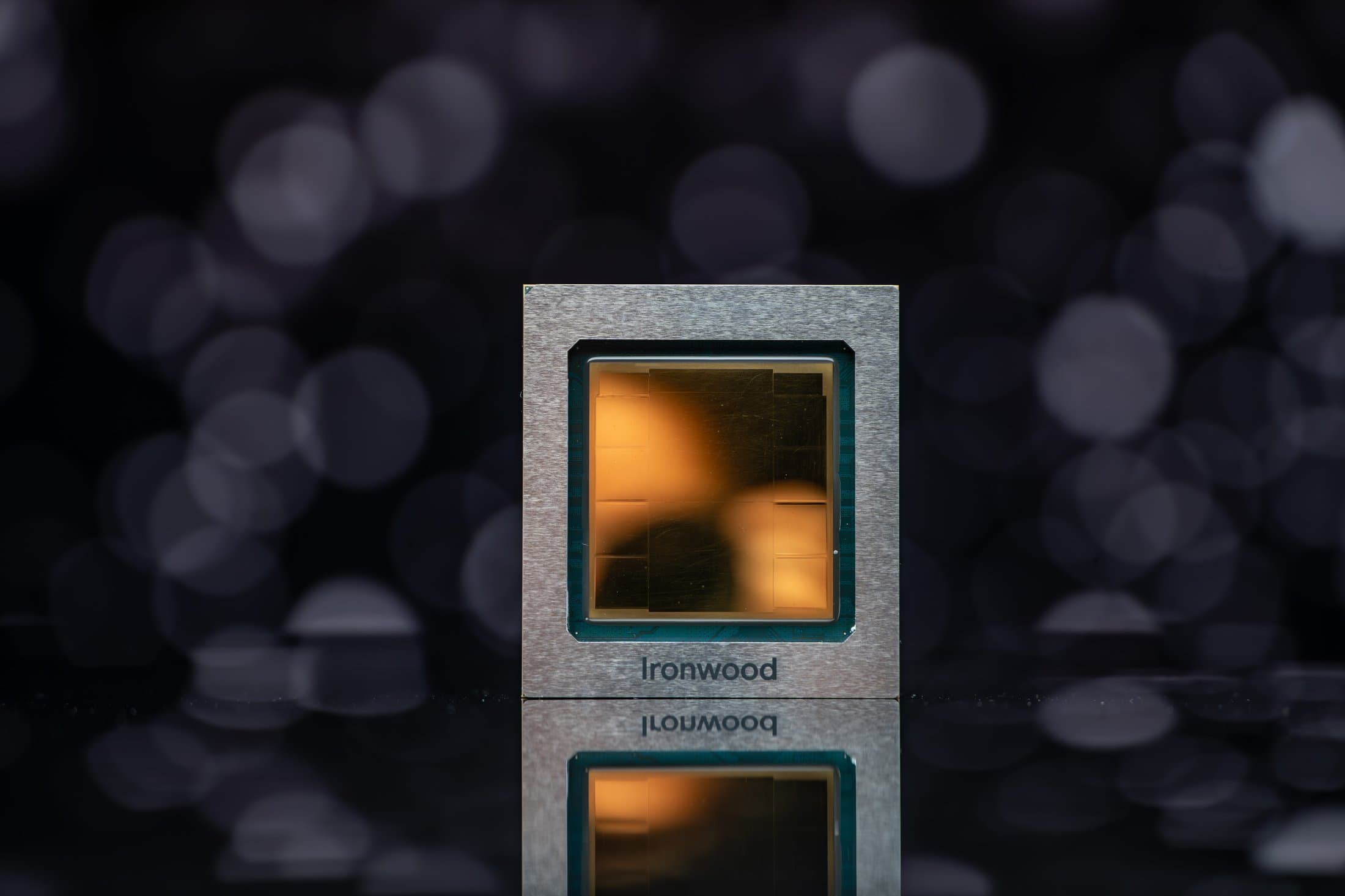
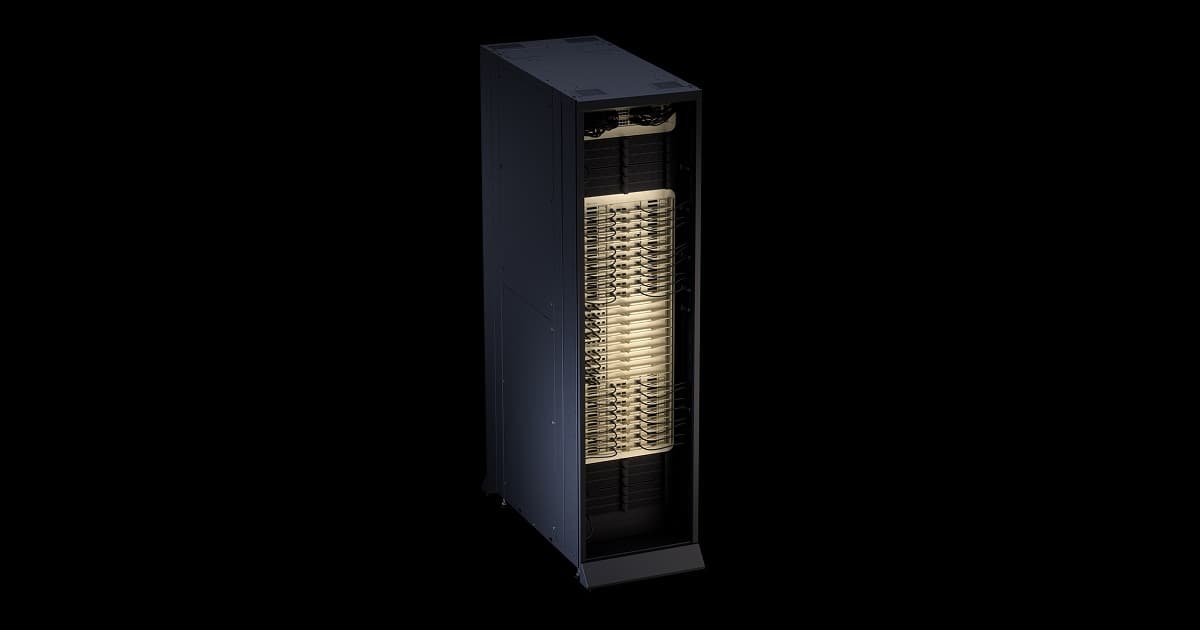
Google's Ironwood TPU, in a Google press image. The report does not say which TPU model OpenAI would buy.
Image: Google
Source · Press image from the Google Cloud blog, used for news reporting.
OpenAI plans to buy Google's tensor processing units (TPUs), The Information reported on Oct. 27, citing a person familiar with the matter. Volume, value and other terms were not disclosed.
Neither company has confirmed it. The Next Web said OpenAI declined to comment to Reuters, which followed up on the story, and that Google did not immediately respond to the news agency. The Next Web also said it had not independently verified the report. Voltgrid treats the purchase as reported, not agreed.
If it goes ahead, it would mark a shift for OpenAI, one of the largest buyers of NVIDIA's graphics processors. Seoul Economic Daily, carrying a Reuters-Yonhap report, noted that NVIDIA CEO Jensen Huang said in August, when NVIDIA agreed to provide more than $100 billion in credit support for an OpenAI-leased Ohio data center project, that OpenAI had committed to spend about $600 billion on NVIDIA servers through 2030. The Next Web describes the purchase as coming alongside NVIDIA, and Seoul Economic Daily frames it as OpenAI diversifying its chip suppliers; neither company has addressed the NVIDIA commitment.
Why an OpenAI TPU Order Would Matter for Supply
TPUs are Google's own AI accelerators, built for the matrix math behind training and serving models. Each Ironwood chip, Google's seventh-generation TPU, carries 192 GiB of high-bandwidth memory, and a pod links up to 9,216 chips, according to Google's documentation. For years Google rented them through its cloud. The Next Web reports that in April Google said it would sell TPU hardware directly to a small group of customers who can run the chips in their own data centers. Seoul Economic Daily adds that Google has begun selling to neocloud providers such as Fluidstack.
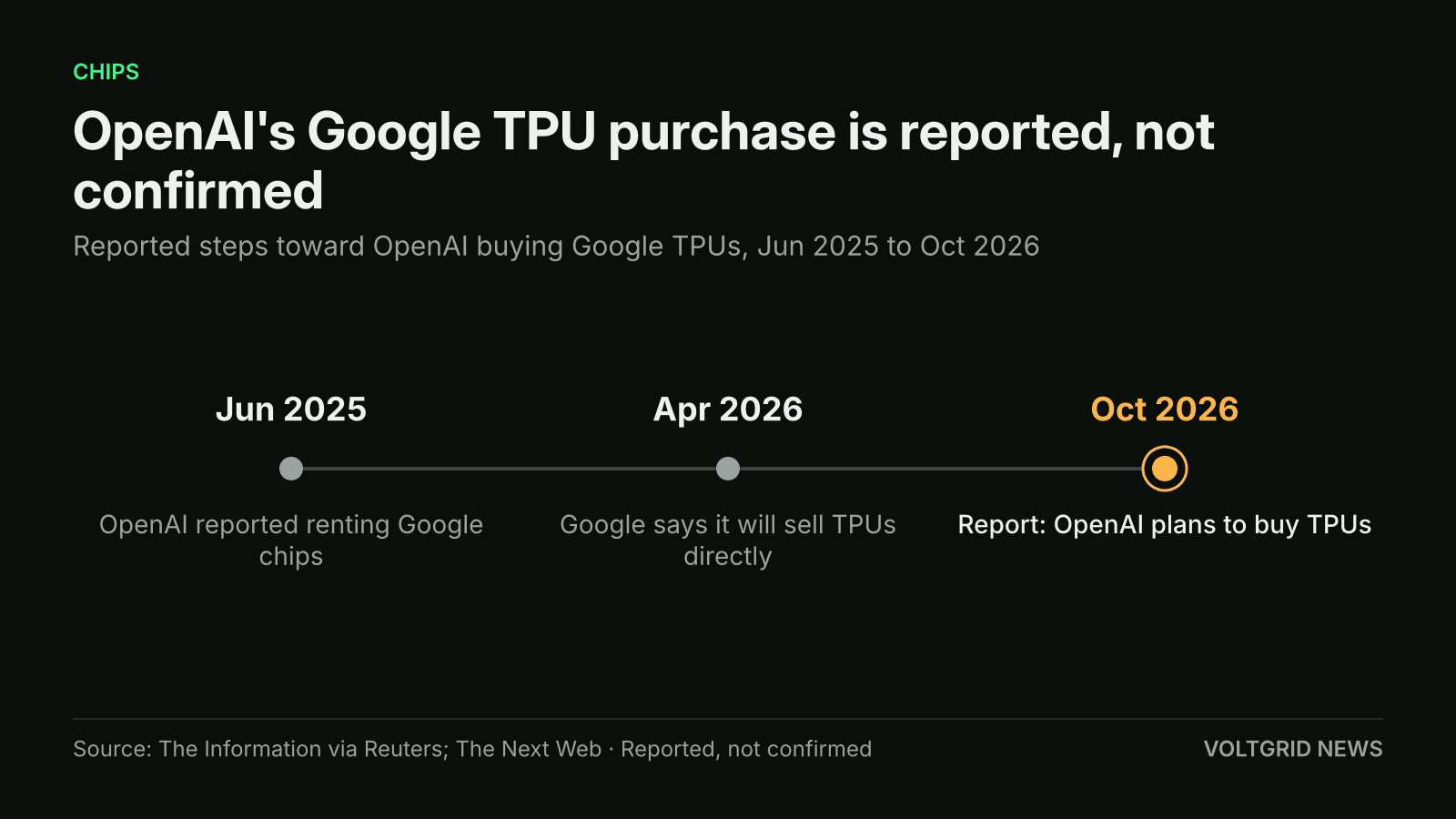
The purchase is reported by The Information and not confirmed by OpenAI or Google.
Illustration (AI-generated)
Alphabet finance chief Anat Ashkenazi has said the company expects to book a small share of TPU sales revenue by the end of this year, with most of it in 2027, according to The Next Web. That timing matters for anyone planning data-center capacity: chips run in customers' own data centers would put the power and cooling load on the buyer's site, not in Google's.
This is not the first report linking OpenAI and TPUs: in June 2025 OpenAI was reported to have begun renting Google's chips, then said it had no specific plans to use them at present, according to Seoul Economic Daily and The Next Web. Early signs of renewed interest are visible. It is hiring engineers to optimize its models on TPUs, according to a job posting quoted by Seoul Economic Daily, though The Information said the tailoring work appears to be at an early stage.
Part of a Wider AI Chip Scramble
The report came as Google said Oracle would become the first major cloud provider outside Google to lease TPUs to customers. Seoul Economic Daily said Oracle is to buy the chips directly and make them available to customers the two companies share, and that OpenAI is a major Oracle cloud customer. Voltgrid covers Oracle's separate NVIDIA, Google and Cerebras announcement in its own story.
OpenAI is also building its own silicon. The Next Web reports it unveiled its first custom AI chip, designed with Broadcom, in June and plans to put it into use by the end of this year. Rival Anthropic, per its S-1 filing as described by Seoul Economic Daily, uses four chip families: Amazon's Trainium, Google's TPUs, NVIDIA GPUs and AMD GPUs.
What Is Not Confirmed About the OpenAI TPU Report
Open points: whether OpenAI would rent or own TPUs, how many, where they would run, and on what schedule. The reports give no figures, and which TPU generation OpenAI would buy has not been reported. Alphabet was due to report quarterly results on Oct. 28, where TPU sales could come up. Neither OpenAI nor Google has put out a statement on the purchase.