Samsung, SK hynix Reportedly Race for ASML EUV Tools at KRW 10T-20T Each
Samsung and SK hynix are reportedly each weighing KRW 10 trillion to KRW 20 trillion of ASML EUV orders, TrendForce says; ASML expects 2027 and 2028 supply to fall short, and only SK hynix's order is filed.
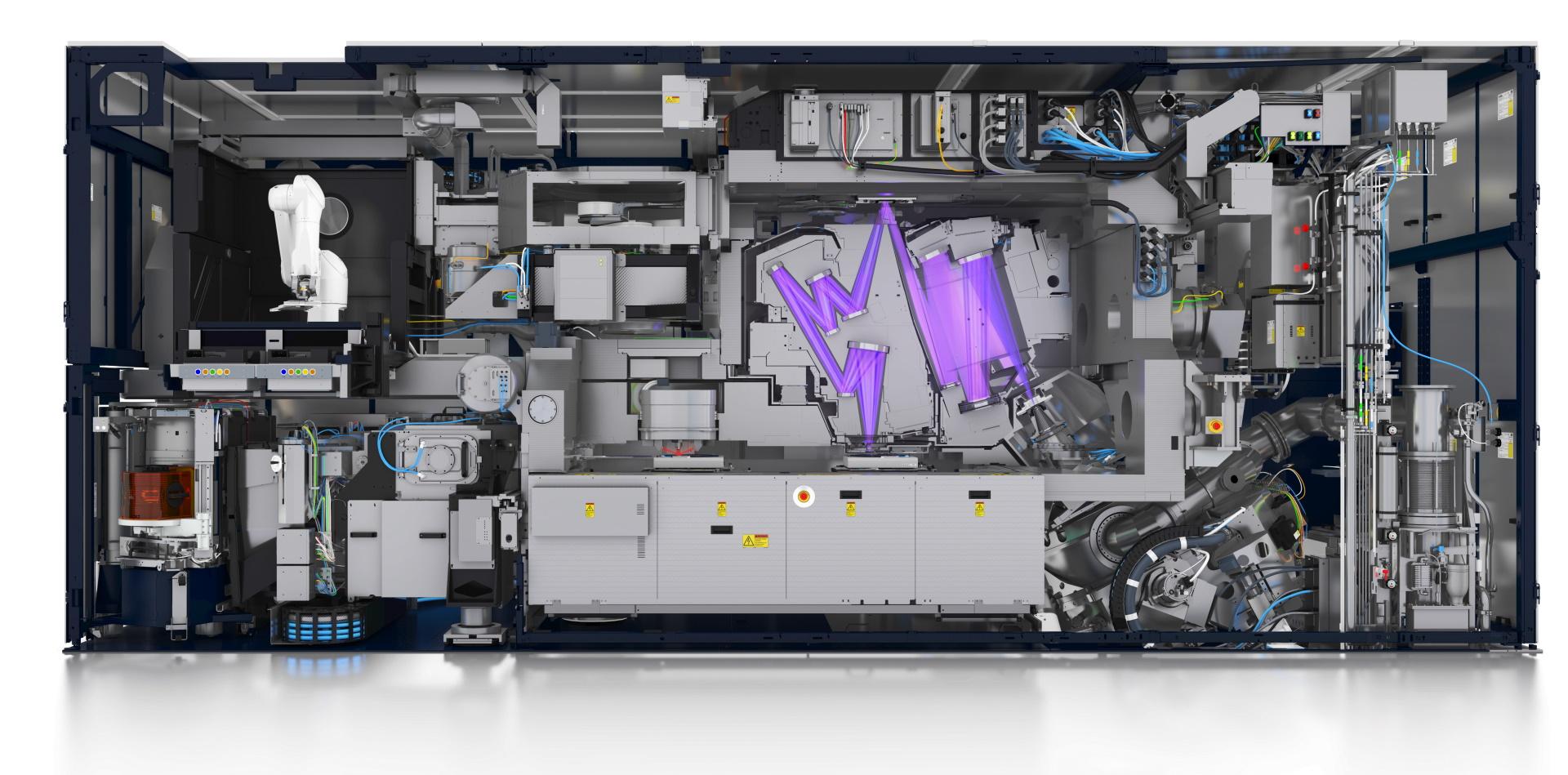
An ASML EUV lithography system, the tool Samsung and SK hynix are reportedly lining up to order. Image shows ASML's EUV product line, not a specific customer's tool.
Image: ASML
Source · Press image from the ASML website, used for news reporting.
Samsung and SK hynix are racing for ASML extreme ultraviolet (EUV) systems, each reportedly committing KRW 10 trillion to KRW 20 trillion, TrendForce said on Nov. 10, citing Korea's Solution News.
Neither company has confirmed those figures. TrendForce says equipment lead times have reportedly doubled, so both chipmakers are considering placing orders earlier than planned, and further orders could push capital expenditure higher. The only order with a number behind it is SK hynix's: the company disclosed on March 24 that it will buy EUV scanners from ASML Korea worth about 11.95 trillion won, which The Elec reported at roughly 10% of its total assets at the end of 2024.
SK hynix's KRW 11.95T EUV order is the only filed figure; the KRW 10T-20T range and Samsung's P5 timing are reported.
The shortage is ASML's own warning. In its Q3 2026 results on Oct. 14, ASML said its currently planned supply for both 2027 and 2028 will not fully meet customer demand, and that it is investigating more 2028 capacity than the 30% increase it had communicated. Some customers, ASML added, want to place orders for 2029 and even 2030. For memory makers, that means tool slots, not only cleanroom space, decide when new DRAM capacity can ship to AI servers.
What the SK hynix filing covers
According to TrendForce's reading of the Solution News report, the SK hynix order includes installation and modification costs and is due for delivery by Dec. 31, 2027. It supports the move to 1c DRAM, the sixth generation of 10nm-class DRAM. The Elec, which reported the filing at the time, said the purpose was to secure EUV equipment for next-generation mass production, including high-bandwidth memory (HBM). Voltgrid News reported earlier that SK hynix plans to scale 6F2 DRAM with EUV before moving to 4F2 or 3D DRAM, giving no dates.
Samsung's side of the race
TrendForce, citing Financial News, says Samsung is adding 1c DRAM lines for HBM4 at its Pyeongtaek P4 site and advancing the P5 complex, where the first fab is targeted to start operating in 2028. Solution News reports that Samsung has already ordered lithography equipment for P5, with tools moving in after the first-phase cleanroom is finished in the first half of 2027. No order value for Samsung has been disclosed. Samsung also held 38% of Q3 DRAM revenue against SK hynix's 29%, according to Counterpoint, so the two are racing for the same scarce tools from different starting positions.
High-NA timing and the wider backlog
Both companies are also preparing High-NA EUV for later DRAM generations, TrendForce says, citing The Bell. They reportedly aim to start 1d DRAM mass production in 2027 and limited production of sub-10nm 0a DRAM in 2028, with High-NA introduced at 0a for selected layers. Samsung is reportedly considering High-NA for only one or two layers to balance cost and yield. TrendForce adds that, per ASML's Q3 presentation, memory customers made up 46% of net system sales against 54% for logic.
Supply strain reaches the back end too. Solution News reports order backlogs of two to three years at suppliers including Hanmi Semiconductor and Amkor, which are expanding capacity for thermocompression (TC) bonders used in HBM manufacturing.
What is not confirmed yet
The KRW 10 trillion to KRW 20 trillion range comes from Solution News via TrendForce, and no company filing backs it for either Samsung or SK hynix beyond SK hynix's earlier 11.95 trillion won. The High-NA timelines, the Pyeongtaek P5 tool orders and the claim that lead times have doubled are also reported, not confirmed. ASML's release gives no customer names or order sizes. Watch for a regulatory filing from Samsung and for any ASML update on 2028 capacity.