Singapore Peak Power Demand Could Reach 13 GW by 2031
Channel News Asia says EMA puts peak demand on a path from 8.6 GW to as much as 13 GW by 2031, led by data centres and chip plants. Five gas plants and a S$5.3 billion grid budget back that range.
2 min readAI-assisted
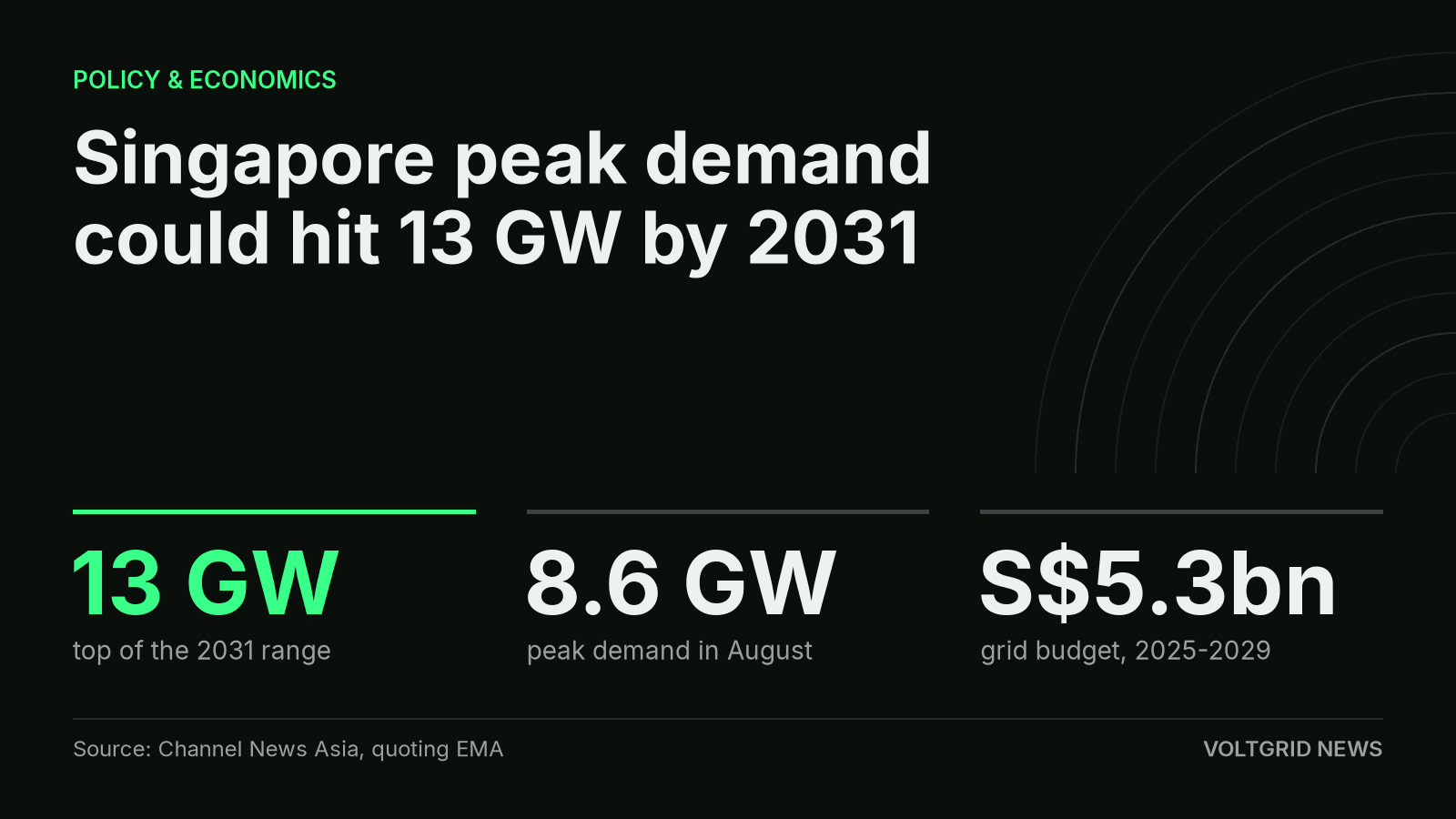
Singapore peak demand could hit 13 GW by 2031. Figures are from the story's sources, drawn because no official photo was wide enough.
Illustration (AI-generated)
Singapore's peak electricity demand could rise from 8.6 GW in August to between 9.9 GW and 13 GW by 2031, Channel News Asia reported on Monday, quoting the Energy Market Authority.
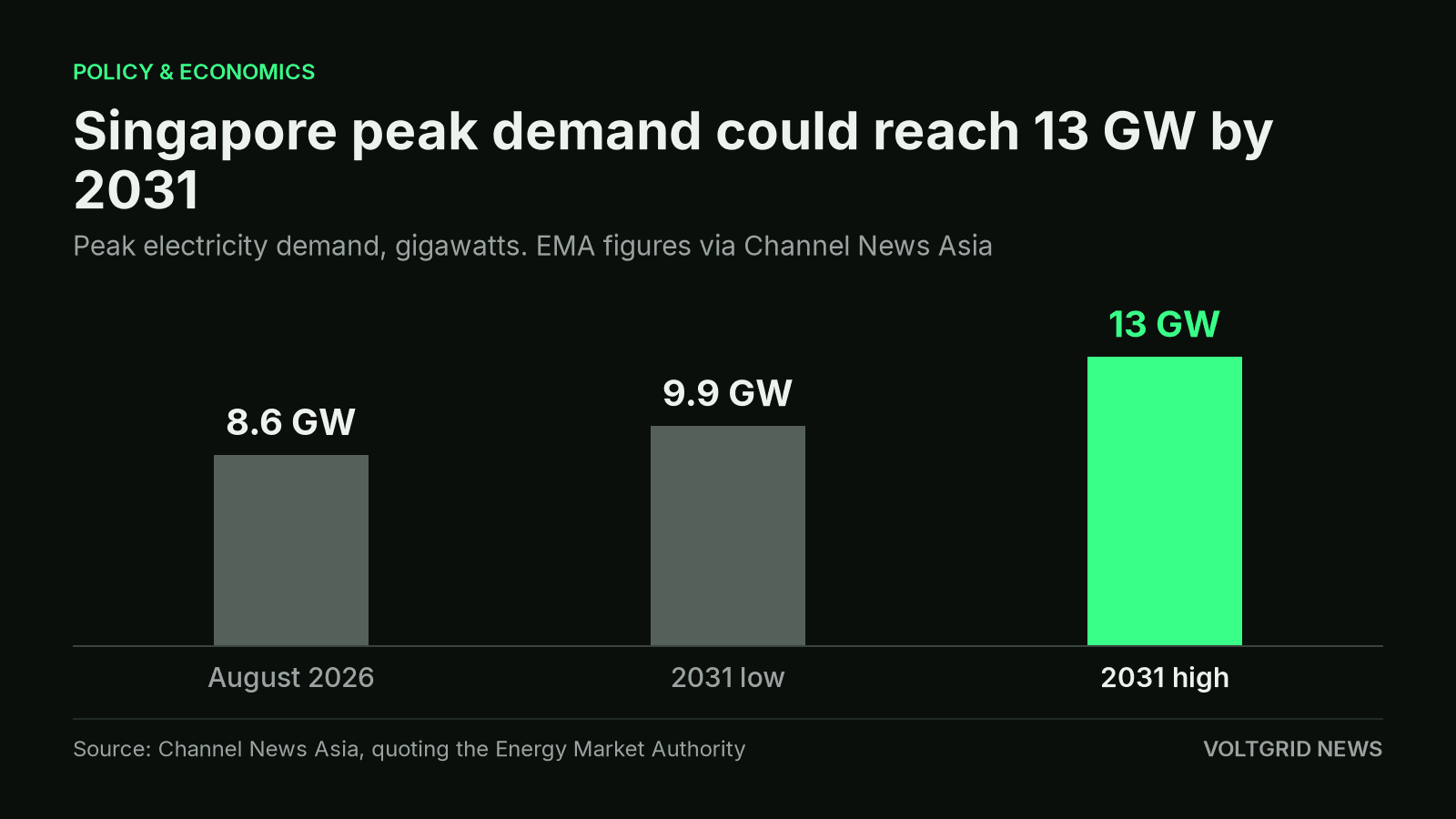
Peak electricity demand, gigawatts. EMA figures via Channel News Asia
Illustration (AI-generated)
The forecast is part of a five-year energy infrastructure plan EMA released on Oct. 26, as Singapore International Energy Week opened. Minister Tan See Leng called the programme the largest build-out of the city-state's energy system in decades. EMA said data centres, semiconductor plants and electric transport are the main new loads, and that the pace depends on when those projects connect.
Gas plants and a larger grid
From 2026 to 2031, five new gas-fired plants are due online, lifting generation capacity by about 26 percent from roughly 12 GW, CNA reported from the plan. EMA is still judging bids for more gas plants that would start by 2032, and it said further tenders will follow over five years if demand keeps rising. The transmission budget is as much as S$5.3 billion (US$4.15 billion) from 2025 through 2029, which CNA described as 11 times the outlay of the previous five years. The plan ties that money to 7 new transmission substations by 2031, compared with 4 in the prior five-year period, and to growth in the high-voltage cable network from about 7,700 km to about 9,100 km by 2030.
Storage, solar and the data-centre load
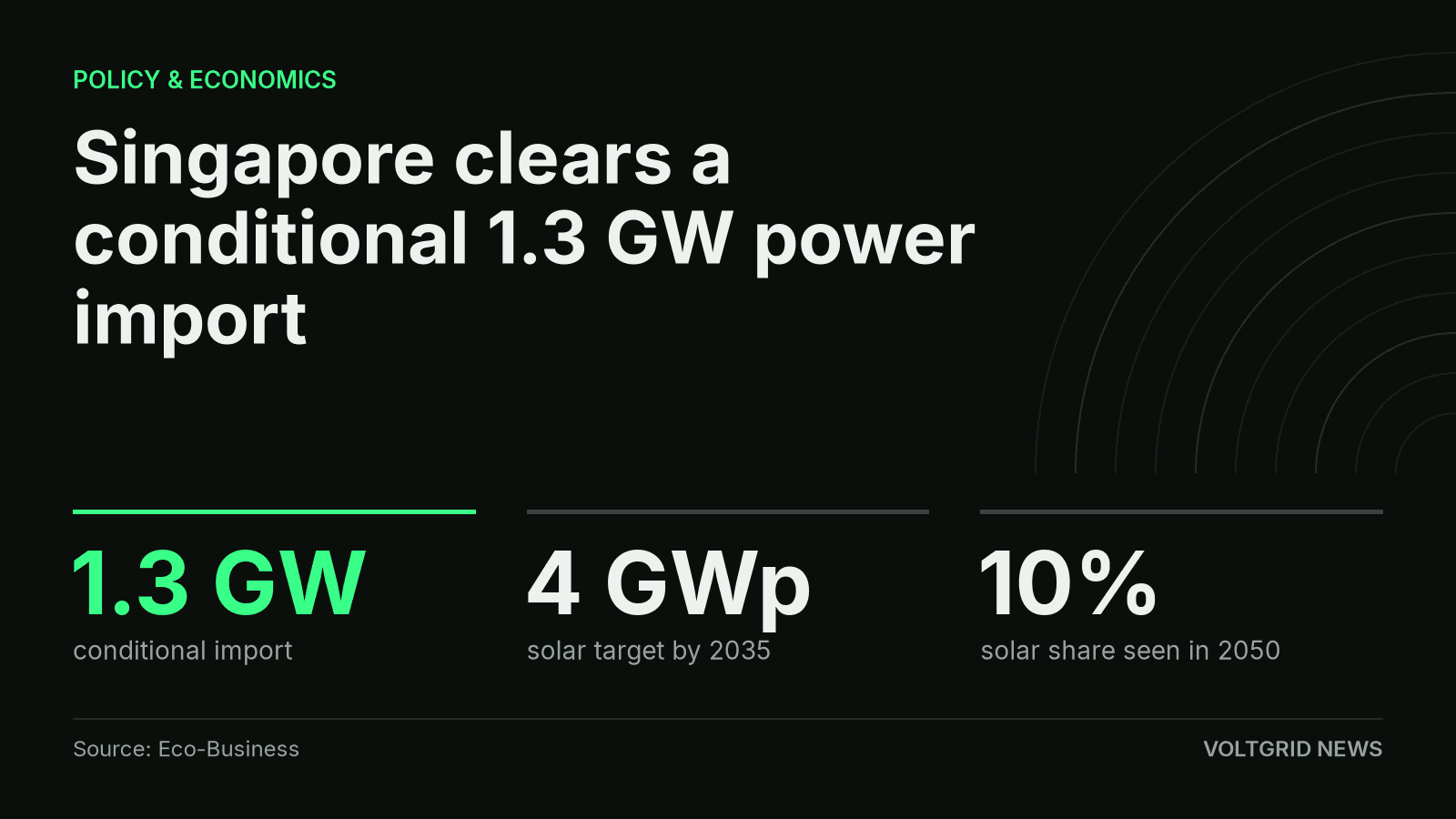
Storage is due to grow from about 350 MWh now to just over 1 GWh by 2030. EMA opened a consultation asking for storage projects and business models that can be built at commercial scale, and it said some systems may need central control depending on their size and role. Installed solar is 2.3 GWp, on course for an existing 3 GWp goal by 2030, with a new target of 4 GWp by 2035. Tan said that even then, solar can meet no more than 10 percent of projected demand in 2050. The gas plants and the storage are the flexibility behind the data-centre and chip-plant load. Over the weekend Indonesia reduced pipeline gas deliveries to Singapore by less than 2 percent of daily demand. Tan said similar cuts had been absorbed before.
What is not confirmed yet
EMA has not named the five gas plants, their individual megawatts, or which data centres sit inside the 9.9 GW to 13 GW band. A possible energy cluster on Pulau Tekong, with hydrogen-ready gas plants and another LNG terminal, is only a study. Regasification capacity is planned to rise from 10 million tonnes a year to 15 million tonnes when a second terminal at Jurong Port opens by 2030. A further expansion of the Jurong Island terminal is still under study. The same day, Singapore's energy ministry and Saudi Arabia's energy ministry announced an intent to store Saudi crude in the Jurong Rock Caverns, with operations aimed at the second half of 2027. EMA and JTC signed a memorandum with Saudi Aramco as a first step. That crude arrangement does not add power-plant capacity.