SK On LFP Consortium Reportedly Bids on 80 MW/480 MWh Jeju ESS Lot
TheElec reports a consortium using SK On's LFP cells bid on KPX's 80 MW/480 MWh Jeju storage lot under a new 25-year term, which needs 18,250 cycles. SK On says nothing is final.
2 min read
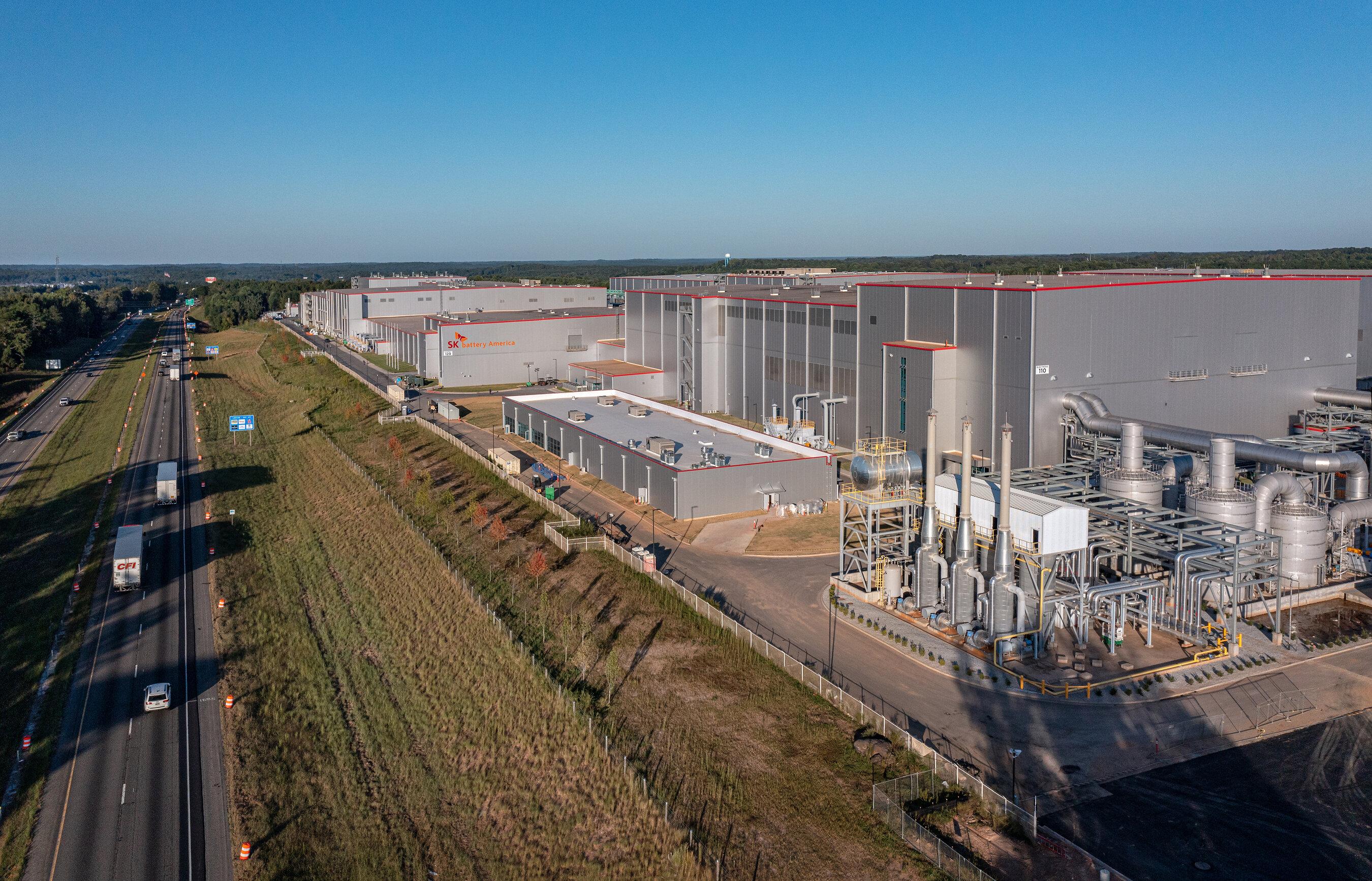
An SK On battery plant, SK Battery America, in an earlier official photo; it is not the Jeju project site.
Image: SK On
Source · Press image from the SK On newsroom on PR Newswire, used for news reporting.
A consortium using SK On's lithium iron phosphate (LFP) cells has bid on the 80 MW/480 MWh Jeju Island lot of South Korea's third energy storage system (ESS) central contract market, with the new 25-year contract term, TheElec reported on Nov. 20.
The report cites industry sources. SK On did not confirm it: an SK On official told TheElec it is "difficult to confirm" whether the company is in the consortium, that the round is in bid evaluation, and that nothing has been finalized. The Korea Power Exchange (KPX) plans to pick preferred bidders in November, and selected operators must finish construction by February 2029.
What the Jeju 25-Year Option Requires
KPX opened the round in September with 1,180 MW in total: 1,100 MW on the mainland and 80 MW on Jeju, according to The Asia Business Daily. The Jeju lot is 480 MWh, which makes it a six-hour system, the duration the tender specifies, as Energy Storage reported on Sept. 23. Because Jeju has a high share of renewable generation, KPX added a 25-year option beside the existing 15-year term.
The durability terms are the hard part, according to TheElec. KPX requires 730 charge-discharge cycles a year, at least 18,250 cycles over the contract, and at least 70% of initial capacity retained throughout. That is roughly two cycles a day. Energy Storage reported that the 1,100 MW mainland lot asks for at least 383 annual cycles under 15-year performance guarantees, so the Jeju option asks for nearly twice the yearly cycling.
Jeju's 25-year option asks for 730 cycles a year, nearly twice the mainland lot's 383 (80 MW/480 MWh, at least 18,250 cycles, 70% capacity retained).
Graphic: Voltgrid News
Why It Matters for Cell Supply
TheElec notes that the tender does not restrict battery chemistry, and that the durability terms are seen as favoring non-lithium technologies such as flow batteries. For LFP, the outlet says meeting 25 years means securing enough capacity from the initial design, and adding cells raises project cost, so price still counts. Energy Storage said price carries half of the award score in the mainland evaluation.
The practical reading for a cell maker is that holding 70% capacity for 25 years pushes up the energy installed on day one, so a Jeju win would test SK On's LFP cost position and not only its cycle life.
Where SK On Stands in the Round
The Asia Business Daily put the cumulative share of the first two rounds at 56% for Samsung SDI, 25% for SK On and 19% for LG Energy Solution. LG Energy Solution did not bid in the third round, as Voltgrid reported, and the same outlet says about 60 consortia submitted bids before the tender closed on Nov. 4.
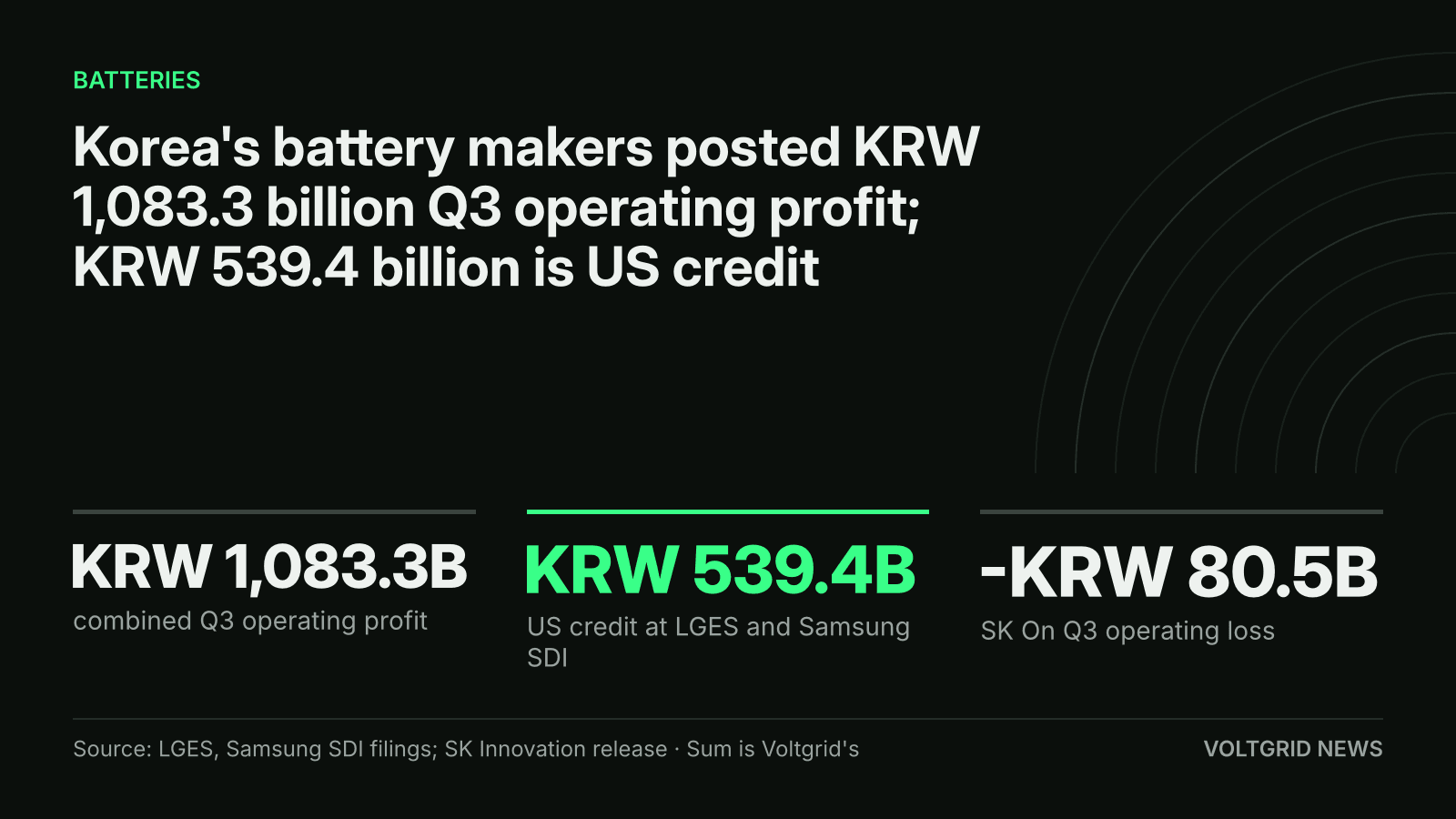
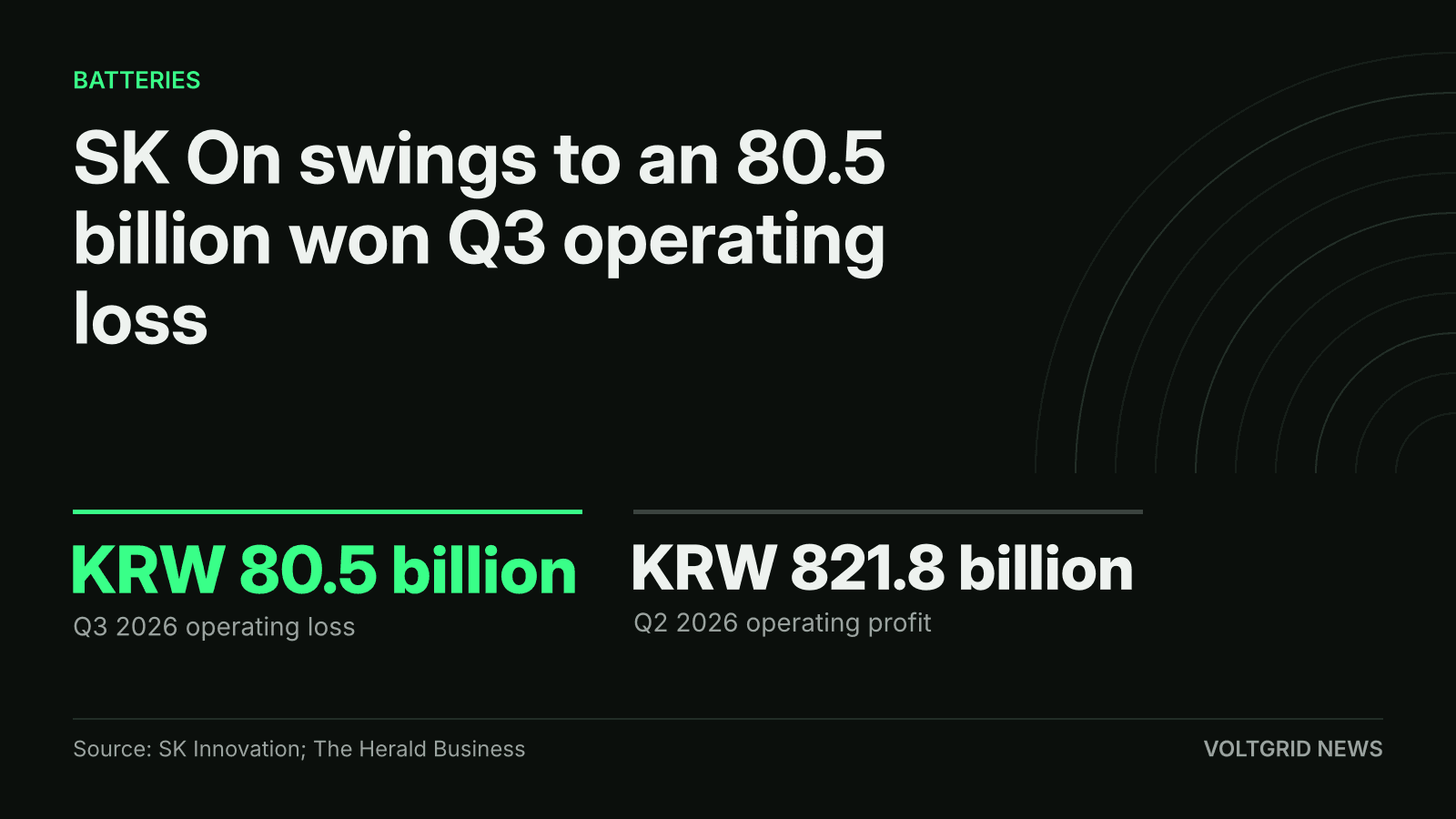
SK On is moving its own capacity toward storage, and its Q3 results on Oct. 29 showed an operating loss of KRW 80.5 billion during that shift. A fire-safety result also matters in KPX scoring, where Energy Storage says 25 of the points cover fire and equipment safety, and SK On says its ESS passed the UL 9540A large-scale fire test.
What is not confirmed yet
SK On has not confirmed that it is part of the Jeju consortium, and TheElec does not name the other members. KPX has not named preferred bidders for any lot. Energy Storage said winners still need grid review approvals and a generation business permit, and failing to secure the permit can forfeit an award. The next fact to watch is KPX's November list of preferred bidders and whether the 25-year Jeju lot goes to an LFP or a non-lithium system.
Sources
- 01South Korea tenders 6.6 GWh of six-hour storage under 15-year contractsEnergy Storageess-news.com
- 02LG Energy Solution Sits Out Third ESS Central Contract Market, Leaving Samsung SDI and SK On in Two-Way RaceThe Asia Business Dailyasiae.co.kr
- 03SK On Targets 25-Year ESS Contract in JejuTheElecthelec.net
- Published
- Sources
- 3 cited