SpaceX Closes $40B GPU Debt Raise, Musk Says; Chips Due Q1-Q2
SpaceX has closed $40 billion of mostly callable debt for GPUs arriving in Q1 and Q2, Musk said on X; earlier Apollo-led reports described talks, and final terms are unconfirmed.
3 min readAI-assisted
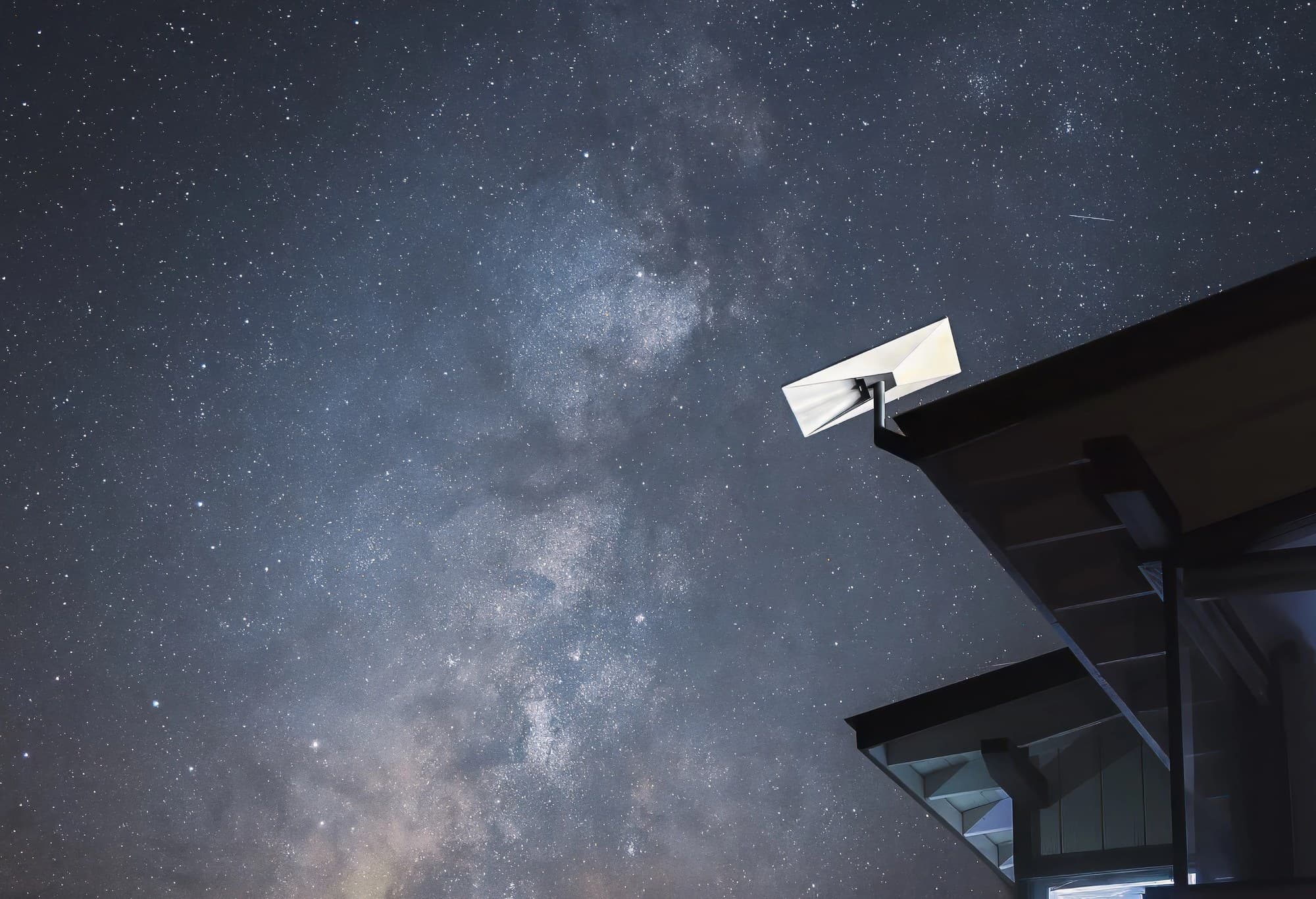
A Starlink terminal, the satellite internet business whose revenue Musk cited for SpaceX's credit access. The photo does not show the GPU purchases or data centers.
Image: SpaceX / Starlink
Source · Press image from the Starlink website, used for news reporting.
SpaceX has closed $40 billion in debt financing for graphics processing units (GPUs), Elon Musk said on X on Oct. 25, according to Reuters. Reuters noted it was not immediately clear from the post what Musk meant by "closed" or whether investors had agreed to pricing.
Musk attributed the successful raise to the company's investment-grade status and revenue from its Starlink satellite internet and launch businesses. "This is primarily callable debt for GPU purchases that will arrive in Q1 and Q2. Not a major factor this quarter," he said in the post, as quoted by Reuters. Reuters did not report lender names or tranche sizes, and it said it was unclear whether investors had agreed to pricing.
Reuters reported earlier in October that SpaceX was in talks with banks and asset managers to raise $40 billion to buy Nvidia AI chips. Secondary outlets attribute a more detailed structure to a Financial Times report from Oct. 6, citing people familiar with the matter: about $10 billion of bank loans and about $30 billion of investment-grade debt, with Apollo Global Management leading and Pimco among the lenders in discussion. Voltgrid has not seen the original FT report. The Grid Fin, which relayed it, said the package had not been finalized and that closing was expected in 2027.
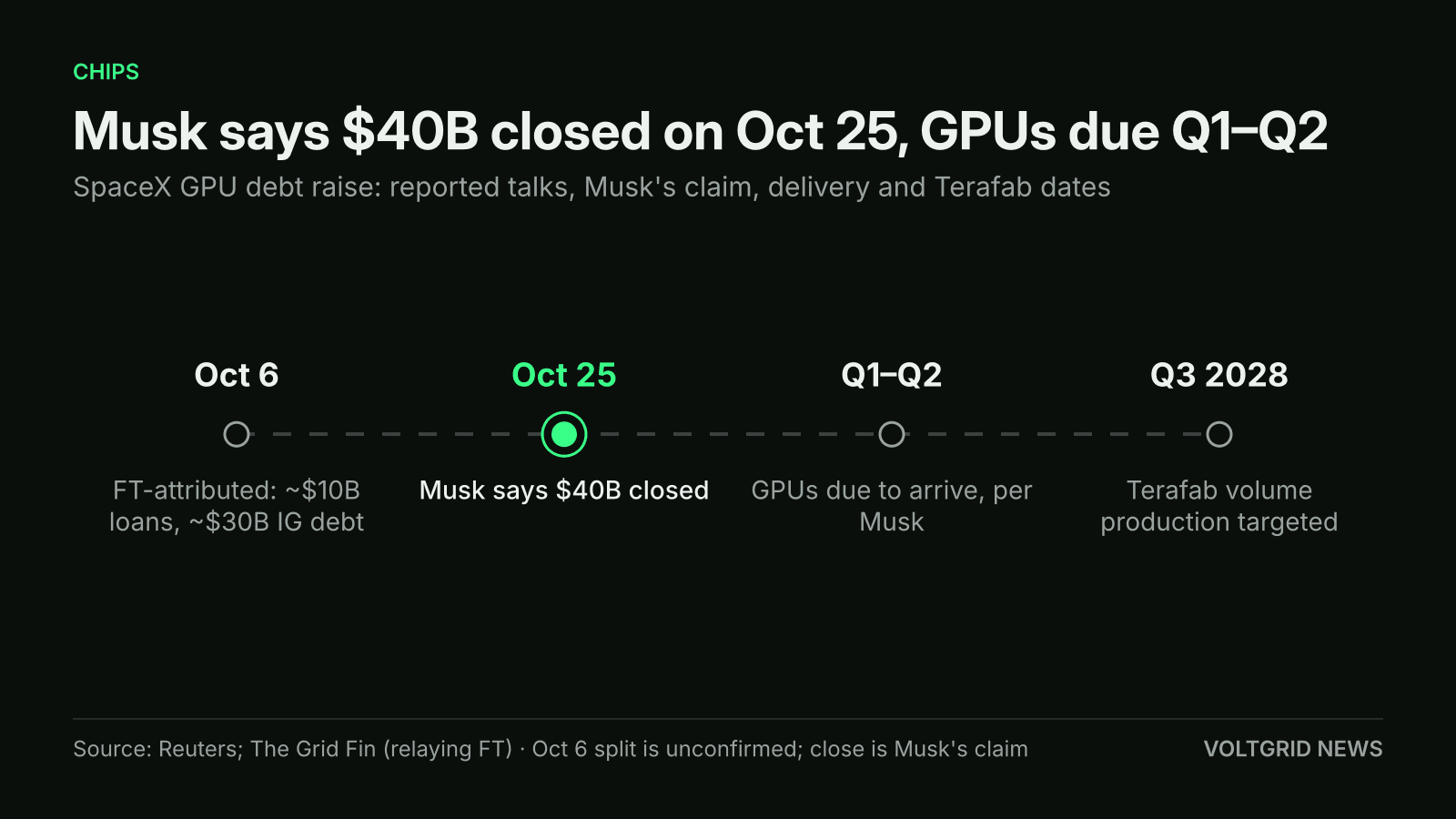
The close is Musk's claim as reported by Reuters; the Oct 6 loan and debt split is earlier, unconfirmed reporting.
Illustration (AI-generated)
Musk's post is the news: he says the raise is done, though Reuters said it was unclear what he meant by "closed". It does not say whether the closed deal matches that reported split, who the lenders are, or when the debt matures. Those terms remain unconfirmed.
What the SpaceX GPU Debt Means for Power Demand
The raise is tied to deliveries. If the GPUs arrive in Q1 and Q2, as Musk said, the financing covers hardware that will need power and cooling at SpaceX's AI sites within months. Musk did not name the data centers that will take the chips or the accelerator models; the Oct. 6 reports described the order as Nvidia chips.
SpaceX's own numbers show how fast the spending is growing. Reuters reported that revenue rose 161% to $14.58 billion in the three months ended Sept. 30 from a year earlier, while total capital expenditures were $19.6 billion, according to SpaceX's chief financial officer on the third-quarter earnings call. For scale, the chief financial officer guided to $35 billion to $40 billion of capital expenditure for the fourth quarter, Reuters reported, though Musk said the debt is not a major factor this quarter.
What Callable Debt Means for GPU Purchases
Callable debt is borrowing that the issuer can repay before its final maturity, so it can be retired early if cash arrives sooner than planned. Musk described the $40 billion as primarily callable debt, and Reuters said it was unclear whether investors had agreed to pricing, so the early-repayment terms are unconfirmed.
The link to hardware is timing. Musk said the debt funds GPUs that arrive in Q1 and Q2, so financing raised ahead of delivery lets the orders be paid for as the hardware lands rather than out of a single quarter's cash flow.
Terafab Sits Behind the GPU Purchases
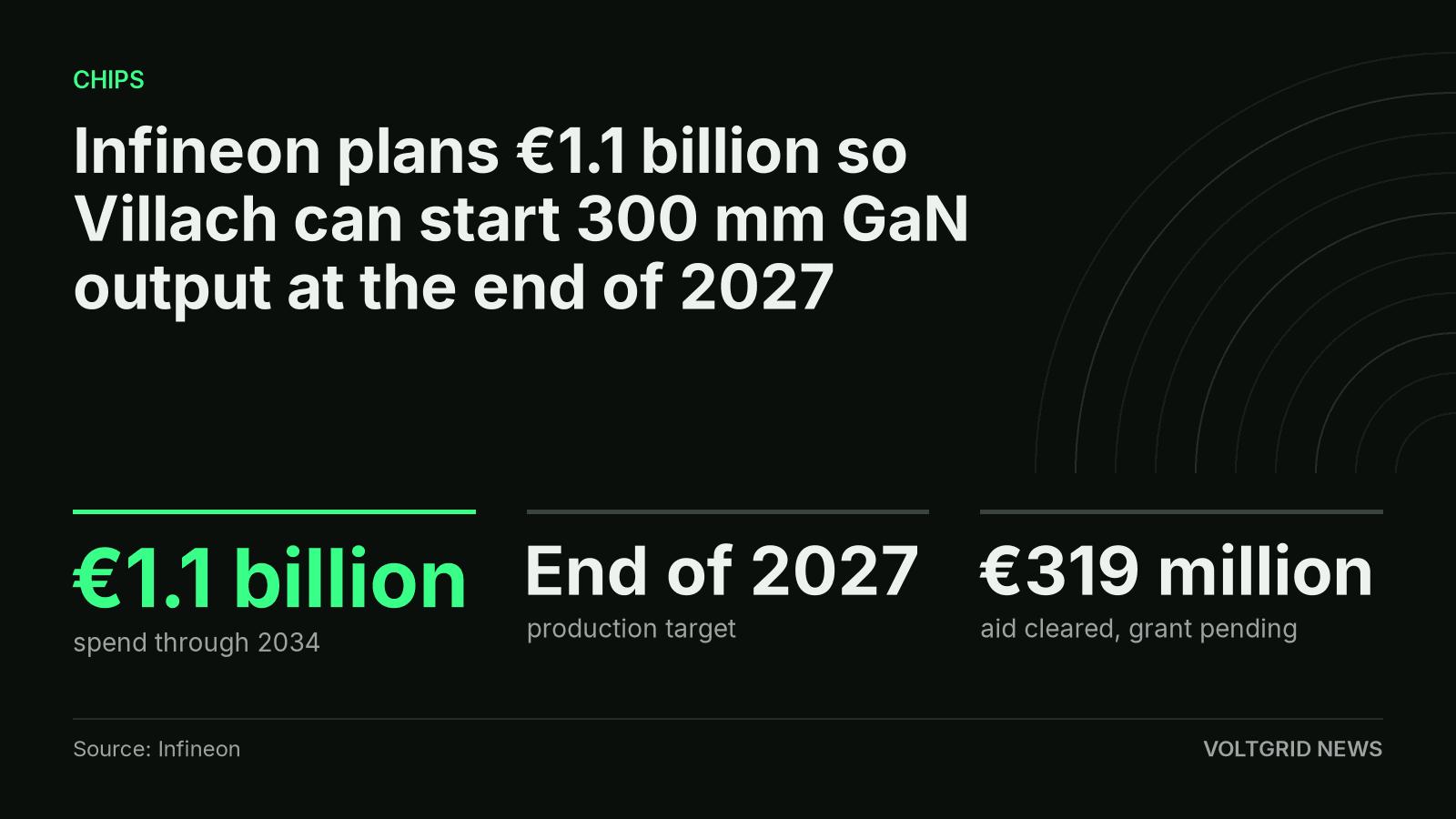
Reuters also noted that Terafab, the chip manufacturing joint venture between SpaceX and Tesla in Austin, should produce a first test chip around May or June of next year and aims for volume production by the third quarter of 2028. Until then, the company depends on bought GPUs. In its S-1 filing before the IPO, SpaceX listed "manufacturing our own GPUs" among its substantial capital expenditures, Reuters said.
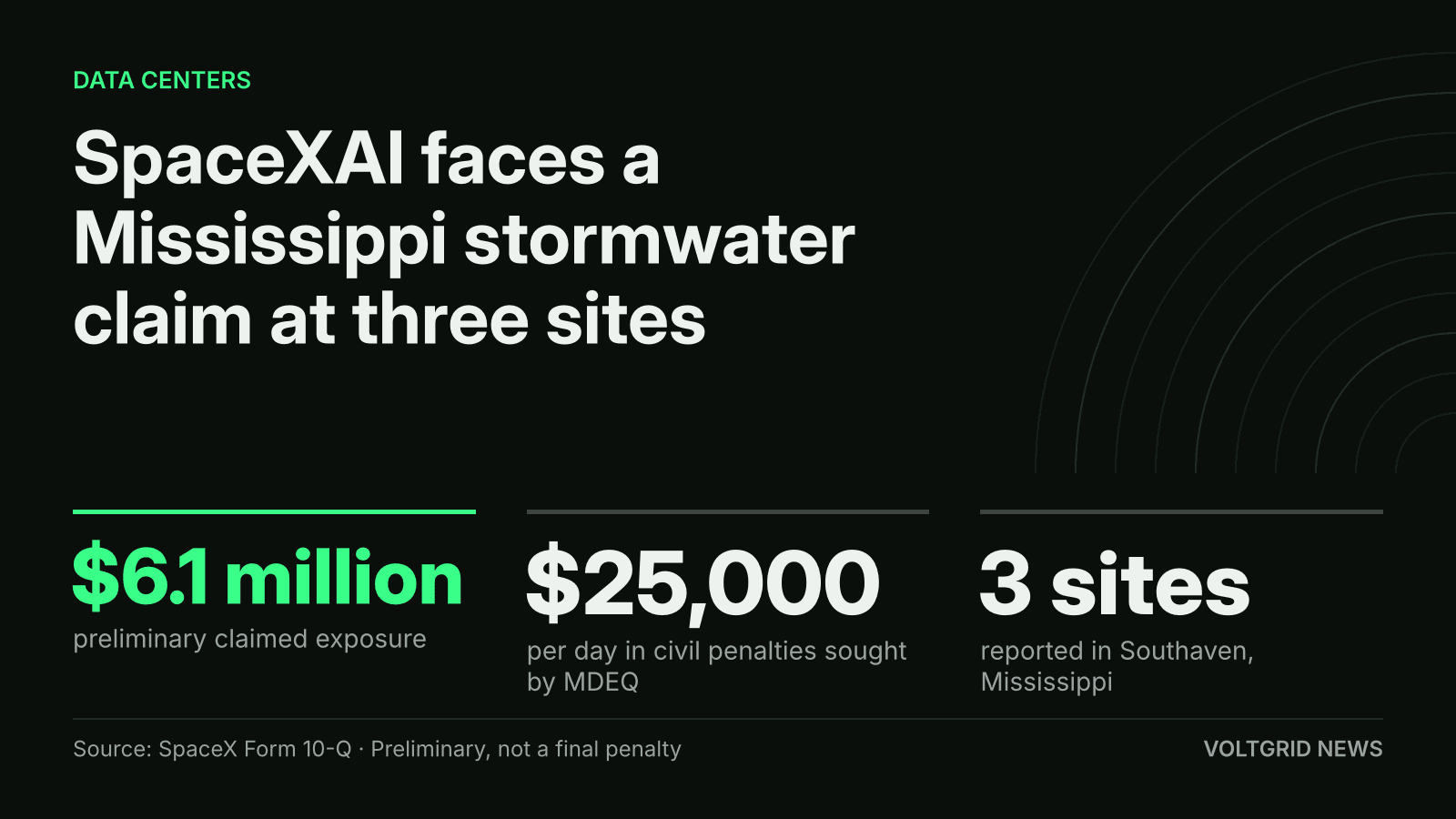
Voltgrid has covered the supplier side of that effort, where Tesla and SpaceX were reported to be in talks with about 10 Korean suppliers for Terafab. It has also covered the build-out friction at SpaceX's data-center sites, such as a $6.1 million Mississippi stormwater claim at Southaven.
What Is Not Confirmed Yet
Voltgrid found no lender statement or SpaceX filing confirming the close; the source is Musk's post as reported by Reuters. Open questions are the split between bank loans and bonds, the role of Apollo and Pimco, the maturity and pricing, and which GPUs and sites the money will fund. Watch for an SEC filing or lender announcement that would fix those terms.