Surrey Iron-Molybdenum Li-CO₂ Catalyst Hits 92 Lab Cycles, 93% Charge Recovery
University of Surrey chemists replaced platinum-group catalysts in lithium-CO₂ cells with iron and molybdenum. Results are lab-scale and capacity-limited; durability is the open question.
Science DeskEdited by Ege Erten
2 min readAI-assisted
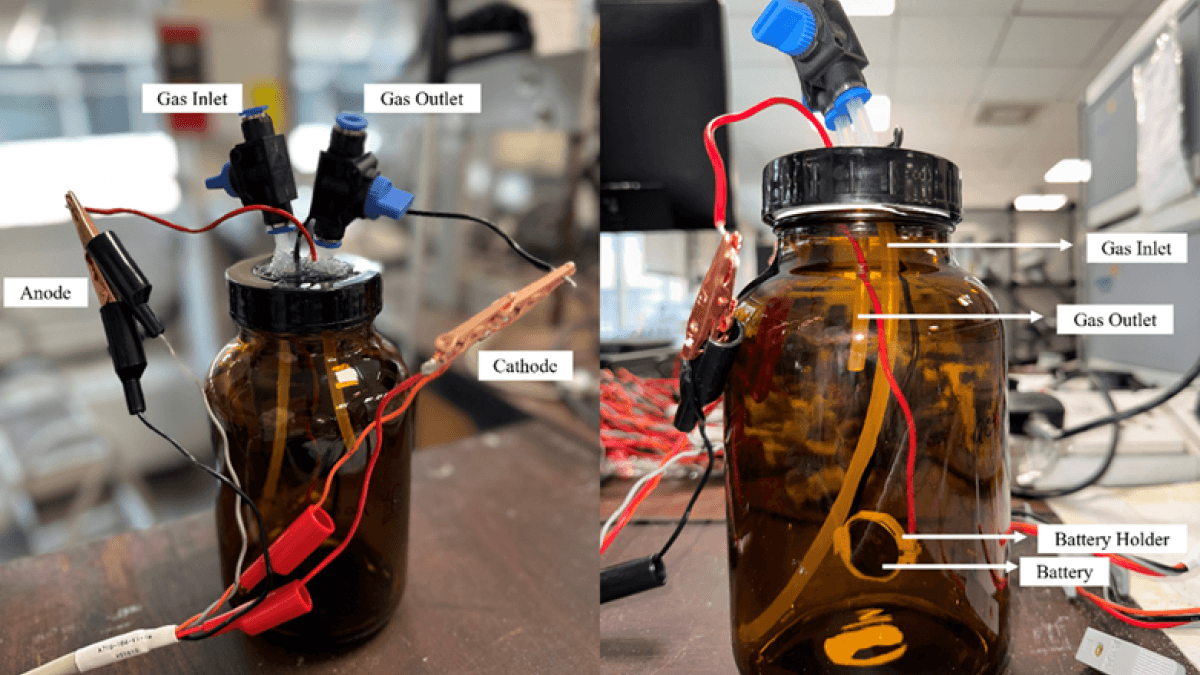
The University of Surrey lab test cell for lithium-CO2 batteries, with gas inlet and outlet, anode, cathode and battery holder labelled.
Image: University of Surrey
Source · Press image from the University of Surrey newsroom, used for news reporting.
Researchers at the University of Surrey have made catalysts for lithium-CO₂ batteries from iron and molybdenum instead of platinum, ruthenium or iridium. The best version recovered 93% of its charge on recharging and completed 92 charge-discharge cycles in the laboratory, the university said on 11 November.
The work appears in the Journal of Power Sources. The team's best catalyst delivered nearly four times the discharge capacity of an unmodified reference material. The university says it performs comparably to, and on some measures better than, earlier catalysts that contain precious metals.
A lithium-CO₂ battery is one that uses carbon dioxide in its discharge reaction. The university says such cells could, in theory, store substantially more energy than lithium-ion cells of the same weight. For data centers and grids, that would matter only if the chemistry ever reached a stable, long-lived product. Surrey does not claim it has, and none of the reports gives a timeline.
How the catalyst was made
A catalyst is a material that speeds up a chemical reaction without being used up. In this type of battery, it helps the charging and discharging reactions run efficiently. Many of the best-performing options depend on scarce, expensive metals, which raises cost and supply questions for large-scale production.
The Surrey team introduced iron into a molybdenum-based compound, then heated it to several different temperatures to see how structure changed battery performance. Heating to 500°C worked best. It produced a mixture of molybdenum oxide and iron phosphate that helped the reactions proceed more efficiently, according to the researchers.
Heating to 500 C gave the best catalyst, a mix of molybdenum oxide and iron phosphate, per the University of Surrey.
Illustration (AI-generated)
Dr Mahsa Masoudi, a research fellow on the team, said that even simple changes to preparation made a large difference. Electric & Hybrid Vehicle Technology International, which also covered the study, reports the same figures.
What the results do not show
The 92 cycles were run under a deliberate limit on how much charge was released in each cycle. That is a lab test condition, not a measure of how long a full-capacity cell would last. The university also says commercial lithium-ion batteries still outperform lithium-CO₂ cells on reliability and lifespan.
Dr Daniel Commandeur, a Surrey Future Fellow, said there is still a long way to go before these batteries appear in everyday devices. The next challenge, he said, is delivering the same performance over much longer periods. The team plans to improve performance and durability, and to test whether the catalysts could serve other technologies that convert carbon dioxide.
The full paper sits behind the publisher's access controls, so the figures here come from the university release and the trade-press report of it. Voltgrid has not seen the paper's data tables, and it is not stated whether other labs have repeated the result.