AEP Ohio Fuel Cells for AWS: About 98 MW Final, No Start Date
AEP Ohio's fuel cells for AWS and Cologix data centers, about 98 MW across two contracts, are final after court appeals ended in June, AEP's Oct. 28 10-Q says. It gives no in-service date.
Nuclear & Microgrids DeskEdited by Ege Erten
4 min readAI-assisted
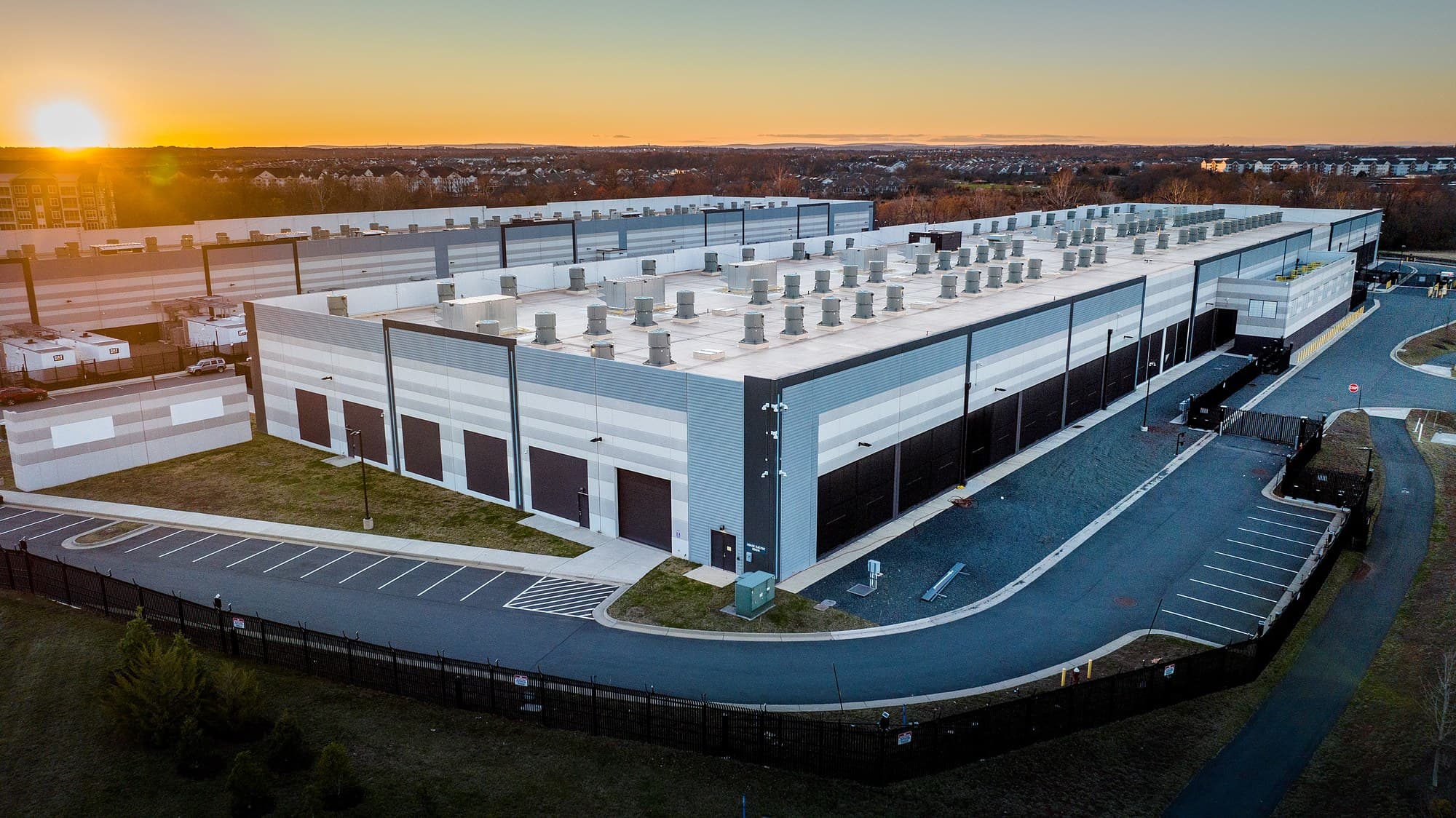
An Amazon Web Services data center. File photo; it does not show the Ohio sites, which AEP does not name.
Image: Amazon
Source · Press image from the Amazon newsroom, used for news reporting.
AEP Ohio, the Ohio utility of American Electric Power (AEP), holds two contracts for about 98 MW of electricity from fuel cells at data centers run by Amazon Web Services (AWS) and Cologix, and they are now final, AEP said in a quarterly report filed on Oct. 28, 2026.
The filing says Ohio Supreme Court appeals against the state regulator's approval were dismissed in June 2026, so the Public Utilities Commission of Ohio (PUCO) decisions can no longer be appealed. That ends the legal risk to the contracts. It does not tell readers when the fuel cells will run. AEP gives no in-service date, does not say how much of the roughly 98 MW serves AWS, and names neither site. No primary source we read states the contract terms.
How the Bloom Fuel Cells Work
The units are Bloom Energy solid oxide fuel cells that make electricity from natural gas through a chemical reaction rather than by burning it, AEP said in a June 2025 release after the PUCO approval. Because the gas arrives by pipeline, the cells add generating capacity at the site without waiting for new transmission lines. AEP Ohio buys the gas on the market and pays Bloom to build and maintain the systems, WOSU reported from the February 2025 application.
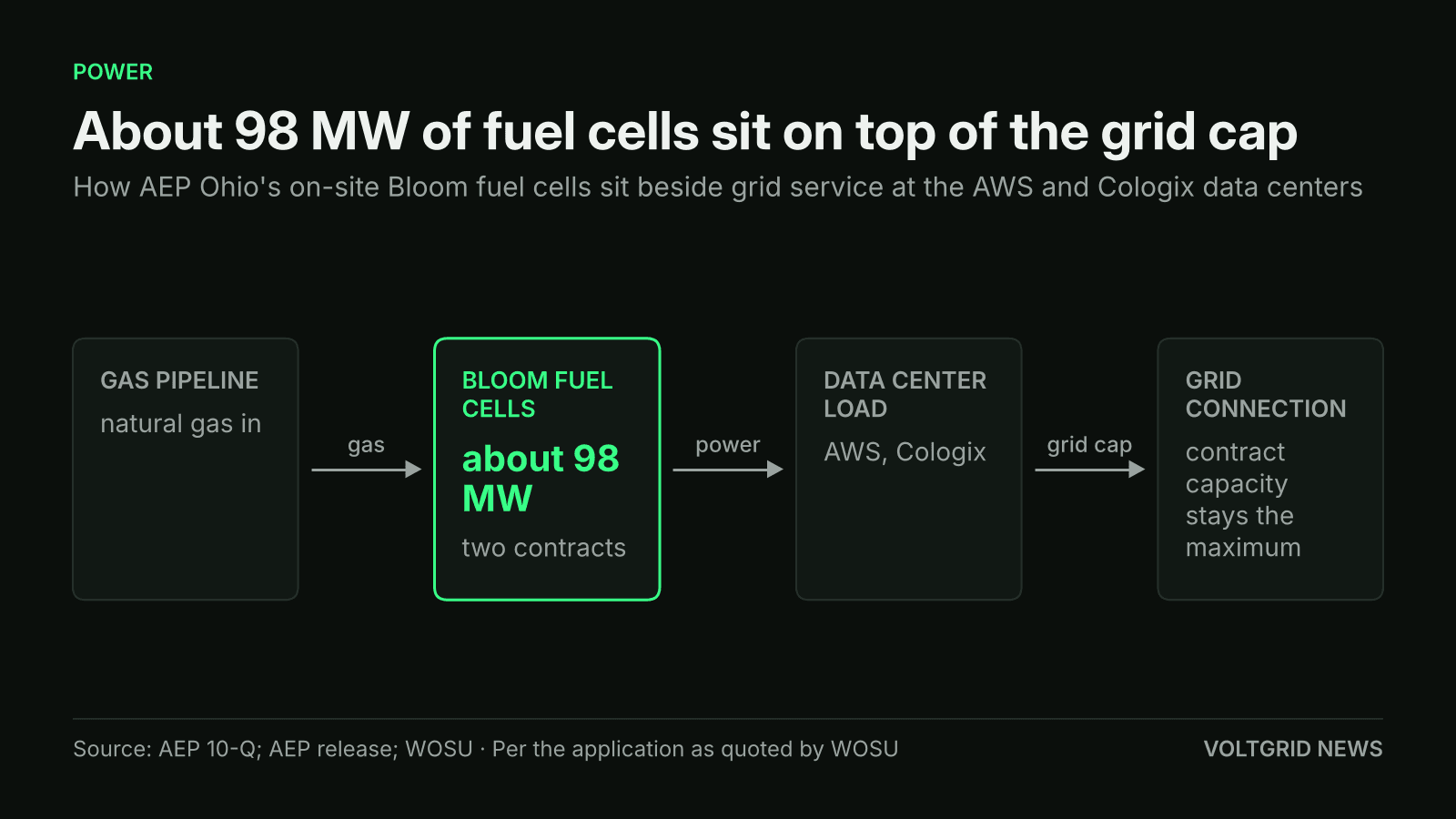
The fuel cells sit on top of each data center's existing grid contract capacity, which stays the maximum.
Illustration (AI-generated)
The design limits what the site takes from the grid. According to the application as quoted by WOSU, each data center keeps its existing grid contract capacity at the maximum, and the fuel cells sit on top of it so the customer can expand. If the cells fail, the customer must cut load or start other on-site generation almost at once, so its grid draw never exceeds the contracted level. Neither AEP nor the customers have described the installations as able to run as an island, and nothing we read describes a controller or storage, so this is on-site generation beside grid service, not a microgrid.
Who Pays and What the Contracts Say
AEP Ohio, the operating company Ohio Power Co., signed both contracts in 2025 to provide electricity service from fuel cells, the 10-Q says. AEP's release says AWS and Cologix pay the full project costs under long-term agreements. AEP told WOSU those costs fall only on the two customers and never enter the rates other customers pay.
WOSU, reading the application, reported a six-year contract with AWS and a 15-year contract with Cologix. AEP redacted the prices as trade secrets, and we have not seen the term lengths on an AEP, PUCO or customer page. AEP's filing does not split the roughly 98 MW between the two sites, so the AWS share is not disclosed.
The fuel cells come through AEP's November 2024 supply agreement with Bloom, which POWER Magazine describes as a 100 MW purchase with an option for 900 MW more.
Approval, Appeals and the Missing Start Date
The regulatory path is complete. The PUCO approved the contracts in May 2025, according to the 10-Q. In September 2025 an intervenor took the case to the Supreme Court of Ohio, arguing the order was unlawful, anti-competitive and discriminatory. The appeals were dismissed in June 2026.
What remains is delivery, and here the record is thin. OPCo's other revenues for the first nine months of 2026 rose $3 million, primarily due to customer-sited projects, the filing says, without naming the projects or saying whether any fuel cells are operating. Air permits and gas connections for the two sites are not described in the sources we read.
What It Means for AWS and the Grid
AEP framed the cells as a bridge. It expects 7 to 10 years before transmission can meet the full demand of the central Ohio data centers, WOSU reported. That gap is why on-site gas generation has spread across AI campuses, including the much larger gas build tied to Amazon's Pecos County site.
Inside Amazon's power program, about 98 MW shared between two companies is small next to its nuclear contracts, such as Vistra's Comanche Peak PPA of up to 1,200 MW.
The Ohio sites matter more as a model for AEP. Its 702 MW Bloom plant near Cheyenne, Wyoming, for Google is about seven times the Ohio deployment, POWER reported, with construction planned in 2026 and full operation targeted by the end of 2028. AEP's 10-Q says an unregulated subsidiary agreed in January 2026 to buy a substantial portion of its 1 GW fuel-cell option for about $2.65 billion. AEP is also raising its capital plan to $100 billion, including $37 billion for transmission.
What to watch
The next fact that would change this file is an in-service notice from AEP, AWS, Cologix or Bloom, with the megawatts at each site. AEP's annual report for 2026, due early next year, is the next filing that could state it. Until then, the contracts are final and the start date is not disclosed.
Sources
- 01AEP Ohio proposes onsite fuel-cell power generation for AWS, Cologix data centersWOSU · wosu.org
- 02PUCO Approves Onsite Power Project for Data CentersAEP · aep.com
- 03American Electric Power Form 10-Q for the quarter ended September 30, 2026American Electric Power (SEC filing) · sec.gov
- 04AEP Plans $4 Billion Fuel Cell Power Plant for Google, Signs Up to 1.6 GW Mainspring Generator DealPOWER Magazine · powermag.com