Amazon's Energy Contracts Hit 690M MWh, Most Due After 2036
Amazon's Q3 10-Q puts its fair-value energy contracts at about 690 million MWh, up from 270 million in June, with an 18-year average term. The filing names no deals and no technology.
Nuclear & Microgrids DeskEdited by Ege Erten
5 min readAI-assisted
Follows our story: Amazon Reportedly Plans Trainium Outside AWS as Q3 Capex Hits $75.9B
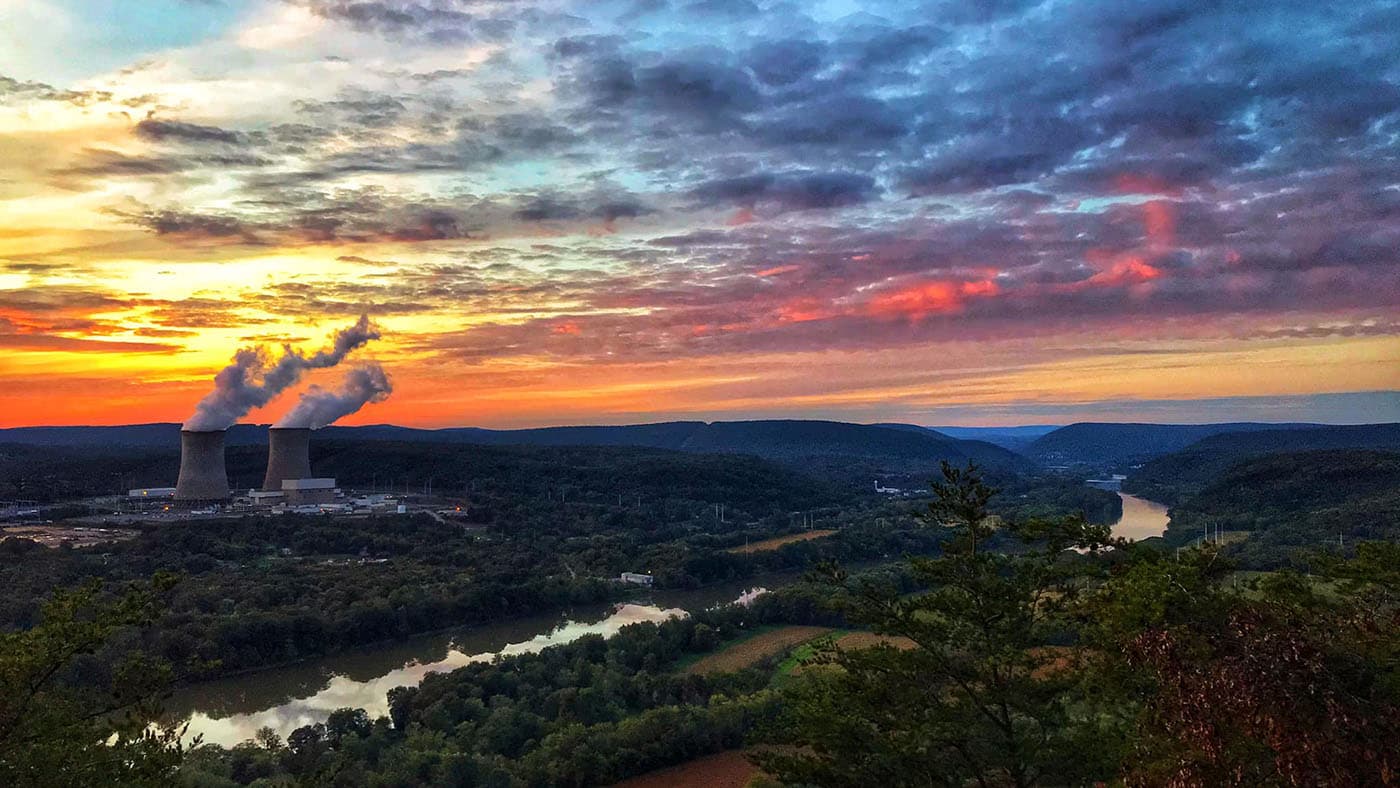
Talen Energy's Susquehanna plant, named in the article as part of the Talen-Amazon agreement; Amazon's 10-Q names no plants, so the photo is illustrative.
Image: Talen Energy
Source · Press image from the Talen Energy website, used for news reporting.
Amazon's long-dated energy contracts under fair-value accounting reached about 690 million megawatt-hours at Sept. 30, up from about 270 million at June 30, the company said in its quarterly report filed Oct. 30. The filing shows a book of long-dated energy contracts, most of the energy due more than ten years after Sept. 30, but it does not show how much of that power is firm, nuclear or even new.
The disclosure fills in a gap left by the earnings release, which Voltgrid covered on Oct. 30 as a capital-spending and chips story. Amazon's purchases of property and equipment were $77.3 billion in the third quarter, against $35.1 billion a year earlier, according to the cash flow statement in its results release. The power to run that equipment is the part the 10-Q now puts a volume on.
What Amazon's 10-Q Says About Its Energy Contracts
Amazon says it signs energy contracts to secure electricity for its existing and future operations, and some of them run for 20 years. Because it may settle part of a contract in cash rather than take the power when its use falls short of the committed quantity, the contracts count as derivatives and are marked to fair value every quarter.
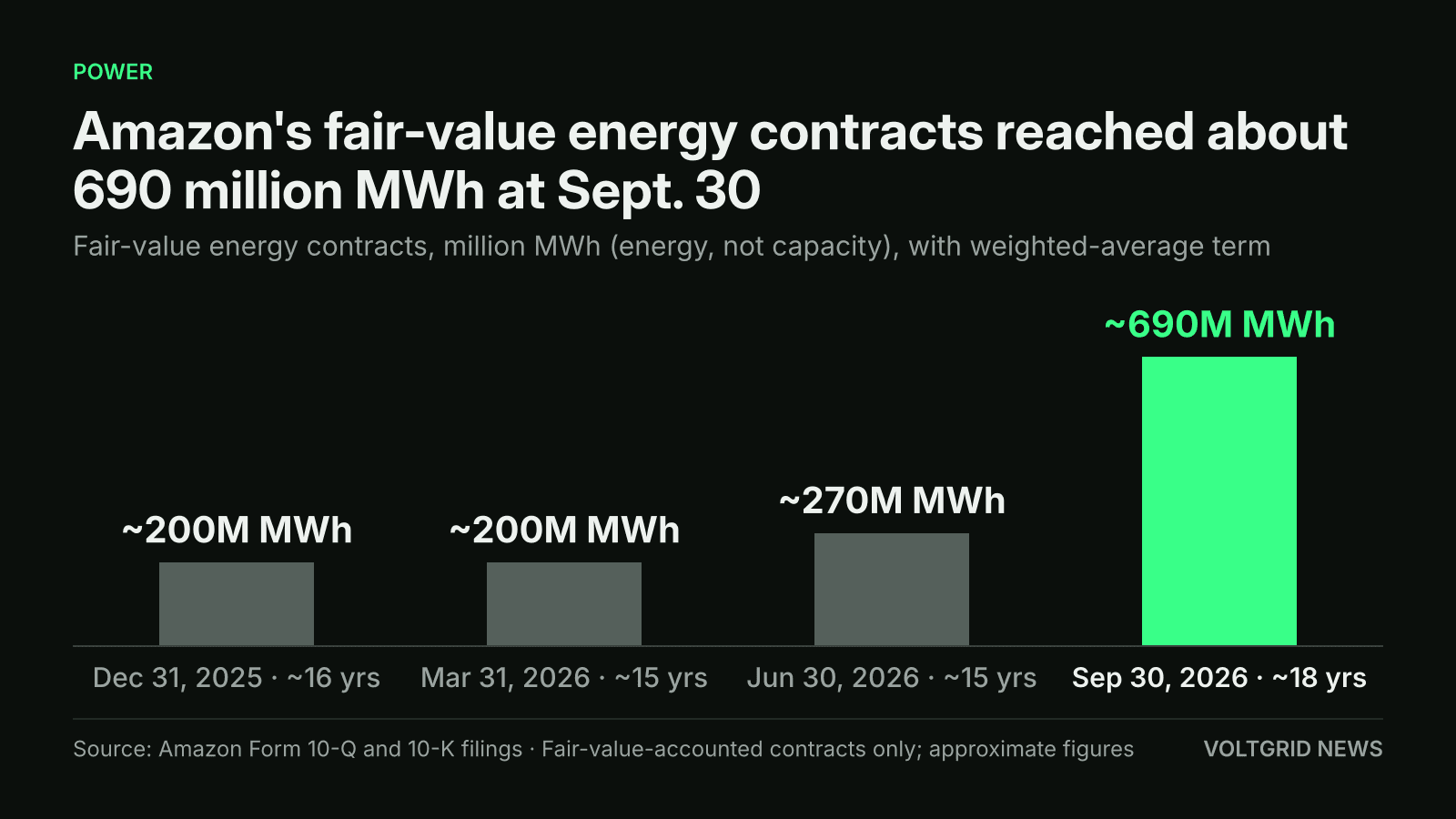
Fair-value-accounted energy contracts rose to about 690 million MWh at Sept. 30, with a weighted-average remaining term of about 18 years; this is energy, not capacity.
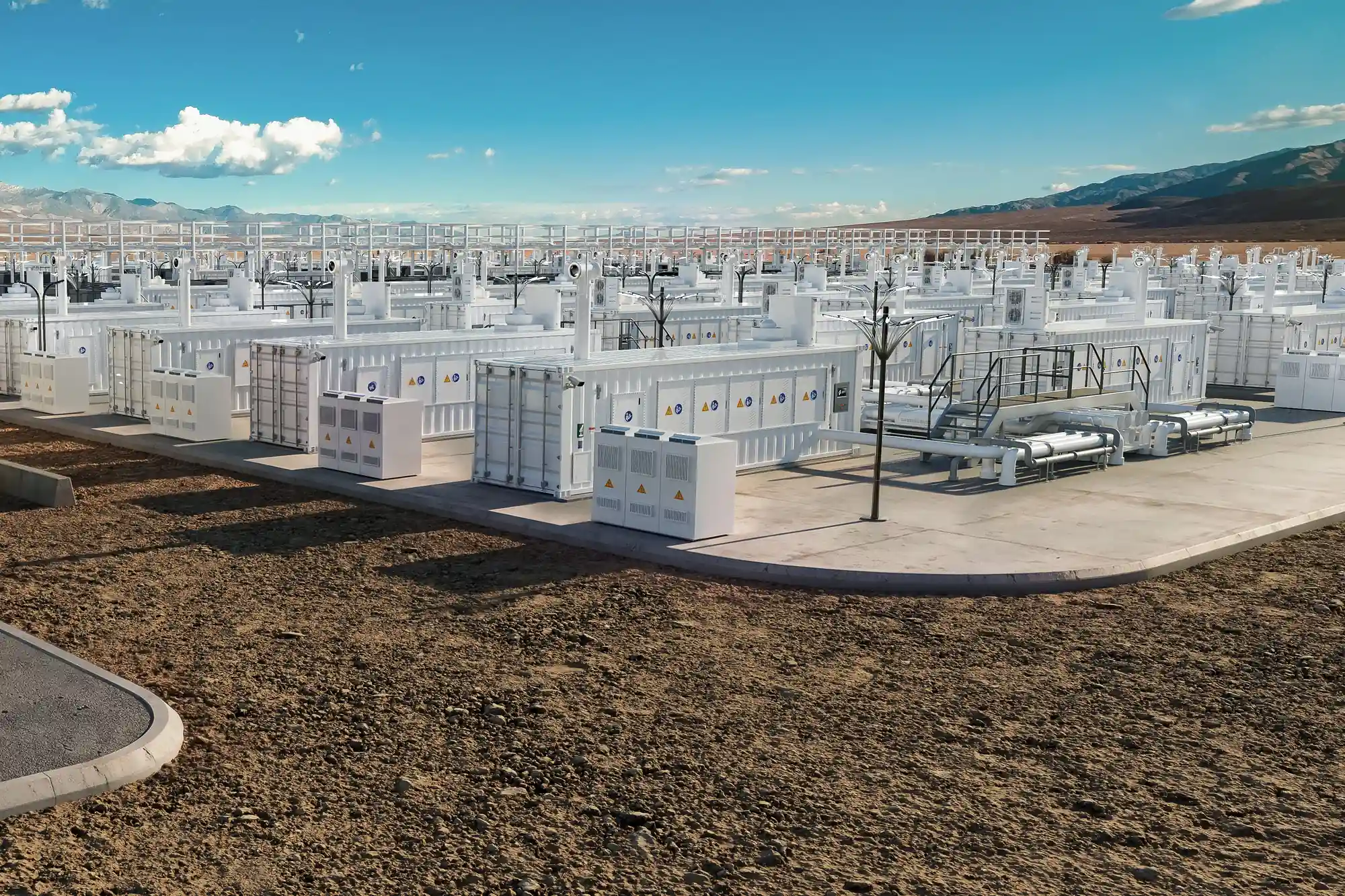
Illustration (AI-generated)
At Sept. 30, those contracts covered roughly 690 million MWh, with a weighted-average remaining term of about 18 years, the filing said. Most of that energy is due to be delivered more than ten years from now. Three months earlier, the second-quarter 10-Q gave about 270 million MWh, a term of about 15 years, and most deliveries beyond nine years. The difference between the two disclosures is about 420 million MWh. Amazon's 2025 annual report and its first-quarter 10-Q had both put the figure at about 200 million MWh.
The accounting is starting to show in the income statement. Amazon booked net unrealized gains of $91 million on these contracts in the third quarter and $551 million in the second, recorded within technology and infrastructure costs and mainly in the AWS segment. Recorded assets on these energy contracts rose to $785 million at Sept. 30 from $112 million at Dec. 31, 2025, against liabilities of $122 million and $139 million. Amazon said its fourth-quarter guidance assumes no effect from these remeasurements, and it kept its forecast of about $220 billion in 2026 cash capital spending.
Why Amazon's Energy Contracts Count as Derivatives
Amazon's 10-Q says it may pay or receive cash instead of taking delivery of electricity when its use falls short of the committed quantity. That cash-settlement feature makes the contract a derivative, so Amazon marks it to fair value each quarter. The roughly 690 million MWh counts only contracts measured that way; contracts awaiting regulatory approval are outside the figure until the approval arrives.
A megawatt-hour is energy delivered over time, and a megawatt is capacity at one moment. The filing gives only the energy, with no split by technology, counterparty or delivery year, so it shows how much electricity Amazon has committed to take, not how many megawatts of firm supply it has lined up.
Why the 690 Million MWh Figure Matters
The figure is energy, not capacity, and Amazon gives no split by technology, counterparty or region. What it does show is the shape of the book. The volume more than doubled in one quarter while the average term lengthened by three years, which suggests the added contracts probably run longer than the existing book. Amazon does not say when the added energy is due or what load it is meant to serve.
Amazon has announced named long-term deals, including Constellation's 20-year agreement for 690 MW at Calvert Cliffs, which includes a roughly 190 MW uprate targeted for 2030 to 2032 and was announced on Sept. 30, as our project file on the deal set out. The 10-Q does not say that Calvert Cliffs, or any other named deal, is in the 690 million MWh, and the deal's MW figure cannot be read across to the filing's MWh.
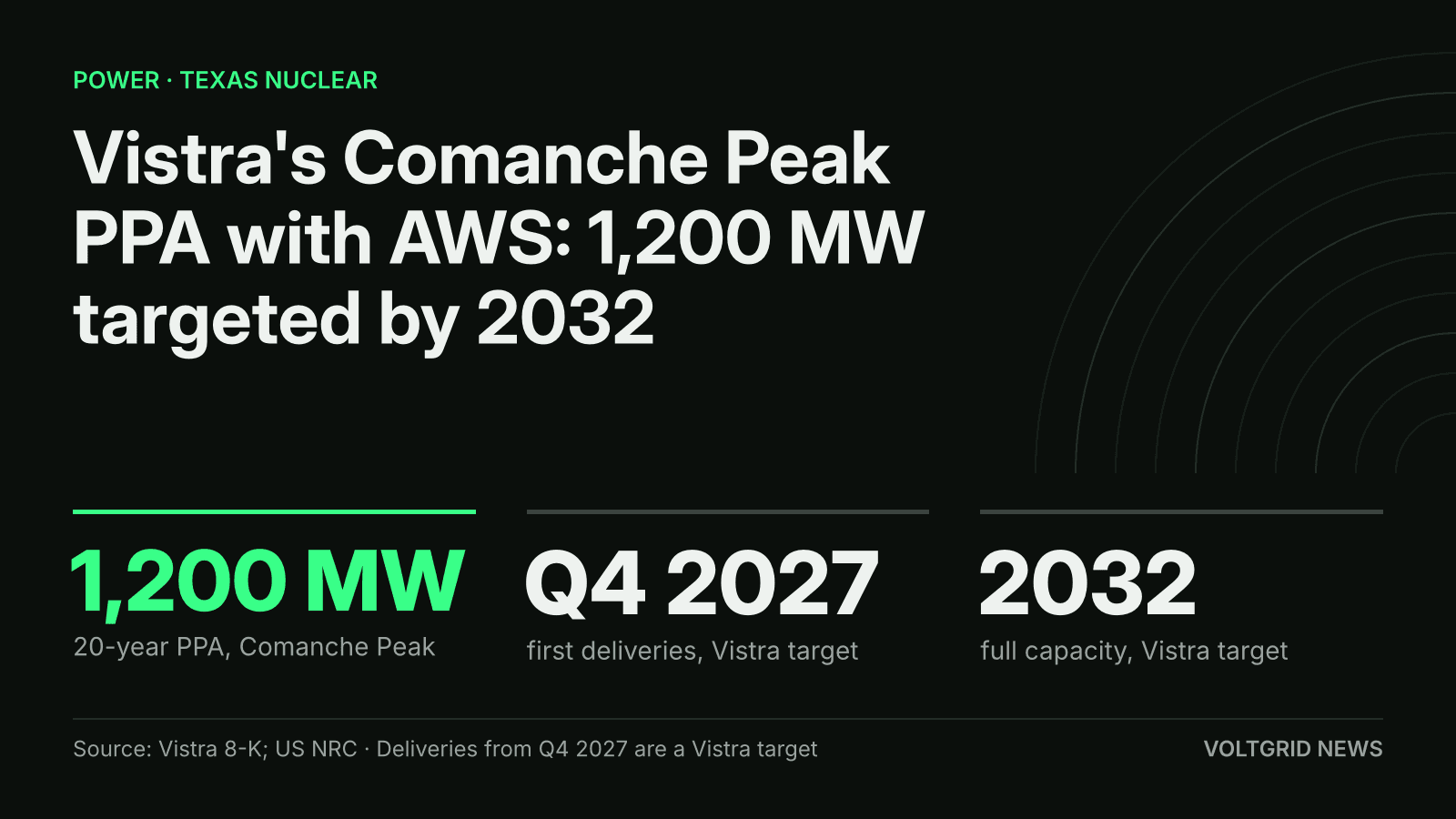
Of the nuclear supply Amazon has named, Talen's Susquehanna plant and Vistra's Comanche Peak come from operating reactors, while Calvert Cliffs pairs output from an operating plant with about 190 MW of new capacity targeted for 2030 to 2032. Talen said in June 2025 it will provide 1,920 MW at the full contract quantity through 2042, expecting full volume no later than 2032, as our Susquehanna project file explains. Vistra's 20-year agreement with AWS for up to 1,200 MW from Comanche Peak targets first deliveries in the fourth quarter of 2027 and full volume by 2032.
The case against
The strongest objection is that the 690 million MWh may say more about accounting than about signing. The figure covers only contracts measured at fair value. Contracts awaiting a regulator's approval are exempt until that approval arrives, and Amazon may use the normal purchases and normal sales exemption where it expects to consume nearly all the committed volume. On Voltgrid's reading, a contract that wins its regulatory approval would enter the figure without a new signing, and Amazon does not say whether any did; the filing does not separate new contracts from reclassified ones.
Second, nothing in the disclosure says the energy is firm. The filing does not say which technologies are in the book, so long wind and solar agreements could be included. A book weighted to 2036 and later could be mostly renewable energy with no bearing on round-the-clock supply for a campus.
Third, the commitment is softer than the volume suggests. Amazon says it can generally end these contracts by paying fixed penalties, such as repaying a counterparty's construction costs. That makes them a strong signal of intent, not an irrevocable purchase.
What it means for nuclear developers
For reactor developers, the filing is a reason for confidence about demand but not about orders. Amazon's new-build nuclear remains at the development stage. In Indiana, AEP and X-energy have a joint development agreement to evaluate a 960 MW Xe-100 project in Sullivan County, Indiana. Amazon supports development through a funding agreement and, AEP says, intends to purchase the power under a long-term contract; the project has not reached a final investment decision. At Cascade in Washington, Energy Northwest's first project of four Xe-100 modules is expected to generate 320 MW, and X-energy's chief executive said in August that it expects to file the NRC construction-permit application in the first half of 2027, later than the end-2026 target in its prospectus. In Virginia, Amazon's arrangement with Dominion on an SMR at North Anna is a memorandum of understanding.
None of those projects has a signed power purchase agreement: Indiana awaits an investment decision, Cascade carries Amazon's right to purchase from the first project, and North Anna is an MOU. The filing does not say which contracts make up the 690 million MWh, so it cannot be read as evidence for or against new reactors or for any named owner's share.
What to watch
Talen reports third-quarter results on Nov. 3, Vistra on Nov. 6 and Constellation on Nov. 9; each may say how much of its Amazon volume is flowing and when the rest starts. NRC hearing requests on the North Anna early site permit renewal are due Nov. 10. Amazon's next annual report will give the year-end figure. A higher number would show the fair-value book still growing; it would not by itself say whether the growth is new signings or contracts reclassified into fair-value accounting, which the filing does not separate.