Antares Nuclear Signs BWXT TRISO Fuel Deal, Starting With 1 MTU
Antares Nuclear has a multi-year TRISO fuel agreement with BWXT, POWER reports, with an initial 1 MTU allocation; quantities depend on later task orders. DOE's Mark-1 approval does not allow operation.
2 min readAI-assisted
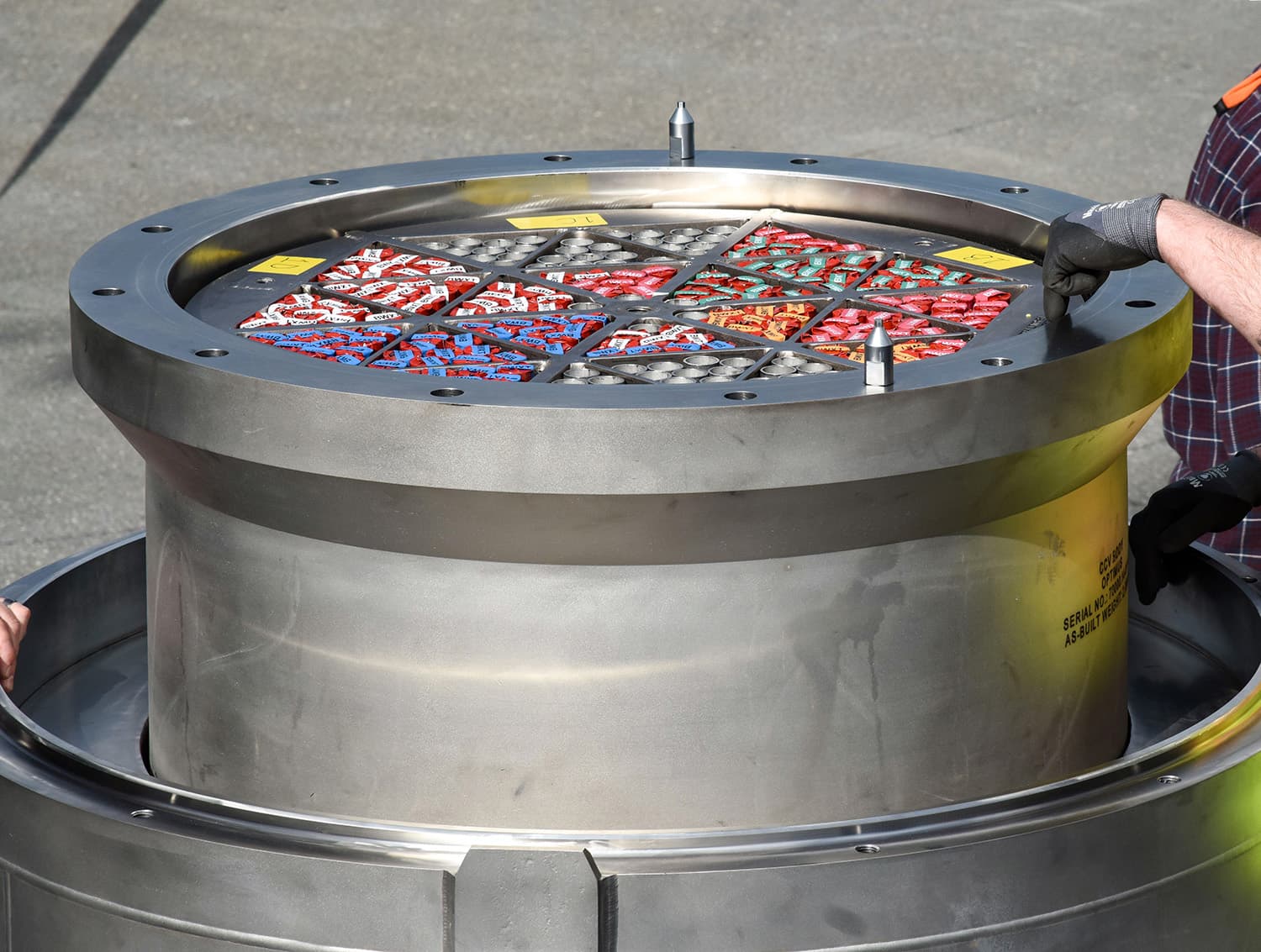
Image released with BWXT's Oct. 27 announcement of the Antares TRISO fuel agreement; it shows fuel packaging, not the Mark-1 reactor.
Image: BWXT
Source · Press image from the BWXT newsroom, used for news reporting.
Antares Nuclear said on Oct. 27 that BWX Technologies (BWXT) will make TRISO fuel for its microreactors through the end of the decade, starting with an initial allocation of one metric ton of uranium (MTU).
POWER Magazine reported that the multi-year agreement covers fuel for Antares' microreactors and lets quantities grow as deployment needs change. BWXT Advanced Fuels will fabricate it at Lynchburg, Virginia, on the line that supplied the Mark-0 reactor and the Department of War's Project Pele microreactor. Quantities, delivery schedules and technical requirements depend on later task orders, and financial terms were not disclosed.
For power buyers, the question is how soon a microreactor can supply electricity. Antares plans to run its Mark-1 reactor at Idaho National Laboratory (INL) in 2027, with first deployments at US military installations from 2028, according to POWER. Antares describes itself as a developer of microreactors for defense and space, and its first deployments are military: Fort Bragg under the Army Janus program in 2028. Neither source names a data-center customer.
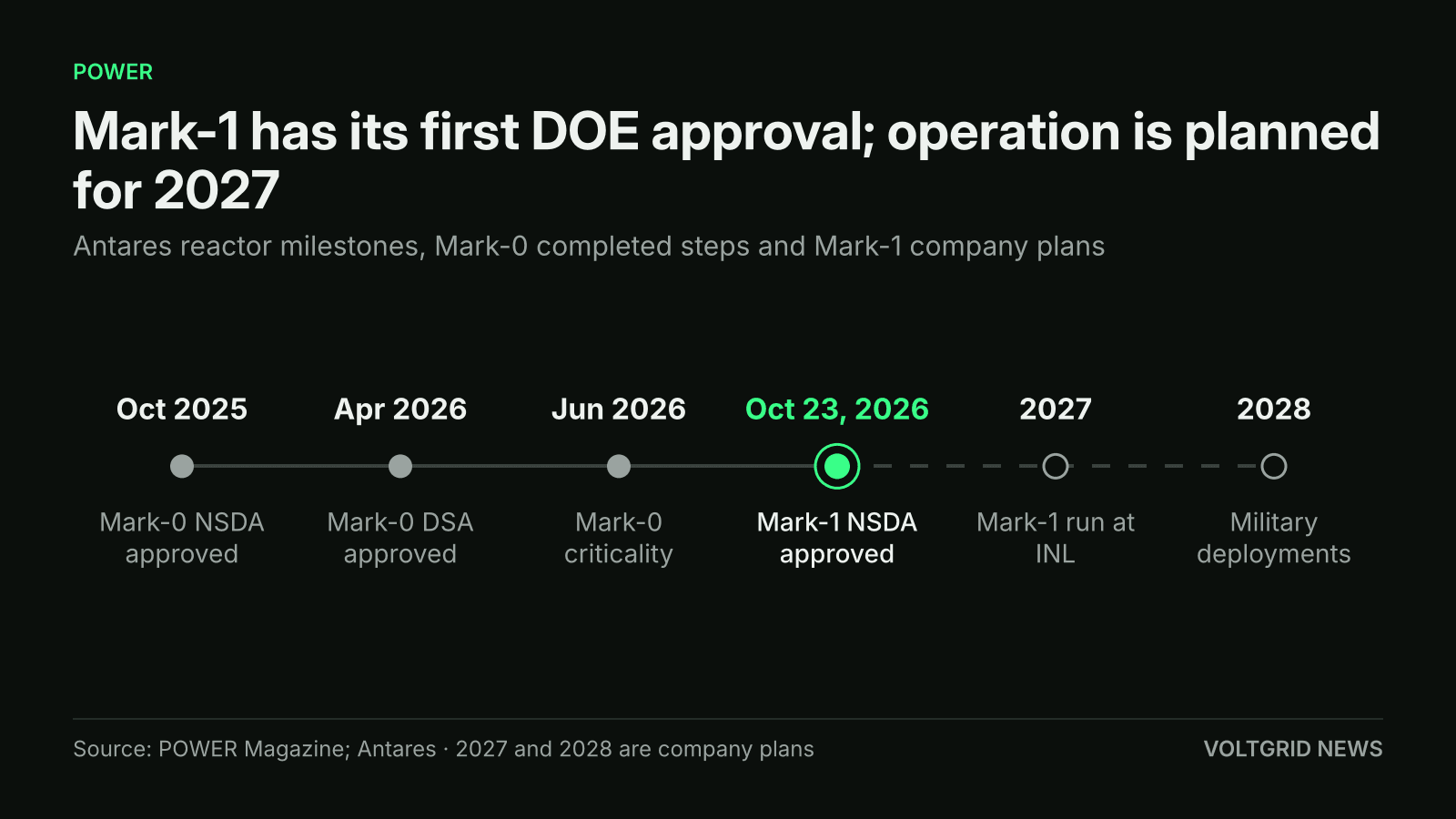
Mark-1 has cleared its first DOE step; the 2027 INL run and 2028 military deployments are Antares plans, according to POWER.
Illustration (AI-generated)
Mark-1 DOE Approval Does Not Allow Operation
On Oct. 23, Antares announced that the Department of Energy (DOE) approved the Nuclear Safety Design Agreement (NSDA) for Mark-1, its first reactor meant to produce electricity. Antares targets a six-month operating campaign at full electrical power in 2027, using a nitrogen closed Brayton-cycle system to convert heat to power.
That approval does not let Mark-1 operate, POWER noted. Antares still needs further safety reviews and later DOE approvals. For Mark-0, the zero-power test reactor, the sequence ran from NSDA approval in October 2025 to Preliminary Documented Safety Analysis approval in January 2026, Documented Safety Analysis approval in April and criticality in June. Mark-0 had no power-conversion system and produced no electricity. Voltgrid News also covered the NRC final rule on DOE and Department of War test data.
TRISO Fuel Supply Is Only One Link
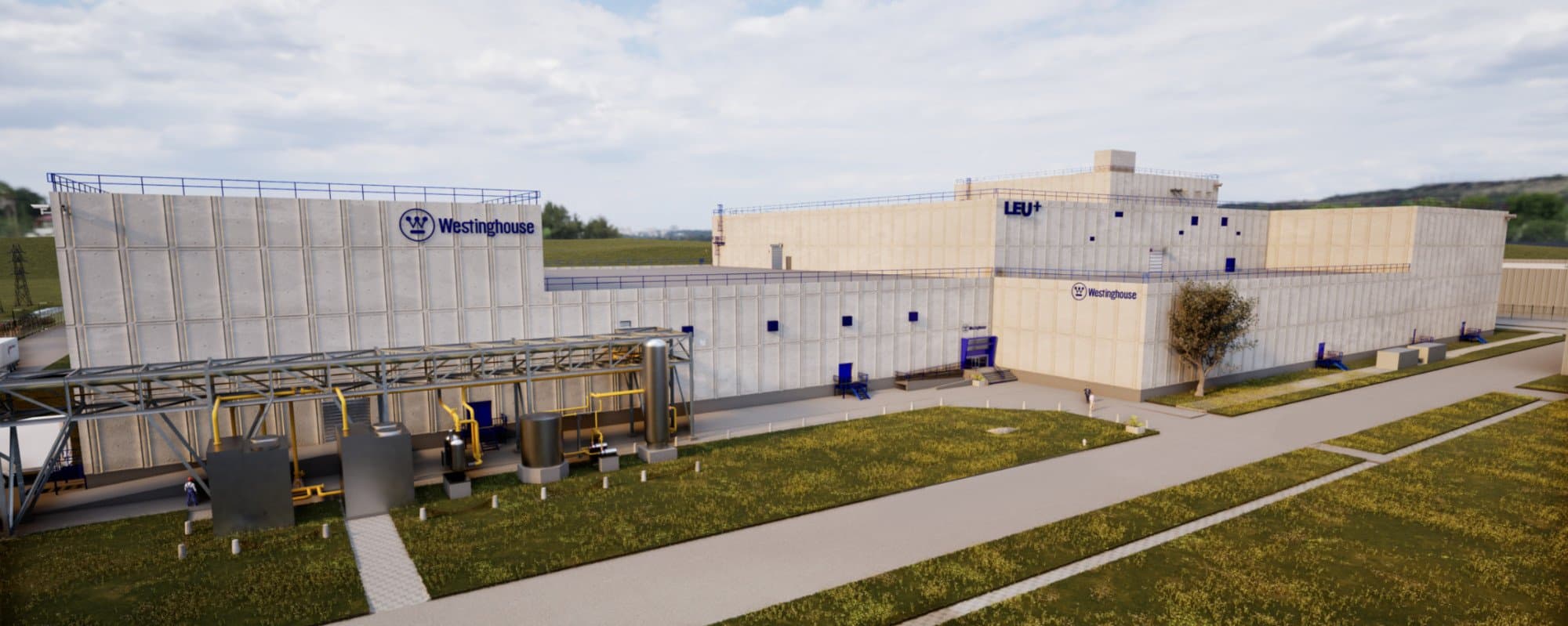
Fuel fabrication is one link in a longer chain, and Antares has signed for others: in August a binding agreement with Standard Nuclear, in September a multi-year HALEU supply contract with Centrus Energy, plus HALEU arrangements with Urenco and General Matter. Voltgrid News reported earlier on Westinghouse's planned South Carolina fuel factory.
How TRISO Fuel Gets From Uranium to Reactor
TRISO fuel reaches a reactor in two steps. First the uranium is enriched: Antares' reactors use high-assay low-enriched uranium (HALEU), which holds less than 20% uranium-235, and Centrus Energy has a multi-year contract to supply it, with deliveries expected before the end of the decade. Then a fabricator wraps uranium-bearing kernels in layers of carbon and ceramic, including silicon carbide, that hold fission products in at high temperatures. BWXT will do that in Lynchburg, Virginia, starting with 1 MTU.
A second fabricator, Standard Nuclear, holds a binding agreement for a minimum of 1 MTU and up to 8 MTU through 2035. For a buyer waiting on microreactor power, fabrication slots and enrichment contracts together can set how fast reactors are fuelled. The BWXT quantities still depend on later task orders, and none of these agreements shows finished fuel has been delivered.
What Is Not Confirmed Yet
POWER cautioned that announced quantities do not show that finished fuel for every planned reactor has been made or delivered. Site-specific safety and environmental reviews at military bases are separate from DOE's authorization at INL. Antares has named only military customers so far, including Fort Bragg under the Army Janus program.