Bessent Says No New Curbs Needed on NVIDIA H200 Chip Sales to China
Treasury Secretary Scott Bessent told CNBC on Nov. 20 that chip restrictions are sufficient and H200 policy holds, but NVIDIA says it has stopped shipping to China despite approvals.
3 min read
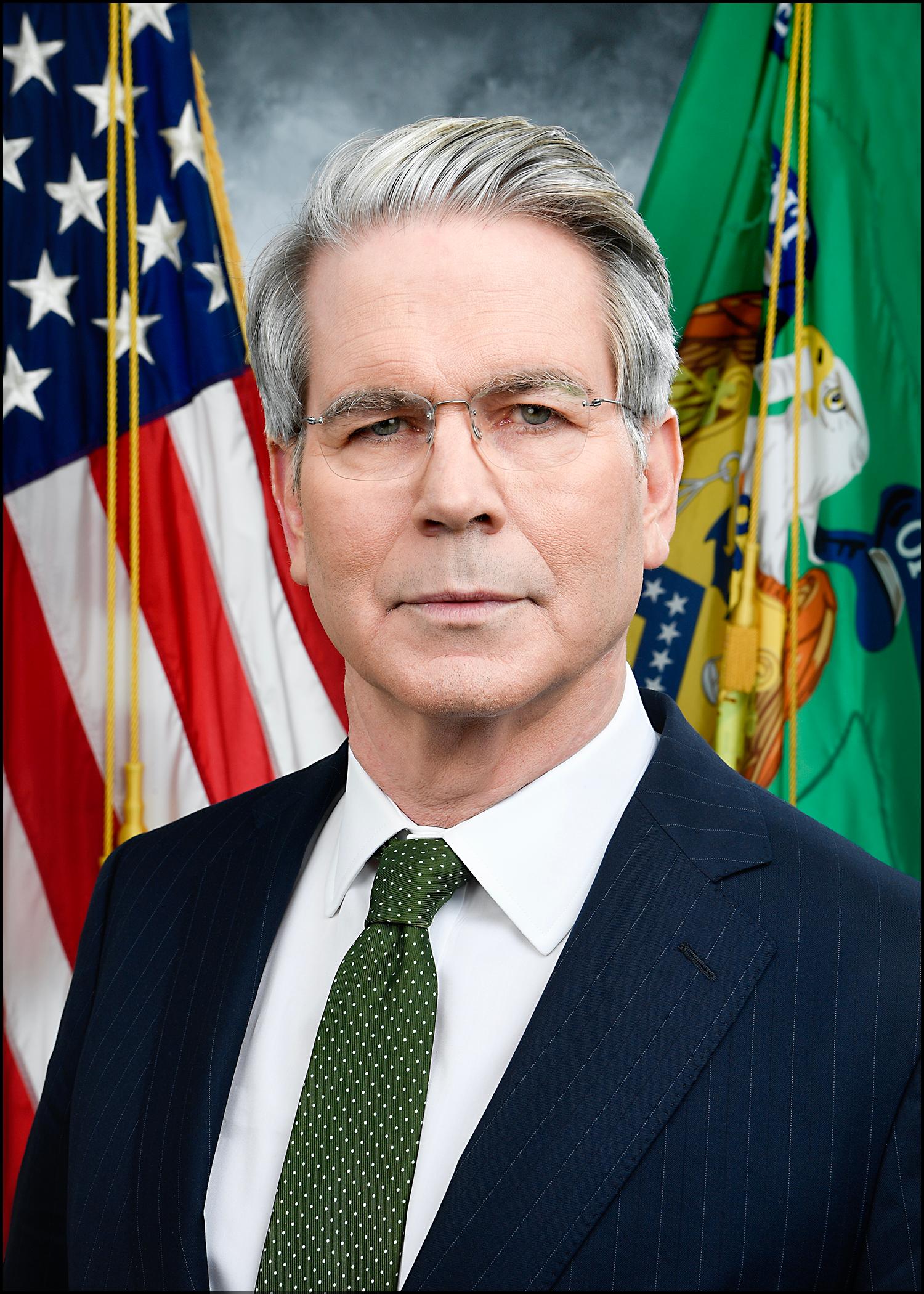
Treasury Secretary Scott Bessent in his official portrait.
Image: U.S. Department of the Treasury
Source · U.S. federal government work, public domain
Treasury Secretary Scott Bessent said on Nov. 20, 2026 that no further restrictions on sales of older NVIDIA chips to China are needed, and that US policy allowing H200 sales to China is unchanged, according to the Associated Press and CNBC.
"The proper chip restrictions are in place," Bessent said in a CNBC interview after returning from Asia with President Donald Trump, per AP. "And the remote access has been curtailed." AP linked the remarks to the administration's move earlier this week to block China's remote access to the latest semiconductors. Voltgrid covered that Bureau of Industry and Security rule on Nov. 16.
What Bessent Said About H200 Sales to China
On CNBC's "Squawk on the Street," Bessent said the US had "already agreed" that H200 chips are the threshold level that can be sold to Chinese buyers, and that this "continues as planned." Asked by CNBC's Sara Eisen about Nvidia's statement that it had stopped selling H200s to China, he said he would not anticipate any change in the policy. Asked about a dispute with Commerce Secretary Howard Lutnick over export controls, he said everyone is committed to following Trump's instructions, CNBC reported. A week earlier he had blamed Commerce for slow-walking limits on suspected cutouts such as Megaspeed.
What the House Licence Data Shows
The comments came a day after the House Foreign Affairs Committee released licensing data. AP reported that the Commerce Department's Bureau of Industry and Security approved the export, re-export or transfer of 879,868 H200 and AMD MI325X chips to companies with Chinese ties across 21 applications as of May 11, 2026, against requests for more than 3.4 million. That is roughly a quarter of the requested volume, by Voltgrid's arithmetic. The approvals include 150,000 for Tencent and its subsidiaries, 75,000 for Alibaba, 43,000 for Baidu and 4,000 for BYD, each of which the Pentagon has identified as having ties to the Chinese military, AP said. Voltgrid's earlier report on the committee data has the detail.
BIS approved 879,868 chips against requests above 3.4M as of May 11, 2026; approvals are not completed sales.
Graphic: Voltgrid News
A Commerce spokesperson told AP the H200 approach rests on a January Federal Register rule that imposes additional national-security requirements for case-by-case review. Nvidia said its limited H200 shipments were legal and authorized by BIS, that the review spanned more than half a year, and that approvals carried strict conditions and limited volumes. AMD said it complies with US export control law.
Nvidia said earlier this week it is no longer shipping H200 chips to China, and a spokesperson told AP on Friday that shipments stopped despite prior approvals. As Voltgrid reported on Nov. 18, interim CEO Colette Kress said Nvidia sold $2.4 billion of licensed Hopper products to China in the quarter ended Oct. 25 and has no current plans for more, and its fourth-quarter guidance assumes no China Data Center compute revenue. Bessent's remarks therefore keep the US licensing ceiling at H200 while Nvidia's own shipments sit at zero: the constraint on volume is now Nvidia's decision and Beijing's import stance, not a new US cap.
What Is Not Confirmed Yet
Bessent gave no rule, date or licence figure, and neither AP nor CNBC reports a new Commerce action. The approvals are not completed sales, and neither outlet says how many approved chips shipped. It is not yet clear whether Nvidia's halt is permanent. CNBC reported that Jensen Huang is slated to appear before House panels on Dec. 1 and an Nvidia lawyer on Dec. 2, which are the next dated chances for the company to explain its China licences.
Sources
- Published
- Sources
- 2 cited