Constellation Nuclear Uprates for Amazon and Google Still Need NRC Approval
Constellation's Q3 deals add more than 1,000 MW, the CEO said on Nov. 9. Constellation describes the new megawatts as targeted uprates at existing reactors, from 2028 to 2032, and each still needs an NRC licence amendment.
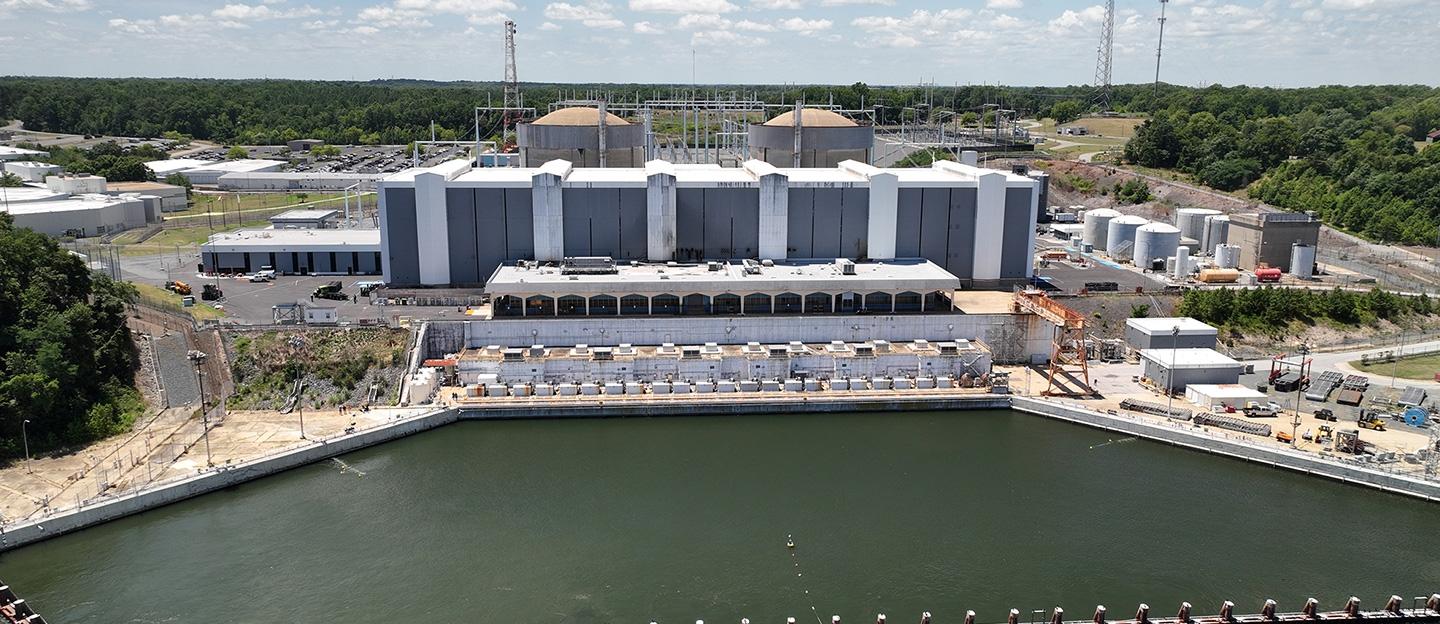
Calvert Cliffs in Maryland, the plant behind Amazon's roughly 190 MW uprate target (Constellation).
Image: Constellation
Source · Press image from the Constellation newsroom, used for news reporting.
Constellation told investors on Nov. 9 that the deals it signed in the third quarter add "more than 1,000 megawatts of new, emissions-free generation," which chief executive Joe Dominguez compared to a new large-scale nuclear plant. Constellation describes Amazon's and Google's share of that new capacity as uprates: upgrades that raise the output of reactors Constellation already runs. That makes it faster and cheaper than new build, but each uprate still needs a licence amendment from the Nuclear Regulatory Commission (NRC), and none had been filed in the public records read for this piece.
What Constellation Signed in the Third Quarter
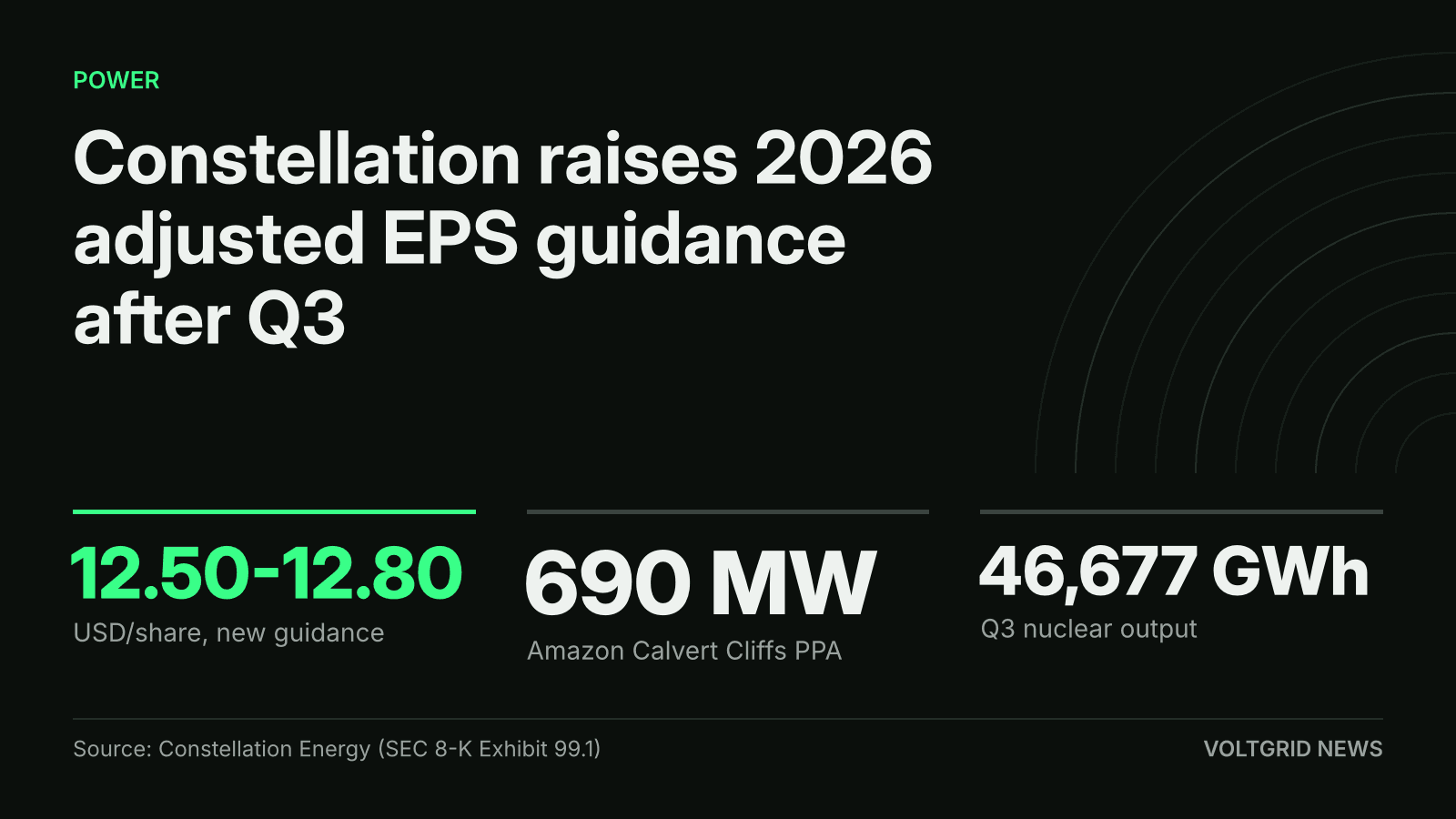
Constellation's third-quarter release, filed with the SEC as an exhibit to an 8-K, lists the deals behind the 1,000 MW figure. Our earnings brief covered the numbers. Amazon signed a 20-year power purchase agreement (PPA) for 690 MW from Calvert Cliffs in Maryland, which includes a 190 MW uprate that Constellation targets for 2030 to 2032. Google signed a 20-year PPA backing more than $4.3 billion of Constellation investment in work at 11 units in Illinois, Pennsylvania and New Jersey, adding about 890 MW of incremental capacity to the PJM grid. Constellation expects the first of those uprates in 2028, a target, not an approved schedule. Google also signed a separate 15-year financial load-following agreement covering 2,700 MW of existing output.
Two other items sit beside these deals. The first is a conditional DOE loan commitment: DOE would guarantee up to $5.0 billion of a 30-year Federal Financing Bank loan at 0.375 percentage points over Treasuries, but only once a loan agreement is signed and Constellation meets DOE's technical, legal, environmental and financial conditions. The loan is unsecured and its rate is fixed at each advance. The second is Constellation's first Peak+ contract, 270 MW of unit-contingent energy, capacity and attributes from its existing fleet, starting in 2028. The buyer was not named.
Both hyperscaler uprate deals are 20-year PPAs, and no NRC filing for either appeared in the public records read on Nov. 9.
The argument for calling this an uprate program, not a new-nuclear program, rests on three facts.
First, the megawatts come from existing plants. The Google release says the money buys new turbines, steam generators and digital controls at operating plants. DOE's Oct. 27 notice names eight sites (Braidwood, Byron, Clinton, Dresden, LaSalle, Quad Cities, Calvert Cliffs and Limerick) that together would add nearly 1.1 GW. Constellation's own Oct. 27 release puts the Google and Amazon share at about 1,080 MW, backed by more than $7 billion of investment.
Second, every one of those megawatts is a target that depends on the regulator. An uprate raises the reactor's licensed thermal power (MWt), and the extra electrical output (MWe) follows from that. The licence sets the thermal limit, so the operator cannot run above it until the NRC amends the licence. POWER reported that the NRC's expected-applications list, last updated Sept. 8, shows 12 Constellation uprate applications between the fourth quarter of 2026 and the end of 2030. Five are extended power uprates (EPUs), which can raise licensed thermal power by as much as 20%. The other seven are smaller measurement-uncertainty recapture (MUR) uprates. The NRC lists the plants as proprietary, so readers cannot yet tell which application carries Amazon's or Google's megawatts.
Third, the paperwork had not yet caught up with the deals. The Q3 release mentions no uprate filing. As of 9:38 a.m. ET on Nov. 9, the 10-Q that Constellation said it would file that day had not appeared on EDGAR. The release does not mention the Crane restart, which Constellation said in August was targeted for 2027.
That suggests a clear read. The Q3 deals bought Amazon and Google a share of future uprate output and long-term contracts on existing output. They did not buy a new reactor, and the new part depends on NRC amendments that Constellation has not yet filed.
The Case That Uprates Are Low-Risk Megawatts
The strongest counter-argument is that uprates are the lowest-risk megawatts available, so calling them less than "new nuclear" misses the point. Constellation says uprates avoid greenfield construction timelines and interconnection queues. The units already have sites, fuel supply, staff, grid connections and operating licences. The NRC has reviewed uprate applications for decades, and the targets Constellation gives, 2028 to 2032, are only two to six years away. On this view, the 2,700 MW financial agreement and the Calvert relicensing support matter as much as the new megawatts, because they keep existing output on the grid.
There is also a case that the money is firmer than the licence. The PPAs were announced as signed 20-year agreements, Constellation reported a 97.2% capacity factor for the quarter (excluding Salem and South Texas Project), and DOE's cheap-debt offer would lower the cost of capital if it closes.
Why an Uprate Needs an NRC Licence Amendment
A reactor's licence caps its heat output, not its electricity. The NRC lists Calvert Cliffs Units 1 and 2 at 2,737 megawatts thermal (MWt) each. Constellation says new turbines, steam generators and digital controls at operating plants add capacity without greenfield timelines, but running a reactor above its licensed thermal limit needs an NRC licence amendment. The 190 MW and 890 MW figures are Constellation's, stated as MW without a net or gross basis, and are not licensed MWt.
POWER reports the NRC expects 12 Constellation uprate applications between the fourth quarter of 2026 and the end of 2030, five of them extended power uprates that can raise thermal power by as much as 20%. Until an amendment is granted, the 190 MW at Calvert Cliffs, targeted for 2030 to 2032, is a goal.
What It Means for Amazon, Google and Constellation
For Amazon, Calvert Cliffs is the nearest new nuclear supply in its program, and it is a 2030–2032 target. That is later than Google's first uprate, which is targeted for 2028. Calvert's two licences, renewed in March 2000, expire in July 2034 (Unit 1) and August 2036 (Unit 2), according to the NRC, so the plant also needs a subsequent licence renewal. Constellation says Amazon's contract gives it the revenue certainty to relicense the plant for another 20 years; no renewal or uprate application had been found in the records checked. Google's 890 MW spreads across 11 units, which spreads the licensing risk too, but Constellation has not said how the megawatts split by reactor.
For other buyers, the model is spreading. Vistra has a conditional DOE offer of up to $4.2 billion for 433 MW of uprates backed by Meta, with work running as late as 2034, according to POWER. Georgia Power plans NRC amendment requests for Hatch in the third quarter of 2027 and Vogtle in the fourth quarter of 2028. Plant problems can also affect these sites. Salem in New Jersey, one of the plants in the Google agreement, has had a refueling outage extended.
For Constellation, the uprates support a CFO-stated plan of "accretive organic growth through nuclear uprates." Meanwhile, the company is also buying gas generation, including the Rhode Island State Energy Center.
What to Watch Next on the Uprates
- Nov. 9, 2026: Constellation's third-quarter 10-Q, which may update the risk factors, uprate spending and Crane timing. - Fourth quarter of 2026: the first of the 12 uprate applications the NRC expects from Constellation. An NRC acceptance review would be the first regulator step for any of these megawatts. - No date set: the DOE loan agreement. Until it is signed, the up to $5.0 billion is a conditional commitment, and Constellation says it is not a decision to proceed with any single uprate. - 2027: Constellation's target for restarting Crane. - 2028: the first Google-backed uprate and the start of the 270 MW Peak+ contract, both targets. - 2030–2032: the target window for the 190 MW Calvert Cliffs uprate. Watch for a subsequent licence renewal filing, since the plant's licences expire in 2034 and 2036.