Dell XPS 14 Panther Lake on Linux: 23 W Average CPU Draw, 65 W Peak
Phoronix's Ubuntu tests of the Dell XPS 14 found it at 1.22x the geometric-mean performance of MSI's same-chip laptop, with no OEM kernel needed; Canonical lists only 24.04 LTS certification.
3 min read
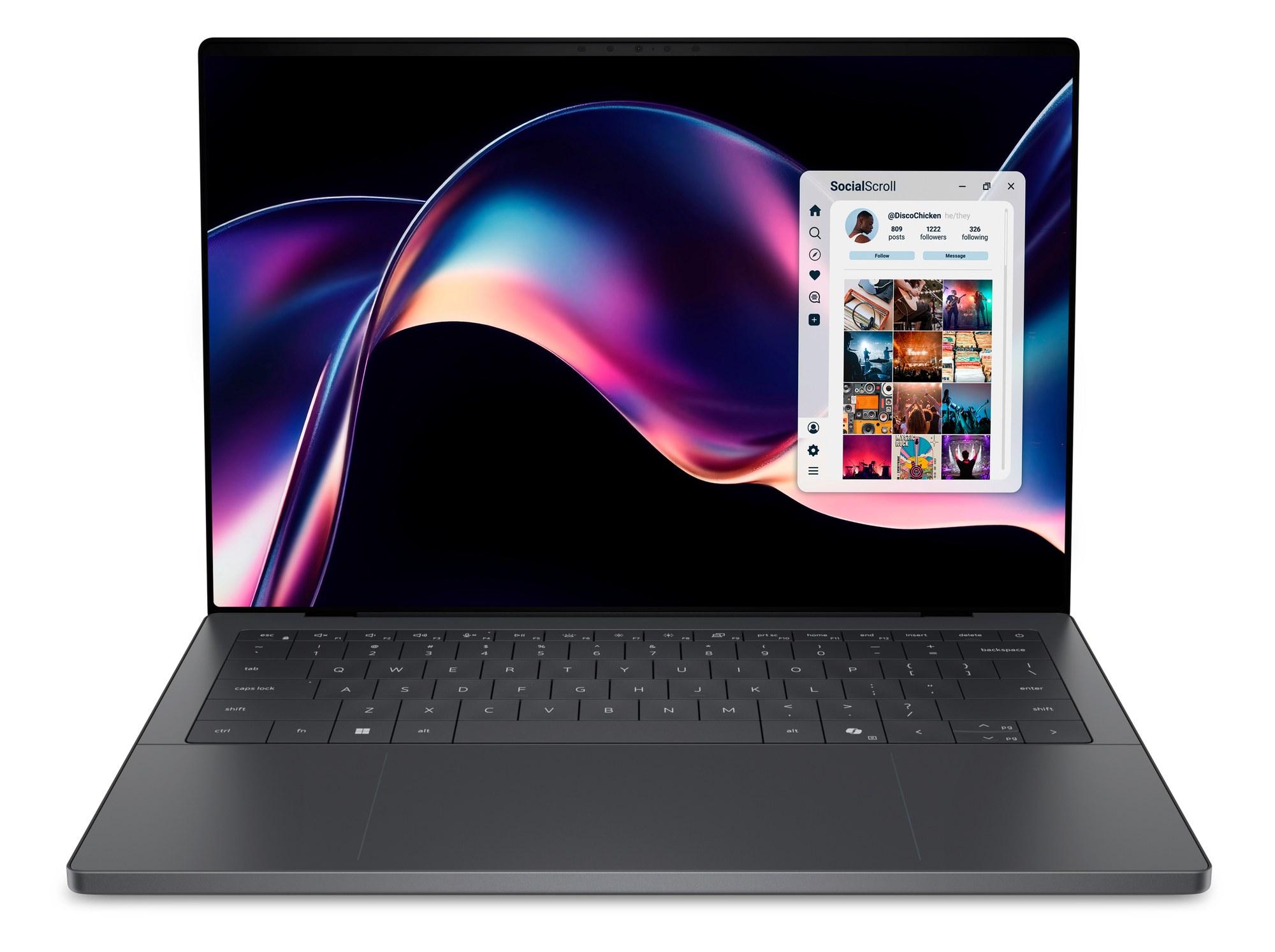
The Dell XPS 14 (DA14260), the laptop Phoronix tested on Ubuntu. Dell product image.
Image: Dell
Source · Product image from Dell's product page, used for news reporting.
Dell's XPS 14 Panther Lake laptop on Linux drew 23 W of CPU power on average and 65 W at peak across more than 200 benchmarks, Phoronix measured on the DA14260 with Intel's Core Ultra X7 358H in a review published Nov. 18.
The unit ran Dell's Ubuntu 26.04 LTS pre-load with 32 GB of LPDDR5x-9600 memory, a 512 GB Kioxia drive and the 2880 x 1800 display. Phoronix said it worked out of the box on the distribution's stock Linux 7.0 kernel and Mesa 26.0, without needing an OEM vendor kernel, and that the webcam, audio and haptic touchpad all worked.
The 23 W average matters more than the peak. Phoronix called it similar to the Framework Laptop 13 with AMD's Ryzen AI 9 HX 370 on average CPU power in its run. That is CPU power, not whole-laptop draw, and Phoronix gave no battery hours; in Voltgrid's reading, the average rather than the peak is the figure that bears on battery runtime, alongside the display, memory and SSD.
Same Core Ultra X7 358H Chip, 1.22x Apart
With every laptop set to its performance profile, Phoronix measured the XPS 14 at 1.22 times the geometric-mean performance of the MSI Prestige 14 Flip AI, which carries the same Core Ultra X7 358H. The reviewer called the gap much larger than expected. The XPS 14 also reached 93% of the Framework Laptop 13 Pro with the flagship Core Ultra X9 388H. Phoronix did not break down why the two X7 358H laptops differ. In Voltgrid's reading, a gap that size on identical silicon suggests the chassis, cooling and power limits each maker sets shape what buyers get as much as the chip itself.
Measured by Phoronix, Ubuntu 26.04 LTS, performance profile: the XPS 14 ran at 1.22x the MSI laptop with the same chip. Dell's 31 hours is a vendor claim.
Graphic: Voltgrid News
Battery life is the softer finding. Phoronix gave no measured hours, only its judgment that the laptop lasts all day under Linux for video and light browser or office work.
Why Identical Chips Perform Differently in Laptops
A laptop chip does not run at one fixed speed. Each maker decides how much power the processor may draw in short bursts and over long runs, and how much heat the fans and chassis can remove.
A higher sustained limit buys speed but adds heat and drains the battery faster. That is why Phoronix's all-day verdict covers video and light office work, and Dell's up to 31 hours is a vendor claim for streaming on the 2K display.
What Canonical Certifies for the XPS 14
Canonical, Ubuntu's publisher, lists two XPS 14 DA14260 configurations as certified, the Core Ultra 5 325 and the Core Ultra X7 358H, both for Ubuntu 24.04 LTS since May 12, 2026, on an OEM 6.17 kernel. Its regression testing of the X7 358H unit continued on Nov. 5 with a generic 7.0 kernel and a newer BIOS, which fits Phoronix's finding that Linux 7.0 works on it. Configurations run up to the Core Ultra X9 388H with 64 GB of memory and 4 TB of Gen5 storage, in a body 14.6 mm thick and just over 3 lb.
The catch is price. Phoronix put the reviewed configuration at around $3,000, which it tied to this year's memory and SSD prices. Panther Lake is also the yardstick for its successor: as Voltgrid reported, Intel expects Nova Lake to reach twice Panther Lake's design wins.
What Is Not Confirmed for Ubuntu 26.04 LTS
Canonical's page, read Nov. 19, shows certification for 24.04 LTS only, not the 26.04 LTS image Phoronix tested. No measured battery runtime under Linux has been published, and Dell has not given a separate price for the Ubuntu model. Phoronix said the Ubuntu 26.10 hardware-enablement stack with Linux 7.3 will come to 26.04 LTS with its next point release, and that newer kernels can bring better graphics performance and some power-efficiency gains; no date was given.
Sources
- Published
- Sources
- 2 cited