Microsoft Picks Intel Foundry EMIB Packaging for Azure Custom Silicon
Microsoft and Intel say Microsoft is the first to announce Intel Foundry EMIB packaging for Azure first-party chips, but neither company has named a chip, a volume or a ship date.
3 min read
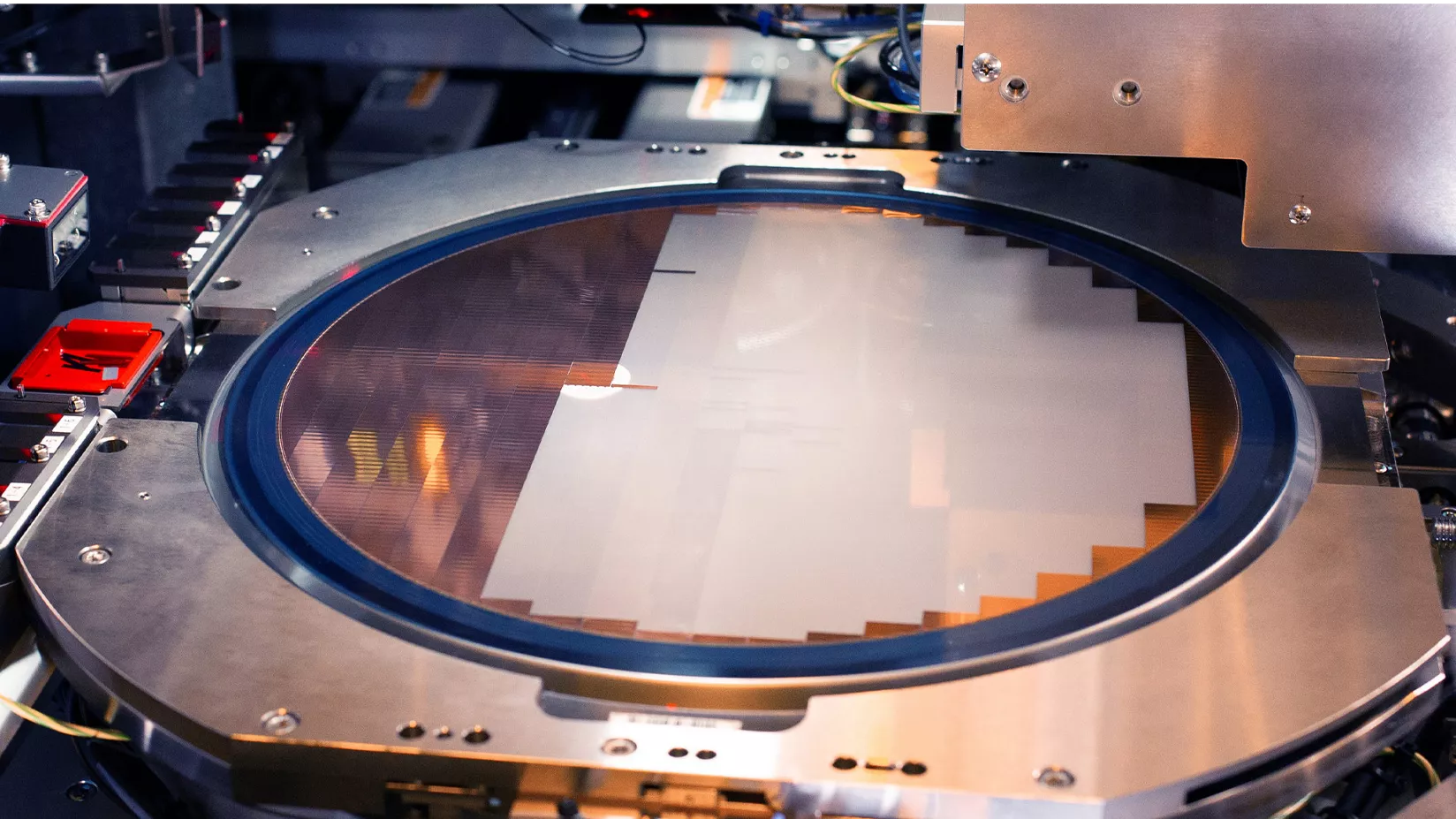
Intel's image for its EMIB packaging process, a file photo from the company's packaging page; it does not show Microsoft's Azure chips.
Image: Intel
Source · Press image from the Intel newsroom, used for news reporting.
Microsoft will use Intel Foundry's EMIB advanced packaging for Azure first-party silicon, the two companies said in a joint announcement on Nov. 18. The companies said Microsoft is the first to announce use of Intel Foundry's EMIB for Azure first-party silicon.
EMIB, short for Embedded Multi-die Interconnect Bridge, is Intel's packaging method that joins chips side by side through a small silicon bridge embedded in the package substrate. According to the announcement, the agreement also confirms multi-year Intel Xeon supply capacity, including instances of the next-generation server CPUs codenamed Diamond Rapids, and expands work across the Azure roadmap.
TechPowerUp reports that Microsoft specifically chose EMIB-T, the variant that adds through-silicon vias (TSVs), vertical connections through the bridge that carry power from the substrate up to the chips. It also reports that successors to Microsoft's Maia 200 AI accelerator and Cobalt 200 CPU will be packaged at Intel Foundry; neither company has named a generation. The joint announcement itself says only "EMIB" and names no chip, so both details rest on TechPowerUp for now.
What it changes for AI chip packaging
For AI accelerators, packaging is a supply constraint in its own right. TSMC's CoWoS, the 2.5D packaging that places processor dies and memory stacks on one interposer, is the method the largest accelerators rely on, and Voltgrid reported on TSMC's CoWoS back-end line at Xintec earlier. A hyperscaler naming Intel Foundry for packaging gives Intel Foundry a named cloud customer for its packaging service, and could put an alternative to CoWoS in front of other chip designers, though neither company has said how much capacity is involved.
Intel says EMIB has been in mass production since 2017 for Intel and external silicon. Naga Chandrasekaran, Intel's chief technology and operations officer and general manager of Intel Foundry, said in the announcement that EMIB lets the companies combine heterogeneous integration with the manufacturing scale the AI era needs.
The rest of the agreement
Beyond packaging, Microsoft will work with Intel on Xeon with Compute Express Link (CXL) for memory efficiency, plus Intel QuickAssist Technology (QAT) and confidential computing. The companies cite up to 2.3x greater performance and memory flexibility for Azure M-series v4 virtual machines using CXL memory and Intel Flat Memory Mode on Xeon 6, and up to 2.5x faster SQL backups on the first QAT-enabled virtual machines. Both are vendor figures.
The packaging news follows a run of Intel Foundry signals. Intel's CEO said Nova Lake is its first client chip on 18A-P, as Voltgrid reported, and this deal extends Intel's foundry pitch from wafers to the packaging step.
How EMIB differs from CoWoS
EMIB puts a small silicon bridge inside the package substrate under the facing edges of two chips, so only those edges carry dense wiring. TSMC's CoWoS, the 2.5D process most large accelerators use, sets chips and memory on an interposer, and its CoWoS-L variant now embeds silicon bridges too, according to TSMC's annual report, so bridge versus interposer is not a clean split between the two. Intel says EMIB offers better power efficiency than traditional interposer-based methods; that is Intel's claim.
EMIB-T adds through-silicon vias to the bridge so power can reach the chips from below, a change Intel introduced for future high bandwidth memory needs. TSMC has made 3.5-reticle CoWoS-L since 2024, so the open question for Intel is capacity, which neither company has stated.
Both packaging routes now rely on embedded silicon bridges; TSMC has shipped CoWoS-L at 3.5 reticles since 2024, while Intel has not stated EMIB capacity.
Graphic: Voltgrid News
What is not confirmed yet
Neither company says which Azure chips will be packaged with EMIB, how many units, at which Intel site or when production starts, and no financial terms were disclosed. The EMIB-T variant, and the link to Maia 200 and Cobalt 200 successors, come from TechPowerUp, not from the release. Microsoft's copy of the release is datelined Nov. 17 and was posted on Microsoft Source on Nov. 18. Microsoft has not said whether its accelerators will use EMIB-T for high bandwidth memory.
Sources
- 01Microsoft and Intel deepen collaboration to deliver differentiated Azure infrastructureIntelintel.com
- 02Microsoft to Use Intel's EMIB Advanced Packaging TechnologyTechPowerUptechpowerup.com
- 03Microsoft and Intel deepen collaboration to deliver differentiated Azure infrastructureMicrosoft Sourcenews.microsoft.com
- Published
- Sources
- 3 cited