AMD's MI430X Pitch Turns NVIDIA's FP64 Emulation Into a Memory Problem
AMD's SC26 study says Ozaki FP64 emulation helps under 10% of the HPC codes it sampled and needs up to 3x the memory. A vendor claim, but it makes NVIDIA's FP64 bet a sizing question for labs.
5 min read
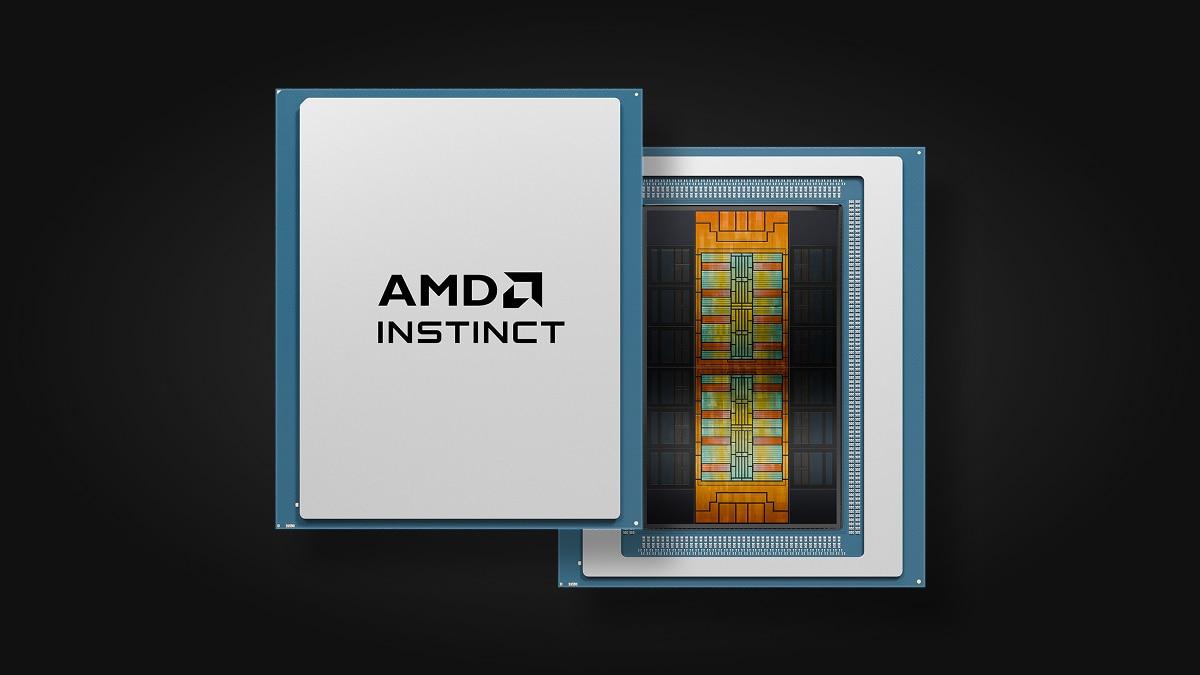
AMD's product-page image of the Instinct MI430X, MI440X and MI455X package family; AMD's MI430X figures are projections, with availability expected in 2027.
Image: AMD
Source · Press image from the AMD website, used for news reporting.
AMD argued at the SC26 supercomputing conference in Chicago that FP64 emulation helps fewer than 10% of the high-performance computing (HPC) workloads in its own study's sample, and can need up to roughly three times the memory of native FP64. The claim comes from AMD's own study, but it shifts the argument with NVIDIA from accuracy to memory and procurement, and that is the part buyers planning 2027 and 2028 systems should take seriously.
What happened
The paper, titled "FP64 Performance and the Limits of Ozaki Emulation on HPC Systems", was written by AMD researchers and presented at SC26, which runs Nov. 15 to 20. Tom's Hardware reported its findings on Nov. 17, and AMD summarised them in a Nov. 12 blog post. AMD profiled 47 workload configurations of 11 applications and benchmarks on its own Instinct MI350X and MI355X GPUs, then tested Ozaki emulation of matrix multiplies on three GPU architectures.
Ozaki schemes rebuild an FP64 matrix multiply from many low-precision slices that run on the tensor cores AI chips are full of, then add the pieces back together. The method only works on dense general matrix multiply (GEMM). By AMD's account, only one profiled code, the rocHPL benchmark, "sometimes" gains from it, and HPL's own rules currently forbid emulation. Sparse solvers, stencil and hydrodynamics codes, finite-element operators, Monte Carlo transport and molecular dynamics such as LAMMPS gain nothing, AMD says. Even on suitable code, AMD found emulation pays off only for large matrices, slows down below that size and depends on how operands are scaled.
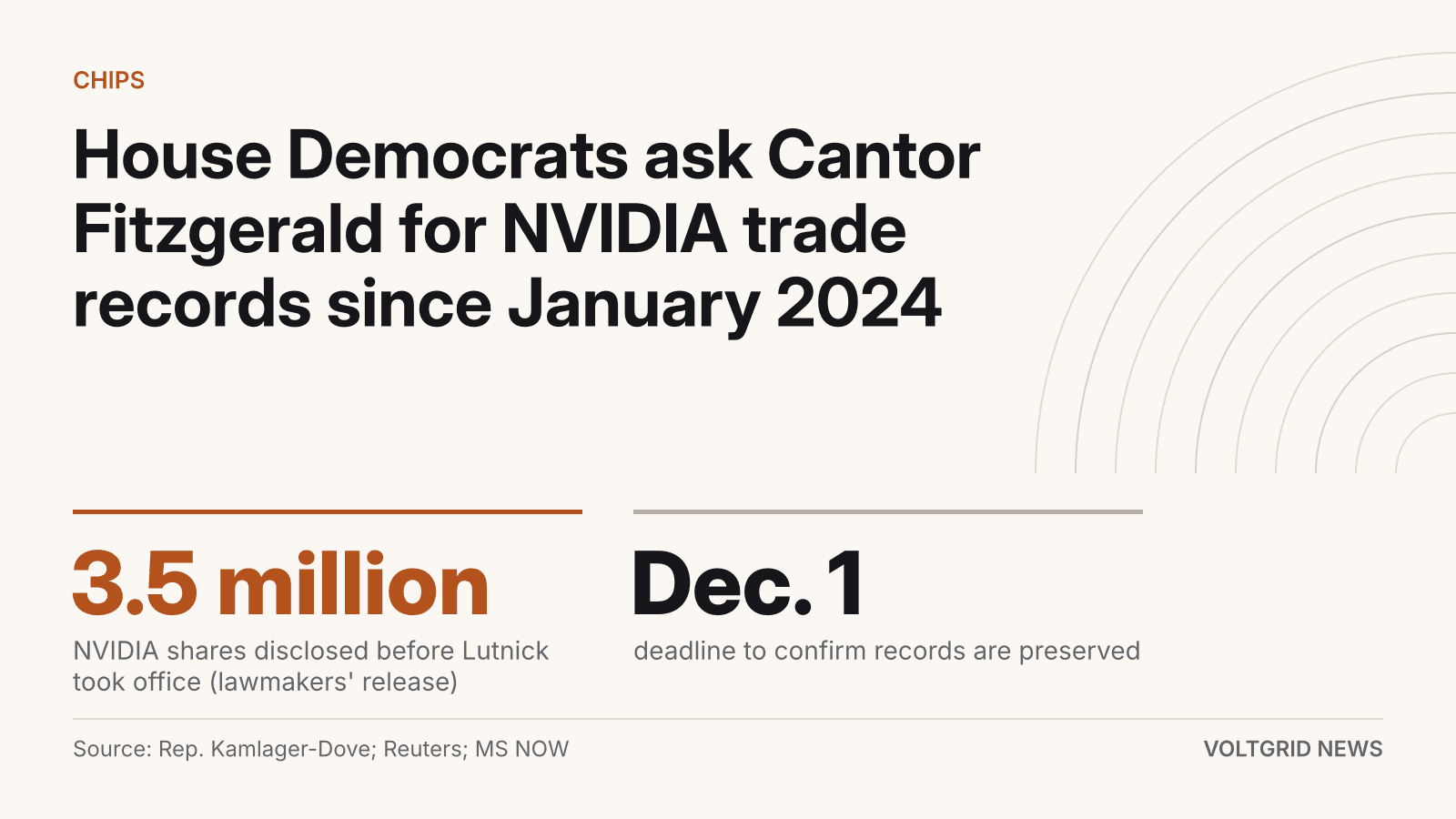
AMD claims Ozaki FP64 emulation fits under 10% of the HPC codes it sampled and can need up to 3x the memory; these are AMD's claims, not independent tests.
Graphic: Voltgrid News
AMD's answer is the Instinct MI430X, a CDNA 5 part it projects at up to 288 TFLOPS of peak native FP64 (vector) per GPU, with 432 GB of HBM4 at up to 23.3 TB/s. Those are AMD projections for a GPU it expects to ship in 2027. AMD's product page puts that at 8.7 times the 33 TFLOPS of FP64 per Rubin GPU that NVIDIA lists on its Vera Rubin NVL72 page. NVIDIA does not say whether its figure is vector or matrix math, so the multiple is AMD's comparison, not a like-for-like measurement. NVIDIA's SC26 address on Nov. 16 introduced a separate science part, Rubin HPC, with FP64-to-FP4 support and more than 50,000 CUDA cores, due in 2028, but gave no FP64 rate.
Why it matters
The accuracy debate is hard for a buyer to settle. The memory point is easier to price. AMD says an emulated FP64 GEMM can occupy up to roughly three times the memory of a native one. HBM capacity is fixed per GPU, so a problem that no longer fits on one GPU spills onto more GPUs and more nodes. Tom's Hardware spelled out the chain: more GPUs mean more floor space, power and cooling. A national lab sizes a machine in megawatts, so a memory multiplier turns into a facility question.
AMD's second argument goes after NVIDIA's best defence, that most HPC code is limited by memory bandwidth, so raw FP64 hardware sits idle anyway. AMD's roofline data agrees that most profiled workloads are bandwidth-bound on the MI355X today. Its projections then suggest that a chip which cuts FP64 throughput while adding bandwidth moves those same kernels to the compute-bound side. If that holds, FP64-light GPUs trade one bottleneck for another.
The buyers AMD names have already picked native FP64. Oak Ridge's Discovery, France's Alice Recoque, HLRS's Herder and LUMI-AI at Finland's CSC will all use MI430X, according to AMD and Tom's Hardware. AMD built the part as an HPC variant: Tom's Hardware notes that the MI430X carries 9.2 PFLOPS of peak FP4 per GPU against 40.3 PFLOPS for the AI-focused MI455X, both AMD figures. Tom's Hardware credits AMD's chiplet and semi-custom experience for that flexibility.
The case against
The study is AMD's own, on AMD hardware, about a rival's method. The full paper was not available to read for this piece, and no independent lab has published a comparison on the same codes. AMD's numbers have also moved. In January, AMD fellow Nicholas Malaya told The Register that emulation offered little or no benefit for 60% to 70% of HPC workloads and used about twice the memory. The SC26 framing is under 10% helped and up to three times the memory. These may measure different things, but both cannot be the headline figure.
NVIDIA's rebuttal, given to The Register in January by Dan Ernst, its senior director of supercomputing products, is substantive. He said emulated results are at least as accurate as tensor-core hardware, that the extra memory applies to the single operation rather than the whole application, and that the matrices involved are usually a few gigabytes. He also argued that vector FP64 codes rarely reach more than a fraction of peak because memory cannot feed them. The Register reported, citing NVIDIA, that with emulation switched on in CUDA libraries, Rubin can purportedly reach up to 200 TFLOPS of FP64 matrix throughput. That is an emulated, matrix-only rate, not comparable with the 33 TFLOPS native figure or AMD's 288 TFLOPS vector projection, and no independent test has confirmed it.
AMD's own projections support part of that view. AMD projects, from analytical models and preliminary silicon targets, that the MI430X will reach 3.08 TFLOPS on HPCG, the memory-bound conjugate-gradient benchmark, and 190 TFLOPS on HPL. By Voltgrid's arithmetic that is about 1% and about 66% of AMD's projected 288 TFLOPS peak; AMD states neither share. That suggests that on memory-bound codes such as HPCG, bandwidth and capacity may matter more than the FP64 peak AMD advertises.
What it means for NVIDIA, AMD and lab buyers
For NVIDIA, the open question is Rubin HPC. A science GPU that adds native FP64 throughput would concede AMD's point. One that leans on emulation would make the 2028 part a test of Ernst's case. Until NVIDIA publishes the rate, labs cannot compare it with the MI430X. NVIDIA's Vera Rubin also has less memory per GPU: NVIDIA lists 288 GB of HBM4 per Rubin GPU, against the 432 GB AMD projects for the MI430X, and shipping Rubin HBM4 runs at 19.2 TB/s, as Voltgrid reported.
For AMD, the paper defends a niche that is shrinking relative to AI. Tom's Hardware notes that FP64 demand has stayed flat while AI compute has exploded, and the TOP500's record-low turnover shows how much hardware is going to AI factories instead. Intel is chasing the same buyers, with FP64 finance claims for its D270. For buyers, AMD's practical offer is the sensible one: profile your own codes before buying peak FLOPS of either kind.
What to watch
The full SC26 paper and its methodology are the first test, along with any NVIDIA reply during the conference, which ends Nov. 20. AMD's MI430X is due in 2027, when the first systems built on it, Discovery among them, should replace AMD's projections with measured FP64 results. NVIDIA's Rubin HPC FP64 specification, for a 2028 part, will show whether NVIDIA keeps emulation as its FP64 strategy. An independent accuracy and memory study of Ozaki emulation on real application codes, rather than HPL, would settle more than either vendor's paper.
Sources
- 01Ian Buck Kicks Off NVIDIA’s Week at SC26 as Science Enters the Age of AgentsNVIDIA Newsroomblogs.nvidia.com
- 02Exascale Was the Beginning: AMD Instinct MI430X GPUsAMDamd.com
- 03Nvidia leans on emulation to squeeze more HPC oomph from AI chips in race against AMDThe Registertheregister.com
- 04NVIDIA Vera Rubin NVL72 specificationsNVIDIAnvidia.com
- 05AMD attacks Nvidia's FP64 emulation at SC26, touts native double-precision on Instinct MI430XTom's Hardwaretomshardware.com
- Published
- Sources
- 5 cited