NVIDIA Rubin HPC GPU Has 50,000+ CUDA Cores, Due 2028, No FP64 Figure
NVIDIA announced Rubin HPC at SC26 on Nov. 16, a Vera Rubin GPU with over 50,000 CUDA cores and 7th-gen NVLink. It gave no memory, FP64 or power figures, so planners have nothing to size yet.
2 min read
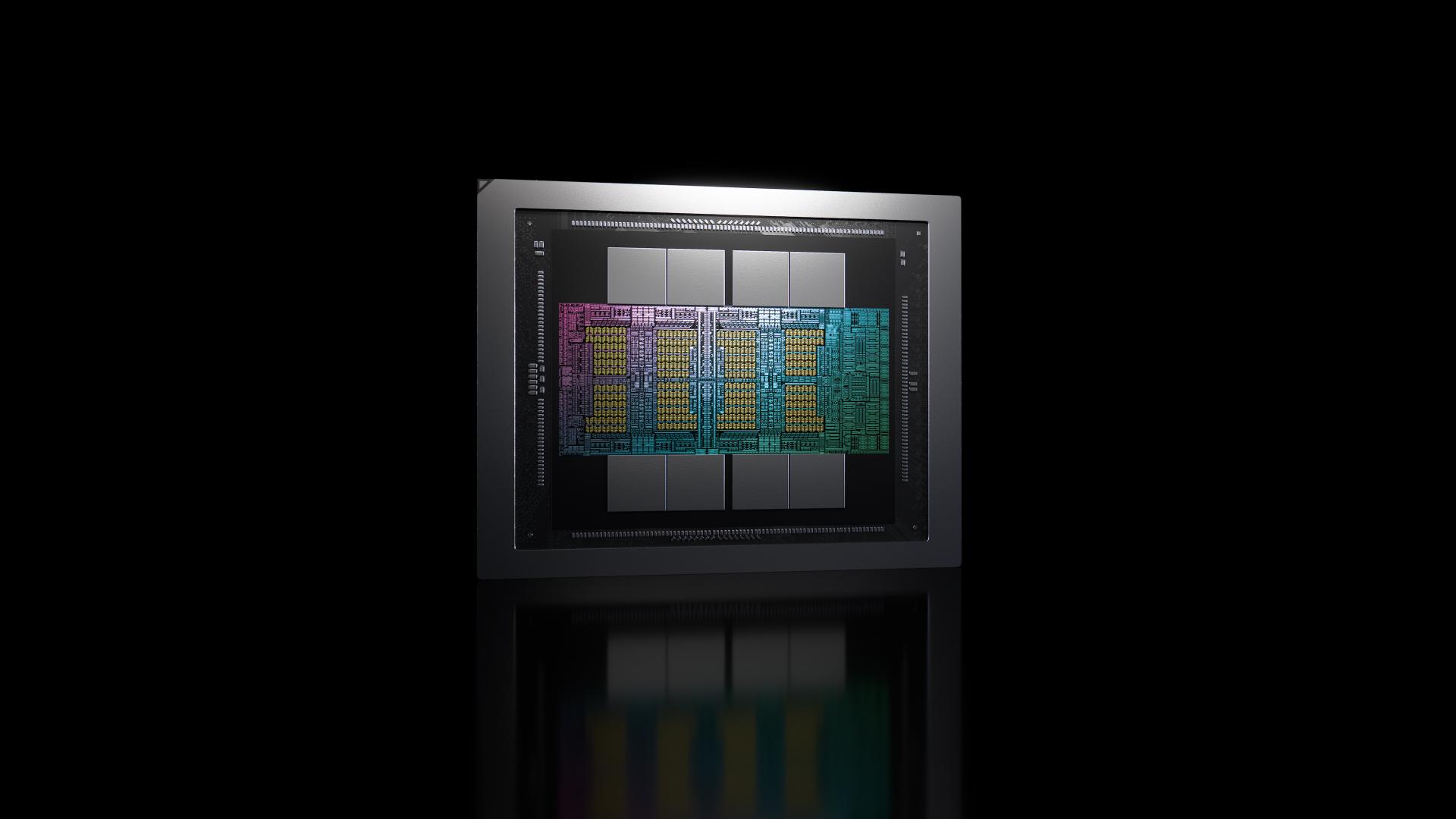
NVIDIA's image of the Rubin HPC GPU, which it expects to make available in 2028.
Image: NVIDIA
Source · Press image from the NVIDIA Newsroom, used for news reporting.
NVIDIA announced Rubin HPC on Nov. 16 at the SC26 supercomputing conference, a new Vera Rubin-platform GPU with more than 50,000 CUDA cores on a single GPU that the company expects to make available in 2028.
NVIDIA's announcement post, written by Dan Ernst, says the GPU is designed to speed simulation and data processing for science, engineering and analytics. It pairs the core count with a sparse data acceleration capability meant to keep those cores supplied with data, and with seventh-generation NVLink for GPU-to-GPU connections. NVIDIA calls the core count a record. Ian Buck, NVIDIA's vice president of hyperscale and high-performance computing, said Rubin HPC "accelerates the simulations agents use to test ideas."
NVIDIA says Rubin HPC has 50,000+ CUDA cores and expects it in 2028; the core count is a vendor claim.
Graphic: Voltgrid News
The post gives no memory capacity, no bandwidth, no power rating and no double-precision (FP64) figure. The Defiant, which also read the announcement, makes the same point: it says the disclosure does not include memory capacity, FP64 performance or an application benchmark, so it does not establish a like-for-like speedup over an earlier GPU.
What Rubin HPC's 2028 Date Means for Planners
For a data-center or HPC site planner, 2028 is the number that matters. A chip with no stated power draw cannot be sized for racks, cooling or a utility interconnect, and a 2028 date puts those decisions well beyond the Vera Rubin NVL72 racks being deployed now. NVIDIA's post also does not say which board, system or partner configuration Rubin HPC will ship in.
NVIDIA's argument is about balance. The company says Rubin HPC scales data movement together with compute instead of adding compute alone, aimed at workloads that repeatedly gather scattered values from a large dataset, such as sparse matrix operations, stencil computations, sorting and reductions. It lists climate models, engineering simulations, genomic analysis and financial risk as examples, and ties the chip to its CUDA-X software libraries.
How Rubin HPC Fits in the Vera Rubin Line
NVIDIA's own product pages describe the Vera Rubin systems already on offer: the NVL72 rack with 72 Rubin GPUs and 36 Vera CPUs, the HGX Rubin NVL8 board with eight Rubin GPUs on sixth-generation NVLink, and the Vera Rubin NVL4, which pairs four Rubin GPUs on sixth-generation NVLink with two Vera CPUs and which NVIDIA pitches for scientific supercomputers. Rubin HPC is the first of the line announced with seventh-generation NVLink.
Every Rubin HPC specification in this story comes from NVIDIA's announcement. NVIDIA's other Rubin pages have not always agreed with each other: as Voltgrid reported, the Vera Rubin NVL72 page lists 19.2 TB/s of HBM4 bandwidth per GPU, below the up to 22 TB/s in an earlier NVIDIA blog. Rubin AI-GPU figures should not be carried over to Rubin HPC.
What NVIDIA Has Not Confirmed About Rubin HPC
NVIDIA has not published HBM capacity or type, FP64 throughput, power, a process node or a price for Rubin HPC, and no simulation benchmarks have been released. The 2028 date is an expectation, not a shipping commitment. NVIDIA has scheduled its third-quarter fiscal 2027 results for Nov. 17; whether it adds Rubin HPC detail then is not known.
Sources
- Published
- Sources
- 2 cited