House Passes 6 Nuclear Bills on NRC Hearings, At-Risk Enrichment
The House cleared six NRC and DOE nuclear bills by Nov. 11, including at-risk enrichment plant construction (394-3) and fewer uncontested licensing hearings; all six await the Senate.
Chips & Power DeskEdited by Ege Erten
3 min readAI-assisted
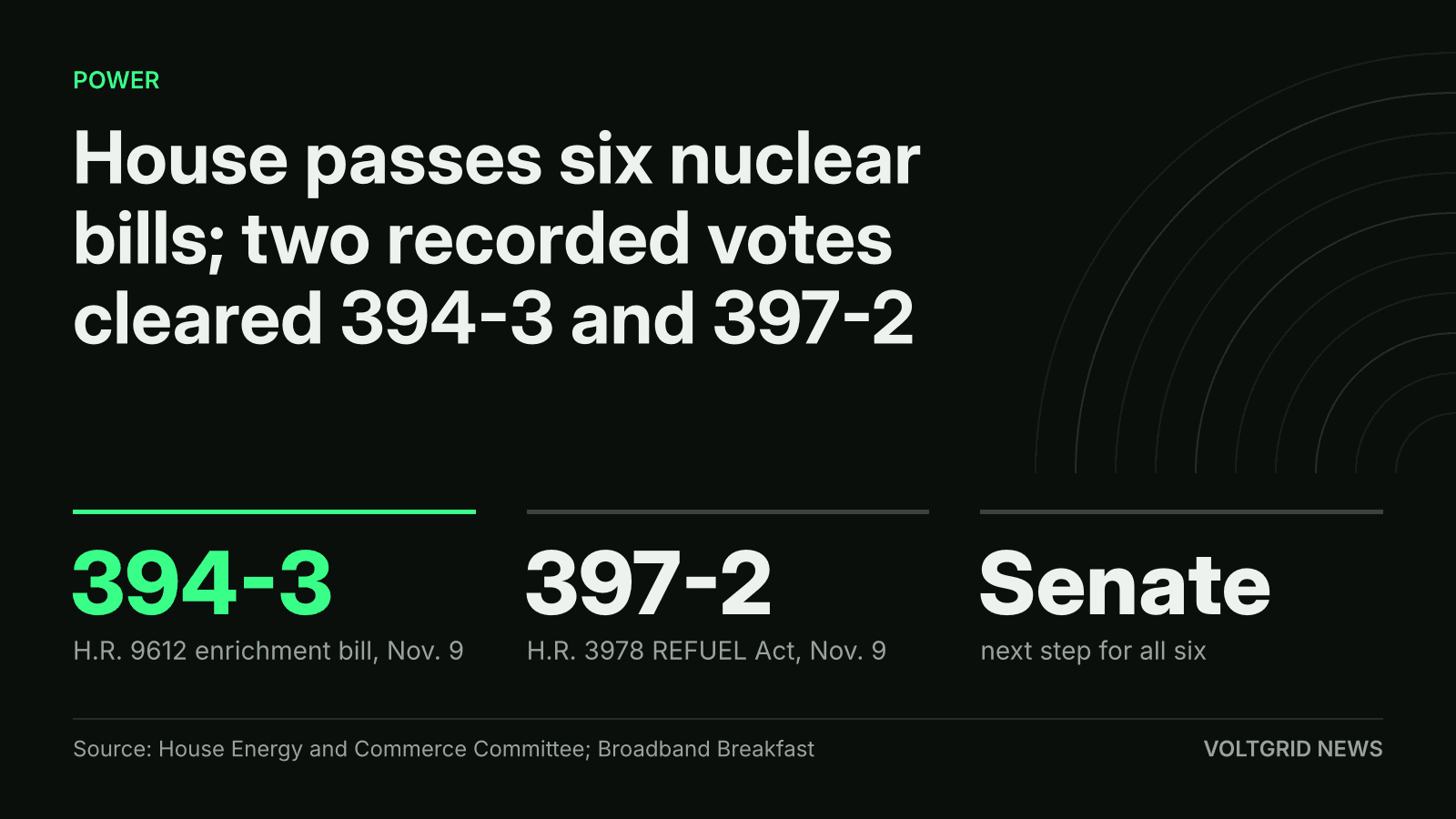
H.R. 9612 passed 394-3 and H.R. 3978 397-2 on Nov. 9, according to Broadband Breakfast; the Senate is next.
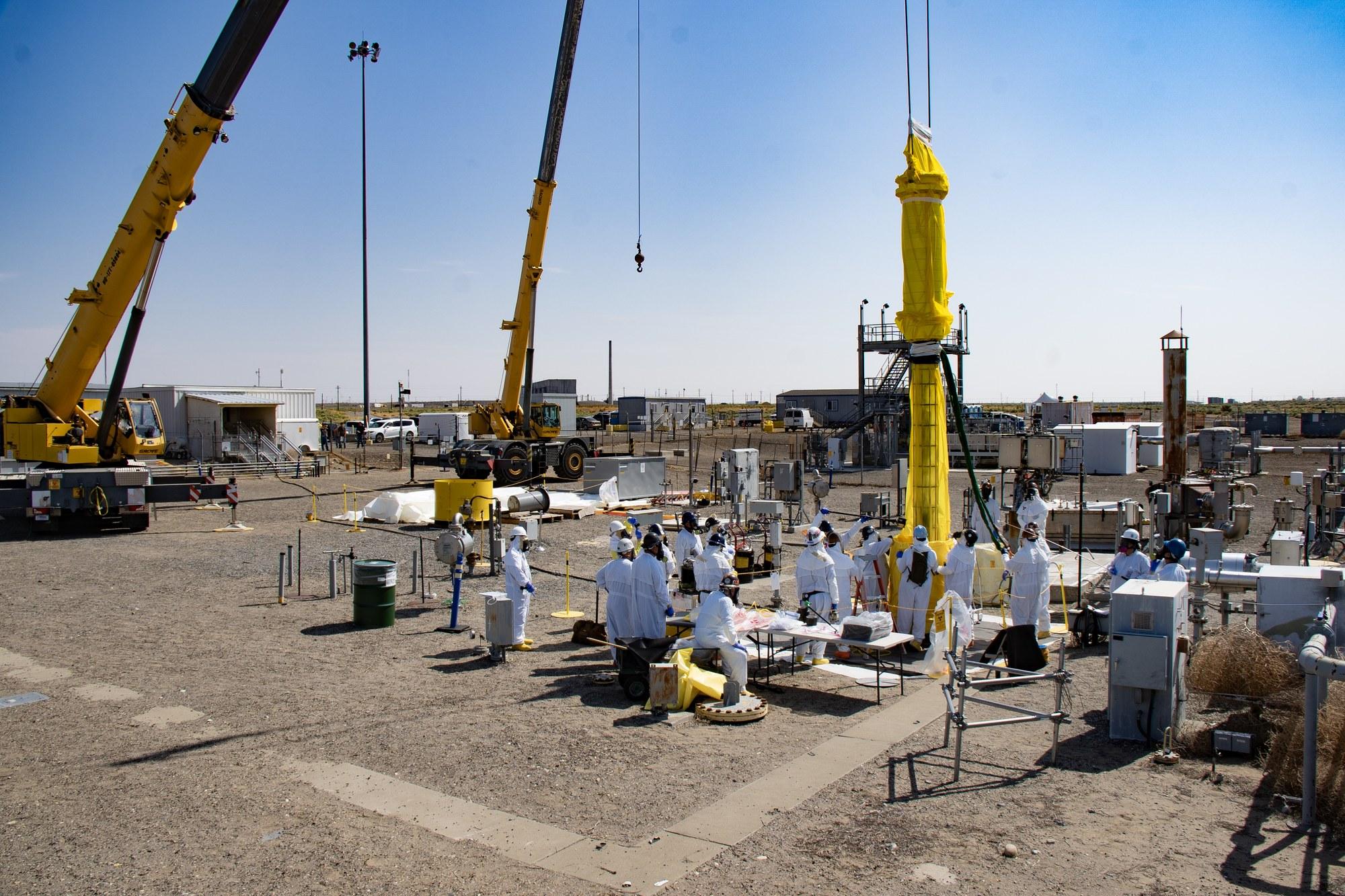
Illustration (AI-generated)
The U.S. House finished passing six nuclear energy bills on Nov. 11, 2026, clearing two by voice vote that day after H.R. 9612, the American Enrichment Deployment Act, passed 394-3 on Nov. 9, Broadband Breakfast reported. All six now go to the Senate.
The Nuclear REFUEL Act, H.R. 3978, passed 397-2 on Nov. 9, according to Broadband Breakfast. Both of those votes used the suspension procedure, which requires a two-thirds majority. H.R. 5549, the Efficient Nuclear Licensing Hearings Act, and H.R. 9084, the Department of Energy Nuclear Transparency Act, passed by voice vote on Nov. 11. The sources read do not give dates or tallies for the other two bills, H.R. 9613 and H.R. 9614. House Energy and Commerce Committee Chairman Brett Guthrie said in a Nov. 12 release that all six passed this week.
H.R. 9612 passed 394-3 and H.R. 3978 397-2 on Nov. 9; two bills passed by voice vote on Nov. 11; results for H.R. 9613 and 9614 were not stated in the sources.
Illustration (AI-generated)
For developers selling power to data centers, the most direct measure is H.R. 9612, which targets the fuel supply that advanced reactors depend on. The bill would let a company build a uranium enrichment plant at its own risk before the final NRC license is issued, WPDE and the committee said. It does not license any facility and does not remove the NRC's authority to license and inspect.
What each bill changes at the NRC and DOE
According to the Energy and Commerce Committee, H.R. 9612 (Reps. Russell Fry and Schrier) also removes enrichment-specific environmental review and adjudicatory hearing requirements, so enrichment plants are licensed like other fuel cycle facilities.
H.R. 5549 (Reps. Morgan Griffith and Schrier) eliminates the requirement to hold uncontested hearings on applications for a construction permit, an operating license, a combined construction and operating license, or a license to possess and use special nuclear material. The committee said it does not affect the right of affected persons to request a hearing. For a reactor developer, that removes a mandatory step from the licensing schedule when no one contests the application.
H.R. 3978 (Reps. Robert Latta and Peters) excludes facilities that reprocess spent fuel without isolating plutonium from the Atomic Energy Act's definition of a production facility. Such plants could then use the one-step licensing process used for other fuel cycle facilities rather than a two-step process, the committee said.
H.R. 9613 (Rep. Harshbarger) lets the NRC's Advisory Committee on Reactor Safeguards decline to review matters that do not merit its attention and focus on safety-significant, novel issues. H.R. 9614 (Rep. Menendez) lets the NRC Chairman set pay for career senior executives at up to 10% above the top basic rate for those positions. H.R. 9084 (Reps. Castor and Miller-Meeks) requires DOE to post licensing and authorization decisions for its nuclear facilities on a public website within 24 hours, plus an annual report to Congress.
What this means for reactor developers
The bills build on the 2024 ADVANCE Act, Broadband Breakfast said, and they touch fuel and process rather than any single reactor. Supporters of H.R. 9612 say at-risk construction could cut enrichment licensing delays by more than a year, according to Broadband Breakfast. That is a claim by supporters, not an NRC estimate.
None of this changes a restart or SMR schedule yet. Small modular reactor (SMR) developers with data-center customers, such as those in Big Tech's nuclear deals tracked by Voltgrid, still depend on NRC permits and on fuel supply that the bills only start to address.
What is not confirmed yet
All six bills must still pass the Senate and be signed by the president. The committee's Nov. 12 release and the news reports read do not say when the Senate will take them up. The dates and margins for H.R. 9613 and H.R. 9614 were not stated in the pages read.
Sources
- 01Chairman Guthrie Applauds House Passage of Six Bills to Advance American Nuclear EnergyHouse Committee on Energy and Commerce (via EIN Presswire) · einpresswire.com
- 02Brett Guthrie applauds House passage of bills to advance American nuclear energy, here’s what the bills doGoogle News · agenda, nuclear regulators · news.google.com
- 03House Passes Four Nuclear Bills, Advances Fuel MeasuresBroadband Breakfast · broadbandbreakfast.com