Big Tech Nuclear Deals: 17,856 MW Announced, Up to 9,880 MW in Signed PPAs
Amazon, Google, Microsoft and Meta have announced US nuclear deals covering 17,856 MW. Up to 1,450 MW, two restarts awaiting NRC approval, is the only new supply of disclosed size targeted before 2030.
Nuclear & Microgrids DeskEdited by Ege Erten
8 min readAI-assisted
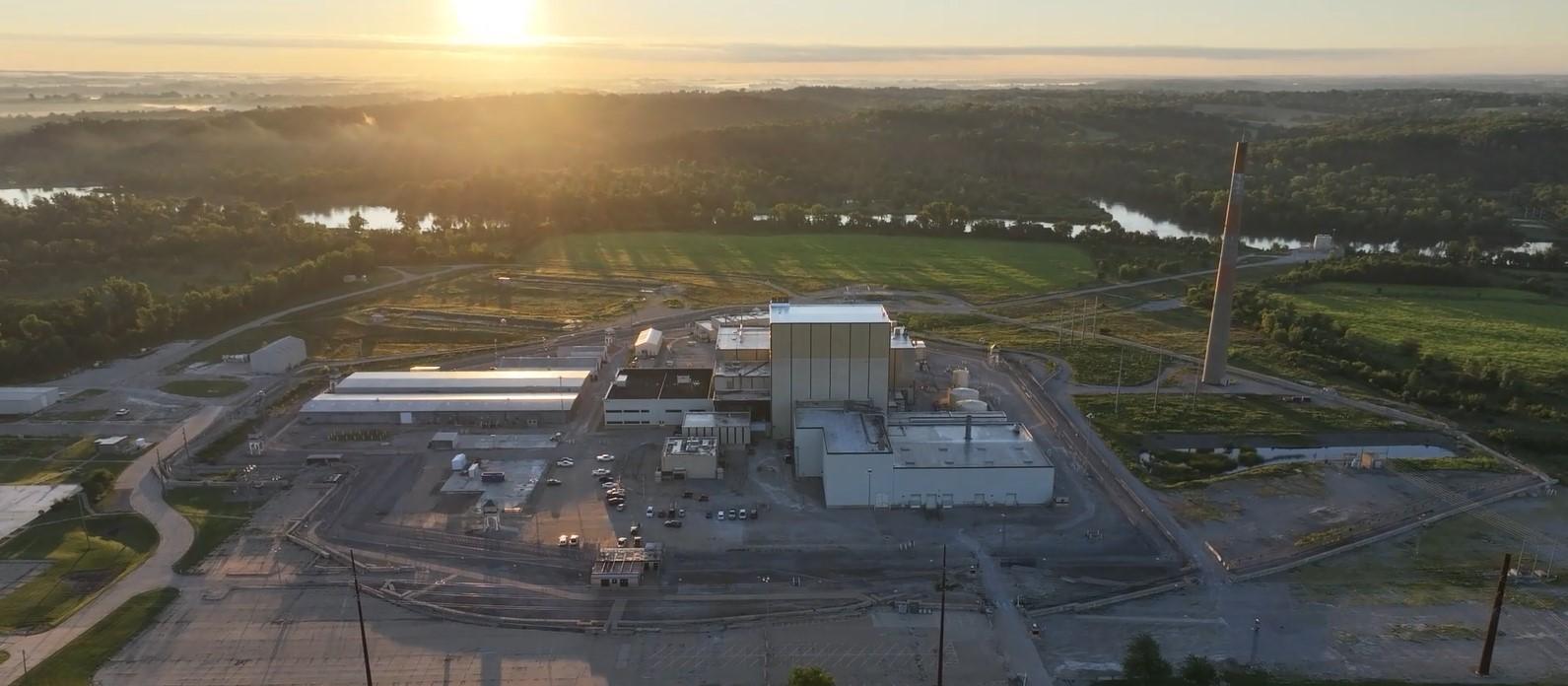
Duane Arnold Energy Center in Iowa, which NextEra Energy targets to restart by the first quarter of 2029 (NextEra Energy)
Image: NextEra Energy
Source · Press image from the NextEra Energy newsroom, used for news reporting.
Big Tech's announced US nuclear deals, held by Amazon, Google, Microsoft and Meta, cover 17,856 MW as of Nov. 12, 2026, but the only new supply of disclosed size targeted before 2030 is up to 1,450 MW.
That 1,450 MW is two reactor restarts, Crane in Pennsylvania and Duane Arnold in Iowa, and neither has Nuclear Regulatory Commission (NRC) approval to run yet. Duane Arnold's 615 MW is the whole plant: Google buys part, a cooperative buys the rest, and the split is not disclosed. Most of the rest is output from running plants, or reactors that have not applied for a construction permit. On Nov. 9, Constellation repeated the terms of its Google and Amazon deals, and the NRC issued the first construction permit for X-energy's Xe-100, the reactor in two Amazon projects, but for a Dow plant.
Nuclear Deals by Buyer: 17,856 MW Across Four Companies
Voltgrid added every published supply or development agreement in the megawatts each source states; most do not say whether net or gross. For development deals, the figures are project sizes, not purchases.
Amazon's ledger is 5,390 MW: up to 1,920 MW from Talen Energy's Susquehanna plant, 1,200 MW from Vistra's Comanche Peak, 690 MW from Constellation's Calvert Cliffs, and three small modular reactor (SMR) projects of 320 MW, 960 MW and at least 300 MW. Its goal of more than 5 GW with X-energy by 2039 is not counted.
Google's is 3,901 MW: Duane Arnold's 615 MW, about 890 MW of uprates (increases in a reactor's licensed output) at Constellation plants, Kairos Power's 500 MW fleet, about 96 MW of Georgia Power uprates, and a floor of 1,800 MW from Elementl Power, which has three projects of at least 600 MW each. Google funds Elementl's early development and holds an option to buy. The Georgia Power uprates, which Google supports, would serve that utility's customers, pending the Georgia Public Service Commission's approval. The Central Iowa Power Cooperative is Duane Arnold's other buyer, NextEra says, so 615 MW is an upper bound for Google. Google's own "over 1.5 GW" from restarts and uprates is consistent with 615 plus 890, or 1,505 MW, though Google publishes no breakdown. A separate 15-year, 2,700 MW agreement with Constellation is left out because it is a financial agreement on existing output, not a supply contract.
Microsoft's is 835 MW, all of it the Crane restart; Voltgrid found no other Microsoft fission power purchase agreement (PPA). Its agreement with fusion developer Helion is outside this ledger, which counts fission only.
Meta's is 7,730 MW: 1,121 MW from Constellation's Clinton plant, Vistra's 2,176 MW of operating output and 433 MW of uprates, up to 2.8 GW from TerraPower and up to 1.2 GW from Oklo. Meta itself cites 7.7 GW.
By type, the 17,856 MW splits into 6,917 MW from running plants (1,920 + 1,200 + 1,121 + 2,176, plus about 500 MW implied at Calvert Cliffs, which is 690 minus its 190 MW uprate; Constellation does not state it), 1,450 MW from restarts (835 + 615), 1,609 MW from uprates (190 + 890 + 96 + 433) and 7,880 MW from SMRs and advanced reactors (320 + 960 + 300 + 500 + 1,800 + 2,800 + 1,200). Signed PPAs come to as much as 9,880 MW, or 55%: Amazon 3,810, Google 1,505, Microsoft 835 and Meta 3,730. Of that, 1,450 MW depends on NRC restart approvals and 1,513 MW on uprates not on the NRC's pending list as of Sept. 15, 2026 (190 + 890 + 433). The other 7,976 MW is development funding, prepayment, frameworks, a memorandum of understanding (MOU) and the Georgia Power uprate agreement.
Announced nuclear MW by buyer and type, 17,856 MW in all; as much as 9,880 MW is under signed PPAs.
Voltgrid News
Illustration (AI-generated)
Running Plants, Restarts and Uprates: Who Adds Capacity
A PPA with a running reactor does not add a megawatt to the grid. The buyer pays for existing output, often so the owner can keep the plant open and relicense it. Constellation said Meta's Clinton deal, starting in June 2027, replaces state zero-emission credits that end in mid-2027; it also adds 30 MW at Clinton through uprates, with no date given, which this ledger does not count separately. New megawatts come only from a restart or an uprate, which need the NRC to amend the plant's license first, or from a new reactor, which needs a construction permit and later an operating license.
The existing-output deals are the firmest. Talen's revised Amazon PPA took effect in April 2026 and runs through 2042, as Voltgrid reported. Its 1,920 MW is a ceiling: Talen's 2025 investor deck shows 1,680 to 1,920 MW at full quantity. Vistra expects Comanche Peak deliveries to Amazon to begin in the fourth quarter of 2027 and ramp to full capacity by 2032. Meta's purchases from Vistra begin in late 2026, and the full 2,609 MW is due online by 2034.
The restarts are further along than any new build. The NRC issued the final environmental assessment and finding of no significant impact for Crane on Sept. 18, 2026, and Constellation told World Nuclear News it is on track to return 835 MW in 2027. In a Jan. 7, 2026 letter, NRC staff estimated final decisions by March 4, 2027, a date that can still move. At Duane Arnold, the NRC issued a draft assessment on July 30, 2026, and projects the final one for fall 2026. NRC staff estimate final decisions by Jan. 29, 2028, a date the NRC's March 2026 letter ties to its understanding that NextEra aimed to be operating in early 2028. That is about a year ahead of NextEra's public target, the first quarter of 2029, announced in October 2025.
Two restarts, Crane and Duane Arnold, are the only new supply of disclosed size targeted before 2030, up to 1,450 MW.
Voltgrid News
Illustration (AI-generated)
The uprates are the least advanced. The NRC's list of pending uprate applications, last updated Sept. 15, 2026, showed none under review, and each Constellation uprate still needs a license amendment. The NRC's list of expected applications shows a Constellation extended uprate planned for the fourth quarter of 2026, plant not named, and filings for PSEG's Salem and for Hatch, a plant in Google's Georgia Power agreement, for the second quarter of 2027. Constellation expects Google's first uprate in 2028 but names no plants. Calvert Cliffs' 190 MW is targeted for 2030 to 2032.
SMRs and Advanced Reactors: Where Each Stands at the NRC
Only one project in the ledger holds NRC permits, and it covers 50 MW of Kairos's 500 MW. The NRC issued construction permits for Kairos Power's Hermes 2 test reactor facility in Oak Ridge on Nov. 21, 2024. Kairos targets operations in 2030, selling up to 50 MW to the Tennessee Valley Authority, with Google receiving the clean energy attributes. Hermes 2 still needs an operating license.
Of 7,880 MW in SMRs and advanced reactors, only Hermes 2, up to 50 MW, holds an NRC construction permit.
Voltgrid News
Illustration (AI-generated)
Amazon's three projects sit earlier. Cascade in Washington, where Amazon has the right to buy the first four Xe-100 modules' expected 320 MW, is still in NRC pre-application. X-energy's chief executive targeted a permit application for the first half of 2027, the American Nuclear Society reported, after earlier targets slipped. The 960 MW Indiana plant is a feasibility study under a joint development agreement, and Amazon "intends" to buy its output only if it reaches a final investment decision. North Anna, with Dominion, is an MOU naming no design; the site's early site permit expires on Nov. 27, 2027, and Dominion applied on July 14, 2026 to renew it.
The Nov. 9 permit for Dow's four-unit, 320 MW Long Mott plant shows the Xe-100 can clear an NRC permit review, as Voltgrid reported, but moves no Amazon project.
Meta's two developers have no application filed for Meta's units. TerraPower's Kemmerer Unit 1 got its construction permit on March 9, 2026, but it is a separate project, and the first Meta units are targeted for as early as 2032. Oklo's Ohio campus is in pre-application, targeting a first phase as early as 2030 and 1.2 GW by 2034, according to Oklo. Google's Elementl projects have no named sites or technology. Holtec's framework for up to 680 MW from its Pioneer SMR-300 units is with a hyperscaler Holtec has not named, so it stays out of the totals.
How Much New Nuclear Is Targeted Before 2030: Up to 1,450 MW in Restarts
By first-power date, the ledger has four parts. Existing output contracted to start before 2030 is 6,417 MW (Susquehanna 1,920 + Comanche Peak 1,200 + Clinton 1,121 + Vistra's operating 2,176), though 3,120 MW of it, Susquehanna and Comanche Peak, reaches full volume only by 2032. New capacity targeted before 2030 with a license path is up to 1,450 MW, the two restarts. About 500 MW at Calvert Cliffs has no disclosed start date. The other 9,489 MW is uprates and SMRs (1,609 + 7,880), almost all targeted for 2030 or later or undated. The exception is Google's first Constellation uprate, expected in 2028, an undisclosed slice of the 890 MW counted there. Together the parts add up to 17,856 MW, so new supply targeted before 2030 is up to 1,450 MW plus that slice.
Up to 1,450 MW of the 17,856 MW announced is new supply of disclosed size targeted before 2030.
Voltgrid News
Illustration (AI-generated)
For engineers and investors, the arithmetic suggests these companies' pre-2030 nuclear is mostly a reallocation of power the grid already has. The new megawatts in that window, about 8% of the ledger, depend on two NRC decisions. If those slip, the only new nuclear these buyers have dated before 2030 is Google's first uprate. Campuses due in that window will likely lean on the grid and other fuels. The case against: keeping Clinton and the Vistra plants open protects supply that might otherwise retire, and uprates need no new site or reactor design, unlike every SMR in the ledger.
Outside the US totals, Google's 22-year Fortum PPA covers up to half of Finland's Loviisa plant, starting in 2028 at a smaller capacity and reaching 50% in 2030 to 2049, Fortum says, which refines our Oct. 20 report.
What to Watch: NRC and Company Dates
The NRC's final environmental assessment for Duane Arnold is projected for fall 2026. Constellation's extended uprate application is planned for the fourth quarter of 2026, and NRC staff estimate final Crane decisions by March 4, 2027. Salem and Hatch uprate filings are planned for the second quarter of 2027. PSEG's planned 200 MW Salem uprate is in no total here; whether it sits inside Constellation's 890 MW for Google is unclear. Cascade's permit application is targeted for the first half of 2027. North Anna's early site permit expires on Nov. 27, 2027 unless renewed. The NRC estimates its Duane Arnold decisions by Jan. 29, 2028, and Google's first Constellation uprate is expected in 2028.
Sources
- 01Google and Kairos Power Partner to Deploy 500 MW of Clean Electricity GenerationKairos Power · kairospower.com
- 02NRC completes environmental review of Crane restartWorld Nuclear News · world-nuclear-news.org
- 03Google, Kairos Power, TVA collaborate to meet America's growing energy needsKairos Power · kairospower.com
- 04Georgia Power agreement with Google to provide approximately $900 million in projected benefits for customers and advance nuclear energy in GeorgiaGeorgia Power · southerncompany.mediaroom.com
- 05Inside information: Fortum and Google partner to drive sustainable growth for Finland, sign nuclear power purchase agreementFortum · fortum.com
- 06TerraPower and Meta Enter Agreement for 8 Natrium Advanced Nuclear PlantsTerraPower · terrapower.com