On-Site AI Power: About 90 GW Announced, 2 GW Running in Mid-2026
In Cleanview's mid-2026 count, about 90 GW of self-built power was announced and about 2 GW running. Contract terms run 6 to 20 years; deals of 10 to 20 years, in our reading, point to primary power more than a bridge.
Nuclear & Microgrids DeskEdited by Ege Erten
8 min readAI-assisted
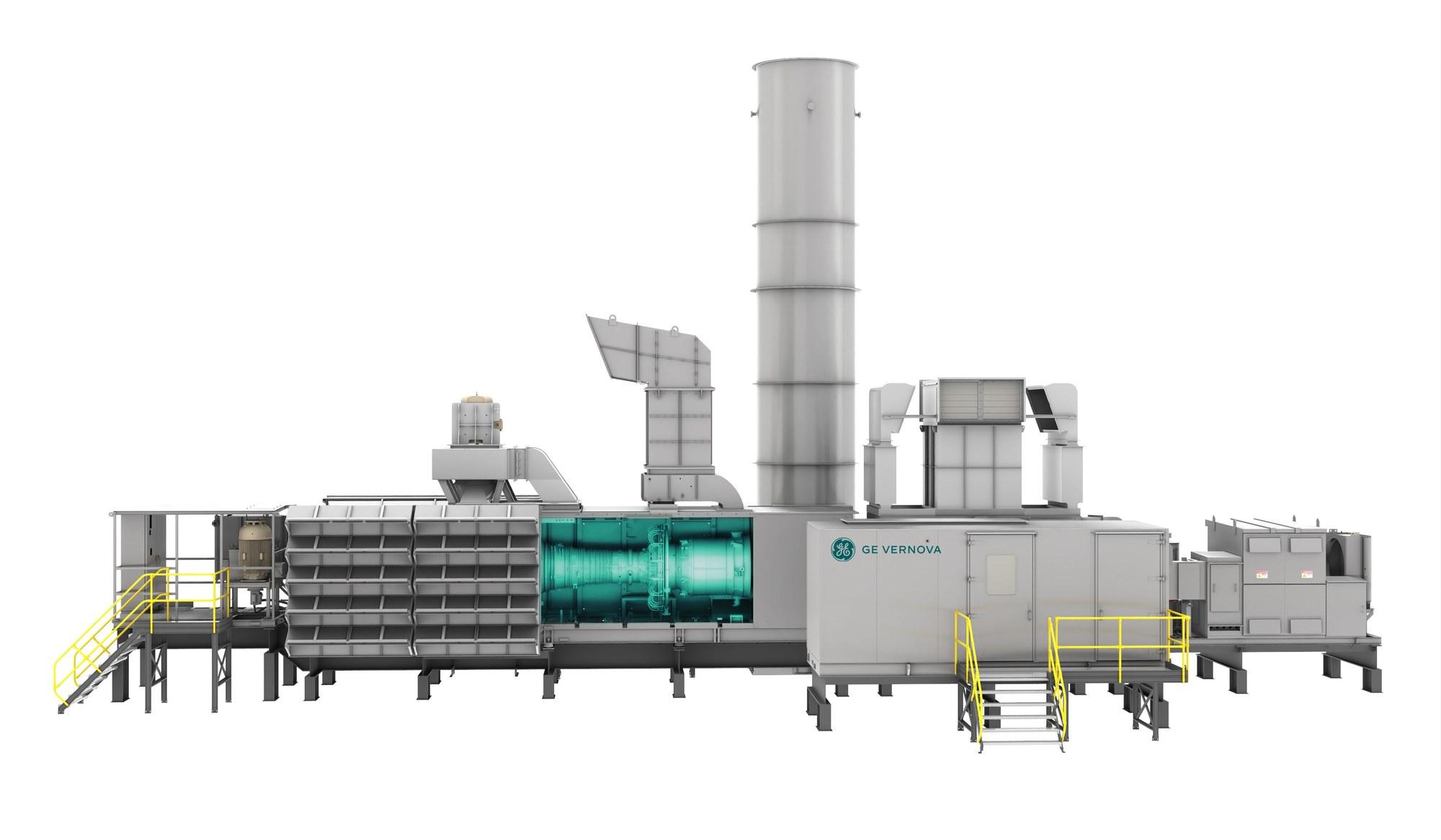
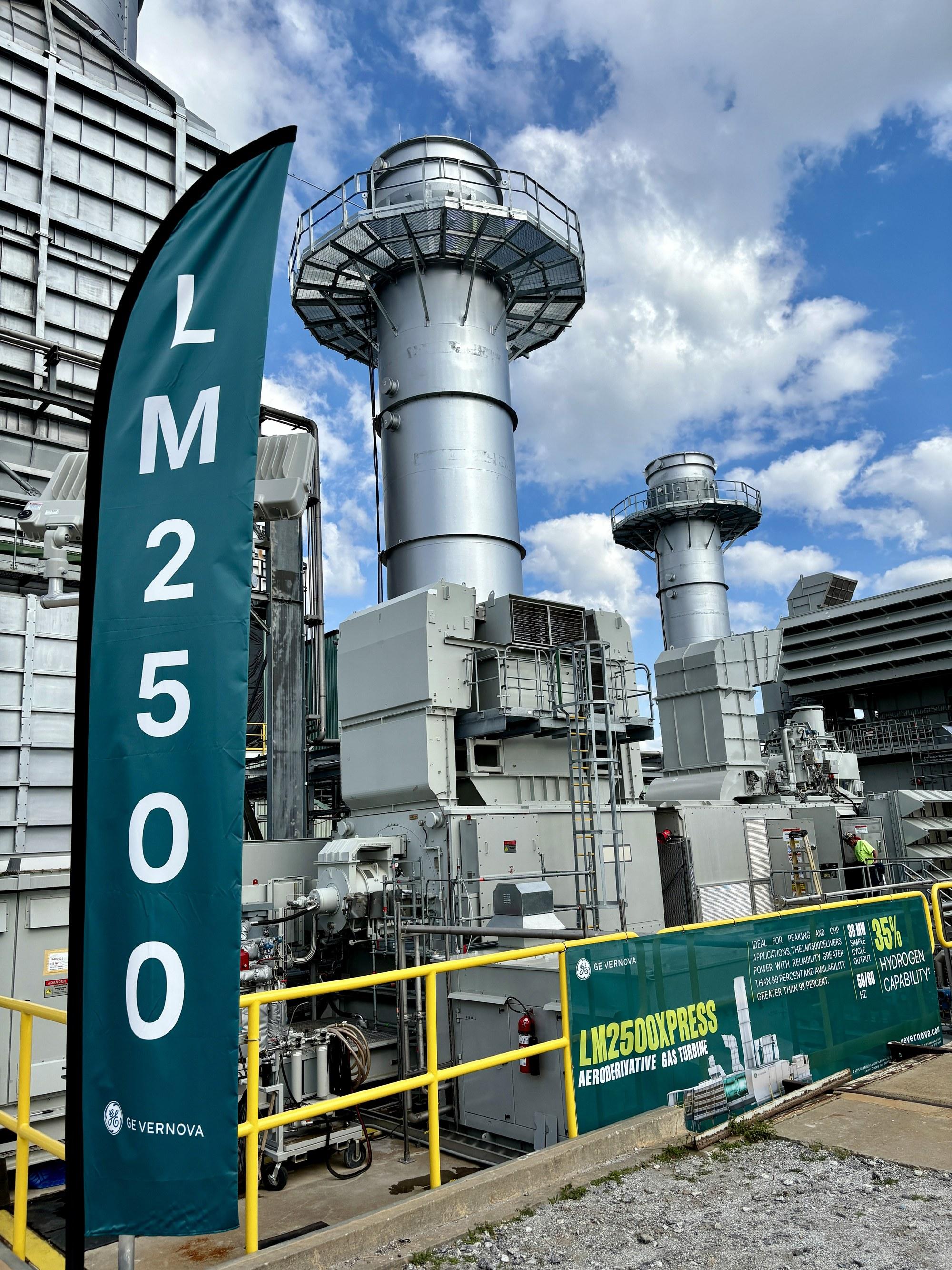
A GE Vernova LM2500XPRESS aeroderivative gas turbine package, the model Crusoe ordered 29 of (GE Vernova).
Image: GE Vernova
Source · Press image from the GE Vernova newsroom, used for news reporting.
US developers had announced about 90 GW of self-built, on-site power for 59 AI data center projects, but only about 2 GW was running as of mid-2026, according to Cleanview's report on such sites, known in the industry as behind-the-meter.
Cleanview, a commercial project tracker, put 2.2% of the roughly 90 GW in operation, 1.2% under construction, 36% permitted and 60% at the announcement stage. Of the operating capacity, 1,498 MW is xAI's turbines at Colossus 1 and 2 near Memphis, a figure that grew with temporary units at Southaven, Mississippi. The report page is undated and later counts are higher: AFP cited about 97 GW on Aug. 11, and Latitude Media reported on Oct. 28 a Cleanview estimate of 110 GW of on-site gas projects under way. The figures differ in date, and Latitude gives no breakdown, so this analysis uses the report's figures.
On-Site Power Projects by MW: Memphis, Abilene, Starbase
The named projects fall into three groups. Fuel cells are Bloom Energy's: Google's Cheyenne plant at 702 MW, Oracle's contracted 1.2 GW and Nebius's 328 MW. Turbines are the second: xAI at Memphis and Southaven, Switch in Nevada and SpaceX at Starbase. Gas engines are the third: VoltaGrid, Wartsila and, by ERock's account, Anthropic. Crusoe's Abilene campus is a separate case.
xAI's 1,498 MW is the one named on-site plant counted as running; the others are applications, plans or reported figures.
Voltgrid News, from Cleanview, AEP, Crusoe, NMED, RGV Business Journal
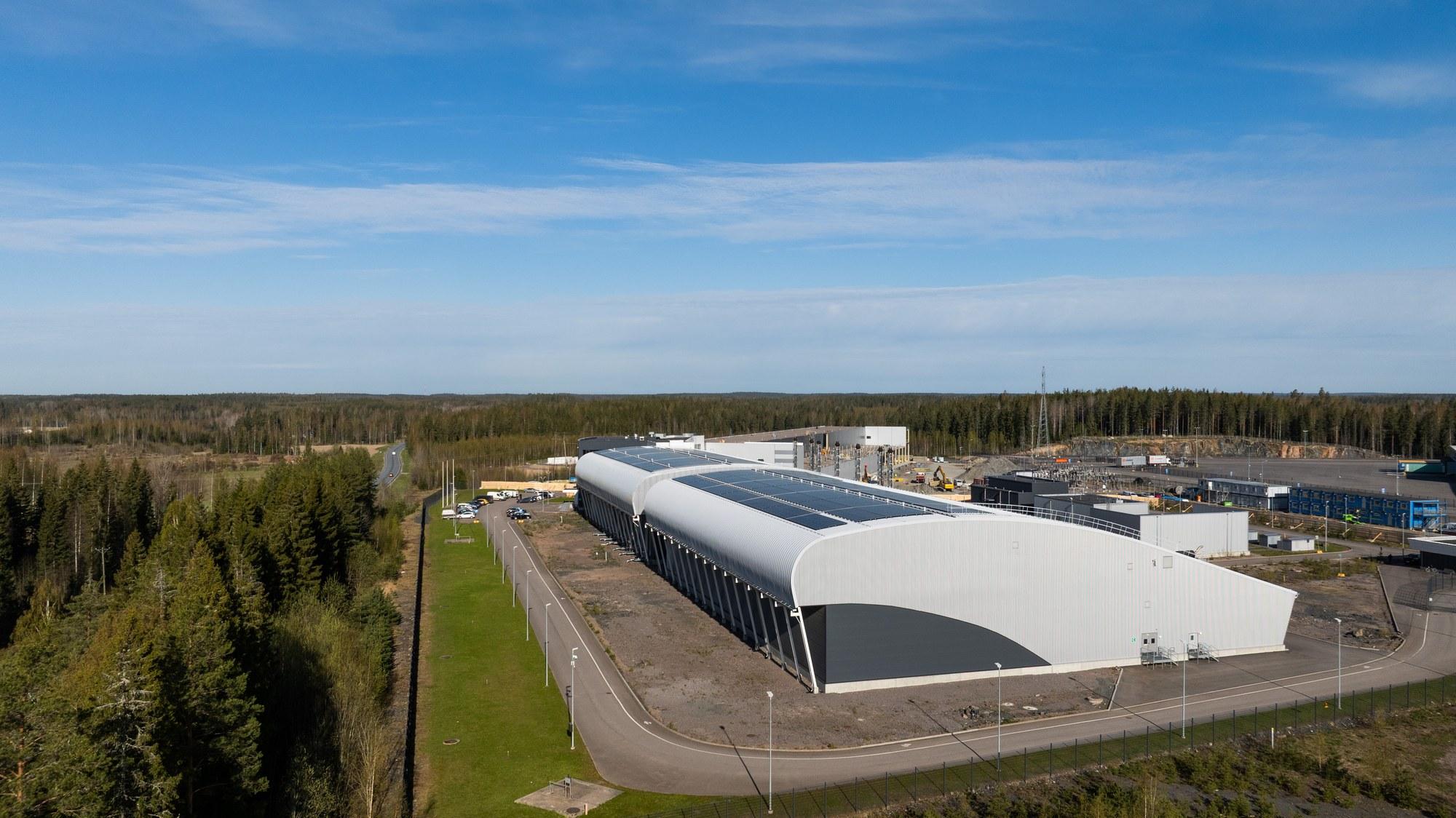
Illustration (AI-generated)
At Memphis, the Shelby County permit covers 15 Solar SMT-130 gas turbines at 16.48 MW each, or 247.2 MW by our arithmetic. That permit covers only the Memphis site; Cleanview's 1,498 MW spans both Colossus sites and includes temporary Southaven units, so the two numbers count different things. At Southaven, Mississippi regulators approved 41 permanent turbines on March 10, 2026, replacing 27 unpermitted units; no MW total is given. The New York Times reported eight converted jet-engine turbines there, each up to 50 MW per Tom's Hardware.
Nexus Fulcrum, the applicant tied to Switch, has asked Nevada regulators for a 510 MW plant of nine turbines, each rated 56 to 57 MW, for completion in late 2029 if approved (our coverage). The RGV Business Journal ties SpaceX's Starbase plant to 35 turbines capable of 748 MW; the city notice gives no MW. Amazon's Pecos County, Texas campus is tied by press reports to Pacifico's GW Ranch, permitted for up to 7.65 GW of gas, a ceiling and not built capacity. Crusoe describes a 900 MW behind-the-meter plant with batteries, technology unstated, for its new Abilene campus for Microsoft; the release uses 900 MW for both campus and plant, each building is designed for 336 MW of IT load, and the first building is expected to be energized in mid-2027.
Bloom Energy Fuel Cells: About 3.3 GW Announced, About 2.4 GW Signed
A fuel cell turns gas into electricity through a chemical reaction rather than combustion. Bloom's counterparties, by stated megawatts, are these.
Oracle: Bloom said on April 13, 2026 that Oracle intends to procure up to 2.8 GW under a master services agreement, with 1.2 GW contracted and deployment under way. Google, through AEP: 702 MW near Cheyenne, Wyoming, under a 20-year power purchase agreement (PPA), at about $4 billion, with construction starting in 2026 and full operation by end-2028, AEP said on Oct. 14. NTT DATA: 900 MW across projects worldwide, first shipments 2027, form of the agreement not stated (our coverage). Nebius: its Form 6-K, an SEC filing, puts the three-phase total at about 328 MW installed and about 250 MW guaranteed, each phase on a 10-year term, with fees of up to $2.6 billion; Nebius's release calls the first project 328 MW. Equinix: more than 100 MW (about 75 operating and 30 under construction, Feb. 2025). AEP Ohio: about 98 MW across two contracts for Amazon Web Services (AWS) and Cologix, now final after court appeals ended in June 2026.
Adding those six gives 3,333 MW (1,200 + 702 + 900 + 328 + 105 + 98, taking Equinix at 75 + 30). Without NTT DATA, whose form is undisclosed, it is 2,433 MW. That 2.4 GW is a sum of signed agreements, some subject to conditions: only about 250 of Nebius's 328 MW is guaranteed. NTT DATA's 900 MW, outside that sum, is worldwide. Only Oracle's 1.2 GW is called contracted by the vendor. We left out Oracle's uncontracted 1.6 GW, what remains of AEP's 1 GW option, California Resources' non-binding 1 GW study, and the 2,462 MW permit application for Oracle's Project Jupiter in New Mexico, whose overlap with Oracle's 1.2 GW is unstated. The megawatts differ in kind: a purchase order commits a buyer to pay, an agreement where the buyer "intends to procure" binds only the part marked contracted, and a permit sets what may be built, not what is.
Bloom says it delivered a fully operational system for an Oracle site in 55 days in 2025, against a 90-day requirement; Oracle has not confirmed it. Nebius says its first project replaces planned reciprocating engines and is expected to be operating in 2026. Both are company claims. Project Jupiter's air permit is still unissued, with a 1,600 MW cap requested on 2,462 MW of nameplate (our coverage).
Gas Turbines and Engines: Unit Size and Delivery Dates
An aeroderivative turbine is a jet-engine core fitted with a generator: small and fast to start. GE Vernova rates the LM6000 at 51.1 to 56.9 MW net in simple cycle and the LM2500XPRESS at about 35 MW, with a five-minute start. Its 7HA, a heavy-duty frame turbine, is 384 MW or 430 MW and ramps to full load in 21 minutes, according to GE Vernova. ProEnergy's PE6000, on a retired jet-engine core, was unveiled at 48 MW. Crusoe ordered 29 LM2500XPRESS units in two batches, which GE says provide nearly 1 GW. It also ordered 13 PE6000 units rated 50 MW each, or 650 MW, with delivery targeted by summer 2027. That is about 1.65 GW of aeroderivative orders at one developer (GE's "nearly 1 GW" plus ProEnergy's 650 MW), an order total and not capacity for primary power; it includes 10 units at the original Abilene campus that Crusoe describes as backup.
Engines are smaller per unit. VoltaGrid says it signed an agreement for INNIO to supply 1.5 GW (300 Jenbacher engines grouped into 25 MW packages, delivery by 2028); terms are not published. Wartsila booked 282 MW, 15 of its 50SG engines (about 18.8 MW each by our division), for delivery in 2028 and full operation in 2029. ERock reported a 470 MW equipment purchase order from Anthropic in the second quarter of 2026. Together that is 2,252 MW; of that, 752 MW (Wartsila and ERock) is stated as firm orders. We exclude INNIO's separate 620 MW order, whose overlap with VoltaGrid is unknown, and the unconfirmed Financial Times (FT) report that Anthropic took over 1.7 GW of Caterpillar generator orders from OnePWR.
Only 752 MW of the 2,252 MW in engine orders and agreements is stated as firm; fuel cells total 3,333 MW announced, 2,433 MW signed (Voltgrid sums).
Voltgrid News, from Bloom Energy, AEP, NTT DATA, Wartsila, ERock, VoltaGrid, GE Vernova
Illustration (AI-generated)
Heavy-duty turbines are where the wait is. Wood Mackenzie told Reuters on Nov. 9 that delivery of a gas turbine in the US takes six years on average, with talks focused on 2030 to 2031; Reuters does not give the figure by turbine class. Mitsubishi Power gave a similar date. Reuters cites new units at $2 million to $2.5 million per MW against $1.5 million to $1.7 million used.
US gas turbine delivery averages six years, per Wood Mackenzie via Reuters, which gives no turbine class; the 55-day fuel cell figure is Bloom's own claim.
Voltgrid News, from Bloom Energy, GE Vernova, Crusoe, VoltaGrid, Reuters
Illustration (AI-generated)
Bridge Power or Permanent Plant: What the Contracts Show
Bridge power is on-site generation that serves a site before its full grid connection. ERock's SEC filing defines it as temporary generation for that period, after which the same units can be kept for backup or dispatch. Amazon says Pecos is designed to move to grid service later. Crusoe said in August 2025 that its original Abilene campus connects to the ERCOT grid and that its GE Vernova turbines there will ultimately serve as backup; the new 900 MW campus is described instead as a dedicated on-site plant.
The contract terms point the other way. Google's Cheyenne PPA runs 20 years. Nebius signed three supply terms of 10 years each. Cologix's AEP Ohio contract runs 15 years, and AWS's runs six, according to WOSU. Those terms are long next to typical grid waits of several years, though the IEA's example, about seven years for a 100 MW grid hookup in Northern Virginia, is longer than the six-year AWS term, and the AWS and Cologix terms are regulator-approved ratepayer contracts, not proof of how long a plant runs. xAI's Southaven plant now holds a permit for 41 permanent turbines. The Nevada Independent called Nexus Fulcrum's plant permanent. Our reading is that deals signed for 10 to 20 years point to primary power with a grid option more than to a bridge. Counterpoints exist: VoltaGrid's own website lists long-term bridge power apart from temporary bridge power, so a long contract can still be sold as a bridge; experts quoted by TechCrunch call converted jet engines a possible short-term play; and no company says its plant stays.
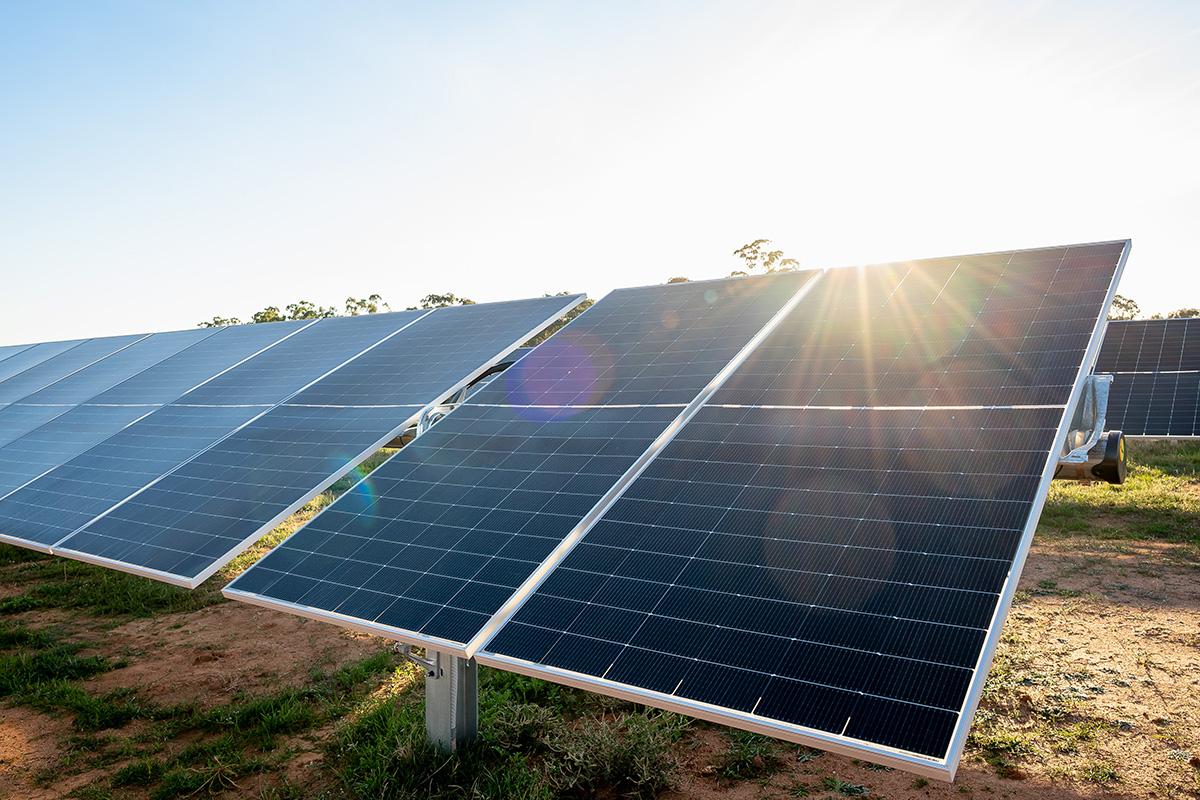
Google's Cheyenne plan: 702 MW of Bloom fuel cells under a 20-year PPA, with full operation targeted by end-2028 (AEP).
Voltgrid News, from AEP
Illustration (AI-generated)
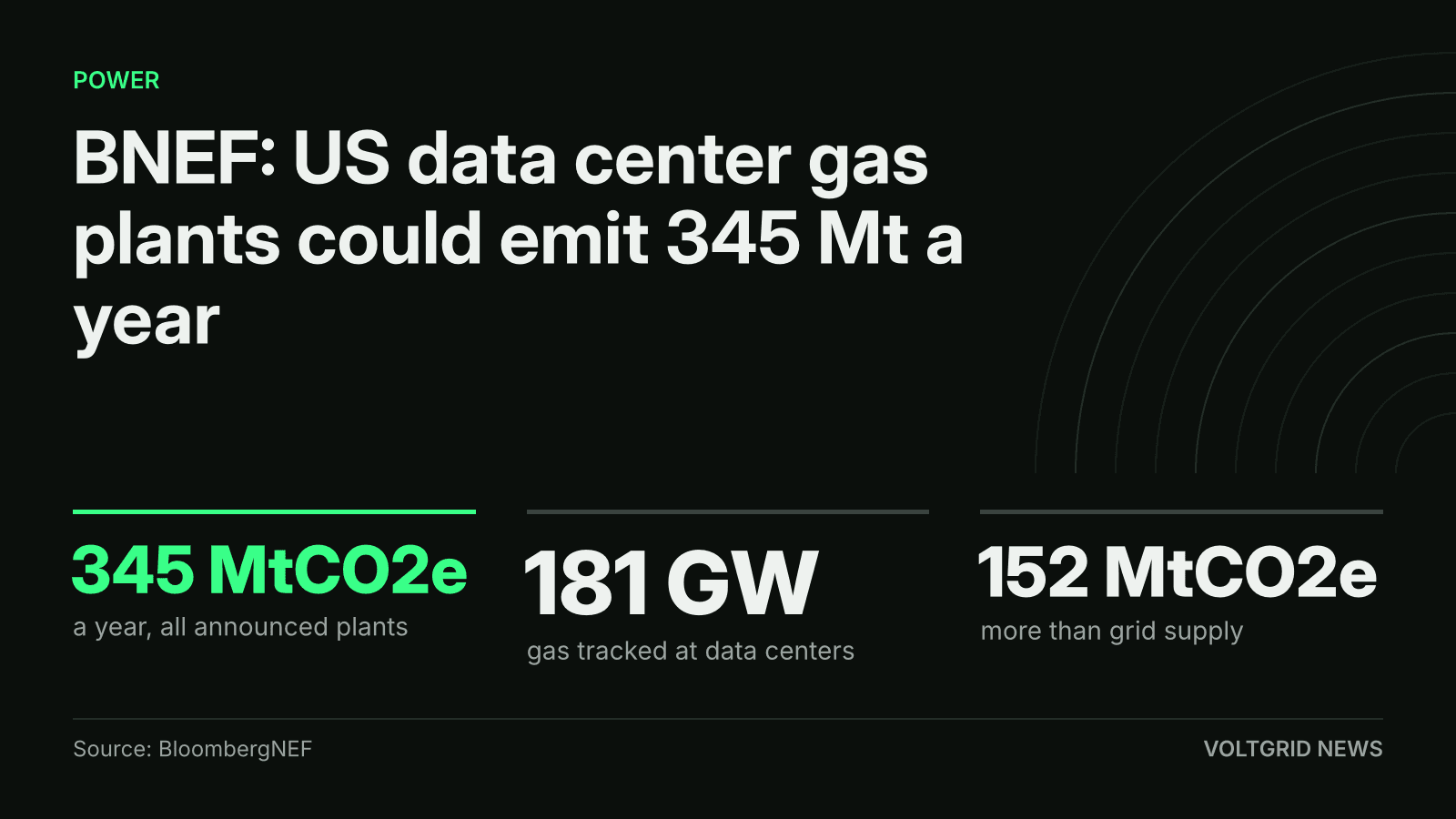
For engineers and investors, four consequences follow. Delivery dates, not megawatts, decide who gets power in 2027 and 2028. Permits and gas supply bind next: Southaven is in federal court, and ENR reported in September that Jupiter's gas pipeline lacked FERC construction authorization. BloombergNEF estimates that if all announced on-site gas plants for US data centers were built and run on its assumptions, they would emit about 345 Mt CO2e a year (million metric tons of CO2 equivalent), 152 Mt more than grid supply; BNEF calls it an indication of scale, not a forecast (our coverage). And the cost of running ahead of the grid falls on whoever holds the equipment contract: AEP's $4 billion for 702 MW is about $5.7 million per MW by our arithmetic, a plant investment and not an equipment price.
What to Watch
On Nov. 12, ERock reports third-quarter results and holds its call. On Dec. 7, New Mexico's hearing on Project Jupiter's air permit is scheduled, though the developer and the state asked on Nov. 3 to vacate it. On Dec. 9, Starbase's city commission hears SpaceX's tax abatement request. On Jan. 2, 2027, the xAI Memphis permit expires. Nebius says its first project is expected to be operating in 2026, and Cleanview forecasts 2.8 GW to 3.2 GW online across all sites by year-end. In 2027, NTT DATA's first shipments, Crusoe's PE6000 deliveries and the first Abilene building for Microsoft all fall due.
Not confirmed: Anthropic, OnePWR and Caterpillar have not confirmed the FT-reported order, no company has said which sites are bridges, and the Cleanview report is a commercial tracker's undated snapshot whose full dataset is paywalled.
Sources
- 01Nebius Form 6-K exhibit: Master Fuel Cell Capacity Agreement noteNebius (SEC) · sec.gov
- 02GE Vernova and Crusoe announce major 29-unit aeroderivative gas turbine dealGE Vernova · gevernova.com
- 03NTT DATA Announces Agreement with Bloom Energy for 900 MW of Onsite Power Generation Across Multiple Data Center ProjectsNTT DATA / Bloom Energy (Business Wire) · financialcontent.com
- 04Nebius and Bloom Energy partner to power AI infrastructure build-outNebius · nebius.com
- 05VoltaGrid Orders 1.5 GW for Behind-the-Meter Power Generation from INNIOVoltaGrid · voltagrid.com
- 06ERock Form 10-Q, quarter ended June 30, 2026ERock (SEC) · ir.erock.com