xAI Reportedly Installs 8 Converted Jet-Engine Turbines in Mississippi
xAI has eight converted jet-engine turbines in Mississippi for Colossus 2, the New York Times reported; Tom's Hardware puts each at up to 50 MW, and an environmental group is challenging the permit.
Chips & Power DeskEdited by Ege Erten
3 min readAI-assisted
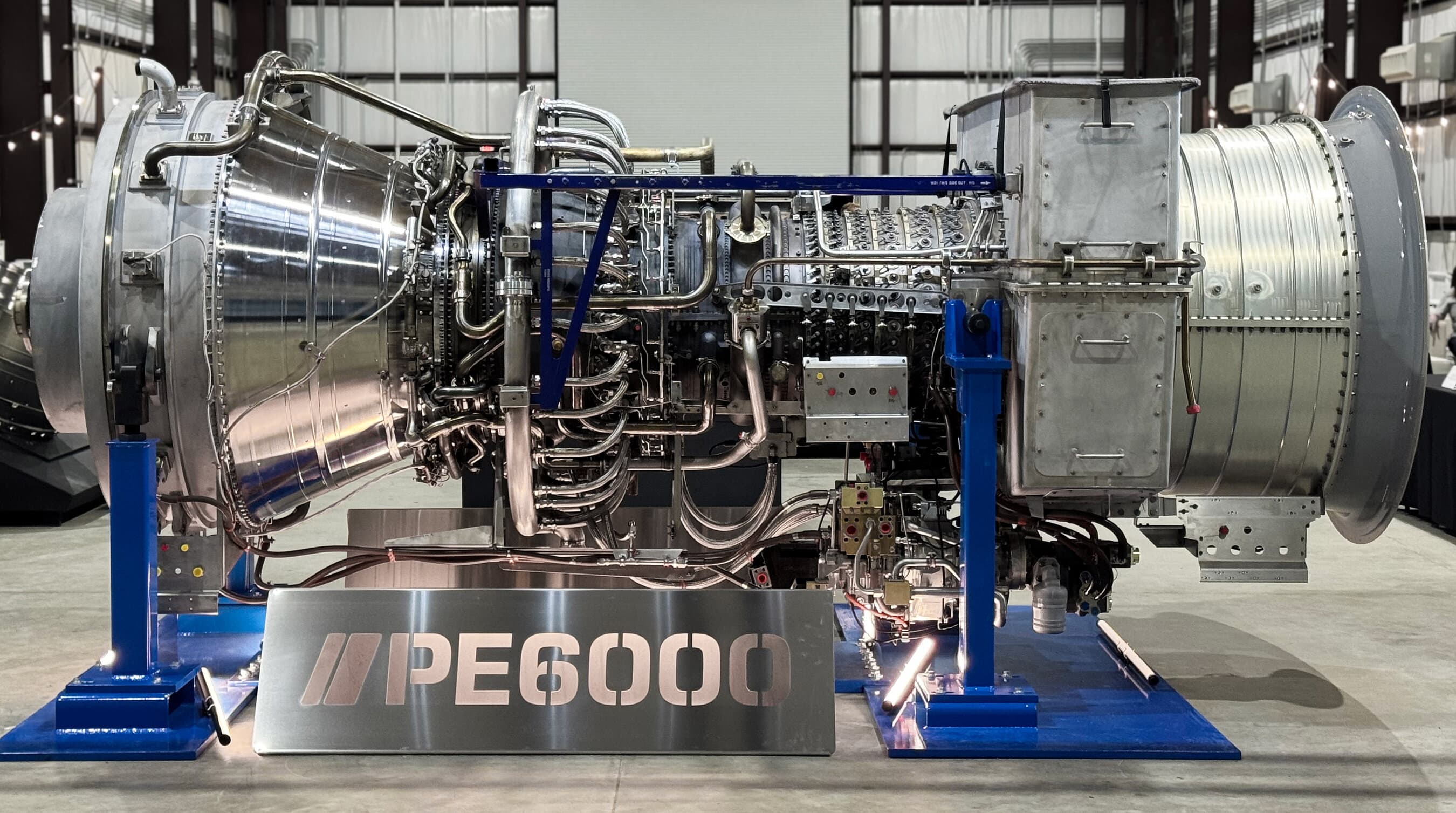
ProEnergy's PE6000, rated 48 MW, starts from an overhauled CF6-80C2 engine core. The photo shows the product, not xAI's Mississippi site.
Image: ProEnergy
Source · Press image from the ProEnergy newsroom, used for news reporting.
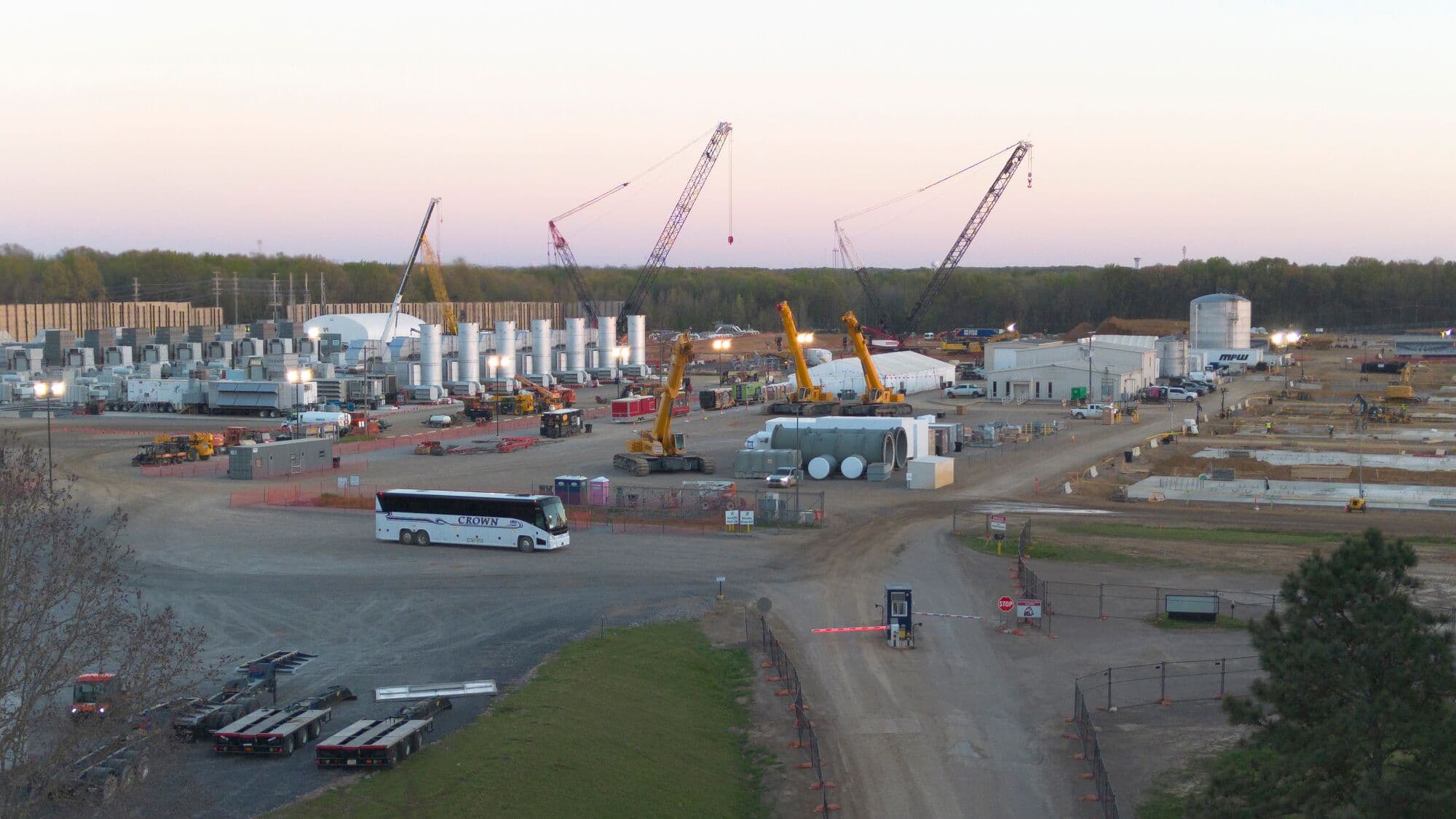
xAI has installed eight converted jet-engine turbines in Mississippi to help power its Colossus 2 data center near Memphis, according to TechCrunch's summary of a New York Times report. Tom's Hardware reports each can produce up to 50 MW, with permits that it says allow a 25% higher limit for volatile organic compounds (VOCs).
The New York Times first reported the installation on Nov. 3, citing state permits and satellite imagery. Voltgrid could not read the Times piece, so the figures below come from Tom's Hardware and TechCrunch, which summarize it. The units are supplied by ProEnergy, a Missouri company that rebuilds General Electric engines of the type used on Boeing jets so that they burn natural gas.
Neither report states a site total or which ProEnergy model xAI uses; ProEnergy rates its PE6000 at 48 MW. Voltgrid has not seen the permit that covers these eight units, and states no absolute VOC limit.
Why Data Centers Want Converted Jet Engines
The draw is speed. Rystad Energy analyst Audun Martinsen told the Times that "they can have a data center running in 24 months" with jet-powered units, according to TechCrunch. TechCrunch, citing the International Energy Agency, says hooking 100 MW to the grid in Northern Virginia takes about seven years, and a Mitsubishi Power executive expects most new power capacity to arrive by 2031.
Turbine makers are no relief. Crusoe walked away in September from a $1.25 billion deal to buy 29 gas turbines from Boom Supersonic, TechCrunch reports, though a Crusoe spokesperson said the company still plans to use turbines at its Abilene, Texas, Stargate campus.
Aeroderivative vs Frame Gas Turbines Explained
An aeroderivative turbine is a jet-engine core fitted with a shaft and generator and run on natural gas. A frame turbine is an industrial machine designed for power plants from the start. The gap is scale and speed: GE Vernova rates its LM6000 at 51.1 to 56.9 MW net in simple cycle and says it reaches full power in around five minutes, while its 7HA frame turbine is 384 MW or 430 MW and ramps to full load in 10 to 21 minutes.
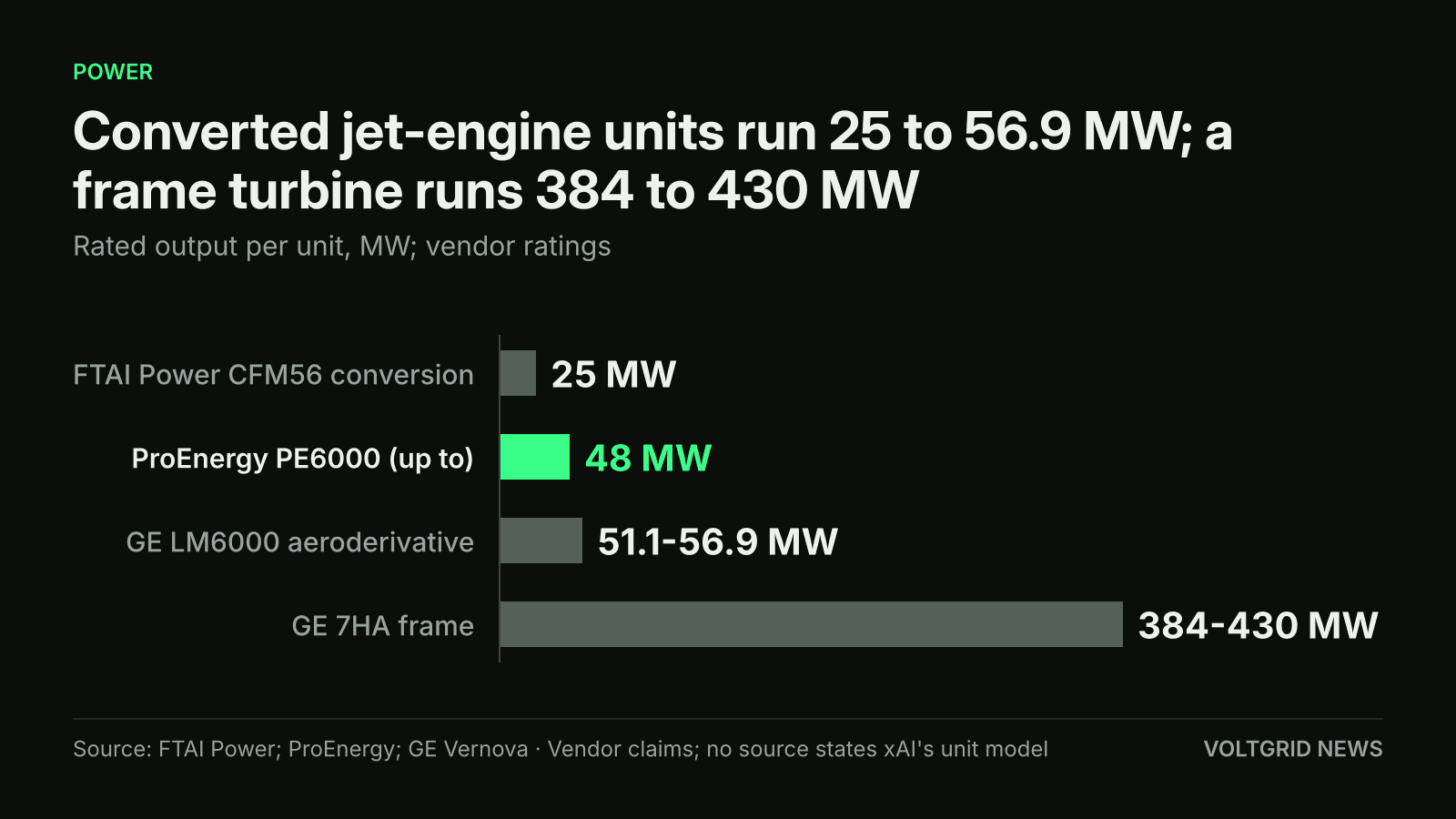
Converted jet-engine units are rated 25 to 56.9 MW per unit, against 384 to 430 MW for GE's 7HA frame turbine (vendor ratings).
Illustration (AI-generated)
For a data center the trade is time against efficiency. Small units can arrive sooner as bridge power, but the Times, per TechCrunch, found converted engines less efficient and more polluting than plant-grade turbines, so more of them are needed for the same output.
ProEnergy and FTAI Supply the Converted Units
ProEnergy told IEEE Spectrum in October 2025, as relayed by Interesting Engineering, that its PE6000 unit, built on a refurbished CF6-80C2 engine core, delivers up to 48 MW. It said it had sold 21 turbines for two data-center projects totaling more than 1 GW, which its customers expect to use as bridging power for five to seven years until grid connection. Those are the vendor's statements.
ProEnergy also told IEEE Spectrum its nitrogen oxide emissions average 2.5 parts per million; Interesting Engineering describes EPA thresholds as typically 10 to 25 ppm. The federal limit for a new gas-fired turbine of 50 to 850 MMBtu/h heat input is 25 ppm at 15% oxygen. Voltgrid has not read the basis of the 2.5 ppm figure or any xAI permit limit.
A second supplier is entering. FTAI Aviation has launched FTAI Power to convert surplus CFM56 engines, the type on the Boeing 737 and Airbus A320 families, into 25 MW units, according to Aerospace Global News. FTAI said in December 2025 it expected production to begin in 2026, with capacity for more than 100 units a year once ramped; Voltgrid has not confirmed that production has started.
What Is Not Confirmed About xAI's Permits
The Southern Environmental Law Center has challenged Mississippi's approval of the turbines, Tom's Hardware reports, arguing xAI has not shown they meet standards for pollutants including formaldehyde and that it undercounted projected emissions. Mississippi's permit board approved 41 gas turbines for xAI affiliate MZX Tech's Southaven plant on March 10, 2026, and the SELC called that permit flawed. xAI has not answered in the reports Voltgrid read.
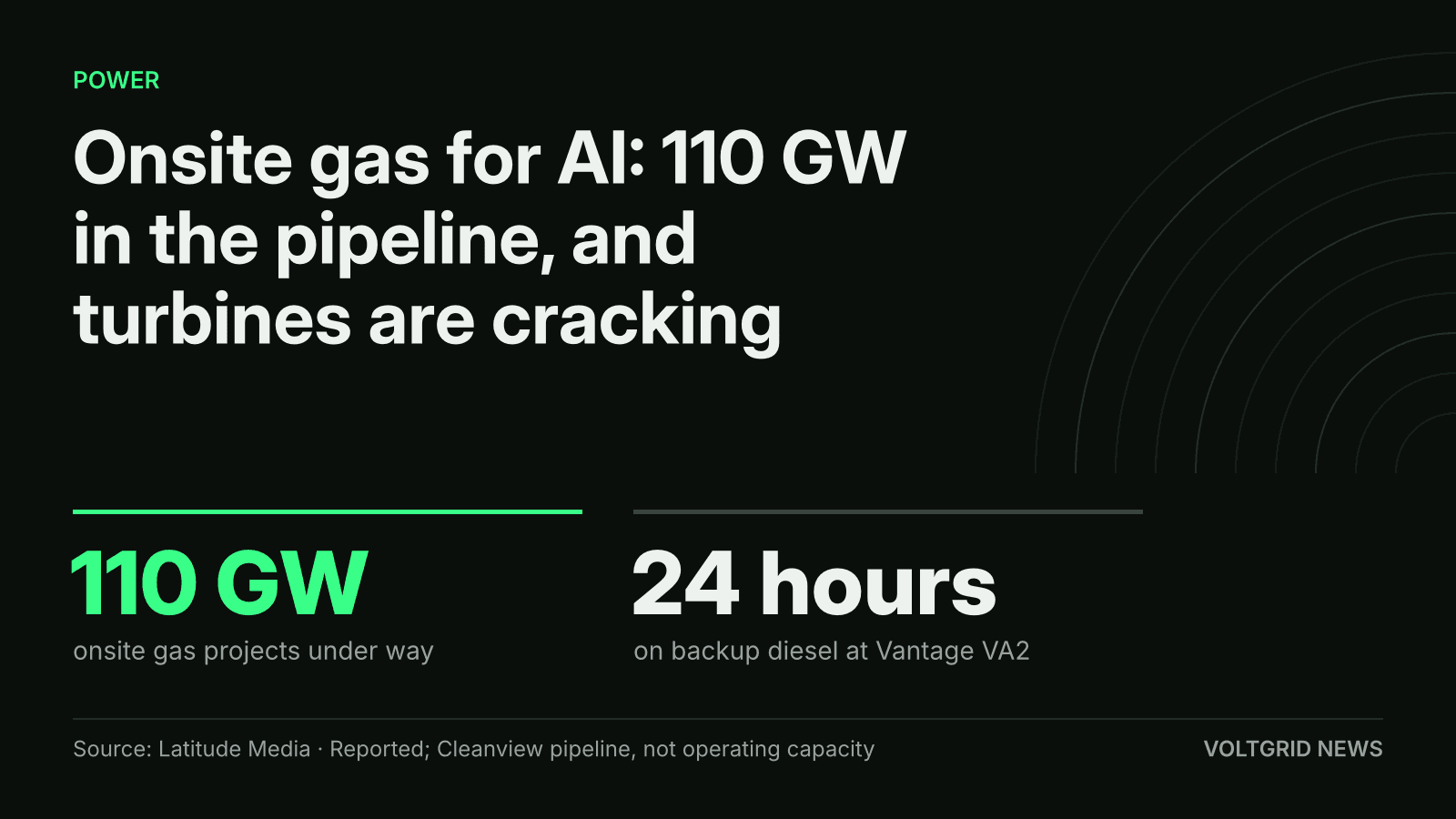
Voltgrid has not established whether these eight units are part of the Southaven plant; the NAACP's Clean Air Act suit over Southaven turbines, in which a federal judge denied xAI's motion to dismiss, is a separate court case. For the wider on-site gas build-out, see how Voltgrid reported 110 GW of on-site gas in development. Watch for the permit challenge's outcome and for any xAI statement of the site's total capacity.
Sources
- 018 converted jet engines are powering xAI data centers as companies look for new energy sourcesTom's Hardware · tomshardware.com
- 02Old, Polluting Jet Engines Are Being Scavenged to Power Data CentersGoogle News · agenda, on-site generation · news.google.com
- 03Data centers are turning to old jet engines as the wait for power growsTechCrunch · techcrunch.com