xAI Motion to Dismiss Denied in NAACP Clean Air Act Suit at Southaven
A federal court in Mississippi denied xAI's motion to dismiss the NAACP's Clean Air Act suit over COLOSSUS II gas turbines on Oct. 30, Earthjustice says; the injunction request is still pending.
Chips & Power DeskEdited by Ege Erten
2 min readAI-assisted
Follows our story: SpaceXAI Faces $6.1M Mississippi Stormwater Claim at Southaven Sites

Gas turbines under construction at the Southaven site at the center of the NAACP's Clean Air Act suit against xAI. Photo by Brad Zweerink for Earthjustice, plaintiffs' counsel.
Image: Brad Zweerink / Earthjustice
Source · Press image from the Earthjustice press release page, used for news reporting.
The U.S. District Court for the Northern District of Mississippi denied xAI's motion to dismiss the NAACP's Clean Air Act lawsuit over the gas turbines powering the COLOSSUS II data center in Southaven, Mississippi, according to an Earthjustice release dated Oct. 30, 2026. Earthjustice, which represents the NAACP with the Southern Environmental Law Center (SELC), said the order came "on Friday," which is Oct. 30.
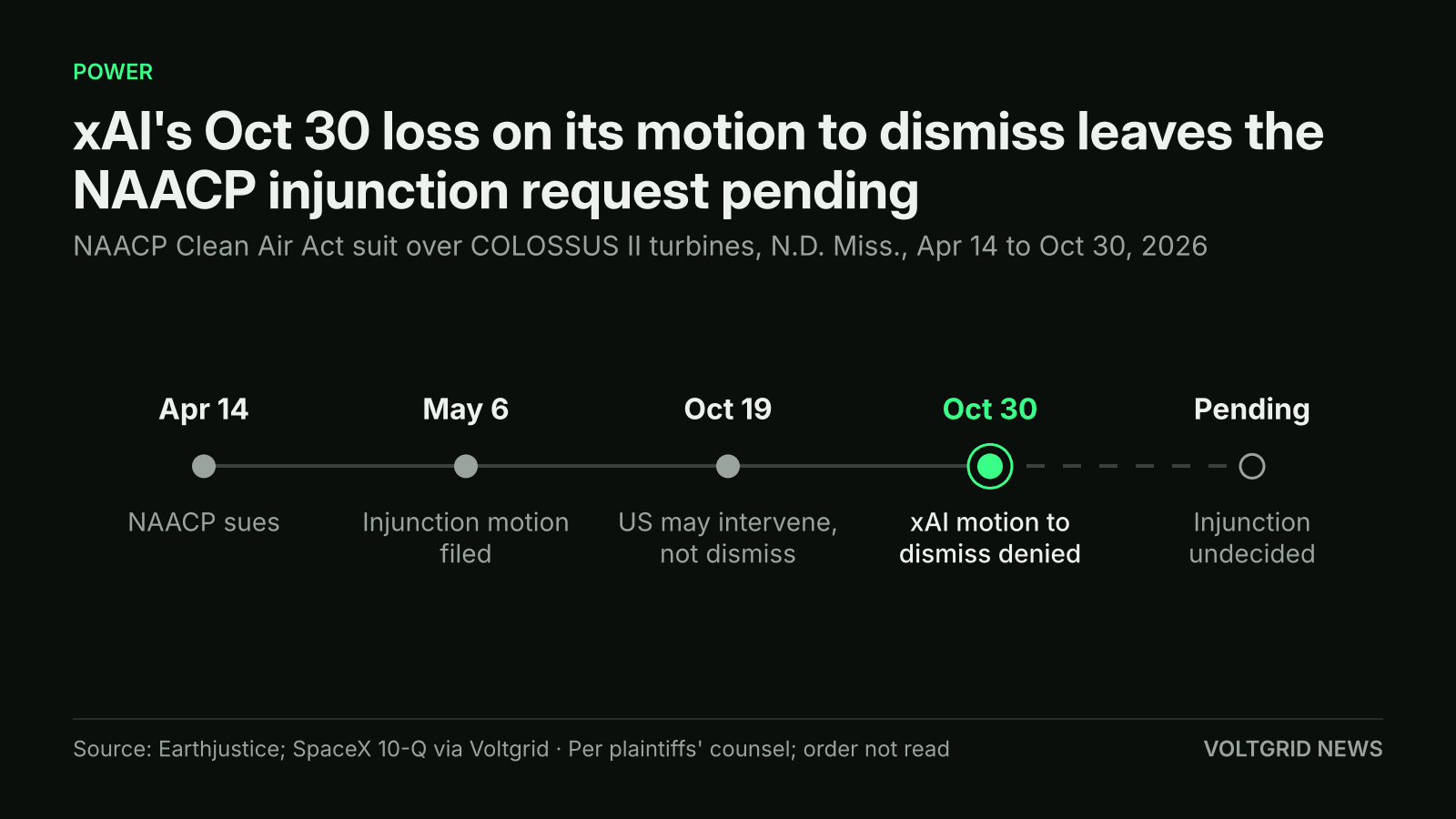
Per plaintiffs' counsel, the court's Oct 30 denial of xAI's motion to dismiss leaves the NAACP's preliminary injunction request undecided.
Illustration (AI-generated)
Voltgrid has not seen the order, and no independent outlet had reported the ruling at publication, so everything below on the order comes from plaintiffs' counsel; the release does not name the judge. The same court acted earlier: as Voltgrid reported on Oct. 24, citing SpaceX's 10-Q, the district court on Oct. 19 let the United States intervene in the case but refused to let it dismiss the suit. The NAACP sued xAI and its unit MZX Tech on April 14 and asked for a preliminary injunction on May 6, per the same filing.
What Earthjustice says the court held
Earthjustice said xAI made two arguments. The first was that citizen suits, which let communities enforce the Clean Air Act themselves, are unconstitutional. The court rejected it, the release says, reasoning that citizen plaintiffs sue in their own name for harm to themselves and so do not exercise the federal government's executive power.
The second argument was that the turbines, including those described as temporary, escape the permitting rules. Earthjustice said the court found the plant is not a "mobile source" under federal regulations and so was not exempt from Clean Air Act permitting. That is the question the NAACP suit turns on: its allegation, as Voltgrid reported on Oct. 24, is that turbines described as mobile are stationary sources running without the required permits.
Why it matters for on-site gas power
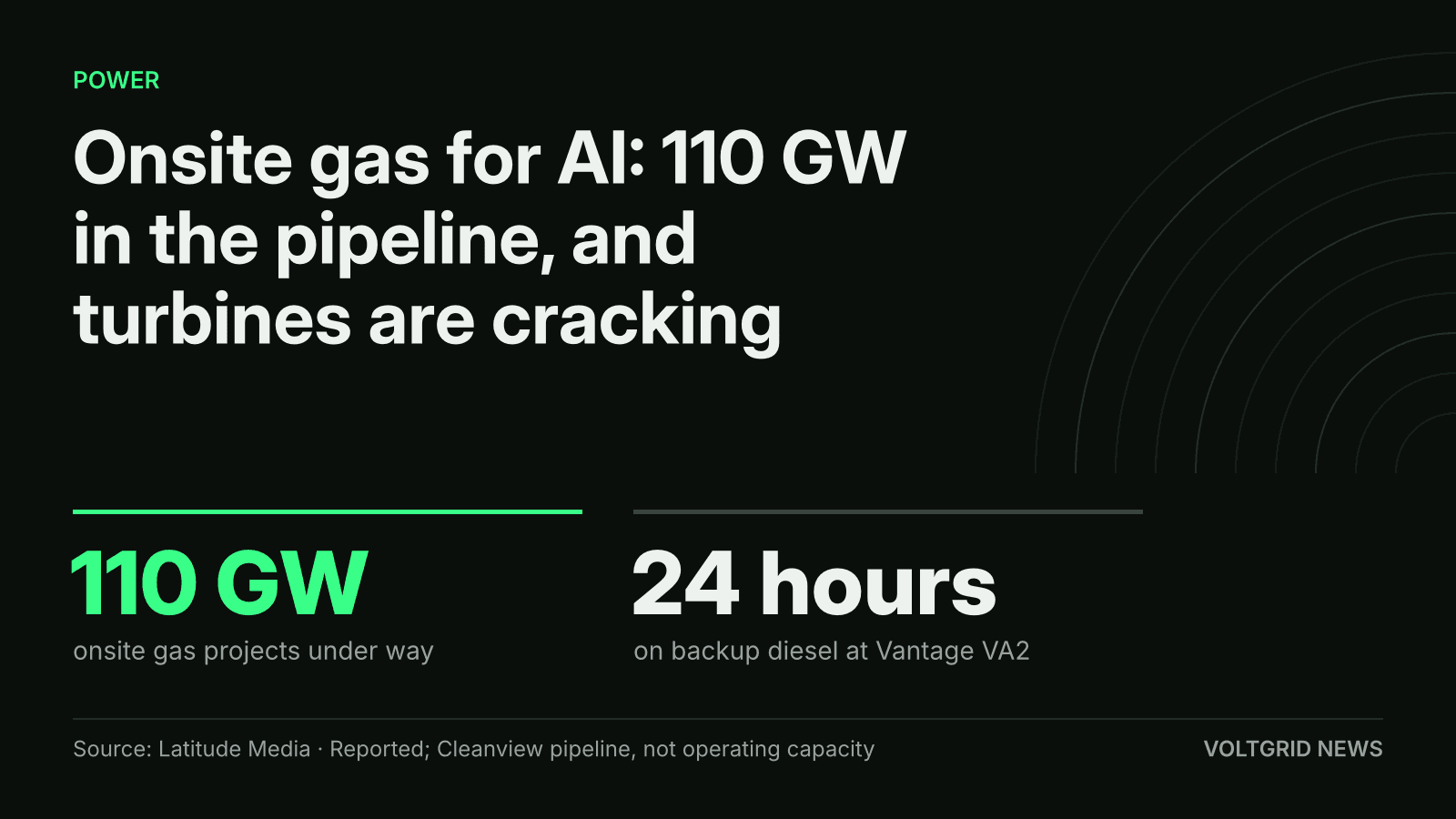
Behind-the-meter gas turbines let an AI campus start drawing power before a grid connection or a permit is in hand. This ruling, as plaintiffs describe it, narrows that route at the motion-to-dismiss stage: labelling turbines temporary did not take the plant outside the permit requirement. It is not a finding that xAI broke the law. The court has not decided the merits, and the release says the preliminary injunction request, which could force the turbines to stop, is still undecided.
The release puts the plant's potential emissions at more than 5,000 tons of nitrogen oxides, 400 tons of fine particulate matter and 47 tons of formaldehyde a year. Those are plaintiffs' figures, not court findings, and the release does not say how they were calculated.
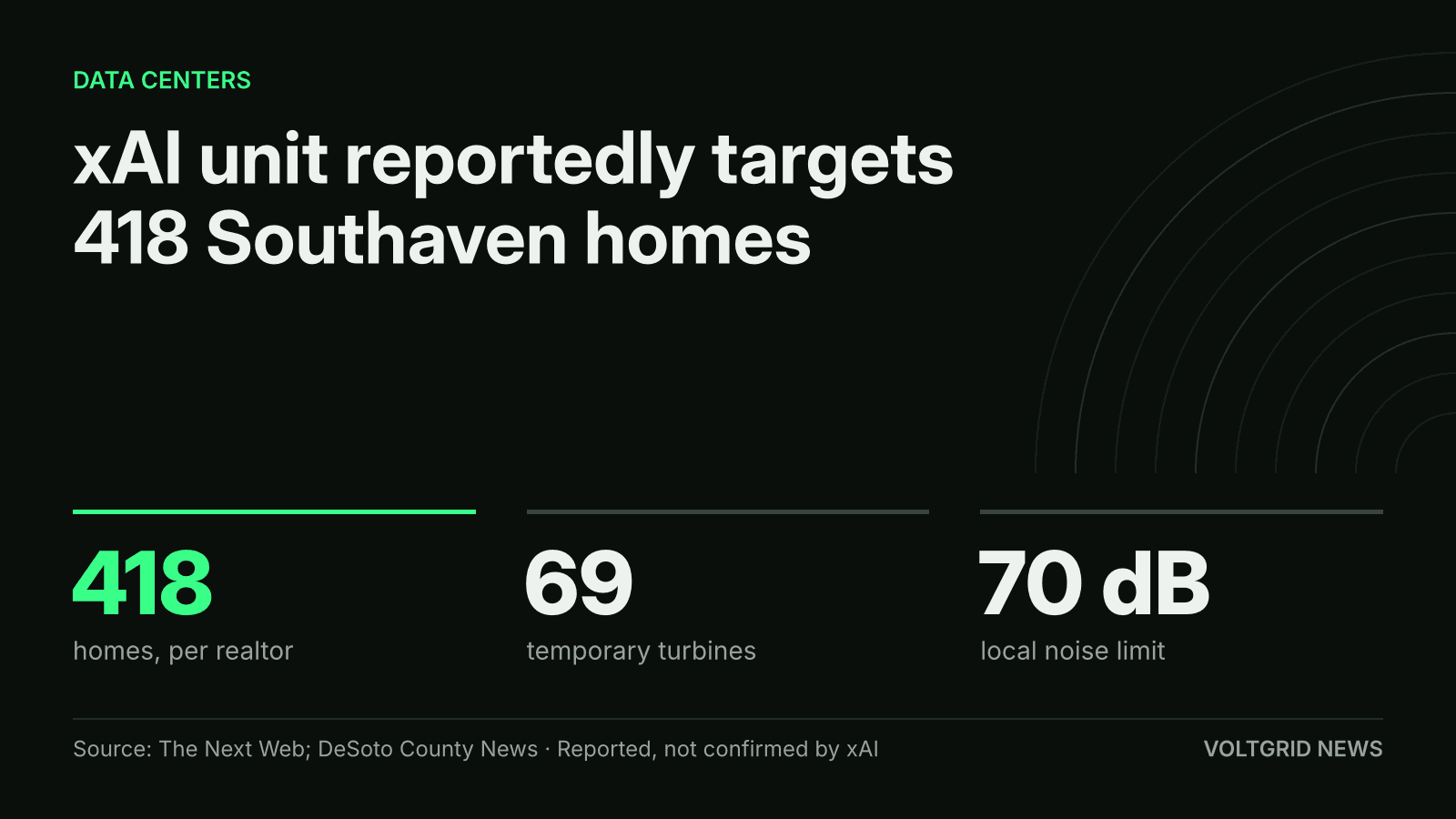
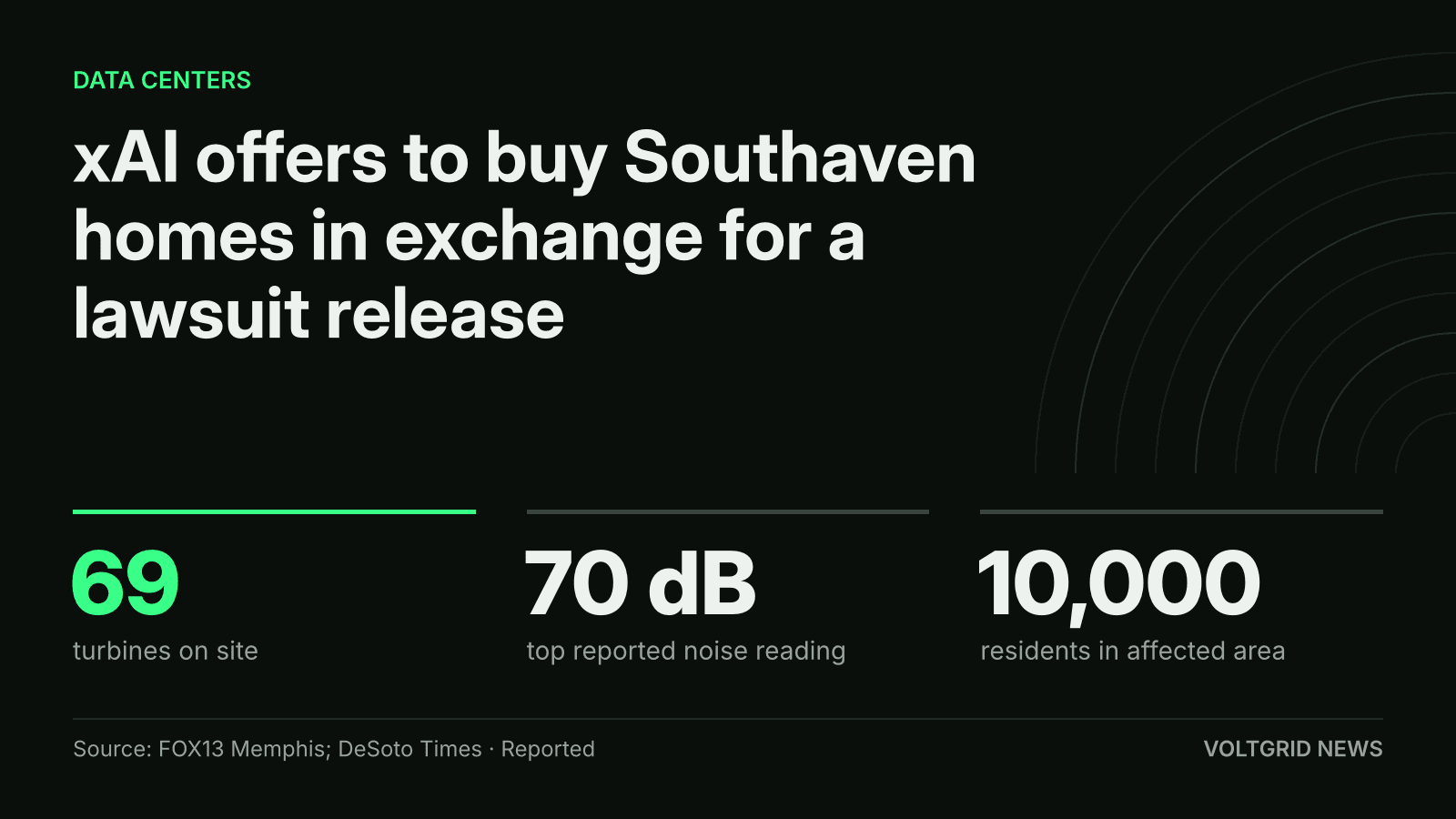
The case sits beside other Southaven disputes. On Oct. 28, xAI offered to buy homes from owners who release noise claims, and on Oct. 31 a realtor's recording heard by the Guardian put the target at 418 homes, a figure xAI has not confirmed. The noise suit and this Clean Air Act case are separate actions. The Oct. 24 story also covered Mississippi's stormwater notices, which the 10-Q puts at about $6.1 million in preliminary exposure.
What is not confirmed yet
The order text, the judge's name and any xAI response were not available to Voltgrid. xAI has not been quoted on the ruling here, and it could appeal or ask the court to reconsider. The preliminary injunction is the next decision to watch, because it is the one that could change whether the turbines keep running.