X-energy 10-Q: Both Amazon Xe-100 Projects Depend on Amazon Funding
X-energy's Q3 10-Q, filed Nov. 12, says Cascade and AEP's Indiana project depend on Amazon development funding, in some cases staged by milestone and conditional, so one shift in Amazon's priorities could hit both.
Nuclear & Microgrids DeskEdited by Ege Erten
6 min readAI-assisted
Follows our story: X-energy Q3 Revenue Hits $66.3M as Net Loss Narrows to $83.7M
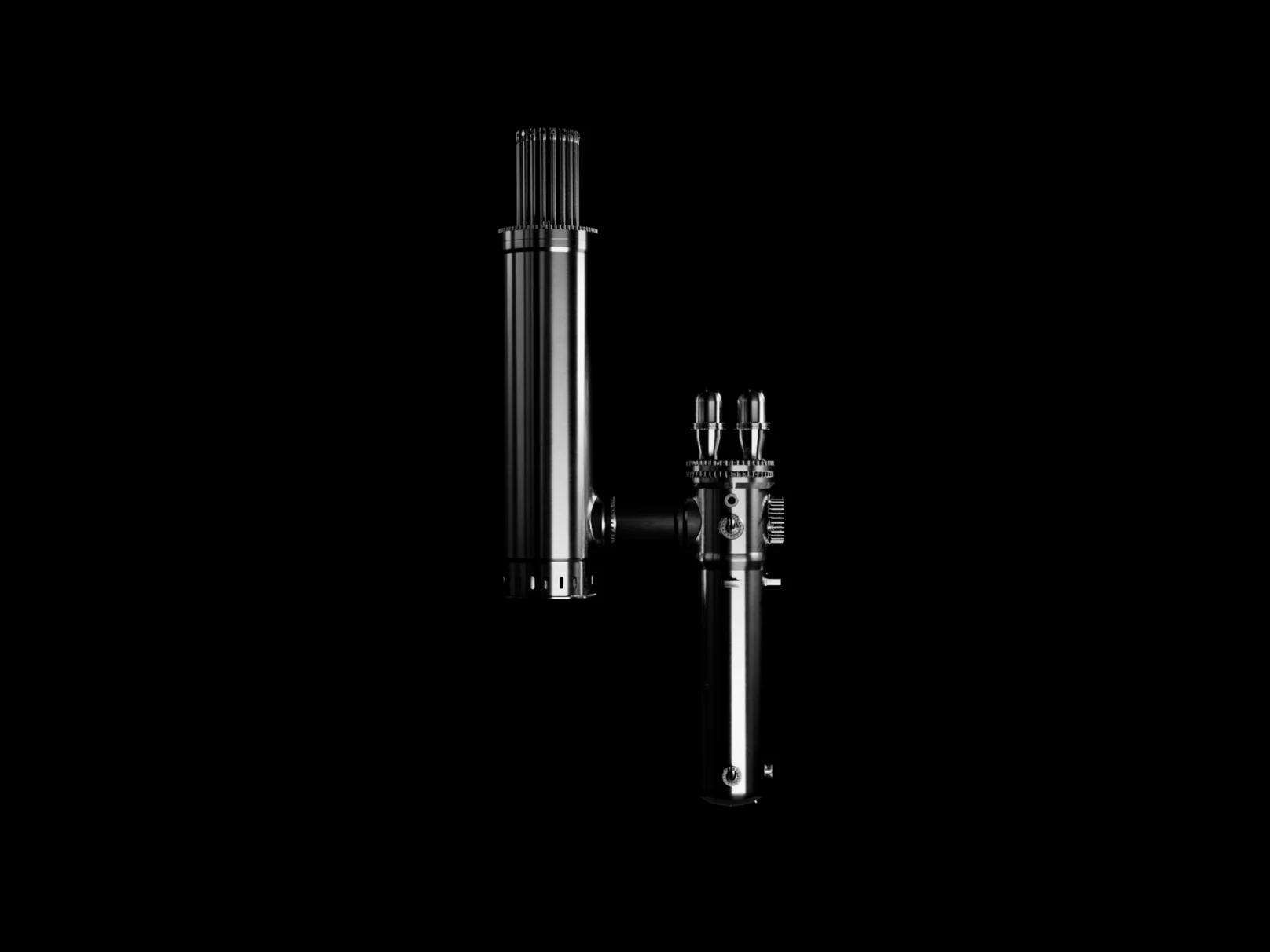
Rendering of the Xe-100 reactor, the design behind X-energy's four-project pipeline (X-energy).
Image: X-energy (rendering)
Source · Press image from the X-energy website, used for news reporting.
X-energy's third-quarter Form 10-Q, filed with the SEC on Nov. 12, 2026, adds a risk factor that ties both of Amazon's Xe-100 projects to the same source of money: development funding from Amazon. Voltgrid's reading is that the target of more than 5 GWe of new Xe-100 projects by 2039, which Amazon holds as options and the 10-Q calls a total potential target that Amazon is not obliged to buy, is for now only as firm as Amazon's next milestone payment, and that contract terms already in place tilt the long-run value toward Amazon.
That frame matters more than the quarter's results, which Voltgrid covered earlier today. The queue slots and the right of first refusal Amazon holds are set out in our project file on the Amazon Xe-100 pact and are not repeated here.
What happened
In the new filing, X-energy says its development arrangements with American Electric Power (AEP) and Energy Northwest are preliminary and depend on certain development funding from Amazon, with no assurance that either project proceeds or produces definitive agreements or revenue. It adds that any change in Amazon's priorities, its funding or its relationship with X-energy could affect both projects at the same time, and that funding and responsibilities differ by project.
The filing then describes how the money moves. In certain cases, X-energy says, Amazon's funding for a project comes in stages as specified milestones are completed and is subject to conditions; in others X-energy funds part of the development costs itself, and it may not recover those amounts. Neither the size of Amazon's funding, the milestones nor X-energy's share is disclosed.
This language is new. A text search of the second-quarter 10-Q, filed Aug. 13, 2026, finds neither the Amazon-dependence risk factor nor any reference to AEP or Sullivan County. The Q2 filing did already carry the queue-slot, right-of-first-refusal, most-favored-pricing and cost-efficiency payment terms, so those are not new disclosures.
The figures for the two projects come from different documents. The Q3 10-Q says Amazon and Energy Northwest signed a Carbon Free Development and Funding Agreement for an initial four reactors of 320 MWe, which could be upsized to 960 MWe, with operations expected in the early 2030s. Amazon's own concept art of the Cascade Advanced Energy Facility shows three reactor buildings housing four units each, ANS Nuclear Newswire reported in October 2025; the 10-Q itself gives no 12-unit figure for Cascade. For Indiana, the 10-Q says X-energy entered a joint development agreement with AEP in August 2026 for feasibility work on a proposed 12-unit, 960 MWe project in Sullivan County, and that AEP and Amazon entered a related funding and development agreement. AEP announced the agreement on Oct. 19, 2026; we found no explanation of the gap between the two dates.
Why it matters
The first step of the argument is concentration. X-energy counts four projects in its pipeline (Dow, Amazon with Energy Northwest, Centrica, and Amazon with AEP), which it says add up to more than 11 GWe and 144 reactors if every customer exercises its contingent rights in full. Two of the four rest on one funder, and the company now says in writing that a single decision by that funder could move both.
Two of the four pipeline projects, Cascade and Indiana, rest on staged Amazon development funding; no project has reached a final investment decision.
Illustration (AI-generated)
The second step is that nothing in either project is yet a commitment to build. X-energy says it has not reached a final investment decision on any deployment and has not delivered a commercial Xe-100. AEP's release says Amazon intends to buy the Indiana plant's output under a long-term contract covering the facility's costs, but only if the project reaches a final investment decision. The 10-Q also says customers including Dow, Amazon and Centrica have rights to delay, reduce or terminate their commitments.
The third step is who keeps the upside. Under its agreements with Amazon, in a term X-energy already disclosed in its second-quarter 10-Q, X-energy must make payments to Amazon from the fifth anniversary of the first Amazon-sponsored project's commercial operation date, reflecting cost efficiencies measured against the power purchase agreement prices of the initial projects. The payments can be deferred if they would exceed a set share of free cash flow, or during a default under a future credit agreement. X-energy says they could be material, and that lower costs on other projects would raise the premium owed on Amazon-sponsored ones. That suggests Amazon has bought both an option on the fleet and a share of its learning curve, while X-energy carries part of the development risk.
The case against
Staged, milestone-based funding is the normal way to pay for nuclear development before a final investment decision, and it limits Amazon's sunk cost rather than signalling weak intent. A risk factor is a legal disclosure, not a forecast. Amazon has also shown steady support: it anchored a funding round of about $500 million in X-energy in 2024, ANS reported, and X-energy expects to file the Cascade construction permit application with the NRC in the first half of 2027, CEO Clay Sell said on the second-quarter call, according to ANS. On that reading, the new paragraph describes how the money is structured, not a change in Amazon's plans.
What it means for Amazon, X-energy and the utilities
For Amazon, the structure keeps the SMR program an option: it funds development step by step and is not obliged to buy reactors. For X-energy, near-term revenue still leans on Washington, not on Amazon: the U.S. government accounted for 84.5% of third-quarter revenue and grant income, the 10-Q says, and 88.3% over nine months. For Energy Northwest and AEP, the filing makes clear that their timelines depend in part on decisions Amazon makes.
One more term, separate from the Amazon funding and already in the second-quarter filing, is worth reading closely. The 10-Q describes a warrant issued on Oct. 3, 2025 to a related-party customer it does not name, for up to 14.1 million Class A shares at $6.4870, exercisable only once all Xe-100 units under that customer's agreements are fully operational. Its grant-date fair value is $162.7 million, to be booked as a reduction of revenue when vesting becomes probable; it was not deemed probable at Sept. 30, so nothing has been recognized. The 10-Q does not say whether the holder is Amazon.
What Funding Stages Mean for an Advanced Reactor
Before a reactor project reaches a final investment decision, someone pays for the studies, licensing work and long-lead orders. In X-energy's 10-Q, Amazon provides certain development funding for the Cascade and Indiana projects, in some cases released in stages as specified milestones are completed and subject to conditions, and X-energy funds part of the costs itself in others. Neither Amazon's amount nor the milestones are disclosed.
The consequence is that a project can look large on paper while still depending on the next payment. Cascade covers an initial four reactors of 320 MWe, upsizable to 960 MWe, and the Indiana plan is a proposed 12-unit, 960 MWe project, but X-energy says it has not reached a final investment decision on any deployment. Long Mott is funded differently: if Dow decides to build, Dow funds construction with a 50/50 DOE cost share.
What to watch
The useful contrast is Dow's Long Mott project in Texas, for which the NRC issued a construction permit on Nov. 9, 2026; the permit allows construction only, and Dow has made no construction decision. The 10-Q says that if Dow makes a final investment decision it is expected to fund construction, which is eligible for a 50/50 cost share under the Department of Energy's Advanced Reactor Demonstration Program, and that if Dow does not, X-energy has no obligation to keep funding the project; to stay in the program it would need another customer for the demonstration plant within a reasonable time, and Dow may terminate its agreements for convenience. The program's current budget period runs from March 2025 to March 2027, with later periods subject to DOE approval. Long Mott's money rests mainly on Dow and DOE; Amazon's two projects rest largely on Amazon.
The milestones that will test the argument: whether X-energy files the Cascade construction permit application in the first half of 2027, as it targets; whether AEP's feasibility work leads to definitive agreements; whether a later 10-Q discloses the size of Amazon's funding or X-energy's share; and the DOE decision on the next ARDP budget period before March 2027. Nothing said on X-energy's Nov. 12 earnings call was available in a readable transcript or report at the time of writing.