Custom AI Chips: 21 Named, 19 Designs, 10 in Service, 8 Announced
Google, Amazon, Microsoft, Meta and OpenAI have named 21 custom AI chips and systems, 19 distinct designs: 10 in service, 1 unconfirmed, 2 in testing, 8 announced. Anthropic's filing shows a top user still runs four chip families.
Hardware & Analysis DeskEdited by Ege Erten
8 min readAI-assisted
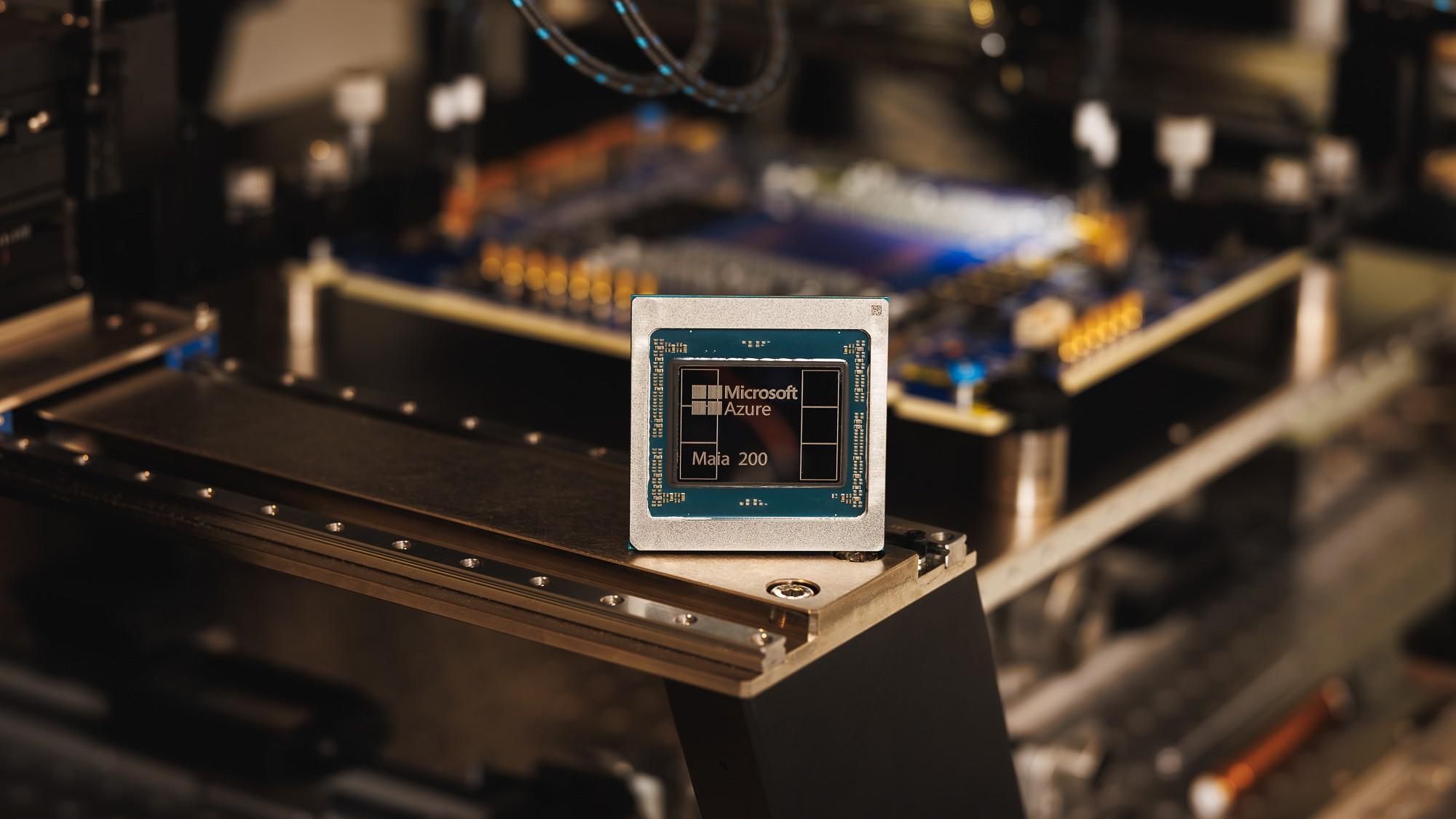
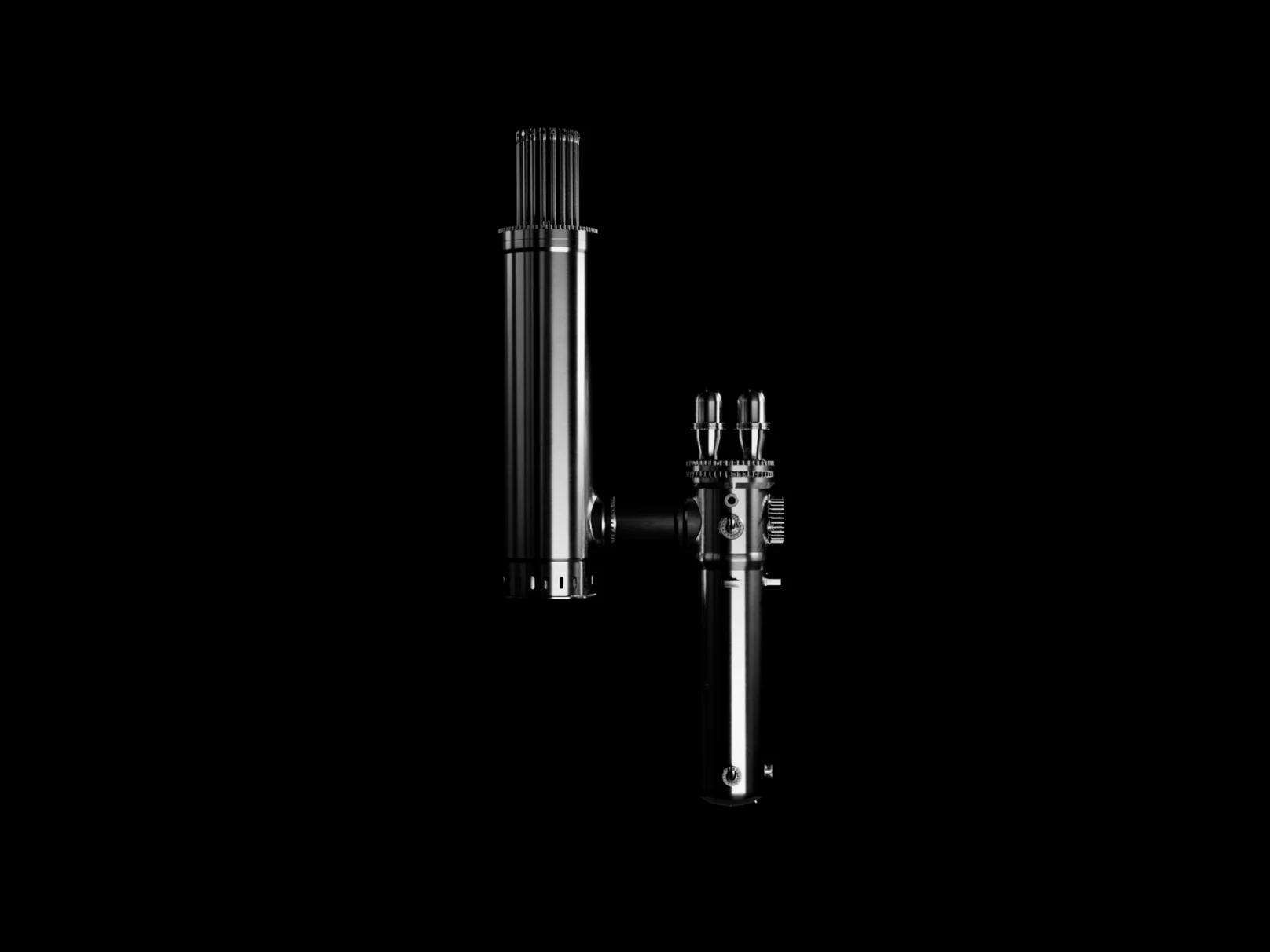
Microsoft's Maia 200, which the company says is now in production and serving Copilot.
Image: Microsoft
Source · Press image from the Microsoft newsroom, used for news reporting.
Five companies have named 21 custom AI chips and systems, 19 distinct designs: as of Nov. 12, 2026, 10 are in service, 1 is unconfirmed, 2 are in testing and 8 are announced.
The five are Google, Amazon, Microsoft, Meta and OpenAI. The count starts at Google's TPU v5e, AWS's Inferentia2, Microsoft's Maia 100 and Meta's MTIA 200; earlier generations such as TPU v4, Trainium1, Inferentia1 and MTIA 100 are not counted. In service means the maker says the chip is generally available or running production workloads; testing means lab results or a first deployment without scale; announced means a name and, at most, a target date. Each status is a vendor statement, not a shipment count. Only two companies give numbers: Meta said on Mar. 11 it has deployed hundreds of thousands of MTIA chips across its generations, and Amazon said on Dec. 2, 2025 that Project Rainier links more than 500,000 Trainium2 chips.
Which Custom AI Chips Each Company Has
Google's TPU v5e, v5p, Trillium (v6e) and Ironwood (TPU7x) are in service, and Google's documentation calls TPU7x the latest TPU available on Google Cloud. TPU 8t and 8i were announced on Apr. 22 for general availability "later this year", and Google's TPU page still marks all four eighth-generation systems, 8t, 8i, 8tx and 8i Max, as "Coming soon". On Nov. 9 Google added 8tx and 8i Max with no date, price or region, and said nearly 100 customers now use TPUs, as Voltgrid reported. That is four in service and four announced, but only two of the four announced are new silicon: Google says 8tx is built on the same silicon as 8t, and 8i Max puts two 8i chips on one package.
AWS has three in service: Inferentia2 (generally available Apr. 13, 2023), Trainium2 (Dec. 3, 2024) and Trainium3, whose Trn3 UltraServers became generally available on Dec. 2, 2025. Trainium4 is announced. Microsoft said on Oct. 12 that Maia 200 is in production, serving Copilot, and that Maia 300 begins production deployments in 2027. Maia 100 has no current Microsoft statement on deployment beyond an August 2024 design post, so it is listed as unconfirmed.
Meta lists five. MTIA 300 is in production for ranking and recommendation training, and MTIA 200 counts as in service under Meta's family-wide deployment figure. MTIA 400 finished lab testing and is "on the path" to deployment, so it sits in testing. MTIA 450 is scheduled for mass deployment in early 2027 and MTIA 500 in 2027. OpenAI has one chip, Jalapeño, which it unveiled with Broadcom on Jun. 24. OpenAI reported first test results on Aug. 25 and plans to begin deploying it by the end of 2026, so it is in testing.
The count leaves out Broadcom's XPU accelerators for Anthropic, which are a Broadcom program, not one of the five companies' own chips. Bank of America, Blackstone, Citi and Morgan Stanley committed $63 billion to buy them and lease them to Anthropic from 2027, as Voltgrid reported. Merchant accelerators, chips sold to any buyer, such as Intel's Gaudi 3, are not counted.
TSMC Nodes, CoWoS Packaging and HBM per Chip
Where a foundry is stated, it is TSMC. Microsoft names TSMC N5 and CoWoS-S packaging for Maia 100, TSMC 3nm for Maia 200 and TSMC N2P for the Maia 300 compute chiplets; CoWoS (chip-on-wafer-on-substrate) is TSMC's packaging that puts logic beside memory. AWS calls Trainium3 its first 3nm AI chip; The Register described Trainium2 in 2024 as a pair of 5nm compute dies on CoWoS with four 24 GB stacks of high-bandwidth memory (HBM). Google names no node; Tom's Hardware reports the 8t and 8i use the N3 family and Jon Peddie Research reports Ironwood uses N3P.
Where a foundry is named it is TSMC, and these six chips carry up to 288 GB of HBM each; GB and GiB are kept as each maker published them.
Voltgrid News
Illustration (AI-generated)
HBM per chip shows where each roadmap points. Trainium3 carries 144 GB of HBM3e. Ironwood has 192 GiB and TPU 8t 216 GB. Maia 200 carries 216 GB, and MTIA 300 is reported at the same. A 288 GB tier follows: TPU 8i, Maia 300 (HBM4), MTIA 400 and MTIA 450. Meta says MTIA 500 has up to 80 percent more HBM capacity than MTIA 450, and ServeTheHome reports up to 512 GB if HBM development proceeds as expected. Google's table, as reproduced by mashdigi, puts TPU 8i Max at 384 GB per package, a third above 8i, not double. Units, GB or GiB, are kept as each maker published them.
Memory brings power with it. In Meta's spec table, as reproduced by Tom's Hardware, MTIA 300 is rated at an 800 W module TDP (thermal design power) and MTIA 500 at 1,700 W, a rise of 2.1 times (1,700 divided by 800), while Meta says HBM bandwidth rises 4.5 times, from 6.1 to 27.6 TB/s. Microsoft's rack figure of 167 kW for 96 Maia 300 accelerators works out to about 1.7 kW each (167 divided by 96), against a 950 W chip TDP, which suggests the figure covers more than the chips. For planners, power per module rises with each custom generation.
Custom AI Chip Status: In Service, Testing, Announced
A chip is one piece of silicon, a package carries one or more chips with their memory, and a system adds the boards, network and rack around them. Google draws that line itself: its eighth generation is two chips, 8t and 8i, in four systems. Counting by name gives 21; by distinct silicon, 19.
10 of 21 named custom chips are in service and 8 are only announced; these are vendor statements, not shipment counts.
Voltgrid News
Illustration (AI-generated)
By company, named parts in service, unconfirmed, in testing and announced are as follows. Google has 4, 0, 0 and 4 (8 named). AWS has 3, 0, 0 and 1 (4). Microsoft has 1, 1, 0 and 1 (3). Meta has 2, 0, 1 and 2 (5). OpenAI has 0, 0, 1 and 0 (1). The totals are 10 in service, 1 unconfirmed, 2 in testing and 8 announced, 21 in all (10 + 1 + 2 + 8). By distinct silicon the announced group is 6, so the total is 19.
Two caveats apply to the count. Google's Nov. 9 post speaks of "shipping" four TPU systems in a year, but its product page marks all four as coming soon, so they stay announced. And Maia 100 is held apart as unconfirmed rather than counted in service, because Microsoft has said nothing about its deployment since 2024.
Custom Chips vs NVIDIA: Training, Inference and Reliance
Most of the new silicon is for inference. Microsoft expects Maia to be the primary inference system for its products from 2027, and Meta's MTIA 450 and 500 target generative-AI inference. Jalapeño targets inference and, Bloomberg reports as relayed by TrendForce, is not designed for training. Google splits the job, with TPU 8t for training and 8i for inference. AWS pitches Trainium3 for both. Google says customers can now deploy TPUs in their own data centers, and Amazon CEO Andy Jassy told analysts on Oct. 29 that Amazon intends to offer Trainium outside AWS late in 2027, according to a call transcript and as Voltgrid reported.
No company publishes its custom share of accelerators, so reliance on NVIDIA cannot be calculated from public data. The best evidence is Anthropic's S-1/A, filed with the SEC on Nov. 10. It says Claude is trained and served on four chip families, AWS Trainium, Google TPUs, NVIDIA GPUs and AMD GPUs, to reduce dependence on any one vendor. The filing lists commitments of at least $110.0 billion to Amazon, at least about $121.3 billion to Google and up to $120.5 billion for NVIDIA-based compute from SpaceXAI. These are cloud contracts, not split by chip and not chip purchases, so they should not be added together, as Voltgrid reported on the offering.
Meta shows the same hedge: its March post stays committed to a diverse silicon portfolio, SiliconANGLE reported on Feb. 26 (citing The Information) that Meta agreed to rent Google TPUs, and Meta has AMD chip deals, as Voltgrid reported.
For a side-by-side look at scale-up systems, AWS says a full Trn3 UltraServer holds up to 144 chips with 20.7 TB of HBM3e and 706 TB/s of aggregate memory bandwidth. NVIDIA lists its GB300 NVL72 at 72 GPUs, 20 TB of GPU memory and up to 576 TB/s. The AWS system has twice the chips (144 against 72), roughly the same HBM-class memory (20.7 TB against NVIDIA's rounded 20 TB) and about 1.23 times the bandwidth (706 divided by 576). AWS does not say an UltraServer is one rack, and NVIDIA's 37 TB "fast memory" includes 17 TB of CPU memory, so only GPU memory is compared. Maia 300, a 2027 design, lists 96 accelerators, 27.6 TB and 1.7 PB/s per rack. All are peak or aggregate vendor figures, not tests on one workload.
A Trn3 UltraServer holds 144 chips against 72 in a GB300 NVL72, on peak vendor figures for accelerator memory only.
Voltgrid News
Illustration (AI-generated)
For engineers and investors the takeaway is limited. Microsoft expects 40 percent more tokens per megawatt from Maia 300 than from leading GPU-based systems, with no rival named, but custom chips do not remove the shared bottlenecks of TSMC wafers, CoWoS capacity and HBM. The supplier side shows the scale: Broadcom reported AI semiconductor revenue of $16.7 billion for its quarter ended Aug. 2, up 221 percent from a year earlier, and guided to $21.7 billion for the quarter ended Nov. 1, and as Voltgrid reported, that growth now carries customer credit risk.
What to Watch and What Is Unconfirmed
AWS re:Invent runs Nov. 30 to Dec. 4 in Las Vegas, where Trainium4 timing is the open question. Google said in April that TPU 8t and 8i would be generally available later in 2026 and has given no newer date, and 8tx and 8i Max have none. Microsoft expects GitHub Copilot and Foundry on Maia 200 by the end of 2026, and OpenAI plans first Jalapeño deployment by the same date. Broadcom's fiscal fourth-quarter results are expected in December, with no date announced. In 2027, watch Maia 300 production, MTIA 450 mass deployment in early 2027, Broadcom's first Anthropic deliveries and Trainium sales outside AWS from late 2027.
Eight of 21 named custom chips are only announced; the next dated event is AWS re:Invent from Nov. 30.
Voltgrid News
Illustration (AI-generated)
Several points are unconfirmed. Maia 100's deployment status has no current Microsoft statement, and the TDP and bandwidth figures in Meta's spec table are as reproduced by Tom's Hardware. Jalapeño's memory, node and benchmark figures come from coverage of OpenAI's Aug. 25 results by TrendForce, citing Tom's Hardware and Bloomberg, and its 1.5 to 1.9 times throughput-per-kilowatt claim over NVIDIA's GB200 and GB300 racks is OpenAI's own, normalized to rated power. Jassy's remarks come from a call transcript, and the Meta TPU rental is a report from anonymous sources. Finally, "in service" rests on company statements, and the unit counts behind them remain private.
Sources
- 01Tensor Processing Units (TPUs)Google Cloud · cloud.google.com
- 02Four MTIA Chips in Two YearsMeta · ai.meta.com
- 03Amazon EC2 Trn3 UltraServers generally availableAWS · aws.amazon.com
- 04TPU 8t and TPU 8i technical deep diveGoogle Cloud · cloud.google.com
- 05Microsoft to expand Azure Maia system to multi-gigawatt deploymentsMicrosoft · blogs.microsoft.com
- 06Trainium3 UltraServer delivers faster AI training at lower costAmazon · aboutamazon.com