Japan Resumes Winter Power Subsidies at Up to 4.5 Yen/kWh
Takaichi said Oct. 29 that electricity and gas subsidies return for December to February, worth about 7,000 yen per household, while the gasoline reference price rises 5 yen a month.
Policy & Economics DeskEdited by Ege Erten
2 min readAI-assisted
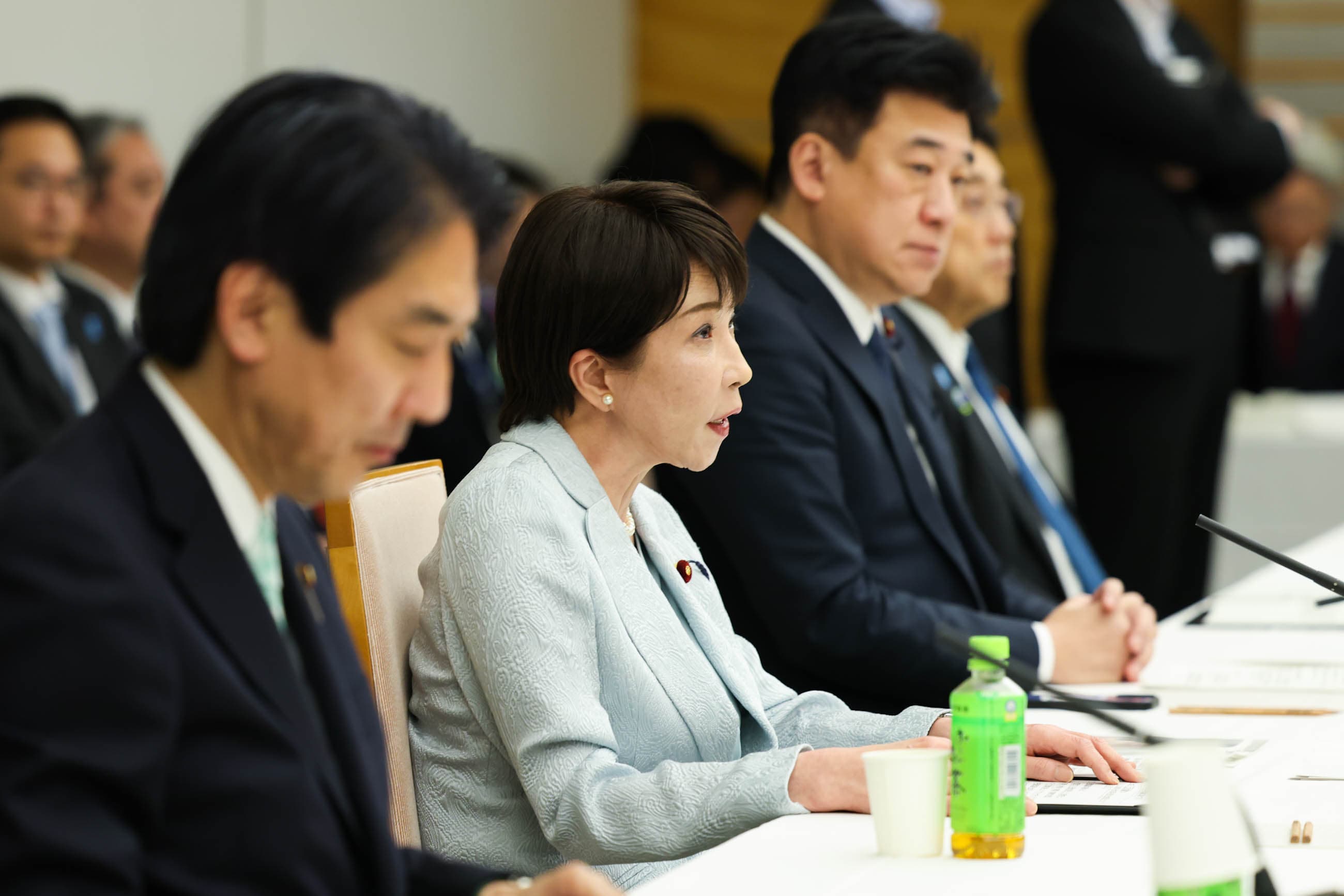
Prime Minister Sanae Takaichi at a meeting on Oct. 29, the day she announced the winter subsidies. The photo is from the Prime Minister's Office of Japan.
Image: Prime Minister's Office of Japan
Source · Press image from the Prime Minister's Office of Japan website, used for news reporting.
Japanese Prime Minister Sanae Takaichi said on Oct. 29 that the government will bring back electricity and gas subsidies for December through February, at 1.0 yen per kilowatt-hour in December and 4.5 yen in January and February, according to Jiji Press.
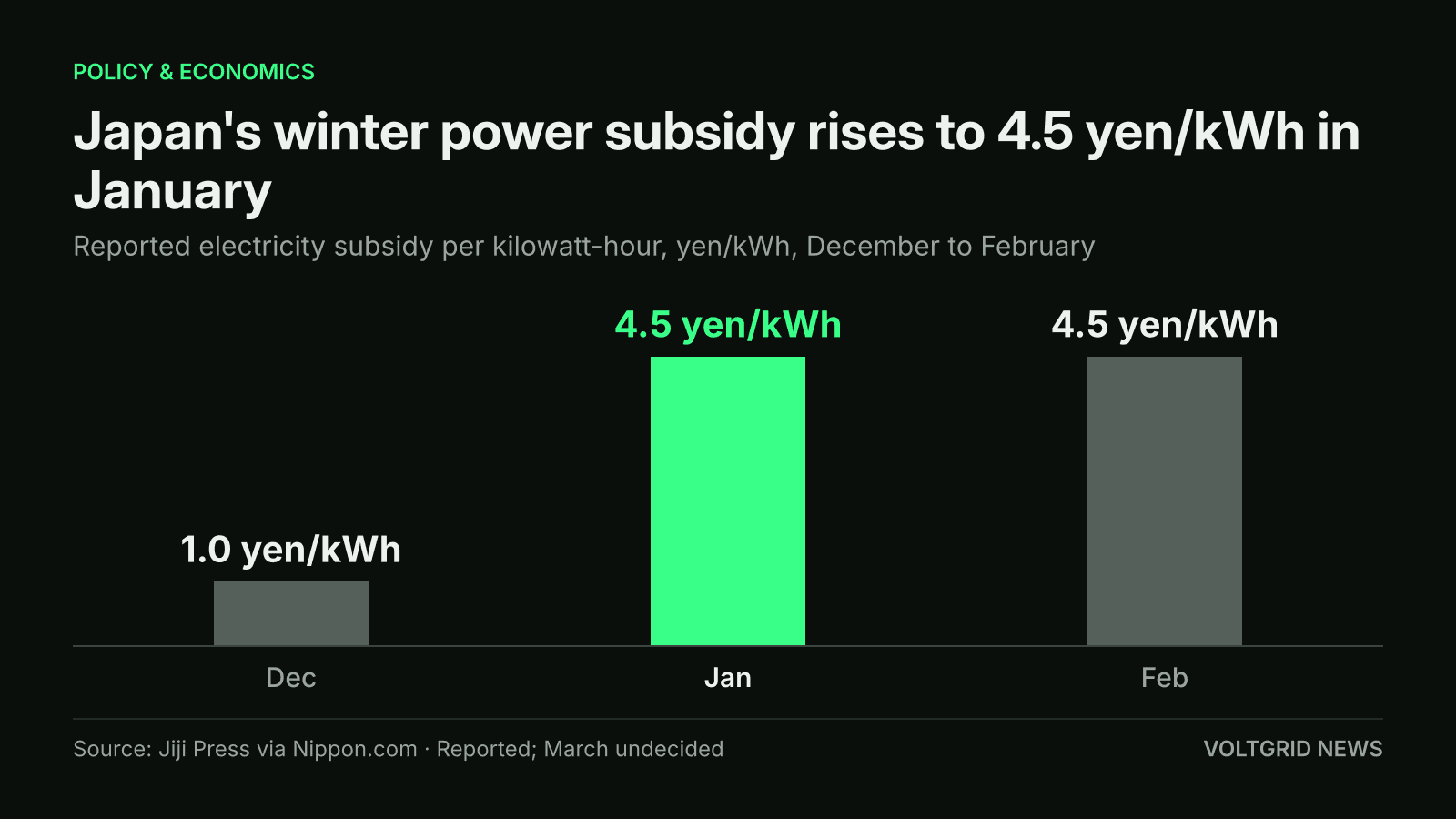
The reported electricity subsidy rises from 1.0 yen/kWh in December to 4.5 yen/kWh in January and February; March is undecided.
Illustration (AI-generated)
The government expects the winter support to cut household costs by about 7,000 yen over the three months, Jiji reported. Takaichi said officials will decide what to do for March after looking at weather and energy prices, so the scheme has no confirmed end date yet.
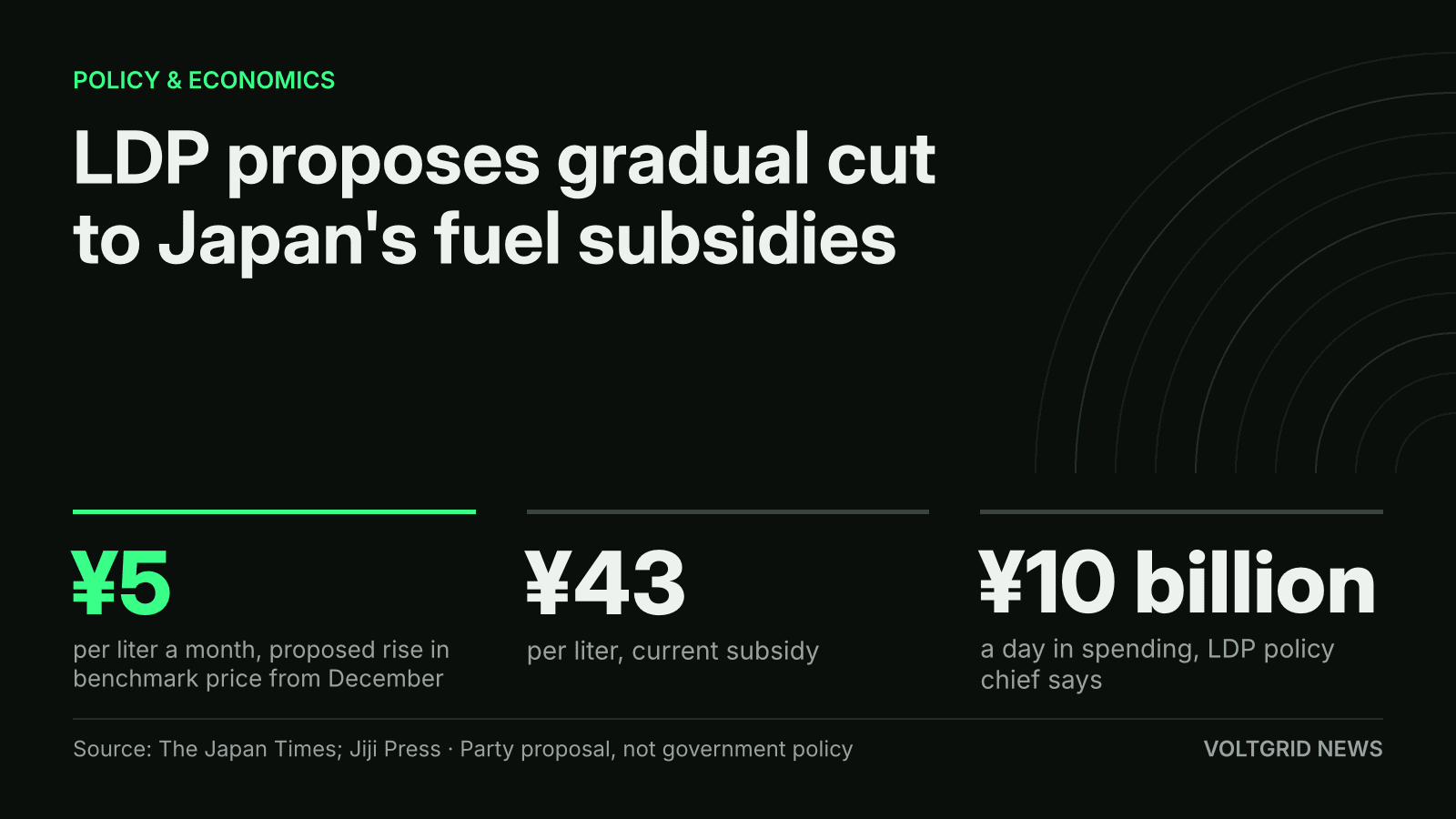
The same announcement sets the path for the fuel subsidy. The reference price used to calculate the gasoline subsidy, currently 170 yen per liter, will rise by 5 yen each month from December, according to Jiji. The step follows a proposal from the ruling Liberal Democratic Party, as Voltgrid reported on Oct. 28.
What the decision changes
The two moves pull in opposite directions. Power and gas bills get a per-unit discount for three winter months, with the larger 4.5 yen rate falling in January and February, the coldest part of the heating season. Fuel support, by contrast, starts to shrink: energynews.pro describes the gasoline subsidy as a per-liter payment to wholesalers equal to the projected retail price without aid minus the reference price, so a higher reference price means a smaller payment at constant crude prices.
According to the same report, the gasoline scheme began as an emergency response to a crude price surge linked to Iran, and no end date has been given for it.
Why it matters for power users
For electricity buyers, a 1.0 yen per kWh discount in December is small beside the 4.5 yen applied in January and February, which is when winter heating demand is highest. The subsidy lowers what households pay, not what generators or fuel importers receive, so it softens the bill without changing wholesale conditions. Large industrial and data-center buyers are not mentioned in the reports reviewed, and nothing there says they are covered.
Japan is choosing to protect household power and gas bills while pulling back on transport fuel support, which suggests the fiscal pressure is concentrated in oil. The monthly 5 yen steps are described as a baseline that can move with crude prices, so the pace of the phase-out depends on oil, not on a fixed schedule.
What is not confirmed yet
The gas subsidy rate per cubic meter and the total budget for the winter scheme were not in the reports reviewed, and the March decision is open. The gasoline plan has no stated end date. Watch for the cabinet's formal budget measures and for any announcement on March support, which Takaichi said will depend on weather and prices.