KB Securities Forecasts 40% DRAM Price Rise for Samsung, SK hynix
KB Securities expects Samsung and SK hynix DRAM selling prices to rise 40% in 2027 and NAND 30%, as demand outgrows supply. It is a brokerage forecast, and spot prices fell last month.
2 min read
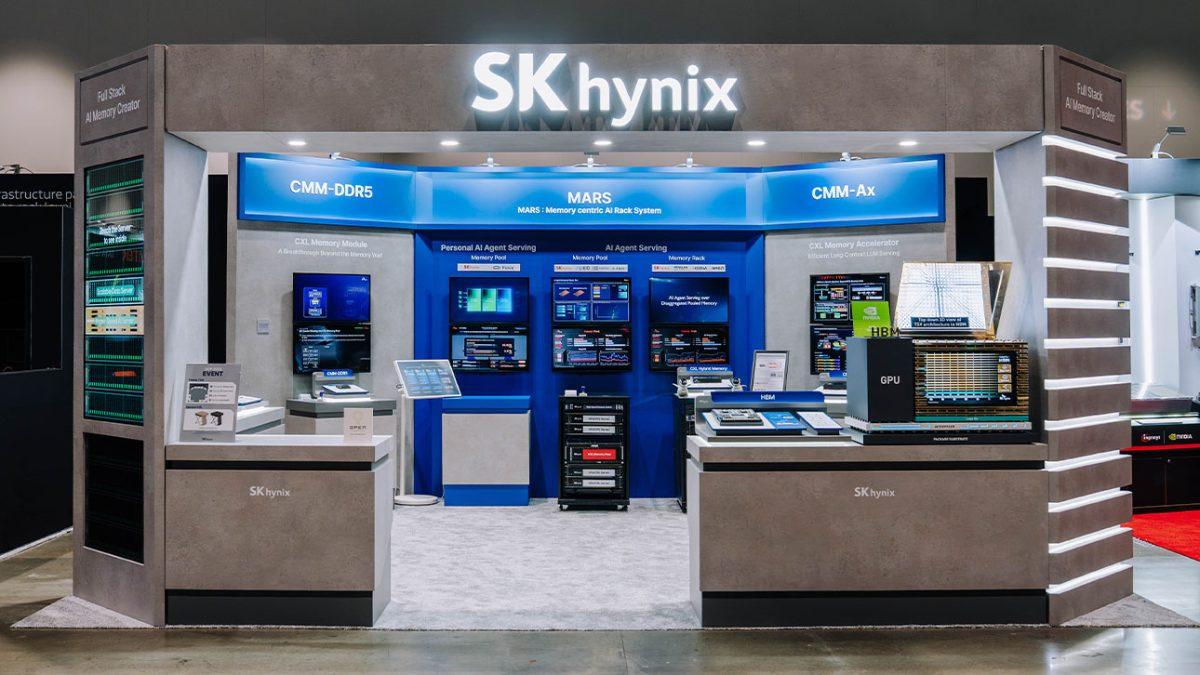
SK hynix's booth at OCP Global Summit 2026, where it showed memory products for AI servers. File photo from the company's newsroom; it does not show the KB Securities forecast.
Image: SK hynix
Source · Press image from the SK hynix newsroom, used for news reporting.
KB Securities forecast in a report dated Nov. 20 that Samsung Electronics and SK hynix will raise their average DRAM selling prices by 40% in 2027 from this year, and NAND flash prices by 30%, SBS News and Seoul Economic Daily reported.
The brokerage bases the call on a widening gap between supply and demand. It expects global DRAM demand to grow 25% in 2027 against supply growth of 18%, with server DRAM demand up 56%, according to Seoul Economic Daily. SBS reported that KB expects major customers to receive only about 70% of the DRAM volumes they need, which it says will push contract prices higher.
KB Securities forecasts 2027 DRAM demand growth of 25% against supply growth of 18%, with server DRAM demand up 56%.
Graphic: Voltgrid News
The figure is a forecast by one broker, not a price either company has announced, and Voltgrid has not seen the KB report itself.
Spot prices fell while contract prices rose
KB said DRAM spot prices fell 5% and NAND spot prices fell 20% over the past month, while contract prices kept rising, Seoul Economic Daily reported. The brokerage estimated the gap between spot and contract prices at more than 20% as of November. Its argument is that spot prices track weak smartphone and PC sales, while Samsung's and SK hynix's earnings depend on contract sales of server DRAM and enterprise solid-state drives.
For NAND, KB expects 19% demand growth, roughly matching supply. It put enterprise SSD demand growth at 54%. Enterprise SSDs make up more than 65% of NAND revenue at both Samsung and SK hynix, against 30% to 40% at SanDisk and Kioxia, which is why KB expects the two Korean makers to hold prices better.
What it means for AI server buyers
For data-center operators the forecast points at cost and allocation. A buyer that gets 70% of the DRAM it asks for must either cut server memory per node, delay racks or accept a higher price and the forecast, if it holds, raises the cost of memory-heavy server configurations.
The memory market is concentrated. Counterpoint put Samsung's share of third-quarter DRAM revenue at 38% and SK hynix's at 29%, as Voltgrid reported, so the two companies KB covers set contract terms for most of the market. Korean press has also said Apple is finalizing a DRAM supply deal with Samsung that fixes minimum volumes and lets the market set prices, a structure that would pass any increase through.
KB also tied the recent slide in chip stocks to leadership changes at Nvidia, worries over the U.S. Democratic Party's stance on AI regulation and the fall in spot prices. It said those concerns were largely priced in.
What is not confirmed yet
The two reports carry no comment from Samsung or SK hynix on the forecast, and neither company has published 2027 pricing. KB's own report was not available to Voltgrid, so every figure here is as SBS News and Seoul Economic Daily relayed it, both from Korean-language reports. Spot weakness is the open risk: if it spreads to contract negotiations, the forecast loses its main support. Next checks are the contract-price releases from market trackers and the Q4 results from both makers.
Sources
- Published
- Sources
- 2 cited