Lithium Hydroxide Futures Fall 7.2% in Guangzhou Debut to 69,600 Yuan/t
China’s Guangzhou exchange opened lithium hydroxide futures on Nov. 26; the June 2027 contract closed 7.2% under its 75,000 yuan base on weak demand, Reuters reported.
2 min read
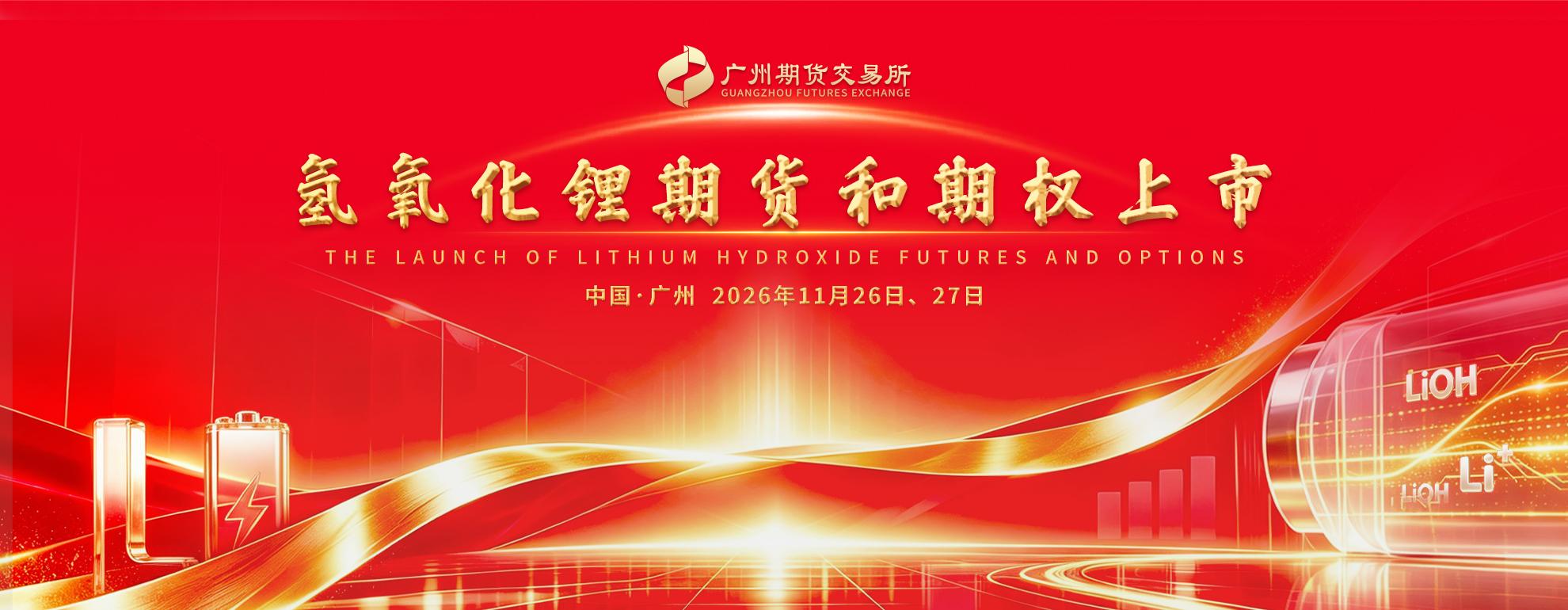
GFEX banner for the lithium hydroxide futures and options launch; an exchange graphic, not a photo of the trading floor.
Image: Guangzhou Futures Exchange
Source · Press image from the Guangzhou Futures Exchange website, used for news reporting.
The Guangzhou Futures Exchange (GFEX) opened trading in lithium hydroxide futures on Thursday, Nov. 26, 2026, and the most-traded June 2027 contract closed daytime trade at 69,600 yuan ($10,445) per metric ton, 7.2% below the exchange's 75,000 yuan base price, according to Reuters as carried by Mining.com.
The most-traded June 2027 contract closed daytime trade 7.2% under the exchange's base price, Reuters reported.
Graphic: Voltgrid News
The June 2027 contract has the earliest maturity of the first batch, which delivers between June and November 2027. SMM (Shanghai Metals Market) reported on Nov. 13, citing two exchange statements, that the first-day margin was 11% and the daily price limit 18% of the base price, so the 7.2% slide stayed well inside the limit. Options on the contract were scheduled to begin trading on Nov. 27, and Bastille Post reported that the exchange had launched both products on Thursday.
Why a hydroxide contract matters for cathode supply
Lithium hydroxide is the feedstock for high-nickel ternary cathodes, the chemistry used in longer-range cells. Bastille Post quoted GFEX commodity department director Yang Yang as saying the contract gives spot trade an open forward price and works alongside the lithium carbonate contract listed in July 2023. Mining South East Europe reported that the test will be liquidity: whether Guangzhou prices can challenge the assessments used in hydroxide supply contracts between Chinese, Japanese and Korean cathode makers and their suppliers, and whether it can rival the hydroxide contract CME already lists.
For cell makers and cathode producers, a listed curve out to November 2027 offers a hedge reference in yuan. Existing hydroxide supply contracts still rely on price assessments, which is why liquidity decides whether the new contract becomes the benchmark.
Demand backdrop and the carbonate comparison
Analysts blamed weak demand. Zhang Weixin of China Futures said demand prospects for the battery metal had worsened and macroeconomic sentiment was soft, and Everbright Futures wrote that hydroxide supply and demand are weaker than for carbonate. Nick Wang of Zljsteel New Energy said carbonate has averaged about 10,000 yuan per ton above hydroxide so far this year, that demand for hydroxide-based batteries was subdued, and that exports could suffer from European Union limits on hybrid-vehicle imports that take effect on Dec. 1.
Carbonate futures fell more than 3% on the same day to 80,580 yuan per ton, their lowest in over a year and 62% below the 209,880 yuan peak of May, Reuters reported. Those carbonate and hydroxide quotes are different contracts with different months, so the gap between them is not a like-for-like spread. Voltgrid has covered the supply side of the same market, including the POSCO-CATL lithium deal signed for 2026-2028.
What is not confirmed yet
No source we read gives first-day volume, open interest or options prices, so the depth of the new market is unknown. SMM's Nov. 27 morning summary repeats the 7%-plus first-day fall and the 69,600 yuan settlement but adds no later price. Whether foreign traders can access the contract, as they can for carbonate, was described by Mining South East Europe as an open question. The first real read on liquidity will come from the opening weeks of trading.
Sources
- 01SMM News: GFEX to launch lithium hydroxide futures on Nov 26 and options on Nov 27Shanghai Metals Marketnews.metal.com
- 02China launches lithium hydroxide trading on Guangzhou Futures ExchangeBastille Postbastillepost.com
- 03China's Guangzhou exchange sets 26 November debut for lithium hydroxide futuresMining South East Europeminingsee.eu
- 04China’s lithium hydroxide futures tumble in debut as demand looks weakMINING.COM (Reuters)mining.com
- Published
- Sources
- 4 cited