Peak Energy Series B Hits $157M With $25M HSBC Debt for Sodium-Ion
Peak Energy raised its sodium-ion Series B to $157 million on Nov. 24, adding a $25 million HSBC loan to $132 million of equity to scale manufacturing and fund grid deployments from 2027.
3 min read
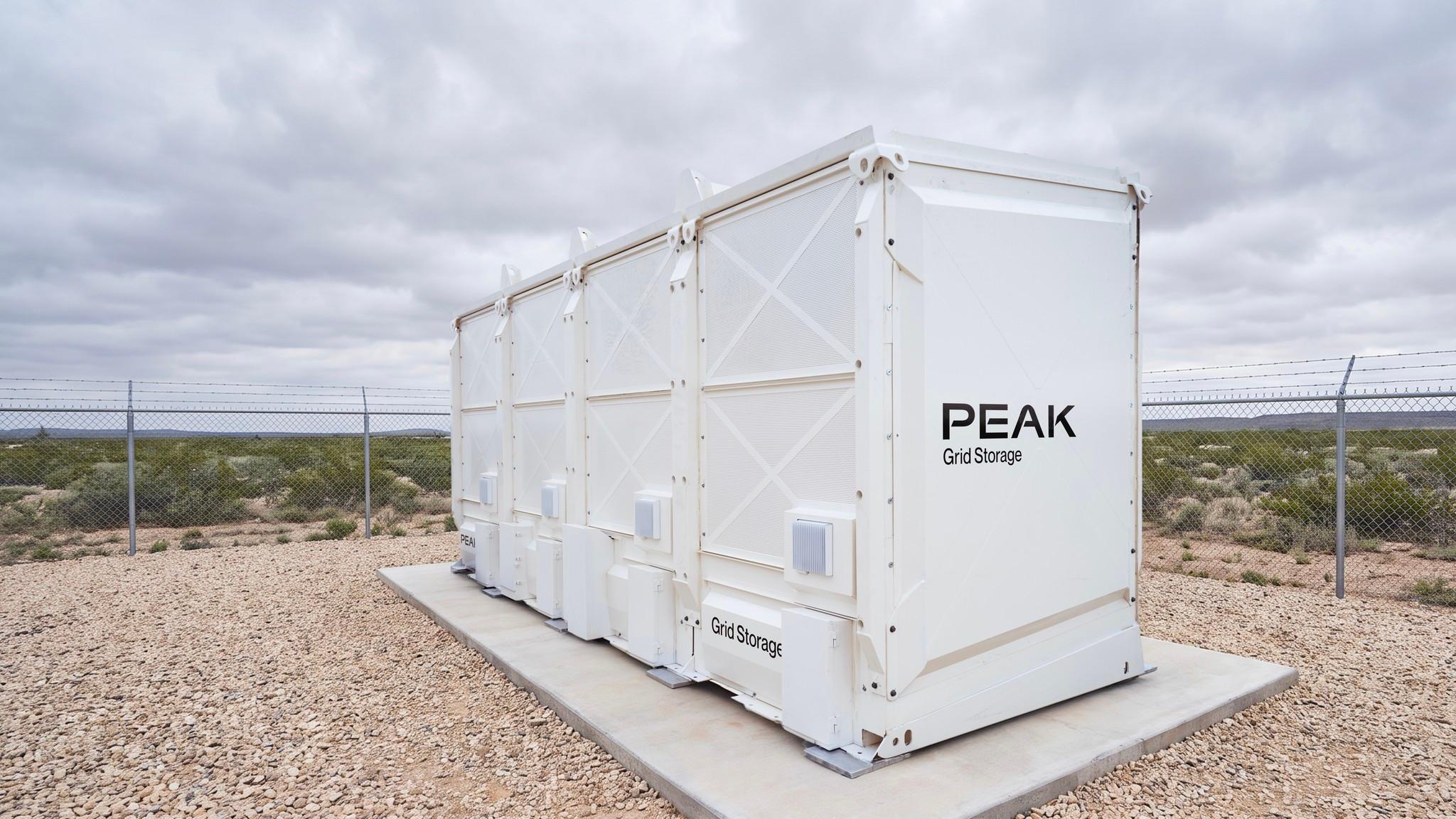
A Peak Grid Storage battery system, from Peak Energy's website. The image is a company file photo, not a picture of a Series B-funded site.
Image: Peak Energy
Source · Press image from the Peak Energy website, used for news reporting.
Peak Energy, the sodium-ion grid-storage developer, said on Nov. 24, 2026 that it has expanded its Series B financing to $157 million, made up of $132 million in equity and a $25 million debt facility from HSBC.
The company said in its release that the extra capital will speed up manufacturing capacity and support commercial deployments that begin in 2027. The $25 million HSBC facility is earmarked for project deliveries from 2027 and for scaling the supply chain as production ramps, according to the release, which Energy Monitor and Mercom India also reported. Peak said it expanded the round because investors showed additional interest.
For buyers of storage, the structure matters as much as the headline. Zack Jacobson, Peak's vice president of finance, said the bank debt lets the company fund project deliveries without additional dilution and keeps equity for scaling the business. In effect, equity pays for the factory and debt pays for the batteries going out the door, which is how a manufacturer with a backlog avoids selling more stock to ship each order.
What the Series B Now Totals
Peak first announced the round on Oct. 21, 2026 as an oversubscribed $108 million raise led by General Motors Ventures, with Maverick Silicon, Infinite Capital, Eclipse, Xora Innovation and LG Technology Ventures taking part. The new total of $157 million is $49 million above that figure. Peak has not said how the October amount splits between equity and debt, so the equity change cannot be stated from its releases.
Peak Energy's Series B totals $157M, made up of $132M equity and a $25M HSBC debt facility, against $108M announced in October.
Graphic: Voltgrid News
Peak's pitch is a passively cooled system that drops active cooling and planned maintenance. The company says that design can cut the cost of energy by up to 20% against conventional storage and that its systems are built to run 30 years without augmentation, meaning without adding battery units to hold capacity. Those are company claims, not independent test results.
Demand is the second number to watch. Peak cites more than $2.5 billion in customer agreements, up from more than $1 billion in its October release. The company is targeting grid-scale applications and data centers, and the new money also funds a pilot meant to show the long-term economics of its technology for data centers. CEO Landon Mossburg said data centers are driving a new wave of electricity demand.
Factory, Contracts and Sodium-Ion Context
Peak said in July that its Sacramento, California plant, a 183,000-square-foot facility with capacity of up to 4 GWh of battery systems a year, would start production and shipments in Q1 2027, with up to $71 million in capital investment. Its earlier agreement with Jupiter Power covers up to 4.75 GWh from 2027 to 2030, including about 720 MWh in 2027 and an option on a further 4 GWh from 2028 to 2030, with a contract value the company said could exceed $500 million. In June it announced a partnership with General Motors to develop sodium-ion cells for grid storage, with GM keeping the manufacturing rights to the cell.
Sodium-ion is moving from pilots to products across the sector. Voltgrid has covered CATL's Tener sodium block, LG Energy Solution's sodium-ion solid-state transformer showing and a 73.1 kWh sodium-ion UPS aimed at AI data centers. Peak's own bet is a U.S.-built, passively cooled system sold for the grid and for data centers.
What Is Not Confirmed Yet
Peak has not disclosed a valuation, the size of any single investor's share or HSBC's loan terms. The $2.5 billion in customer agreements and the 20% cost claim come from the company and have not been independently verified. Commercial deployments are scheduled to begin in 2027, and the Sacramento line is due to start in Q1 2027, so none of the new capacity is shipping yet.
Sources
- Published
- Sources
- 3 cited