Nuclear Thermal Energy Storage: UCF Models Plants That Follow Grid Demand
University of Central Florida researchers modeled nuclear thermal energy storage for molten salt reactors, holding heat at low demand and releasing it later, Interesting Engineering reported. No cost figures were given.
2 min readAI-assisted

The study is a model; it has not been tested at an operating nuclear plant, according to Interesting Engineering.
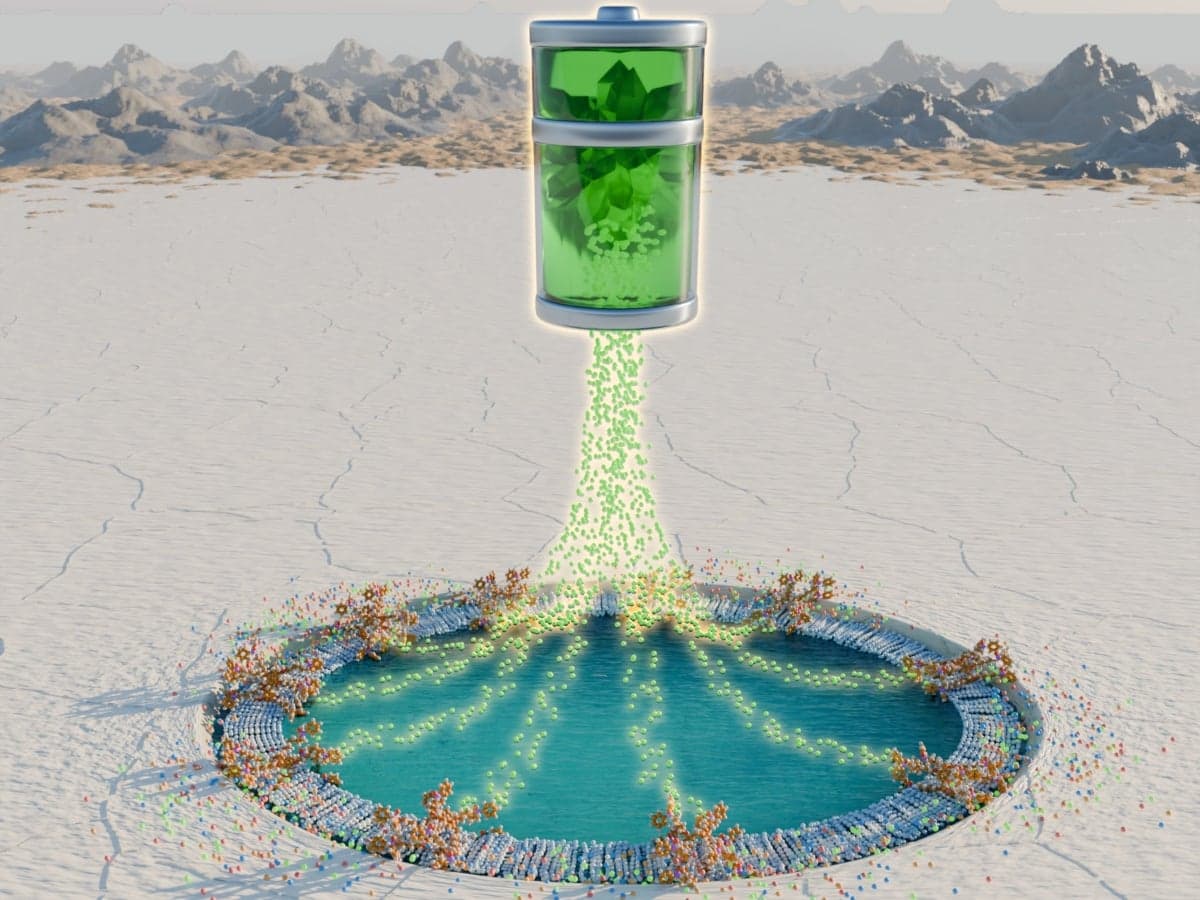
Illustration (AI-generated)
Researchers at the University of Central Florida (UCF) have modeled nuclear thermal energy storage as a way for plants to follow changing grid demand without repeatedly turning the reactor up and down. The study pairs molten salt reactors with thermal energy storage, according to Interesting Engineering.
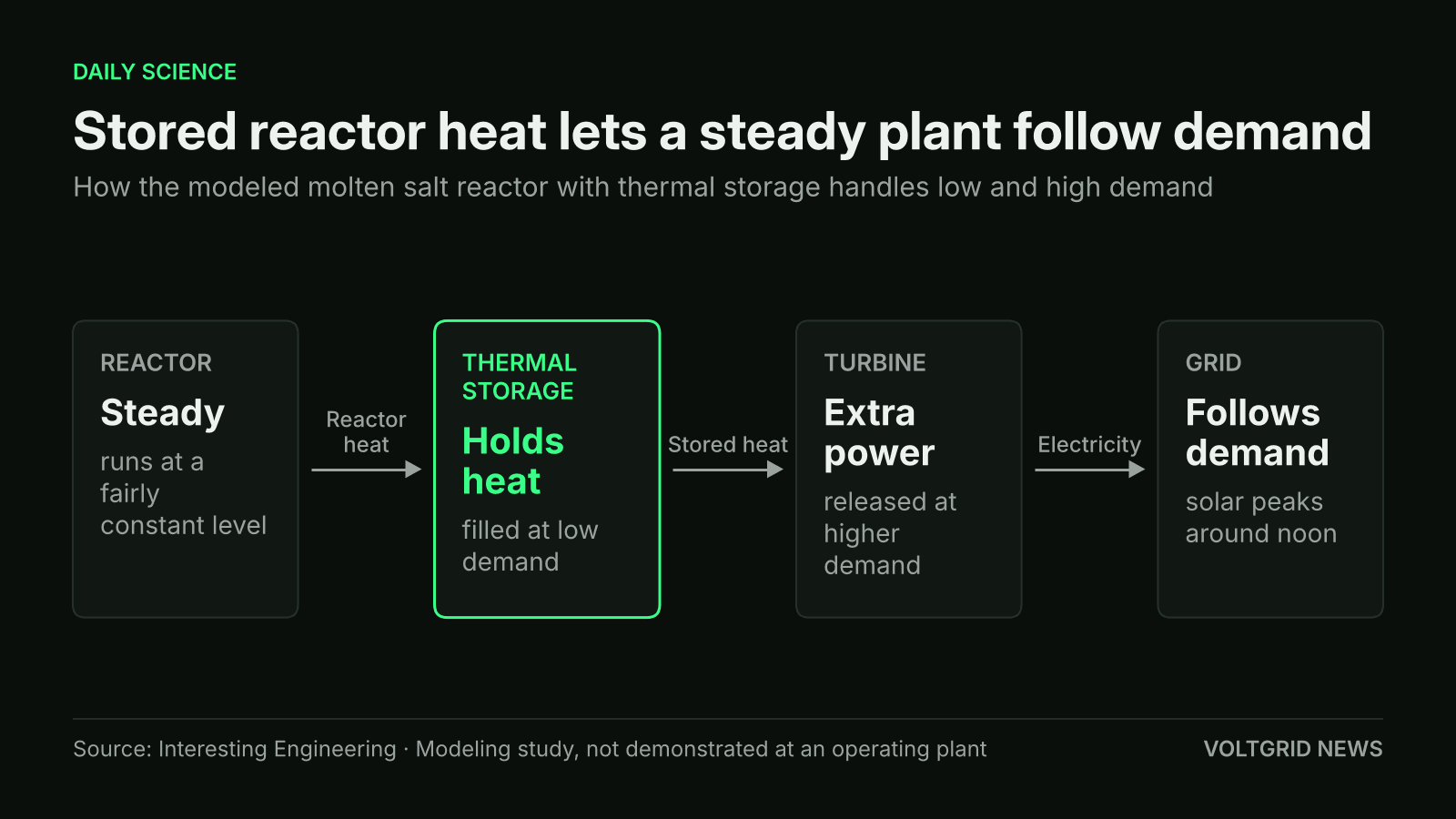
In the University of Central Florida model, stored heat is released for extra electricity when demand rises, Interesting Engineering reported.
Illustration (AI-generated)
Thermal energy storage means holding heat instead of sending it straight to the turbines. In the model, some reactor heat goes into storage when electricity demand is low, and the plant releases it later to make extra electricity when demand rises. The reactor itself stays at a fairly steady level while the power-generation side adjusts.
Why Nuclear Plants Need Flexibility
Conventional nuclear plants are generally built to run around the clock. Doctoral researcher Augusto Delavald Marques said nuclear power needs to be flexible while reactors operate at a steady pace, because grid demand swings through the day. He said this is especially pronounced on grids with a lot of solar, where output peaks around noon and fades toward night.
How the Thermal Storage Model Works
The team combined thermodynamic modeling of the system with an economic analysis of how a plant might respond to electricity prices. Prices tend to fall when renewable output is high and rise when demand grows or renewable output drops. Storing heat when power is cheap and releasing it when power is dear could raise the revenue a plant earns, the researchers argue. The analysis used a rolling-horizon approach, which weighs operating decisions over successive time windows instead of one fixed schedule.
The study appeared in the Journal of Energy Resources Technology, Part A: Sustainable and Renewable Energy, according to Interesting Engineering.
What Is Not Confirmed Yet
This is a modeling study. The team has not tested the combined system at an operating nuclear plant, and Interesting Engineering reported that the university's announcement gave no figures for efficiency gains, extra revenue or the cost of adding storage. Molten salt reactors are an advanced design, and the study does not say when one with storage could be built. Further engineering and economic assessment would be needed to show whether the approach is practical, the outlet said.
For grid operators and data-center developers weighing nuclear supply, the open question is whether storage can make a steady-output plant behave more like a dispatchable one at a price that works.