POSTECH Manganese-Rich Cathode Keeps 98.4% After 200+ Cycles
POSTECH researchers say controlling oxygen loss in a lithium- and manganese-rich cathode raised usable capacity and held 98.4% of initial performance over 200-plus cycles. A lab result, not a product.
2 min readAI-assisted
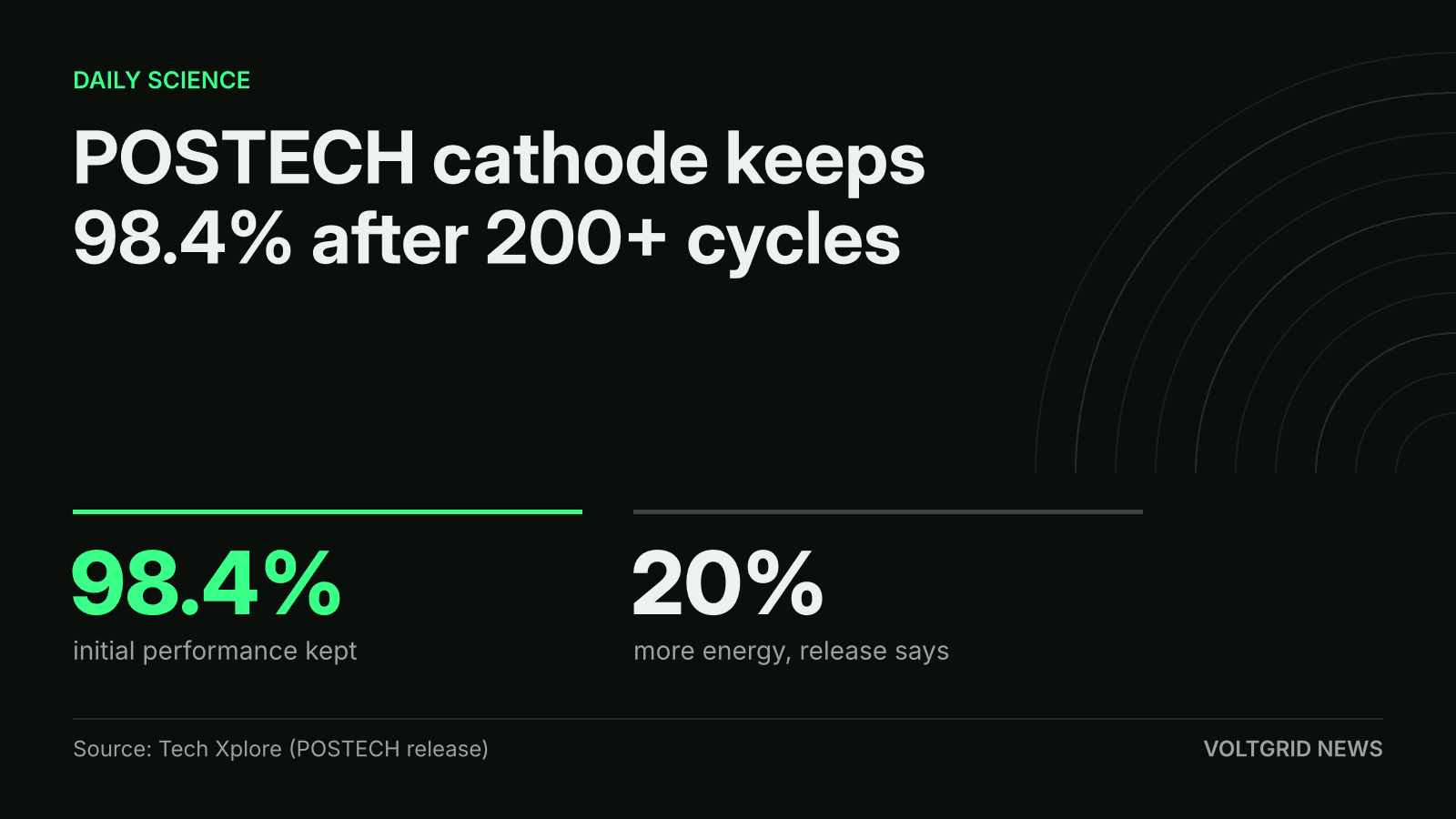
POSTECH reports the cathode kept 98.4% of initial performance after more than 200 cycles; the 20% energy figure is the release's statement.
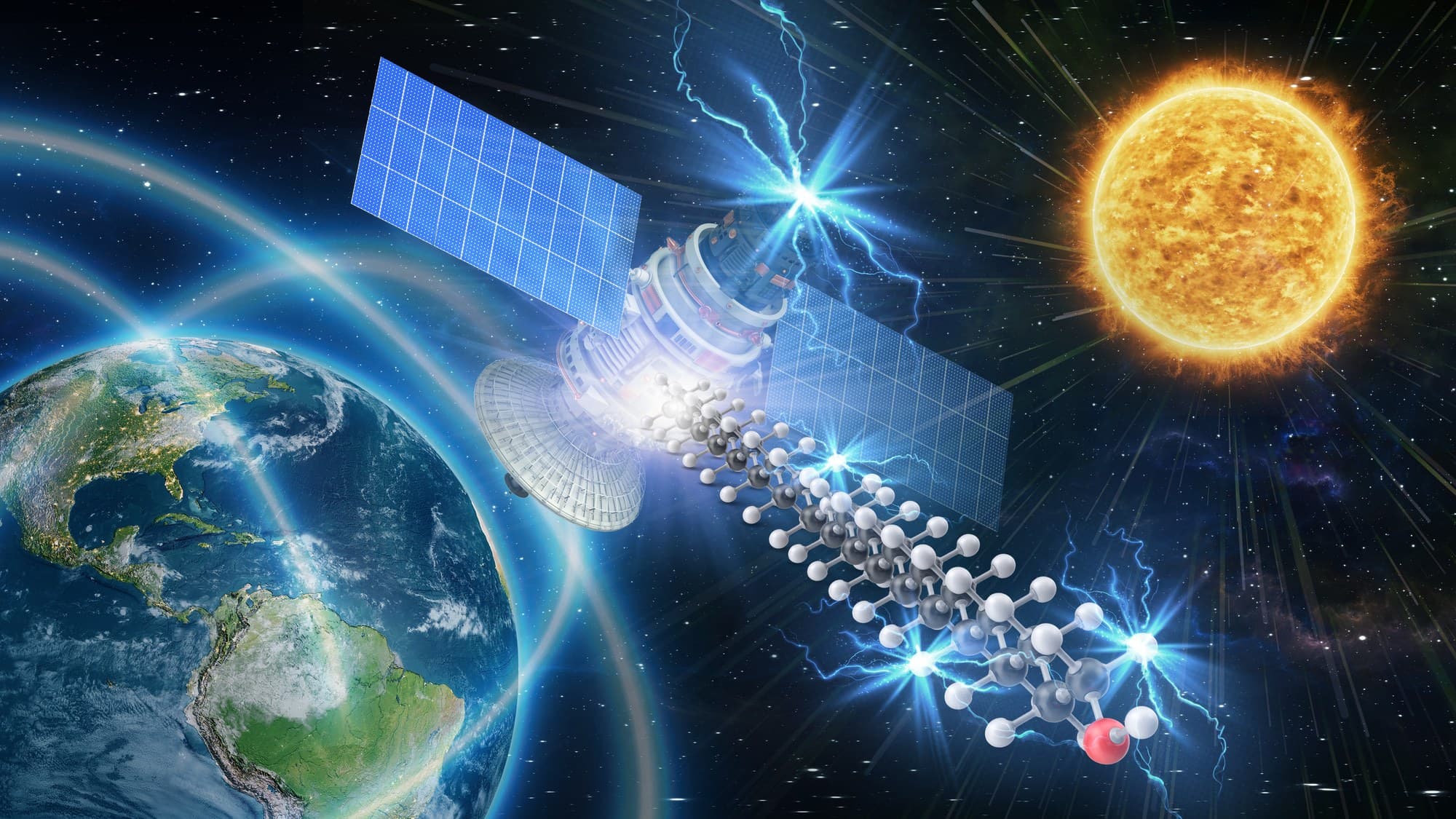
Illustration (AI-generated)
Researchers at Korea's Pohang University of Science and Technology (POSTECH) say a manganese-rich battery cathode kept 98.4% of its initial performance after more than 200 charge-discharge cycles, once they controlled how much oxygen the material loses. The work appeared in Energy & Environmental Science, according to the university's release published by Tech Xplore on Oct. 27.
The twist is that oxygen loss, normally a sign of a battery wearing out, can also open new routes for lithium ions. Teams led by professors Jihyun Hong and Kyu-Young Park traced how the cathode's internal structure changes over hundreds of cycles. They found that the amount of oxygen lost sets how far the structure scrambles, and that scrambling can raise usable capacity.
Why Manganese-Rich Cathodes Matter for EV Batteries
The material is a lithium- and manganese-rich layered oxide, or LMRO. It needs less of the costly metals nickel and cobalt, and the release says it stores about 20% more energy than conventional nickel-based cathodes. That makes it a candidate for cheaper EV batteries that could compete with low-cost lithium iron phosphate (LFP) cells made in China.
Its weakness is that capacity and operating voltage both fall with repeated cycling. Earlier studies reported different end structures inside the cathode, so the cause of the decline was never settled. Voltgrid News reported earlier on Hanbat's disordered lithium-rich cathode.
How oxygen loss reshapes the cathode
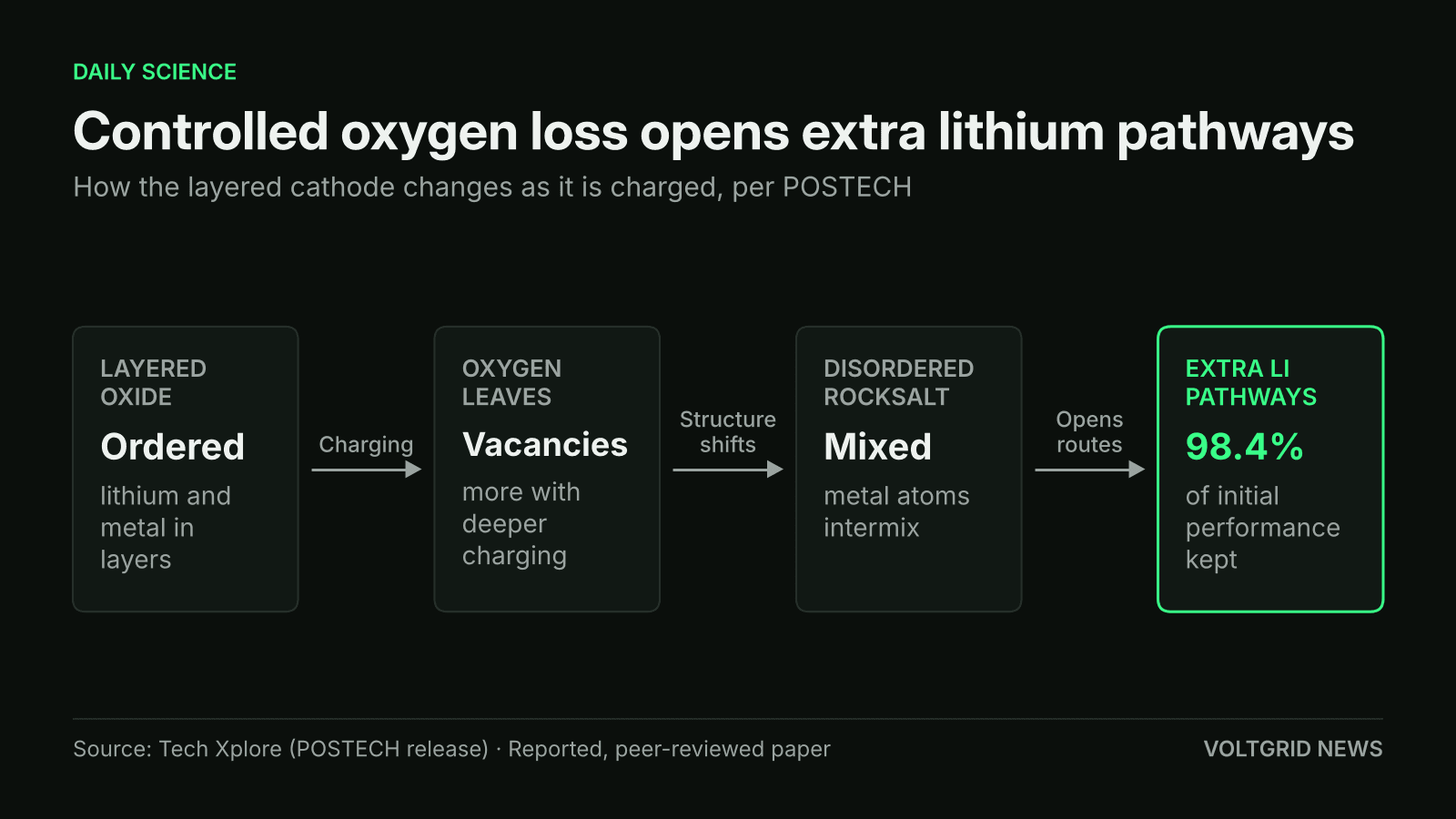
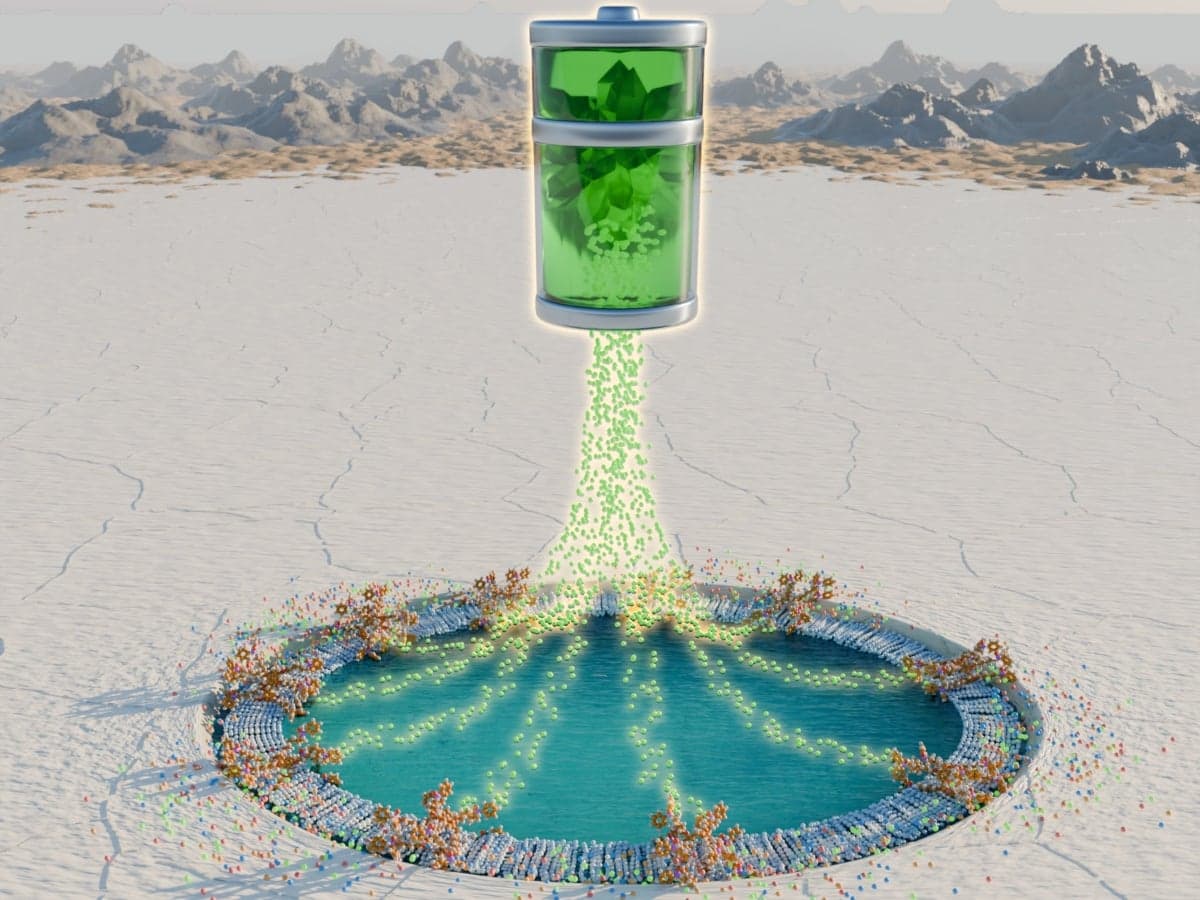
Oxygen loss reshapes the cathode and opens extra lithium pathways, POSTECH reports; 98.4% of initial performance was kept.
Illustration (AI-generated)
A fresh cathode is orderly: lithium and transition-metal atoms sit in separate layers, like bricks in a wall. As the cell charges, some of the oxygen atoms that hold the framework together escape. Lithium and transition-metal atoms then drift across their layers and mix, and the layered structure turns into what scientists call a disordered rocksalt, where the metal atoms no longer follow a long-range pattern.
The team showed that charging depth sets the oxygen loss. A higher charging voltage meant more oxygen lost, and the resulting gaps, called oxygen vacancies, built up and pushed the rearrangement further. The surprise was that the disordered structure created extra pathways for lithium ions, so usable capacity increased instead of falling.
Hong said battery degradation could be delayed, and lifetime extended, by controlling factors such as operating temperature and the surface environment of the cathode. By promoting or suppressing the disorder, he said, it may become possible to design EV batteries tuned for different uses. Park said combining precise materials measurements with computer modelling let the group resolve a problem open for nearly two decades.
For fleet and storage buyers the practical meaning is cost and range: a cathode with less nickel and cobalt that holds its performance would ease pressure on both. That is a design direction, not a product.
What is not confirmed yet
The 98.4% figure comes from the university's summary, which describes it as initial performance without giving the cell format, test temperature or voltage window. The paper itself was not available to Voltgrid in full, so those details remain unchecked here.
The result is a laboratory study. The release gives no date for a commercial cell, and 200-plus cycles is far short of the thousands an EV pack must survive. The title of the paper is "A unified framework for path-dependent order-to-disorder phase evolution in Li-rich layered oxides," with Gukhyun Lim as first author (DOI 10.1039/d6ee03906e).