UT Austin Lithium Extraction Nanochannels Are 2-5x More Selective
Cell-inspired channels pass lithium and block look-alike ions, the University of Texas at Austin reports in a Journal of the American Chemical Society paper. It is lab-scale and untested on real brines.
2 min readAI-assisted
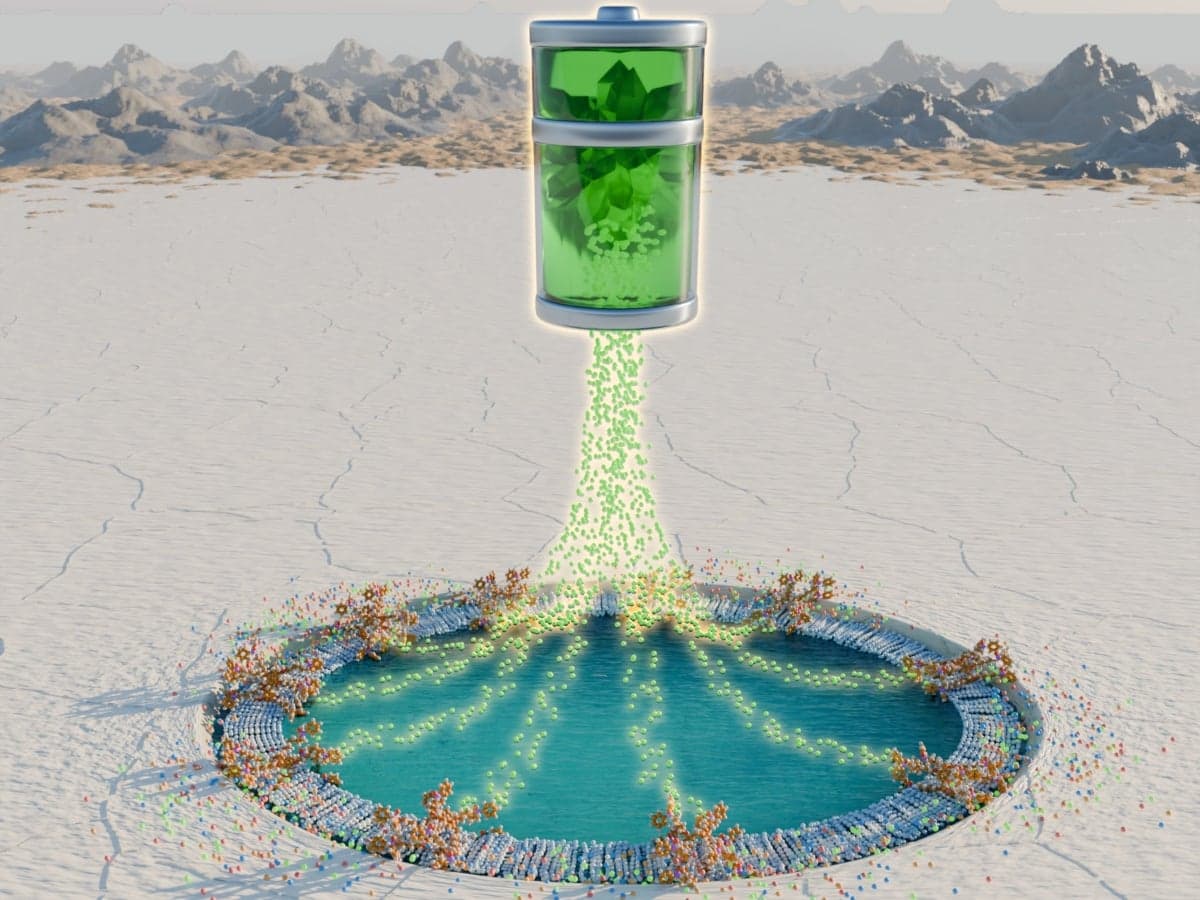
University illustration of the cell-inspired channels guiding lithium ions toward a battery; the work is a lab result.
Image: University of Texas at Austin, Cockrell School of Engineering
Source · Press image from the University of Texas at Austin Cockrell School of Engineering newsroom, used for news reporting.
Researchers at the University of Texas at Austin have built artificial nanochannels for lithium extraction that let lithium ions through while blocking the similar ions that travel with them, and they are two to five times more selective for lithium than other recently developed lithium transporters, according to the university's release. The team calls them among the most selective ever made.
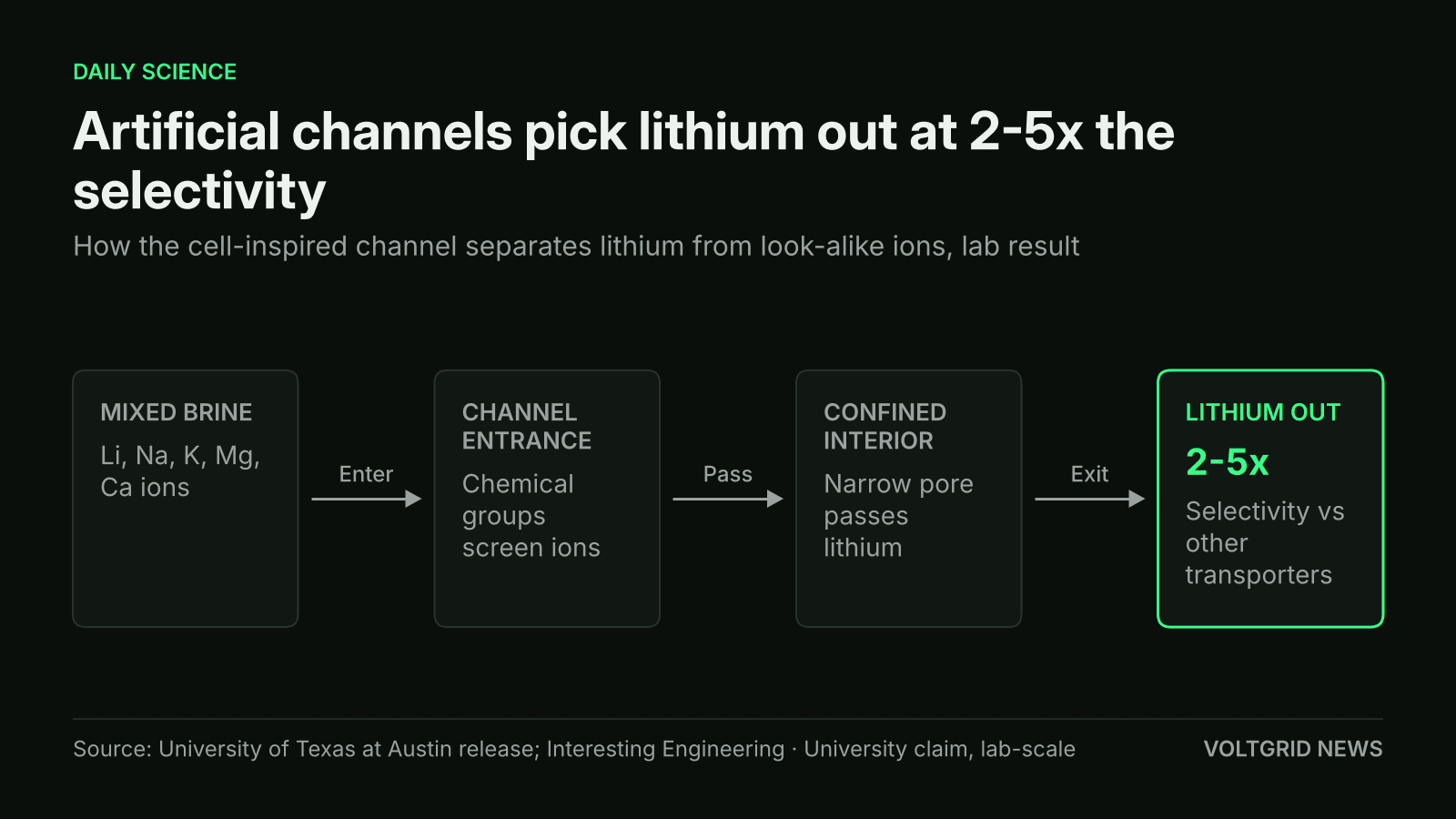
The University of Texas at Austin says the channel's entrance groups and narrow interior give 2-5x the lithium selectivity of other transporters, in lab tests.
Illustration (AI-generated)
The study, led in part by professor Manish Kumar, appeared in the Journal of the American Chemical Society under the title "Highly Selective Artificial Lithium Channels." The release carries a publication date of Oct. 24.
Why Lithium Extraction Is Hard
Lithium sits in underground brine, hard rock and recycled batteries, mixed with sodium, potassium, magnesium and calcium. These ions look alike to a filter, so current separation methods are slow, use a lot of energy and can leave harmful waste, the university says.
Living cells solve the same problem with protein pores that admit one kind of ion and refuse others. The Texas team copied that idea with tiny pores set inside a membrane. Selectivity comes from two things working together: chemical groups at the channel entrance that interact with the ions, and a narrow interior that limits which ones fit through.
From Toolkit to Membrane Process
The work extends the group's earlier channels for separating rare earth elements, which are used in wind-turbine magnets and electric-vehicle batteries. Research scientist Harekrushna Behera said the team now has a toolkit rather than a one-off result, because understanding how ions interact with the entrance groups lets them design channels for lithium and possibly other critical minerals.
The next step is packing the channels into larger membranes, using a layered, cell-like membrane material the group developed recently. The goal is a continuous process that separates lithium without harsh solvents.
What the Lab Result Does Not Show Yet
The release says experiments with real brines, which hold many salts at once, and at industrial scale are still needed. Interesting Engineering notes that the announcement gave no commercial-scale recovery rates, energy use or operating costs. The selectivity figure compares against other lab transporters, not against the evaporation ponds or chemical plants that supply most lithium today.
For battery makers, the appeal is supply: the researchers say a cleaner, faster separation could raise domestic lithium output. They also see uses in recycling lithium from used batteries and, eventually, in better separators inside batteries. None of that has a timeline in the sources.