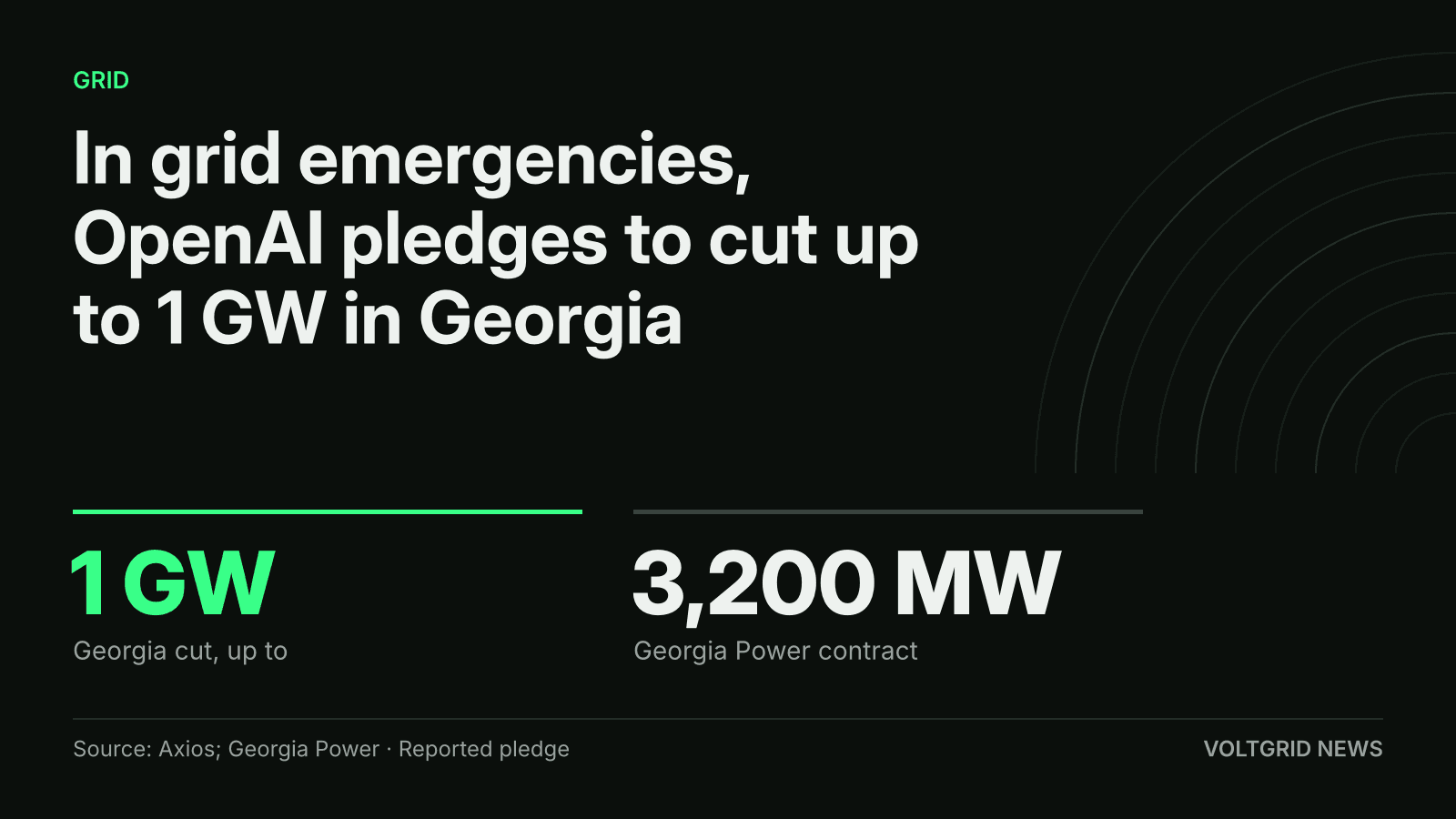
PJM Winter Outlook: 182,426 MW Capacity vs 147,500 MW Peak
PJM expects 182,426 MW of operating capacity against a 147,500 MW winter peak that would be a record, leaving about 200 MW less gross headroom than last year's outlook as load growth continues.
Energy & Cooling DeskEdited by Ege Erten
3 min readAI-assisted

File photo of PJM's control room. PJM said on Nov. 5 that it expects 182,426 MW of operational capacity this winter (PJM).
Image: PJM Interconnection
Source · Press image from the PJM Inside Lines newsroom, used for news reporting.
PJM Interconnection said on Nov. 5 that it expects 182,426 MW of operational capacity this winter against a forecast peak of about 147,500 MW, plus roughly 3,200 MW of average exports to neighboring systems.
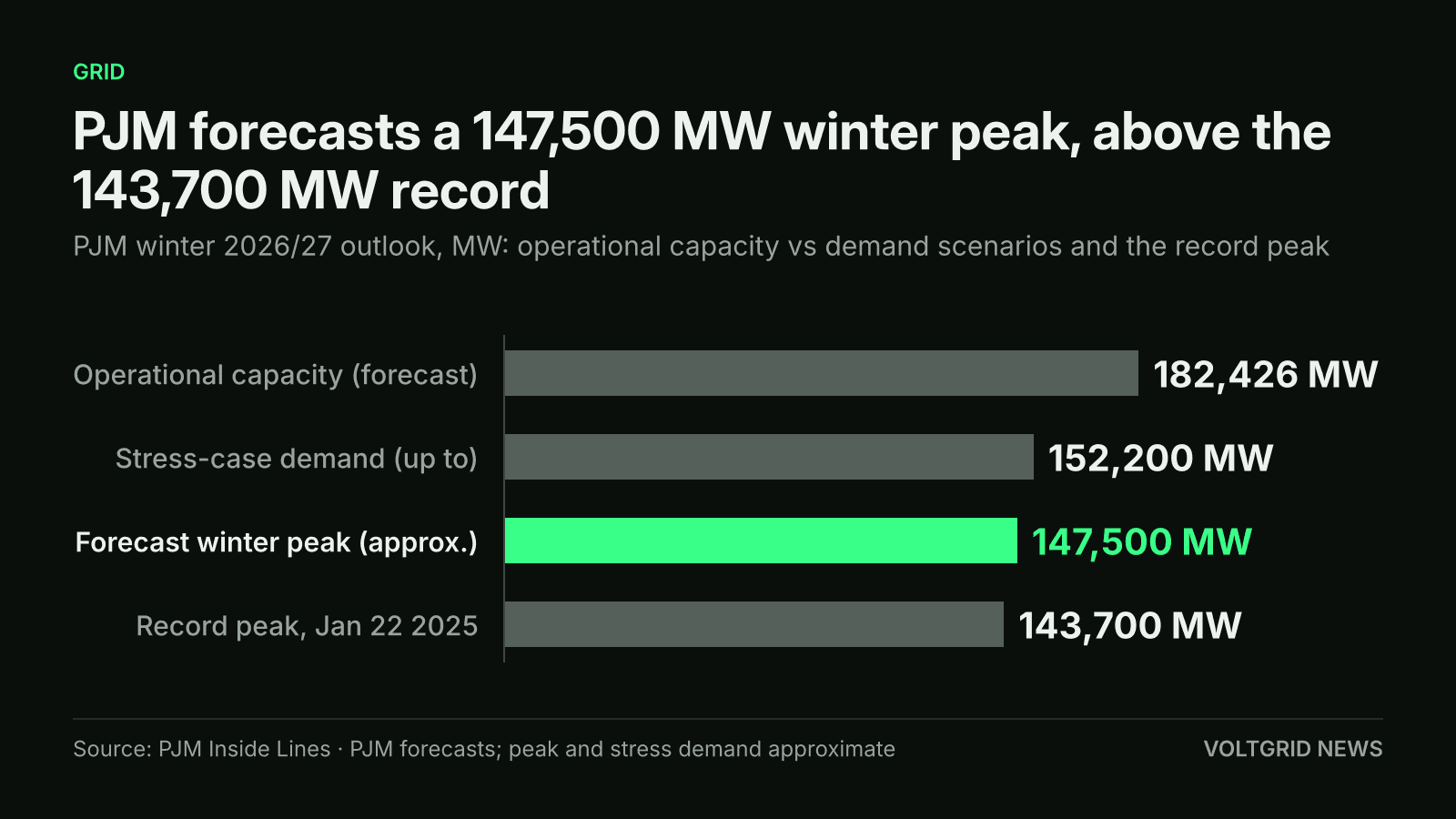
PJM's forecast winter peak of about 147,500 MW would top the 143,700 MW record set on Jan. 22, 2025; capacity is a PJM forecast of 182,426 MW.
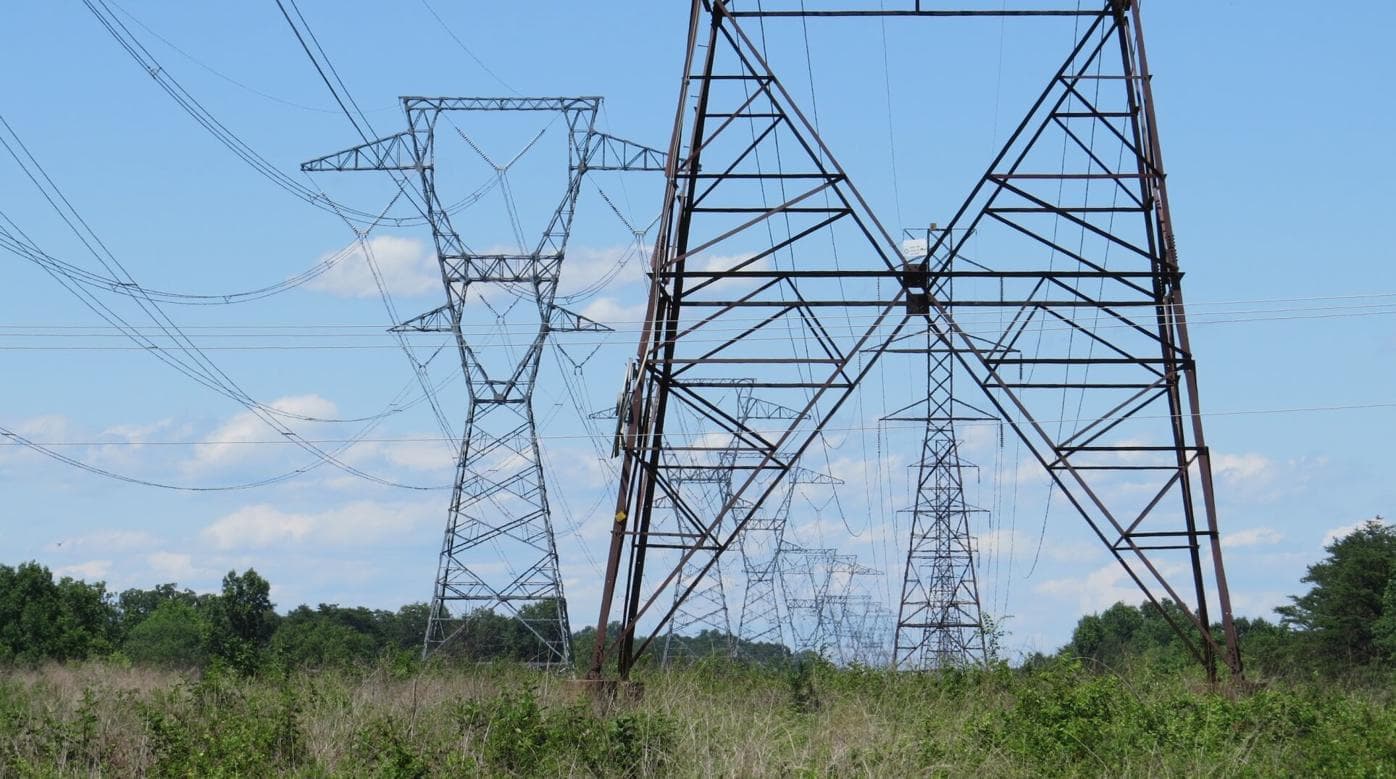
Illustration (AI-generated)
PJM, the grid operator for 13 states and the District of Columbia, said that peak would set a new winter record if reached. The previous record is 143,700 MW, set on Jan. 22, 2025, so the forecast sits about 3,800 MW above it. PJM's own summary is that resources are sufficient under expected conditions, "though reserve margins continue to tighten as demand outpaces new power supplies."
How the margin compares with last winter
PJM's 2025/26 outlook, published Nov. 3, 2025, projected 180,800 MW of operational capacity against a 145,700 MW peak. Set side by side, capacity is up about 1,600 MW and the forecast peak is up 1,800 MW. The gap between the two is roughly 34,900 MW this year against 35,100 MW last year, a difference of about 200 MW. That is Voltgrid's arithmetic on PJM's headline figures, not a PJM reserve-margin number, and last year's figures were rounded to the nearest 100 MW.
The official reserve margin is a different, smaller measure. Last year PJM put it at 7,500 MW after expected generator outages, exports and other factors, down from 8,700 MW the year before. This year's release says margins "continue to shrink" and that PJM forecasts adequate reserves in the most probable scenario, but it gives no megawatt figure for the margin, so a direct year-over-year comparison on that basis is not possible yet.
What PJM ties to data-center load
PJM said new load growth, "especially data centers and other Large Load customers," is driving steady increases in annual demand, and that forecast winter peak demand has risen by about 7,500 MW, or 5%, since 2022. It did not attribute the 147,500 MW forecast to data centers alone, and it did not publish a data-center share of the peak.
On the supply side, PJM cited increasing demand, ongoing generator retirements and the slow pace of new projects coming online as the forces eroding reserves, while the number of flexible resources that can respond quickly is falling. It singled out the BGE, Pepco and Dominion zones in Maryland, Virginia and the District of Columbia, where transmission constraints limit how much power can be delivered from elsewhere.
Stress cases and emergency tools
PJM also modeled less likely cold scenarios with fewer available generators, from outages or weak renewable output, and demand of up to 152,200 MW. Last year's stress cases topped out at 150,300 MW. PJM said the studies show reliability can be maintained by using both Pre-Emergency and Emergency Demand Response. Demand Response, which pays customers in advance to cut use when asked, was activated 15 times in 2025 and 2026, against eight times in the previous eight years.
PJM said it has also received emergency authority from the U.S. Department of Energy to direct data centers and other large loads to run their backup generators as a last resort to protect residential customers, and that it has never had to use it. It warned that outages on the scale of Winter Storm Elliott, about 46,000 MW, could leave the system vulnerable.
What comes next
The outlook is a forecast, and PJM said performance by generators in extreme cold is the swing factor. It is expanding site visits with ReliabilityFirst to an expected 30 to 35 this year, from fewer than 10 before 2023, and adding a similar program with SERC. The National Weather Service expects a slightly warmer winter across the PJM footprint.
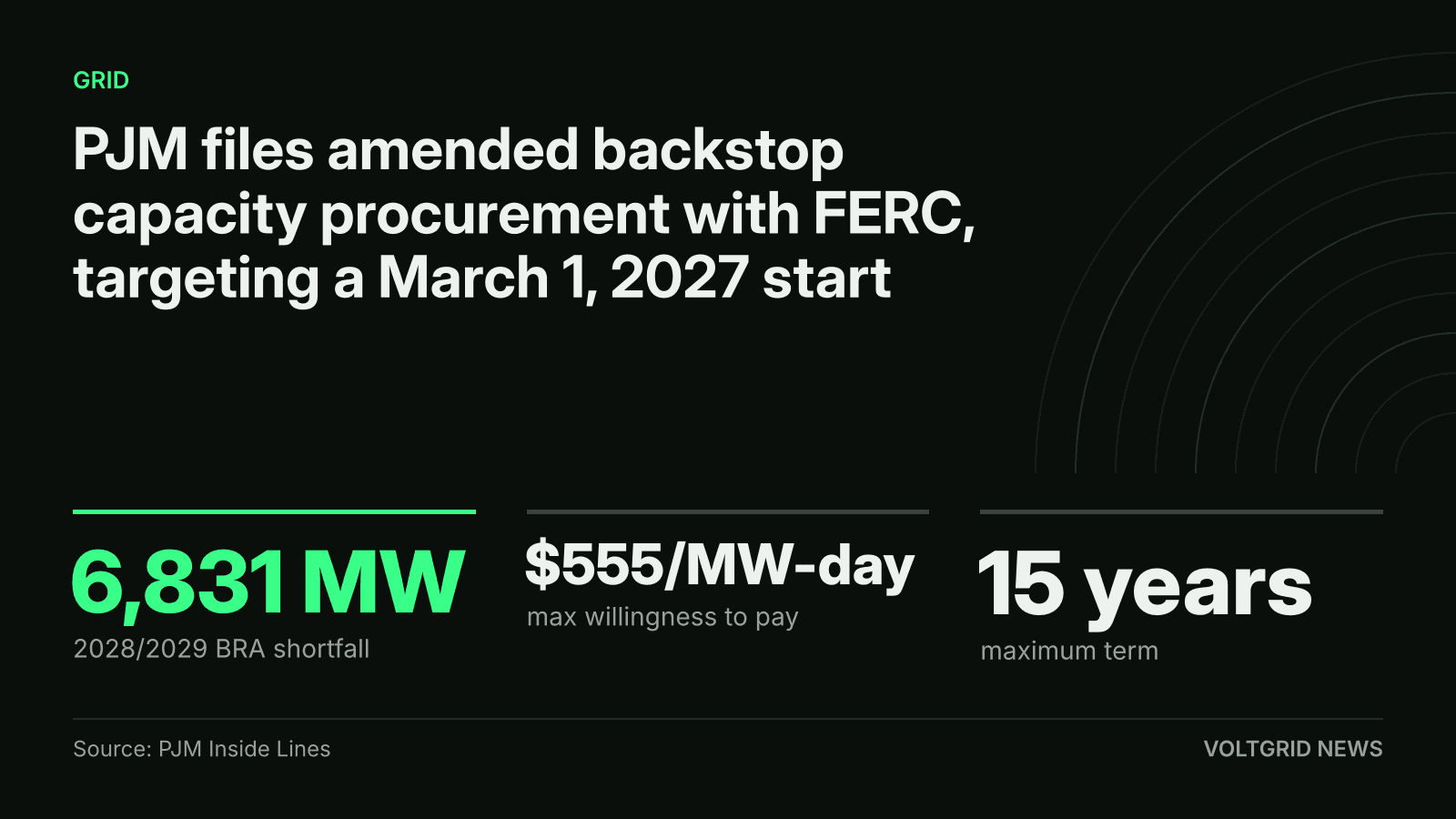
The grid operator is also under pressure on the capacity side. PJM asked FERC on Oct. 29 to open a 6,800 MW reliability backstop auction in March 2027, and it is defending itself against a $145 million Winter Storm Fern complaint from Mon Power at FERC. Exelon's complaint over the timing of PJM's capacity auction is pending, with no PJM response found yet. Watch the first sustained cold snap: PJM recorded winter loads above 130,000 MW for eight straight days in January and February 2026, a stretch that tested the fleet at loads well below this winter's forecast peak.