Samsung Exynos 2700 Reportedly Beats Snapdragon 8 Elite Extreme by 20%
Korean press, citing industry sources, reports a Geekbench 6.5 multicore lead of about 20% for Samsung's Exynos 2700 over Qualcomm's Snapdragon 8 Elite Extreme Gen 6. The figures are unverified and neither company has confirmed them.
3 min readAI-assisted
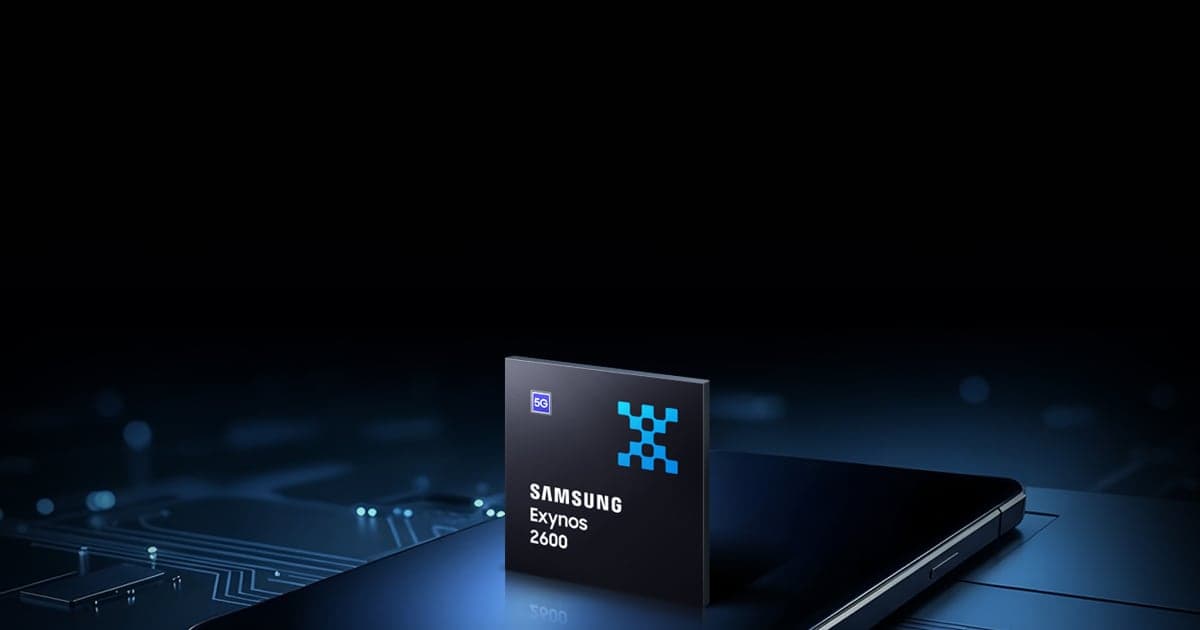
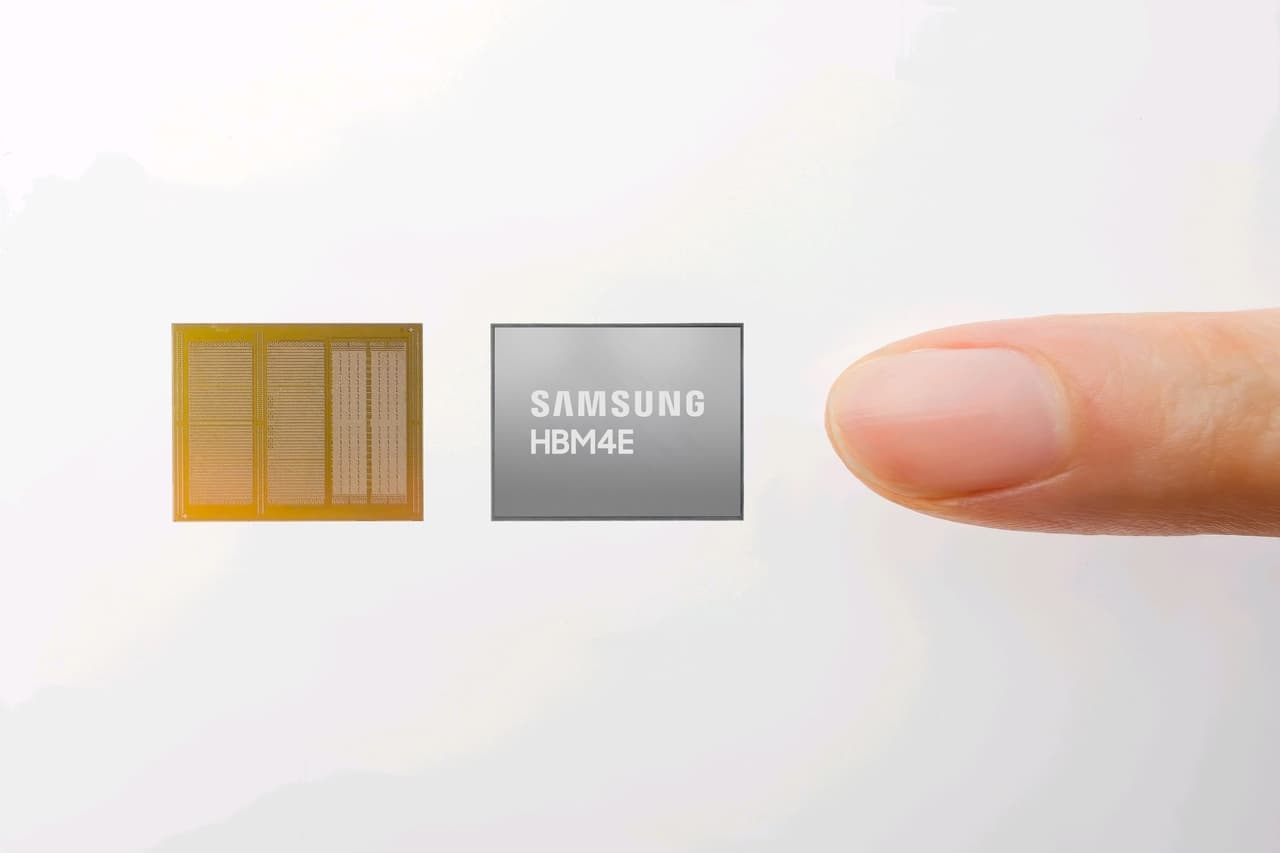
Samsung's current Exynos 2600, the predecessor of the reported Exynos 2700. Samsung has not published images of the Exynos 2700.
Image: Samsung Semiconductor
Source · Press image from the Samsung Semiconductor website, used for news reporting.
Samsung's unreleased Exynos 2700 phone processor scored about 13,000 points in Geekbench 6.5 multicore, roughly 20% above the roughly 11,000 points reported for Qualcomm's Snapdragon 8 Elite Extreme Gen 6, according to Korean press reports published on October 25. The figures are unverified, and neither company has confirmed them.
The Asia Business Daily, citing industry sources, said the comparison used a Xiaomi 18 Pro Max, the phone that carries Qualcomm's Extreme chip. On the newer Geekbench 7.0 the reported multicore lead shrinks to about 15%. Against the standard Snapdragon 8 Elite Gen 6, the reported gaps are 44% on Geekbench 6.5 and 36% on Geekbench 7.0. Notebookcheck, which also covered the report, says the numbers reportedly come from Samsung's internal testing.
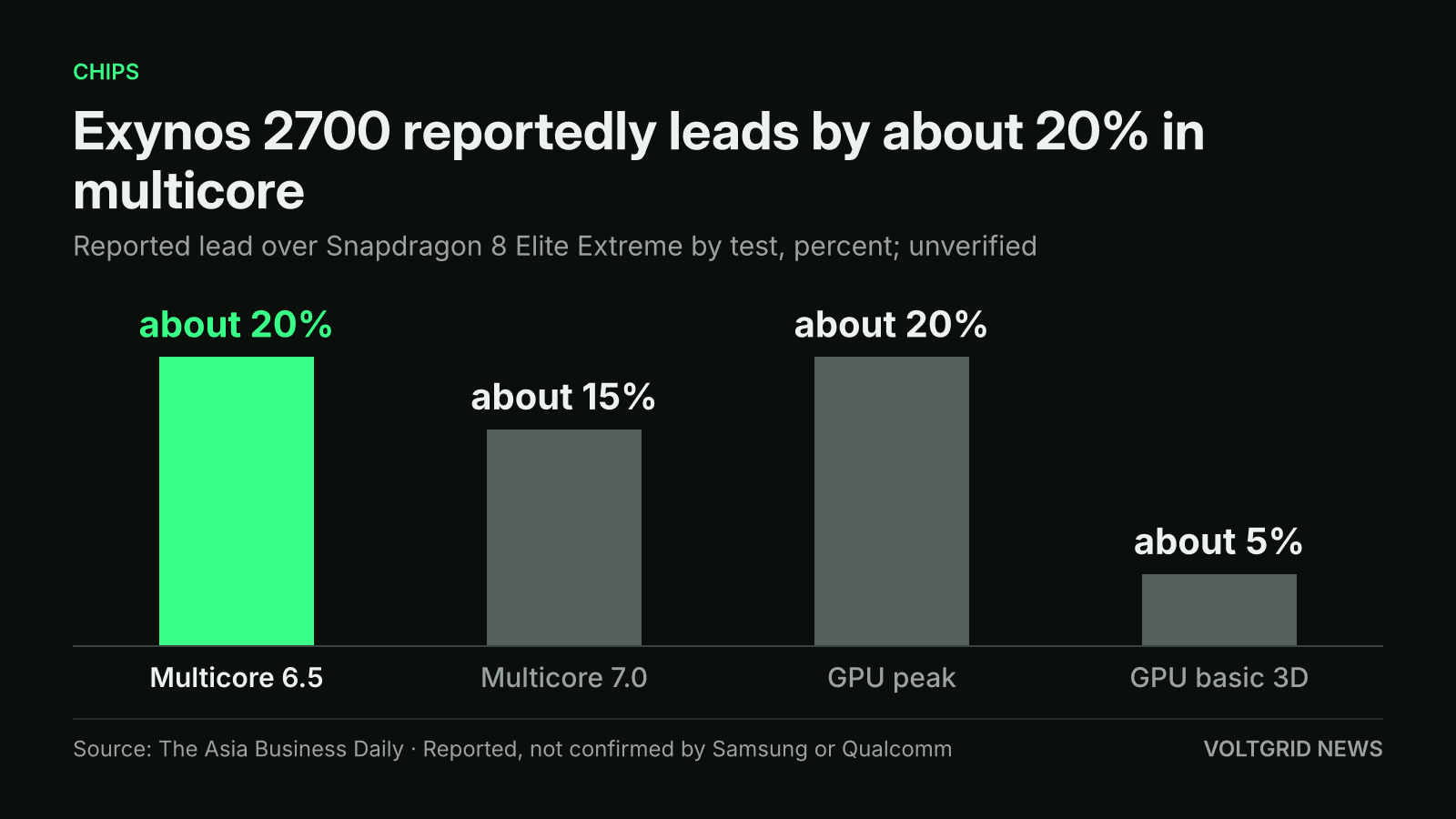
The reported GPU lead falls from about 20% in a peak test to about 5% in a basic test, according to The Asia Business Daily; unverified.
Illustration (AI-generated)
The graphics claims are narrower. In a peak-performance test under demanding gaming conditions the Exynos 2700 reportedly scored about 20% higher than the Extreme chip, but in a basic 3D graphics test the lead was about 5%. Notebookcheck points out that the reports do not name the GPU benchmarks or give power draw or sustained-performance figures, so the results say little about how a phone would behave after minutes of play.
Why the Exynos 2700 Matters for Samsung Foundry
The Exynos 2700 is expected to power Galaxy S27 models early next year, although Notebookcheck says its use in the Galaxy S27 Ultra remains uncertain. According to the Asia Business Daily, it is to be built on Samsung Foundry's second-generation 2-nanometer process (SF2P) with an upgraded Heat Path Block packaging design meant to reduce heat. Neither element is a first: Samsung's current Exynos 2600 is already made on its 2nm GAA process and already uses Heat Path Block, which Samsung calls a first in mobile processors. Qualcomm's rival Gen 6 flagships, announced on September 22, are also on a 2nm process, so a competitive Exynos 2700 on SF2P would give Samsung's foundry a stronger showcase for outside customers. Voltgrid News also covered Samsung's reported Taylor fab tool order.
Notebookcheck adds that earlier leaks describe a 10-core CPU with two prime cores, one clocked at up to 4.24 GHz, an Xclipse 970 GPU and LPDDR6 memory support. LPDDR6 would not set the chip apart, since Qualcomm lists LPDDR5X or LPDDR6 memory for its Extreme Gen 6. Notebookcheck also says mass production has reportedly begun at an initial volume about 10% above the Exynos 2600, while the Asia Business Daily says only that the chip is expected to be mass-produced. None of these details has been confirmed by Samsung.
Why Benchmark Leads Differ by Test
A benchmark score describes one chip, in one phone, on one test, which is why the reported lead moves between Geekbench versions and between graphics tests. A short run can flatter a phone chip that slows down as it heats, and neither report gives power draw or sustained performance. That is why the Heat Path Block packaging matters as much as the peak score.
This is also not the first such claim. In August, Android Authority covered an earlier report, also based on industry sources, that put the Exynos 2700 19% ahead of the standard Snapdragon 8 Elite Gen 6 and 9.5% ahead of what the outlet called the Gen 6 Pro on Geekbench 6.5 multicore, with 12.7% lower power draw than that chip. Those margins differ from the new ones and predate Qualcomm's launch, so the two reports should not be read as one trend. The outlet told readers to take those results with a great deal of salt and said it wants real-world testing first.
What Samsung and Qualcomm Have Not Confirmed
Samsung has not published benchmark results, and no Qualcomm response was found. The tests have not been independently reproduced on retail hardware, and Samsung has not said which Galaxy S27 models and regions will use the Exynos 2700. Independent testing should become possible once Galaxy S27 units reach reviewers.