Solar Aircraft Batteries Need 500 Wh/kg, Harvard-Led Study Finds
A Harvard-led paper in ACS Energy Letters puts 500 Wh/kg as the battery energy density that makes months-long solar flight in the stratosphere viable, against about 250 Wh/kg in EV cells today.
2 min readAI-assisted
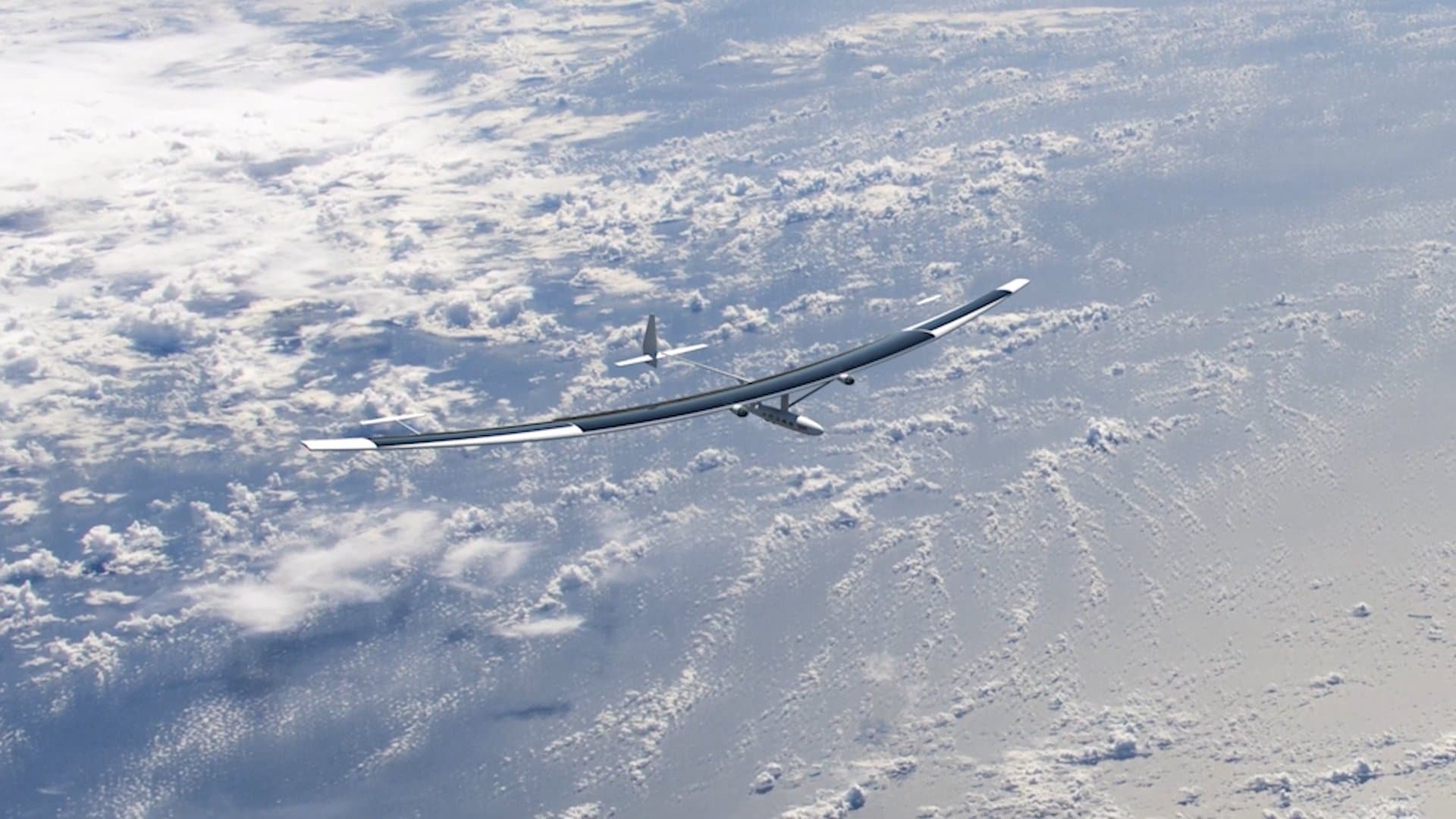
Solar aircraft can fly through the stratosphere to collect atmospheric and climate data, the Harvard SEAS release says. The image is the one featured on that release page.
Image: Electra, via Harvard SEAS
Source · Press image from the Harvard SEAS newsroom, used for news reporting.
A Harvard-led study published in ACS Energy Letters identifies 500 watt-hours per kilogram (Wh/kg) as an important threshold for the battery energy density of solar stratospheric aircraft, Harvard's engineering school said on Oct. 28.
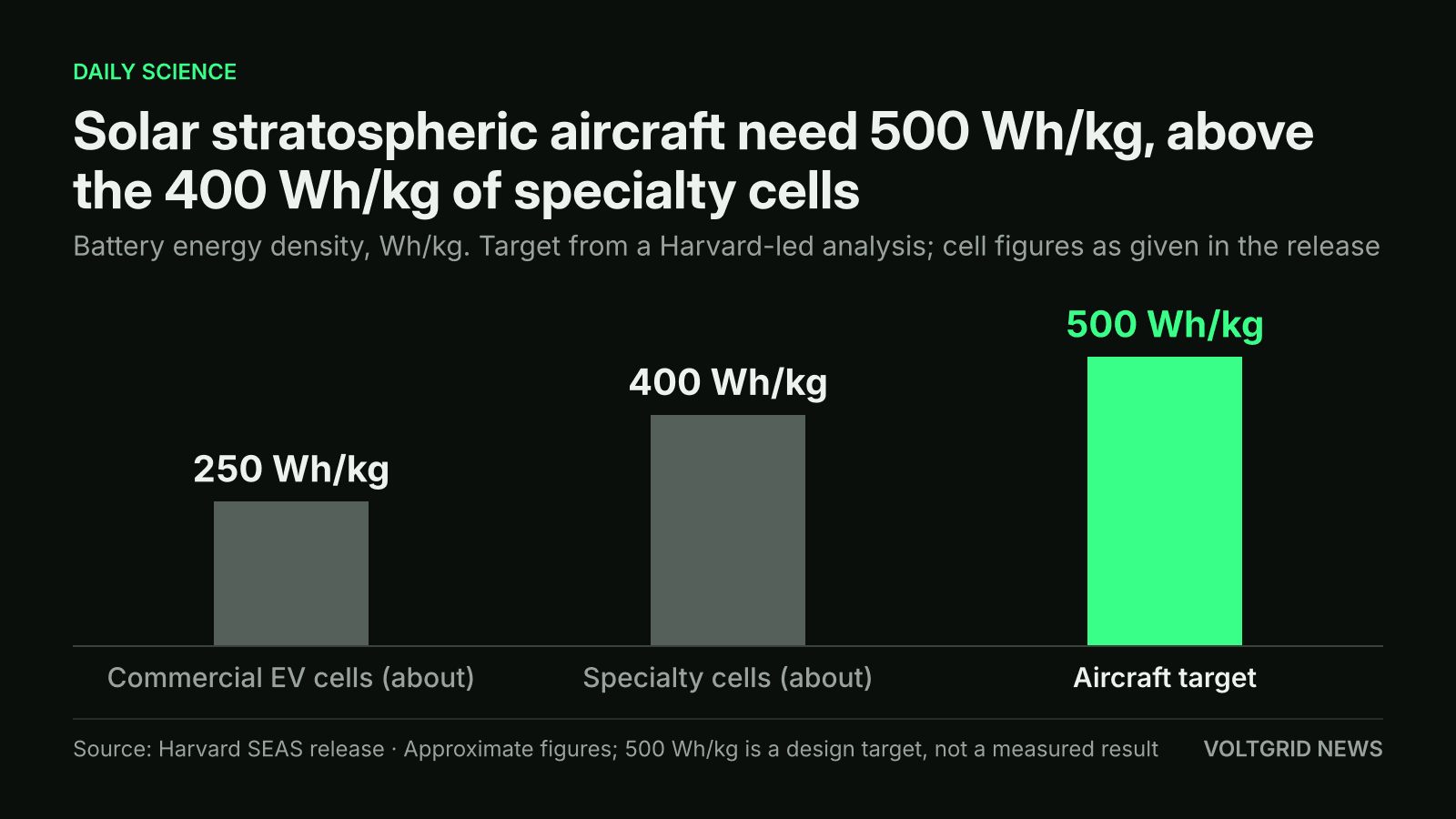
The 500 Wh/kg target sits above the specialty cells of about 400 Wh/kg and the roughly 250 Wh/kg of commercial EV batteries, per Harvard SEAS.
Illustration (AI-generated)
At that level, the researchers argue, persistent flight becomes viable across many parts of the world where atmospheric conditions allow. For comparison, the release says today's commercial electric-vehicle batteries sit at roughly 250 Wh/kg, while experimental or specialty cells near 400 Wh/kg already exist. "We're almost there," said lead author Craig Mascarenhas, adding that those cells are expensive but getting cheaper quickly.
Why the battery is the limit
These pilotless, fixed-wing aircraft are designed to cruise for weeks or months in the stratosphere, at about twice the 30,000-foot cruising altitude of commercial jets and above most weather. They collect surplus solar energy by day to charge their batteries, then run on the batteries at night.
Mascarenhas described a circular problem: more stored energy means a heavier battery, which needs more power to generate lift, which calls for still more stored energy. Energy density, how much energy each kilogram of battery holds, is the lever that breaks the loop.
Energy density over power density
The paper also argues that battery developers should prioritize energy density rather than balance it equally with power density, the conventional approach. The reason is that these aircraft draw very little power but must store a lot of energy to last the night.
What it could change
Harvard's team says solar aircraft could give persistent, detailed climate and atmospheric data, from hurricane tracking to wildfire monitoring. The release contrasts them with NASA's ER-2 high-altitude aircraft, which carries a pilot and flies six to eight hours at a stretch at tens of thousands of dollars per hour. A modern unmanned solar aircraft, the researchers say, could stay airborne for months with fewer staff and lower operating costs.
The 500 Wh/kg figure is a design target from an analysis, not a measured result, and Harvard's release does not say when cells meeting it will be available at an acceptable price. For scale, Fraunhofer ISE reported silicon-anode cells passing 1,000 cycles at 280 Wh/kg, still well below the aircraft target.
The work was done with the University of Michigan and industry partners, and co-authors include battery researchers Venkatasubramanian Viswanathan and Shashank Sripad and aerospace entrepreneur John Langford. Harvard's Jim Anderson leads the university's branch of the NASA-funded Stratospheric Airborne Climate Observing System collaboration.