NVision Single-Molecule Qubit in Nature Targets Photonic Chips
NVision says its Nature paper shows one organic molecule can act as a qubit and be laid on photonic chips like OLED material. First prototype chips with HyperLight are due in Q4 2026.
2 min readAI-assisted

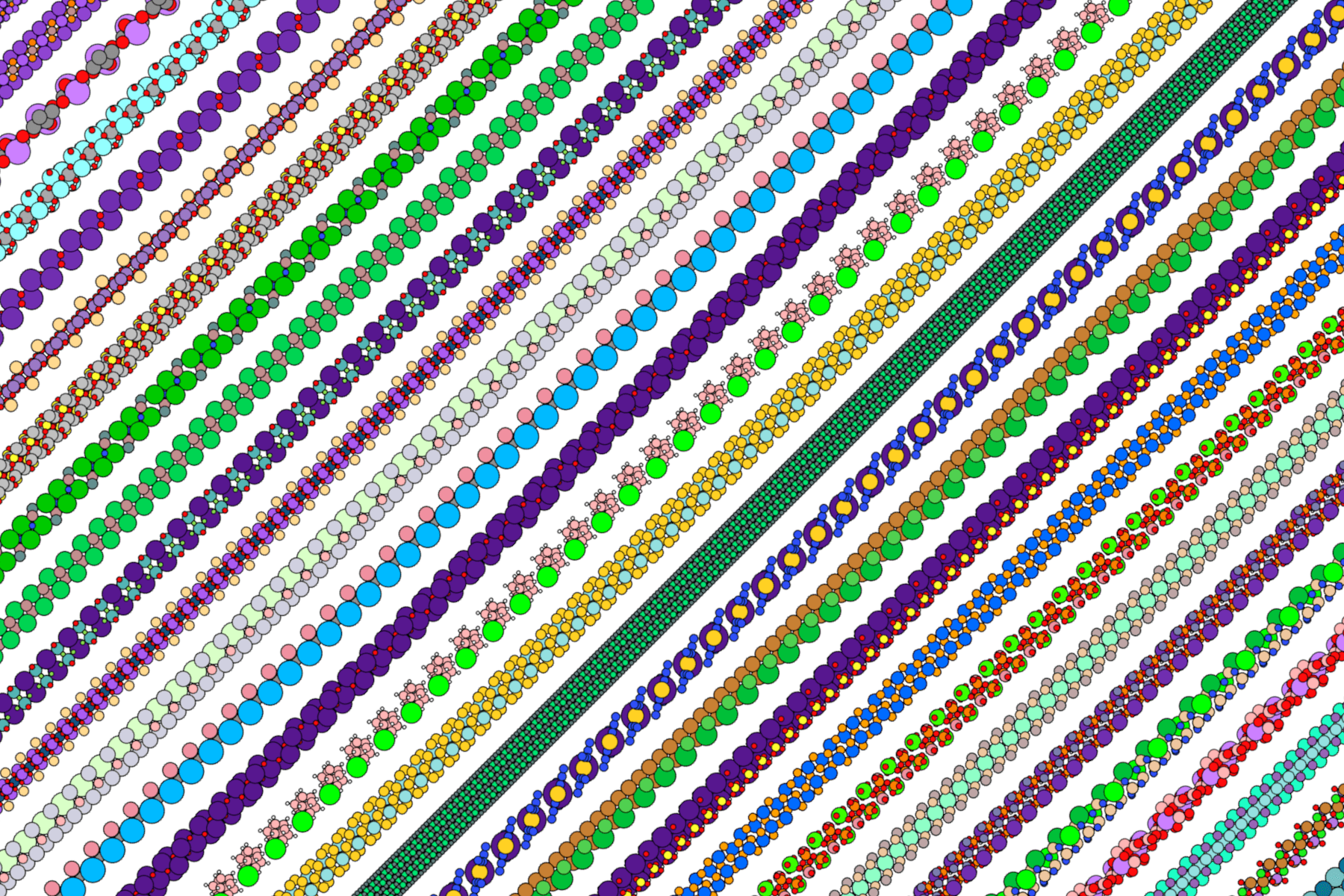
NVision's illustration of its molecular qubit, published with its Nature paper announcement. It is an artwork, not a photo of a chip.
Image: NVision
Source · Press image from the NVision newsroom, used for news reporting.
German startup NVision published a paper in Nature on Oct. 28 that it says shows a new way to build quantum computing chips: using a single organic molecule as a qubit, deposited as a thin film in the way OLED display materials are, according to Reuters.
The paper is titled "A Single-Molecule Spin-Photon Interface". NVision says it is the first individually addressable organic molecule that can link a stationary qubit, which stores quantum information in an electron's spin, to photons, the particles of light that carry information between chips. Until now, the company said, molecular spins could not be controlled one by one and coherently, so they could not serve as true qubits.
How the molecule was found
NVision used computational screening to evaluate more than 150 candidate molecules and synthesized 40 of them in the lab, the company said in its release. Reuters described the search as AI simulation of hundreds of candidates. Chief technology officer Ilai Schwartz told Reuters the team found a "Goldilocks" molecule that could be laid down in a thin layer over a chip made with conventional technology. The company calls it a carbene system, and says it works at 2 K to 4 K, a few degrees above absolute zero.
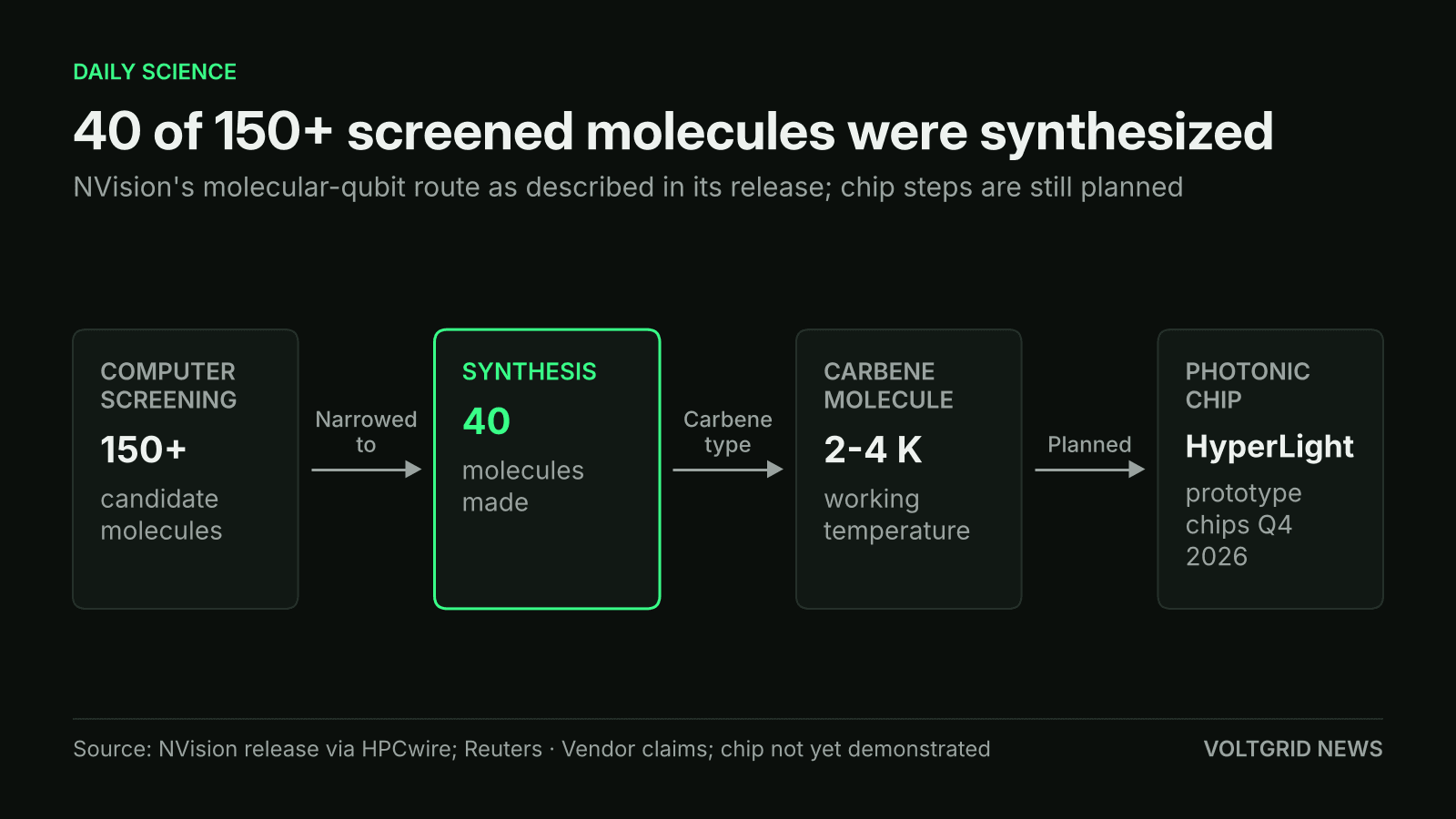
NVision says it screened more than 150 candidates and synthesized 40; the photonic-chip step is planned, with prototypes expected in Q4 2026.
Illustration (AI-generated)
The same release says the platform tolerates up to 70% photon loss, which would let it run on standard silicon photonics rather than specialized low-loss optics. That is a company claim, not a figure from the paper's reviewers.
Why photonic chips matter for scale
Most quantum processors need qubits packed close together, which raises crosstalk, control complexity and heat. NVision argues that linking qubits by light removes that limit. IBM took a related route when it linked two 120-qubit chips with four cables, a different approach to joining quantum chips.
NVision also announced a partnership with HyperLight, a US maker of thin-film lithium niobate photonic chips used in AI data centers and telecom networks. The two plan to integrate the molecular qubits onto HyperLight's photonic circuits. First prototype integrated chips are expected in Q4 2026, and NVision is targeting a live on-chip demonstration by the end of 2026.
For data-center planners the stated end goal is the relevant part. NVision's roadmap targets 1,000 physical qubits, progressing toward 1,000 logical, fault-tolerant qubits on a chip by 2030, in a data-center form factor. Chief executive Sella Brosh told Reuters the company wants to make the chips, deposit the molecules and handle error correction itself, and that "eventually, what we will sell is a rack-ready computer."
What is not shown yet
The result is a single-molecule demonstration, not a working processor. The molecular qubits have not yet been shown on a finished photonic chip, and the 2030 targets are the company's own roadmap. The funding figure is also easy to misstate: Reuters corrected its report to say NVision has raised $120 million from public and private sources, including Abbott Laboratories, not $155 million.