TrendForce NAND Price Forecast: 0-5% Fall in 1Q27 as China Cuts SSD Orders
TrendForce's NAND price forecast of Nov. 19 has contract prices falling 0-5% in 1Q27 after an 8-13% rise in 4Q26, with all categories down from 2Q27; no size given for China's SSD cuts.
3 min read
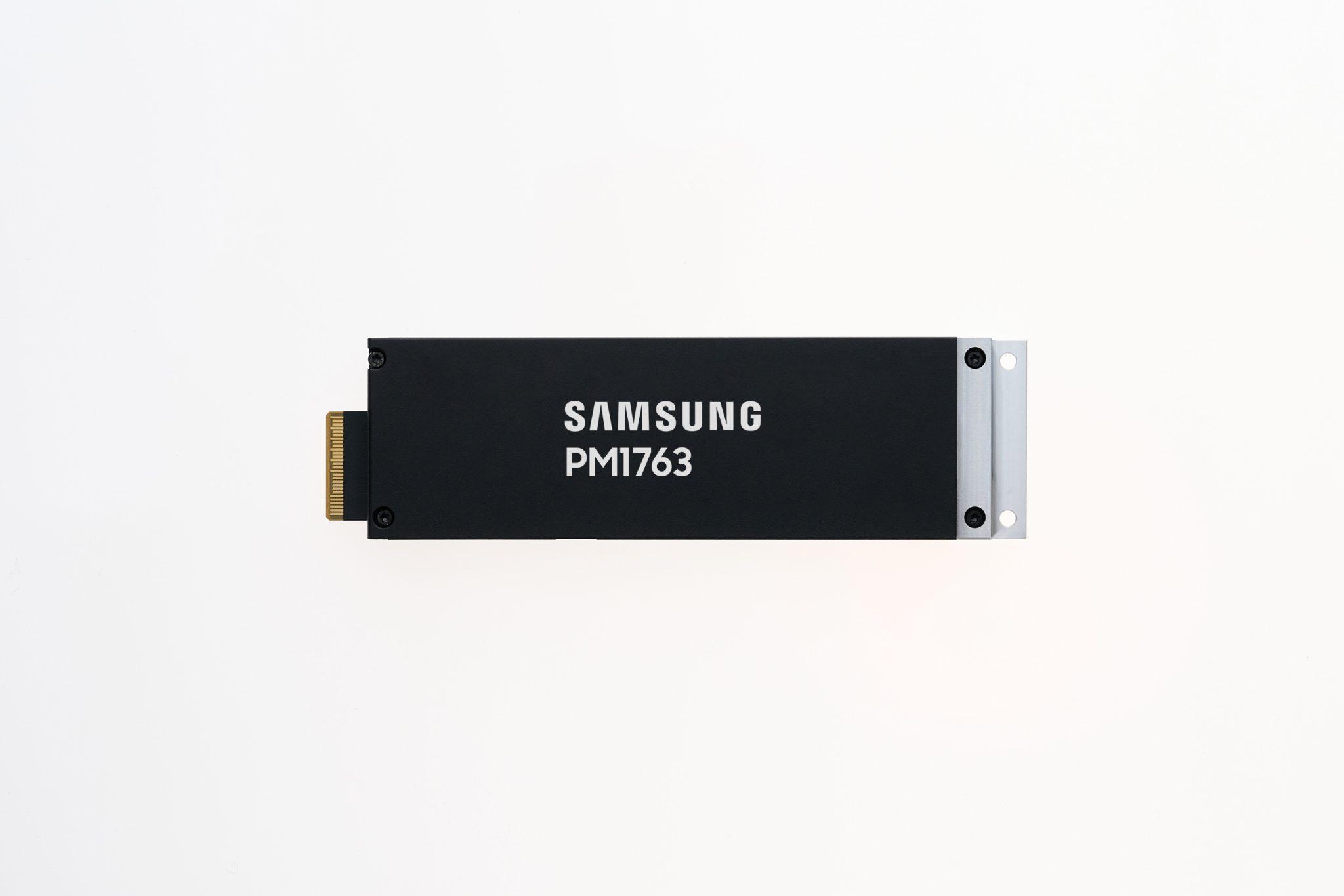
Samsung's PM1763 enterprise SSD. File image of a Samsung data center drive; it is not one of the products in TrendForce's forecast.
Image: Samsung
Source · Press image from the Samsung newsroom, used for news reporting.
TrendForce's NAND price forecast, issued Nov. 19, has overall NAND Flash contract prices falling 0% to 5% quarter on quarter in the first quarter of 2027, after a rise of 8% to 13% in the fourth quarter of 2026, with every product category in a downward cycle from the second quarter.
TrendForce forecasts NAND contract prices falling 0-5% in 1Q27 after an 8-13% rise in 4Q26; it gave no figure for 2Q27. Source: TrendForce, Nov. 19, 2026.
Graphic: Voltgrid News
The Taiwan-based research firm said in a press release that Chinese cloud service providers (CSPs) have cut their 2027 enterprise SSD orders by more than U.S. CSPs added. It names three causes for the Chinese cuts: GPU shortages, elevated inventory and intensifying competition over token pricing. U.S. CSPs, by contrast, have raised their 2027 demand forecasts again, supported by AI agent and general-purpose server projects already under construction, according to TrendForce. The Register, which reported the forecast the same day, noted that TrendForce gave no figure for the size of the Chinese cuts.
Why NAND Contract Prices Are Turning Down
Supply is the other half. TrendForce expects global NAND Flash bit supply to grow 25% to 30% year on year in 2027, as quad-level cell (QLC) NAND spreads and chips move to more layers, even if some suppliers slow expansion plans. It estimates industry capital spending will rise 26.7% to $29.9 billion. In consumer markets, it expects lower-cost memory inventories to run out in 2027, pushing up device prices and cutting shipments, while brands trim storage capacity per device to hold down costs.
The firm said weaker consumer shipments and fewer Chinese enterprise SSD orders had already weighed on contract prices in the fourth quarter, and that it lowered its quarterly contract-price increase forecast to 8% to 13%. These are contract prices. Separately, TrendForce said spot prices have seen a correction of more than 20% as distributors clear inventory.
NAND Falls While DRAM Stays Tight
This is Voltgrid's reading, not TrendForce's. Our DRAM coverage points the other way. KB Securities expects Samsung and SK hynix DRAM selling prices to rise 40% in 2027, as Voltgrid reported, and Apple is reportedly close to a multiyear Samsung DRAM deal in which prices follow the market. So a NAND decline that starts in early 2027 would sit beside a DRAM market that KB Securities expects to tighten. The Register made the same point: cheaper NAND would not fix the separate DRAM squeeze.
The cause also links storage to GPUs. The Chinese order cuts trace to a shortage of accelerators, so SSD demand in that market is tied to how many GPUs Chinese cloud providers can buy. TrendForce lists changes to restrictions on overseas GPU procurement among the factors its outlook depends on. Where DRAM prices follow AI server demand from NVIDIA's customers, as our analysis of NVIDIA's margin guide argued, NAND demand now also reflects the buyers who cannot get those accelerators.
KB Securities, as reported by Seoul Economic Daily and SBS News, expects Samsung and SK hynix NAND selling prices to rise 30% in 2027, with enterprise SSD demand growth of 54%. That is an average selling price forecast by a brokerage for two companies, not a contract-price forecast for the market, so the two are not a like-for-like contradiction, though the NAND call for 2027 is contested.
What Is Not Confirmed About the NAND Outlook
TrendForce's outlook is a forecast, not a price any maker has set. It said the outcome depends on the pace of inventory reduction at Chinese CSPs, changes to GPU procurement restrictions, and whether device makers keep cutting memory specifications in 2028. It also pointed to U.S. policy after the mid-term election and the approval pace of major AI data center projects planned for 2028. The press release gives the 1Q27 range and the direction for the second quarter, but no percentage for 2Q27 or later quarters.
Sources
- Published
- Sources
- 2 cited