Xiaomi 18 Pro Max Scores 59.9% in 3DMark Stress Test, Beating Oppo's 58.2%
Trusted Reviews' 3DMark stress test put the Xiaomi 18 Pro Max's Snapdragon 8 Elite Extreme Gen 6 ahead of Oppo's Dimensity 9600 Pro, 59.9% to 58.2%, but a pre-release unit trailed Oppo in Geekbench AI.
3 min read
Follows Snapdragon 8 Elite Extreme Gen 6 Specs: 5 GHz, 2nm, First Retail Test
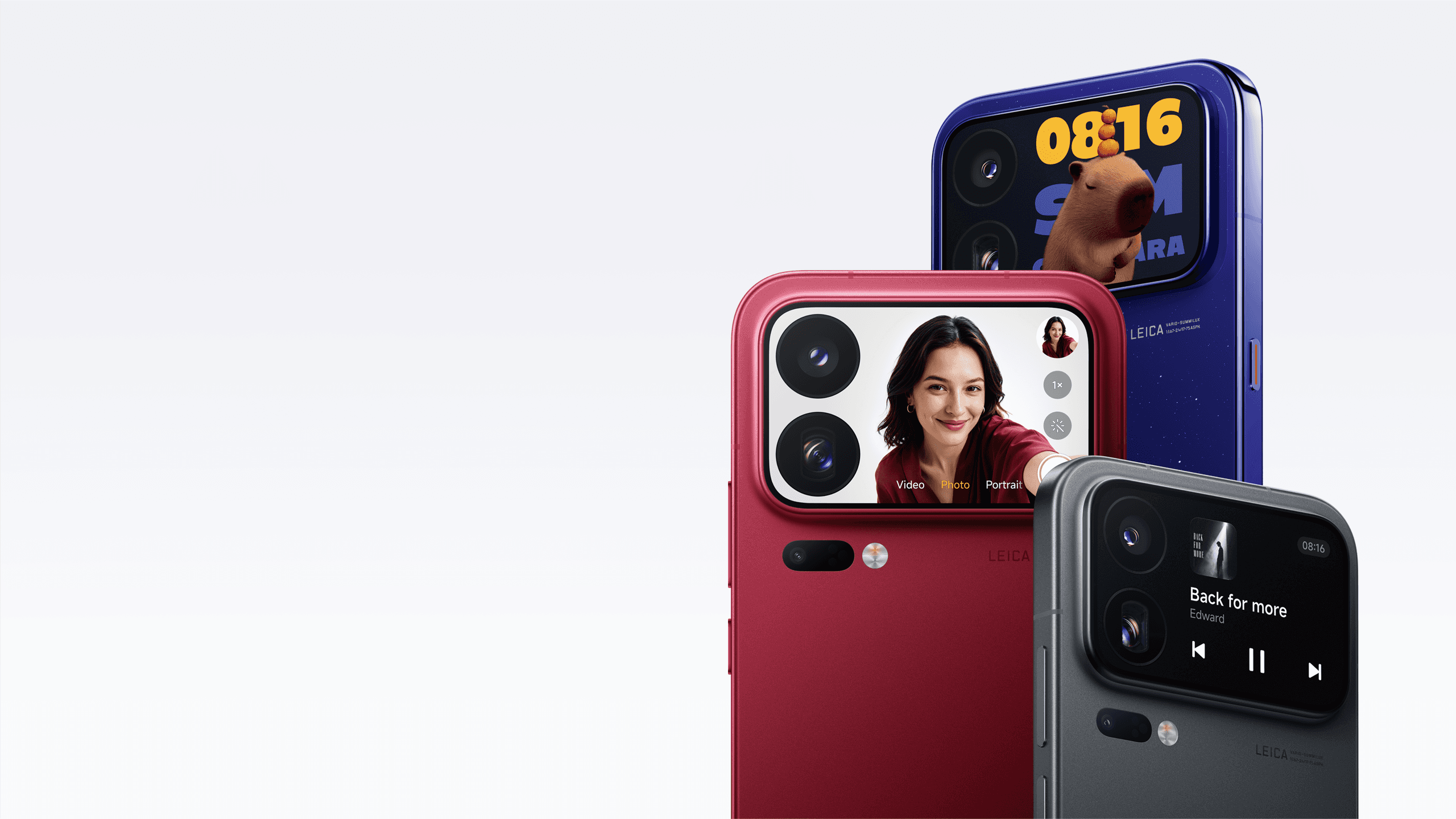
The Xiaomi 18 Pro Max in Xiaomi's own product-page image; the phone runs Qualcomm's Snapdragon 8 Elite Extreme Gen 6.
Image: Xiaomi
Source · Press image from the Xiaomi Global product page, used for news reporting.
In a Nov 25 review, Trusted Reviews measured 59.9% stability for the Xiaomi 18 Pro Max in 3DMark's Wild Life Stress Test, against 58.2% for the Dimensity 9600 Pro-based Oppo Find X10 Pro Max.
It adds to the independent testing of Qualcomm's Snapdragon 8 Elite Extreme Gen 6 that began with Notebookcheck's OnePlus 16 test covered in our product file on the chip. That test found a chip with modest peaks and steady sustained output. The new data mostly agrees on sustained graphics, but Android Headlines' AI numbers point the other way, with one caveat: its Nov 17 review ran on a pre-release unit with pre-release software.
What stress-test stability measures
3DMark's Wild Life Stress Test runs the same graphics scene in 20 loops and reports a stability percentage: a higher figure means less performance lost as the phone heats up.
Stability says nothing about speed on its own. A phone can score high on it by starting slow, so the single-run score matters too. GSMArena's harder test, Wild Life Extreme for 20 minutes, reports the drop from peak instead, so its result cannot be read against Trusted Reviews' percentages.
Sustained graphics: ahead of MediaTek, behind RedMagic
In the Trusted Reviews tests, the Xiaomi's single-run 3DMark Wild Life score was 7,728, against 7,639 for the Oppo and 6,195 for the RedMagic 12 Pro, a gaming phone with the same Qualcomm chip. The RedMagic posted the highest stability, 61.9%, and the fastest Solar Bay ray-tracing result, 60.3 fps against the Xiaomi's 53.6 fps. Trusted Reviews said the Xiaomi matches Dimensity 9600 Pro phones on peak but, over the test's 20 loops, settles at a throttled level considerably higher than the Oppo or the vivo X500 Pro Max.
In Trusted Reviews' 3DMark Wild Life Stress Test, the Xiaomi 18 Pro Max scored 59.9% stability, between the Oppo's 58.2% and the RedMagic 12 Pro's 61.9%.
Graphic: Voltgrid News
GSMArena's Nov 17 review of a global 12GB/256GB unit ran a harder test, the 20-minute Wild Life Extreme loop, and measured a drop of roughly 48% from peak, about 46% in Performance mode. It also saw CPU performance settle at around 50-60% of its starting level under prolonged load, with large swings. GSMArena judged the throttling typical of current flagships, and said the RedMagic's higher scores on the same chip suggest Xiaomi leaves performance unused.
On-device AI: the open question
On its pre-release unit, Android Headlines ran Geekbench AI, where a higher score is better, and measured a quantized score of 4,645 for the 18 Pro Max, against 5,876 for the Oppo Find X10 Pro Max. The gap was wider at higher precision: 2,089 against 4,094 in single precision and 3,088 against 4,224 in half precision. The cheaper Xiaomi 18 Pro, with the standard Snapdragon 8 Elite Gen 6, scored 5,339 quantized on the same site. Android Headlines does not say why the higher-tier chip scored lower; it notes only that some of its results could change by launch on retail software.
Trusted Reviews' table shows a different picture, but it is not the same test, outlet or unit. Its row labelled "AI performance" gives the Xiaomi 6,773 against 5,889 for the Oppo and 7,788 for the RedMagic, but the review does not name the benchmark behind it. Qualcomm claims 33% better AI performance per watt than its predecessor, according to GSMArena, a vendor figure that neither review tests.
Heat and battery
With an infrared gun on its pre-release unit, Android Headlines measured a 97.5°F surface temperature after 30 minutes of 4K60 recording, cooler than the Oppo's 100.4°F, though the Xiaomi's battery peaked warmer, at 95.7°F against 92.7°F. Its rundown at 200 nits lasted 12h 58m from the 7,050 mAh cell, against 19h 04m for the Oppo's 8,000 mAh battery. With different cell sizes and pre-release software, that gap is not a measure of chip efficiency. The global cell is smaller than the China model's, as Voltgrid reported. Trusted Reviews lists the phone at £1,399.
What is not confirmed yet
Android Headlines could not run the Wild Life Extreme stress test or get an AnTuTu score on its pre-release unit and said it would update the review. Its AI and battery figures may change on retail firmware, and the page still carried the pre-release note on Nov 26, with no retail-unit numbers added. The benchmark behind Trusted Reviews' AI score is unnamed, and none of the three reviews gives a power-draw figure, in watts, for the chip.
Sources
- Published
- Sources
- 3 cited