Google Gemini Glasses: Snapdragon AR1 Gen 1, About 41 g, From $395
Google and Samsung's Gemini glasses go on sale Dec. 10 from $395. Samsung confirms a Snapdragon AR1 Gen 1 with 2GB of memory, and a nine-hour claim that it pairs with split computing.
5 min read
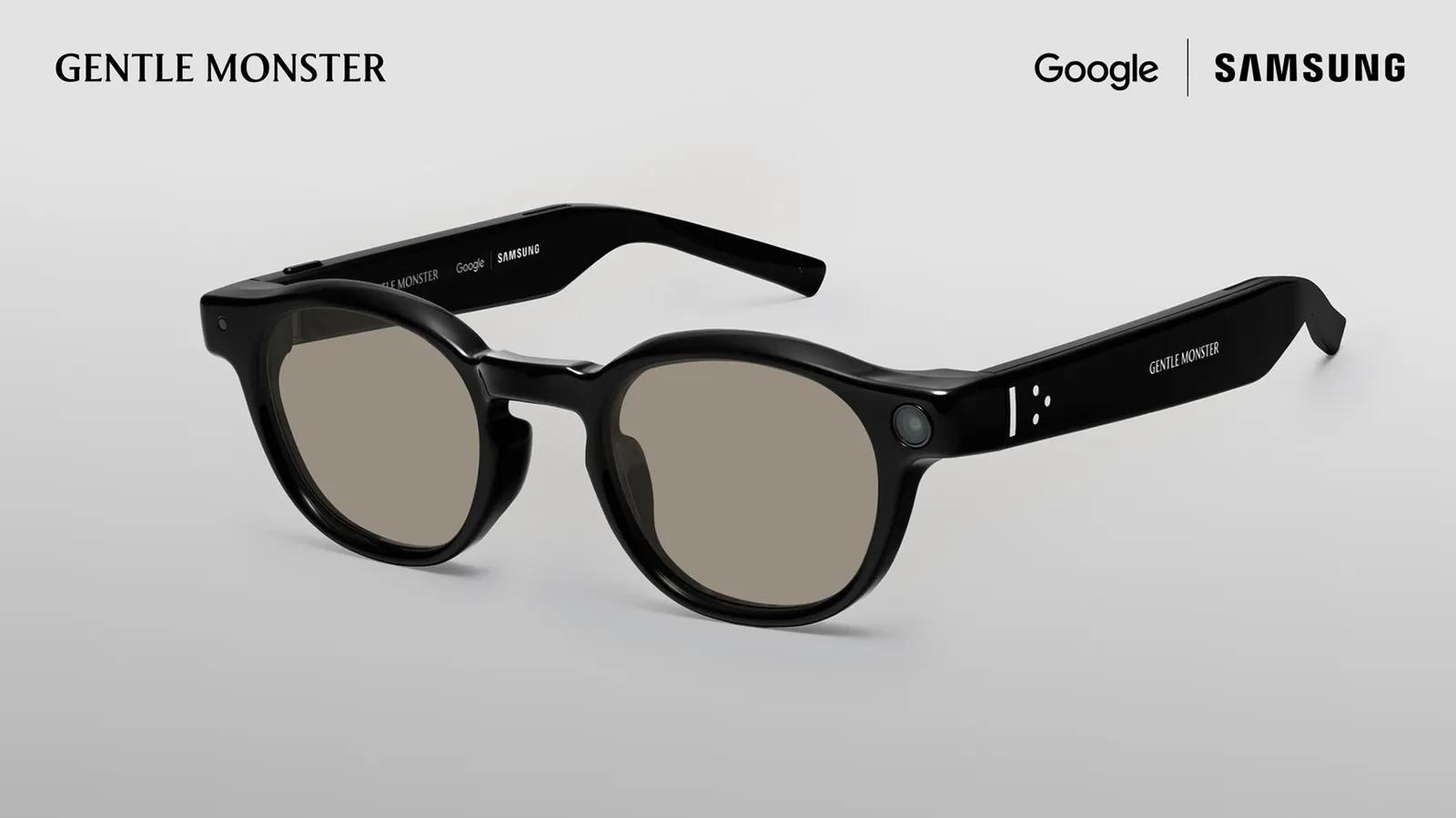
One of the Gentle Monster designs in Google and Samsung's Gemini glasses line, on sale Dec. 10 (Google, Samsung).
Image: Google
Source · Press image from Google's blog, used for news reporting.
Google opened pre-orders on Nov. 12 for its first Gemini glasses, built with Samsung in Warby Parker and Gentle Monster frames, from $395 and weighing around 41 g, with sales starting Dec. 10 in the US and South Korea.
The glasses carry a camera, microphones and open-ear speakers; Google does not mention a display in the lenses, Notebookcheck noted. The wearer says "Hey Gemini" or taps the frame to ask about what they are looking at, get turn-by-turn directions from Google Maps, hear speech translated, take calls or capture photos and video. Google said its eyewear works with Pixel and Galaxy phones and with iPhones. The product is aimed at people who want an assistant that sees what they see without taking the phone out of a pocket, and it walks into a category Meta already leads: The Next Web reported that Meta shipped 81% of AI glasses in the first half of the year.
For Voltgrid the defining number is not the camera but the power budget. Samsung claims up to nine hours on one charge from a frame of about 41 g. Its release credits a split-computing system, together with component placement, battery design and thermal management, for balancing performance and comfort; that system offloads a portion of the processing to the connected device, which Samsung describes beside Galaxy phones. Voltgrid reads this as keeping the heaviest work off the face, and it is a platform choice as much as a hardware one, because it ties the glasses to the phone, the account and the cloud behind them.
Inside the Snapdragon AR1 Gen 1 Chip
Google's own post does not name a chip, and The Next Web was first to report a Qualcomm Snapdragon AR1. Samsung's spec sheet settles it: the eyewear runs on the Snapdragon AR1 Gen 1 Platform, with 2GB of memory and 64GB of storage. The radios are Wi-Fi 6E and Bluetooth 5.4, and the glasses, though not the case, are rated IPX4, Samsung says.
The idea that matters is where the work runs. With 2GB of memory on the glasses, Voltgrid reads the design as splitting the job three ways. The glasses capture images and audio and handle the device itself; Samsung describes offloading "a portion" of the processing to the connected device; and Gemini's answers come from Google's cloud, Notebookcheck reports, citing Google's privacy post. Notebookcheck, citing Google's privacy post, reported that data sent to the phone or the cloud for processing is encrypted in transit. Neither Google's nor Samsung's pages say how the load divides, how much Gemini runs on the glasses, or what the radios cost in battery. Those are the numbers that will decide whether nine hours holds up under heavy camera use. Voltgrid News covered Qualcomm's other platform in Snapdragon 8 Elite Extreme Gen 6 specs.
Samsung's battery claim rests on a mixed-use scenario that may include Gemini conversations, music, video capture, messages and notifications. With a full charging case it claims up to 72 hours; Google said the case recharges the frames up to seven times. Weight varies by frame: 39.6 g to 43.9 g for Gentle Monster and 40.4 g to 42.6 g for Warby Parker, with standard lenses and before prescription lenses, Samsung said. The case itself weighs 194.5 g for Gentle Monster and 166.8 g for Warby Parker.
The camera is a 12MP HDR unit, ultra-wide according to Google, taking 3,024 by 4,032 portrait photos and recording 3K video at 30fps or 2K, with HDR video up to 2K. Two open-ear speakers and four microphones handle voice.
How Gemini Glasses Compare With Ray-Ban Meta Gen 3
The closest rival is Meta's Ray-Ban Meta (Gen 3), launched in September. Android Authority reported it starts at $449, with up to nine hours of battery, a 12MP camera that records 3K video and a six-microphone array. Notebookcheck reported 32GB of storage, up to 50 extra hours from its case and Bluetooth 5.3; battery life rose from eight hours on the Gen 2 to nine.
On the specs both sides publish, the two products look close. Both claim up to nine hours of battery, on conditions that are stated only for Samsung's; both cameras are 12MP with 3K video; and Google's entry price is $395 against Ray-Ban Meta's $449, while Gentle Monster's $449 to $489 range overlaps it. Samsung lists 64GB of storage against 32GB. The case figures are not like-for-like: Samsung gives a 72-hour total, while Meta's 50 hours is an addition, so they should not be set side by side as stated. The pages we read do not name the Gen 3's chip, so a silicon comparison would be guesswork. Meta also sells cheaper camera glasses, with its Meta Adventurer line starting at $249, Android Authority reported.
On published specs the two pairs look close: both claim up to 9 hours and a 12MP camera. These are vendor claims, not test results, and the case battery is left out because the bases differ.
Graphic: Voltgrid News
What Reviewers Measured So Far
Voltgrid found no independent battery, latency or thermal measurements as of Nov. 14. The Dec. 10 sale date is the first point at which testers can check the nine-hour claim on the mixed use Samsung describes.
Gemini Glasses Price, Release Date and Software
Warby Parker's three styles (Alden, Reid and Wren, in optical or sun versions) start at $395. Gentle Monster's six designs cost $449 to $489 in the US, depending on the model. Samsung counts 30 designs in all, from 16 Gentle Monster and 14 Warby Parker variations. Both lines launch in the US, Gentle Monster's also in South Korea, and the glasses work only with Google Accounts from those two countries for users 18 or older. Google has not said whether they will come to Europe, Notebookcheck noted.
The software terms favour Android. Google lists Pixel 7 phones and later on the September 2026 Android 17 update, and Galaxy S, S FE, Z Fold, Flip and Fold Ultra phones on One UI 9.0 or later. Guided Vision, the Aira human-interpreter service and Audible work only with Android phones at launch, and Bixby works only with Galaxy phones. The two companies disagree on iPhone support: Google says iPhone 13 Pro and above, while Samsung's sheet says iPhone 13 and later with at least 6GB of RAM on iOS 26.6 or later. Google says Guided Vision and Aira may require a subscription or membership; it does not say whether Gemini on the glasses will.
What to Watch After the Dec. 10 Launch
The milestone is Dec. 10, when the glasses go on sale and independent reviews can test the battery claim, the phone dependence and how the split computing behaves on an iPhone against a Galaxy phone. Watch for Google or Samsung to say how much of Gemini runs on the glasses, for a Gemini subscription price, and for a date outside the US and South Korea.
Sources
- 01Meta launches Ray-Ban Meta Gen 3 smart glasses with a nine-hour batteryAndroid Authorityandroidauthority.com
- 02Google intelligent eyewear collections open for pre-orderGoogleblog.google
- 03Google's Gemini glasses redact faces before the AI sees themNotebookchecknotebookcheck.net
- 04Samsung Announces December Release for Intelligent Eyewear, Bringing a Smarter Way To See the WorldSamsung Newsroomnews.samsung.com
- 05Google and Samsung's Gemini smart glasses go on preorder from $395The Next Webthenextweb.com
- Published
- Sources
- 5 cited