HyperAccel Reportedly Gets 10,000 of 20,000 Bertha Chips From Samsung
Korean AI chip startup HyperAccel asked Samsung Foundry for 20,000 Bertha accelerators and was allocated 10,000, TheElec reported, and SK hynix covered only part of the memory it needs.
3 min read
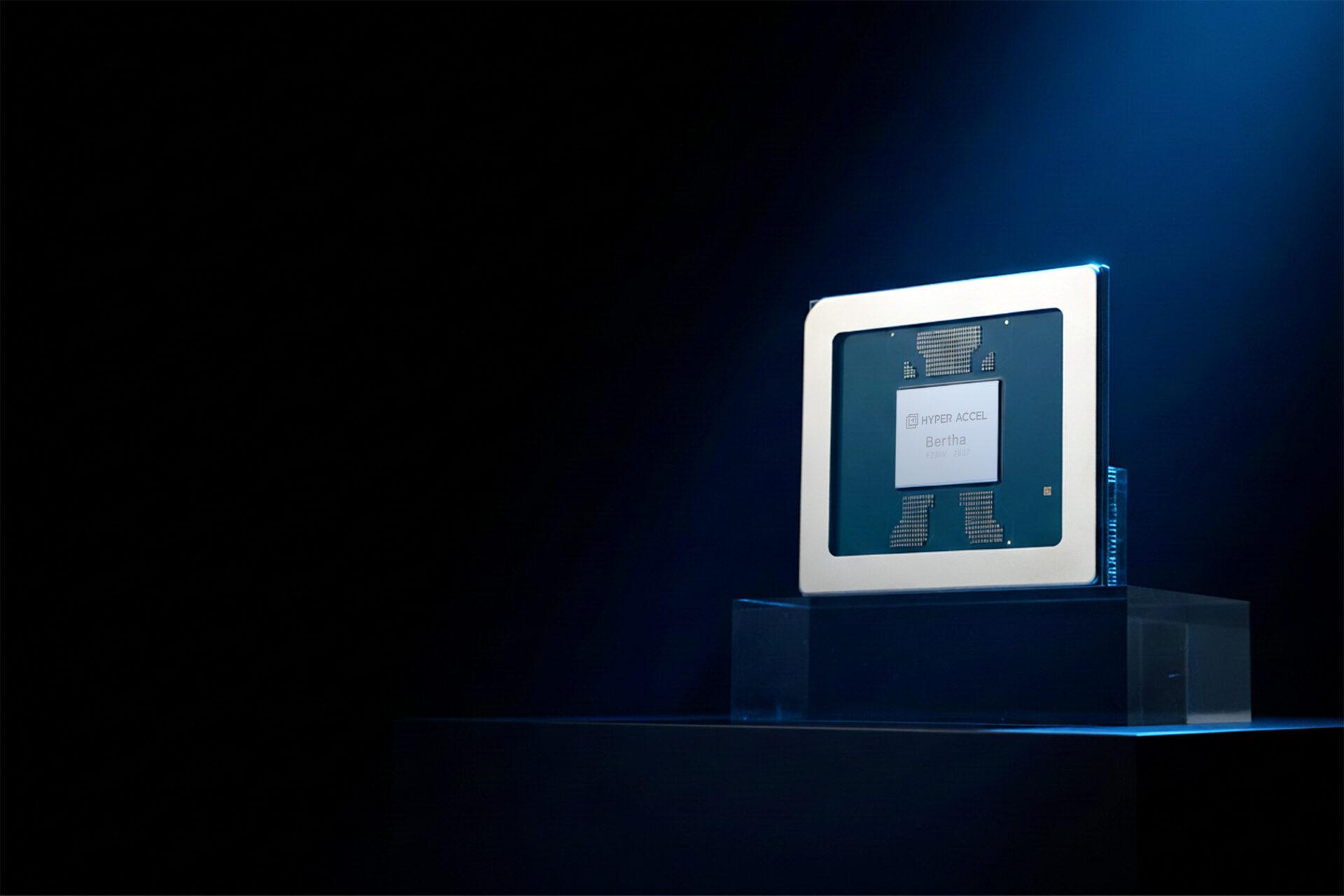
HyperAccel's Bertha accelerator, the LPU built on Samsung Foundry's 4nm SF4X process (HyperAccel).
Image: HyperAccel
Source · Press image from the HyperAccel website, used for news reporting.
HyperAccel, a Korean AI chip startup, asked Samsung Foundry to build 20,000 Bertha accelerators on its 4-nanometer SF4X process and received an initial allocation of 10,000 units, half the request, according to TheElec's report of Nov. 13.
Samsung's initial allocation covers half of the 20,000 Bertha units HyperAccel requested, TheElec reported.
Graphic: Voltgrid News
Chief Executive Kim Joo-young disclosed the shortfall on Nov. 12 at a breakfast seminar hosted by the AI Semiconductor Forum in Seoul, TheElec said. He said Samsung's order book was already at full capacity, which pushed production beyond the schedule the company preferred. HyperAccel also asked SK hynix for 100,000 memory chips and secured only a portion, Kim said, after SK hynix told the company the volume would be difficult.
The squeeze is about volume rather than technology. Each Bertha card carries eight channels of LPDDR5X (low-power DDR memory) totaling 192GB, and TheElec reports that building 10,000 cards reliably takes about 100,000 LPDDR5X chips once yields and spares are counted. A startup that cannot place a 10,000-card order cannot ship the racks its customers plan around. Kim argued that fabless companies with small orders lose out to global technology giants, and called for government-level support to allocate memory to domestic startups.
What Bertha is and how much power it draws
Bertha is a language processing unit (LPU) for data-center LLM inference, built on Samsung Foundry's 4nm SF4X process, TheElec said. HyperAccel's own Nov. 12 release says its cards draw 250W each and pair LPDDR5X with a dataflow architecture it says reaches about 90% memory bandwidth utilization, against 50% to 60% for GPUs. The company says its internal benchmarks show an eight-LPU server delivering more than 3.5 times the throughput per watt and per dollar of a system using NVIDIA RTX PRO 6000 Blackwell Server Edition cards at 600W each. Those are company claims, not independent tests. By our arithmetic from the 250W figure, 10,000 cards would draw 2.5 MW at the card level, before servers, networking and cooling.
HyperAccel chose LPDDR5X over HBM (high-bandwidth memory), which sits at the center of the tightest part of the memory market. That keeps the startup out of the HBM queue, yet it still competes with large buyers for ordinary DRAM supply. Samsung led DRAM revenue with 38% in the third quarter and SK hynix held 29%, as Voltgrid reported from Counterpoint data.
Samsung 4nm is getting crowded
Samsung's 4nm lines are filling with other custom-silicon work. Voltgrid has covered CoAsia Semi's over-800 mm2 switch chips on Samsung 4nm, which have shipped since mid-October. Design partner SEMIFIVE said on Sept. 8 that it had begun mass production of HyperAccel's accelerator, a big die of more than 500 mm2, in its first large 4nm program. TheElec's Nov. 13 report instead says first-generation Bertha mass production is planned for the second quarter of next year, with the second-generation Carmen in 2029. The two accounts are not reconciled in the reports we read.
HyperAccel raised about 150 billion won in a Series B round with Krafton and LG Electronics among the investors, TheElec said, bringing cumulative funding above about 210 billion won. It plans to show an eight-LPU server at SC26 in Chicago on Nov. 17-19, according to its release.
What is not confirmed yet
Neither Samsung nor SK hynix has commented in the reports we read, and the SK hynix share of the 100,000-chip request is not quantified. It is not stated when the second 10,000 Bertha units could be allocated, or whether the shortfall delays customer shipments. The gap between SEMIFIVE's September production start and TheElec's second-quarter 2027 mass-production date also remains open.
Sources
- 01HyperAccel to Showcase LPU-Based AI Inference System at SC26, Highlighting Power and Cost EfficiencyPR Newswire (HyperAccel)prnewswire.com
- 02SEMIFIVE Commences Mass Production of HyperAccel Bertha AI Inference Accelerator on Samsung 4nmSemiconductor Digestsemiconductor-digest.com
- 03HyperAccel Struggles to Secure Samsung Foundry Capacity, SK hynix MemoryTheElecthelec.net
- Published
- Sources
- 3 cited