Samsung Reportedly Faces EUV Mask Blank Shortage as Hoya Limits Supply
Samsung Electronics reportedly cannot get all the EUV mask blanks it wants in 2027, The Elec says: Hoya holds an estimated 70% to 75% of the market, and its new Singapore plant is due only in fiscal 2028.
3 min read
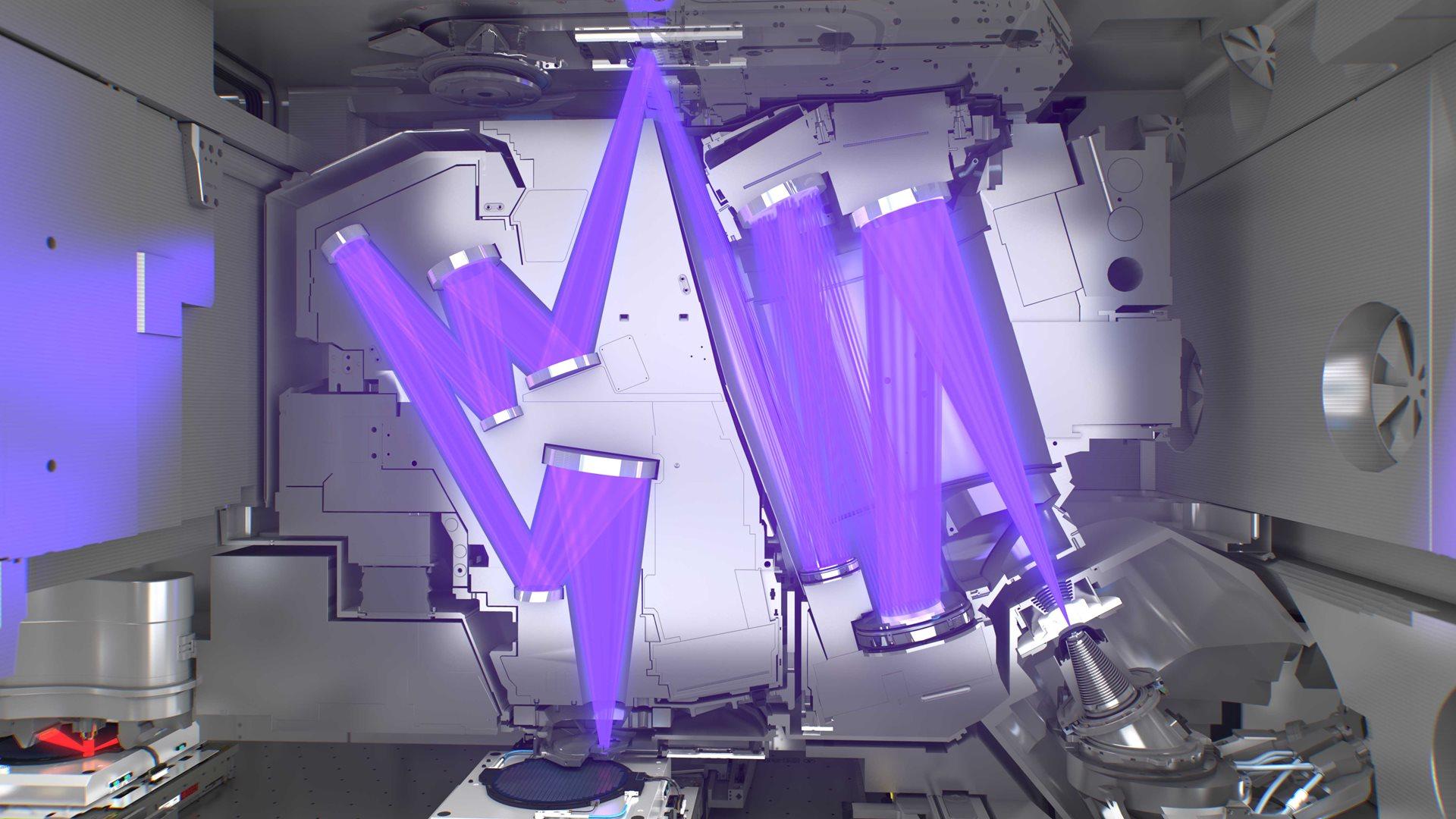
ASML's EUV lithography optics path, the tool that exposes the masks built on EUV mask blanks. The image is an ASML product view, not a Hoya or Samsung photo.
Image: ASML
Source · Press image from the ASML website, used for news reporting.
Samsung Electronics is reportedly facing a shortage of EUV mask blanks in 2027 after Japan's Hoya told it that it cannot fully meet a request for more supply, according to The Elec, which cited industry sources on Nov. 10.
Samsung's semiconductor procurement division asked Hoya for additional volume in September, after internal simulations of next year's production showed a sharp rise in blank consumption, The Elec reported. Hoya replied that full compliance would be difficult because other chipmakers are also ramping demand quickly. DigiTimes also carried the claim as a reported one, and neither company has publicly confirmed it.
EUV mask blanks are the substrates, coated with a multilayer reflective film, on which photomasks are patterned. The Elec said Samsung expects to use about 5,500 of them this year, with internal projections of roughly 25% annual growth over the next three years. Compounded, that would put annual use near 10,700 blanks in the third year, Voltgrid's own arithmetic on The Elec's figures. A shortage, The Elec noted, could delay photomasks for new chip development and the replacement of masks used in mass production.
Why Hoya's limit bites Samsung
Hoya holds an estimated 70% to 75% of the global EUV mask blank market, with AGC (formerly Asahi Glass) at 20% to 25%, The Elec said. Samsung once bought from the two at 80% to 20%, a ratio IT Home also relayed, but The Elec said quality issues with AGC products and specification changes have pushed Hoya's share of Samsung's purchases above 90%.
Hoya's share of Samsung's EUV mask blank purchases has risen above 90%, The Elec reported, citing industry estimates.
Graphic: Voltgrid News
Mask counts rise with each node. Samsung uses four to five EUV masks in its 1b DRAM process and six to seven in 1c, with about 10 expected in 1d, which is scheduled for mass production in the second half of 2027, The Elec said. In foundry, its 4nm process reportedly uses 15 to 16 EUV masks, 3nm about 20 and 2nm 25 to 27. Samsung makes mobile application processors and HBM base dies on 4nm while expanding 2nm development and production, so the squeeze lands on the processes it is leaning on hardest.
Phase-shift masks add to the strain. The Elec cited industry estimates that a phase-shift blank takes 1.5 to two times longer to make than a conventional one, and most EUV masks in the 1d process are reportedly expected to move to that technology.
Little relief before 2028
Hoya said in April it would invest about 42 billion yen in a new EUV mask blank factory in Singapore, but mass production is scheduled for fiscal 2028, so it does not help next year's supply, The Elec said. On its fiscal 2026 second-quarter results, Hoya reported EUV mask blank revenue up more than 25% year over year and indicated that one new factory might not be enough.
Samsung's hedge is South Korea's S&S Tech, whose blanks are in final qualification for mass production, The Elec reported. Key thin-film characteristics reportedly meet Samsung's requirements, though particle contamination and some other areas need work. A pass would put a domestic blank in Samsung's processes for the first time.
The squeeze comes as Samsung competes for scarce lithography capacity elsewhere: Samsung and SK hynix were reportedly each weighing ASML EUV orders of KRW 10 trillion to KRW 20 trillion, as Voltgrid reported on Nov. 10. Scanners add exposure capacity, but without blanks the masks that feed them cannot be made. Samsung's 2nm plans, including reported HBM base die work at Taylor, depend on the same mask supply.
What is not confirmed yet
The shortfall is a single-source industry claim. Neither Samsung nor Hoya is shown confirming the request, Hoya's answer or the size of any gap, and the volume Samsung asked for has not been reported. Watch for the outcome of S&S Tech's qualification, any Hoya comment on 2027 allocation, and whether AGC lifts its share of Samsung's orders.
Sources
- Published
- Sources
- 3 cited