AMD ROCm 10.2 Adds 18 Ryzen APUs, Flags WSL2 AI Failures on Strix Halo
AMD's ROCm 10.2 adds 18 gfx1103 Ryzen chips and vLLM 0.32, but its notes warn AI jobs under WSL2 can fail on Ryzen APUs including Strix Halo, with 10.1 as the fallback.
3 min read
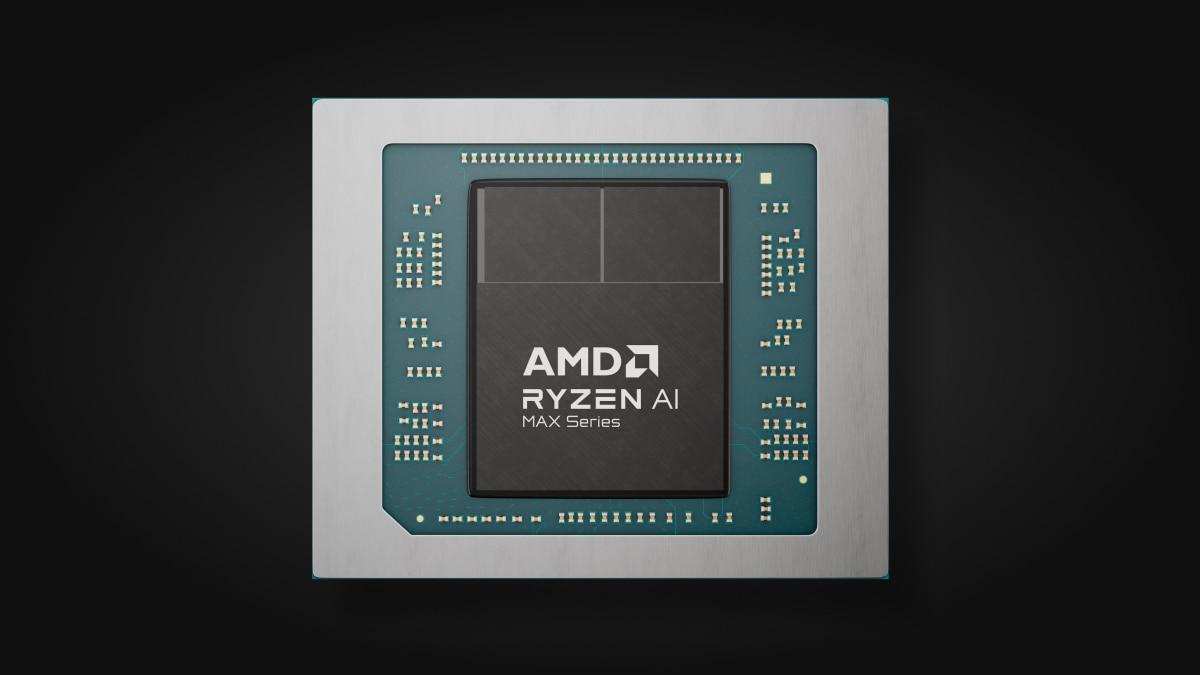
AMD's Ryzen AI Max series, the Strix Halo family whose gfx1151 target appears in the ROCm 10.2 WSL2 known issue.
Image: AMD
Source · Press image from the AMD website, used for news reporting.
AMD released ROCm 10.2 (ROCm Core SDK 10.2.0) on Nov. 18, 2026, adding official support for 18 more Ryzen processors and the Radeon PRO W7900D, while its own release notes warn that AI jobs under WSL2 can fail on Ryzen APUs, Strix Halo included.
The 18 new chips are Ryzen 200-series parts, in PRO and consumer versions from the Ryzen 3 205 to the Ryzen 7 253, and four Ryzen 100-series models: the Ryzen 9 180, Ryzen 7 165 and 155, and Ryzen 5 125. AMD's hardware table lists the 200-series chips as gfx1103 Hawk Point designs with Radeon 780M, 760M or 740M graphics. In its release blog, AMD said all 18 use the same gfx1103 target as the Radeon 700M parts it already supported, run on Windows and Linux without custom builds, and are validated across HIP, PyTorch and vLLM. Phoronix, which reported the release on Nov. 18, noted that these are older RDNA 3 laptop models gaining official support only now.
A known fault on the machines bought for local AI
Further down the notes, AMD lists a known issue. Under WSL2, the Linux layer inside Windows, AI workloads on Ryzen APUs with the gfx1150, gfx1151, gfx1152, gfx1103 and gfx1153 targets might stop with an illegal memory access error that ends the job. AMD said it has seen the fault with PyTorch and llama.cpp. The workaround is to stay on ROCm 10.1.0 or move to a ROCm 10.3.0 nightly build (GitHub issue #10097). In AMD's own table, gfx1151 covers the Ryzen AI Max 300 series (Strix Halo) and the Ryzen AI Max PRO 400 series (Gorgon Halo).
For a buyer, that matters more than the version numbers. Unified-memory APUs are AMD's answer to desktop AI boxes, and its own Ryzen AI Halo is sold as a Windows machine, as Voltgrid reported from StorageReview's review; AMD's notes do not mention the Halo. StorageReview measured the $3,999 Ryzen AI Halo at 222 tokens per second in vLLM for gpt-oss-120b at batch 64, against 701 on DGX Spark. AMD's workaround for a Windows owner who runs PyTorch or llama.cpp through WSL2 on such a machine is to stay on ROCm 10.1.0 or use a 10.3.0 nightly. AMD lists the fault for WSL2 only, not for native Linux.
A second known issue hits image generation. ComfyUI workloads on the AOTriton backend might run slower on some Radeon GPUs and Ryzen APUs, such as the Radeon RX 7900 series and the Ryzen AI Max 300 series. AMD's workaround is another attention backend, such as the --use-flash-attention option (issue #10098).
Why One ROCm Bug Spans Many Ryzen Chips
ROCm supports a chip through its LLVM target, not its marketing name. Every chip that shares a target such as gfx1103 runs the same compiled GPU code. AMD's release notes map gfx1103 to Hawk Point parts with Radeon 780M, 760M or 740M graphics, and gfx1151 to Strix Halo and Gorgon Halo.
That is why the WSL2 fault reaches beyond one chip. AMD's known issue #10097 names five targets: gfx1150, gfx1151, gfx1152, gfx1103 and gfx1153. AMD's blog says the 18 added Ryzen chips use gfx1103, so by AMD's own table they sit in the affected group beside Strix Halo, and the affected setup is WSL2 only.
Framework updates and what else changed
ROCm 10.2 moves its supported frameworks to PyTorch 2.15.0, JAX 0.11.2, vLLM 0.32.0 and SGLang 0.5.21. AMD's notes say this replaces support for PyTorch 2.12.0, JAX 0.11.0 and vLLM 0.29.0. AMD's blog said AITER, its tuned kernel library for inference, now works on Radeon GPUs and Ryzen AI chips without a separate install, with kernels compiled the first time they are used. On the server side, the release adds KVM SR-IOV virtualization on the Instinct MI350P and KVM passthrough on Radeon PRO W7800, W7900, W7900D and W7900 Dual Slot cards. Phoronix also pointed to an RCCL improvement for PCIe GPUs and to official RHEL 10.3, RHEL 9.9 and SLES 16.1 support.
AMD's ROCm 10.2.0 notes move vLLM support from 0.29.0 to 0.32.0, PyTorch from 2.12.0 to 2.15.0 and JAX from 0.11.0 to 0.11.2.
Graphic: Voltgrid News
AMD is also building a path that avoids a ROCm install altogether: its early-access Loom SDK targets CPUs, GPUs and NPUs without one.
What is not confirmed yet
Voltgrid found no independent ROCm 10.2 results against 10.1 on Strix Halo or on the newly added gfx1103 chips as of Nov. 19, so AMD's validation claims stand alone for now. AMD gives no date for ROCm 10.3, the release its notes point to for the WSL2 fix. Its blog calls 10.2.0 the latest in a six-week release cadence; if that holds, 10.3 would land around the end of December, a Voltgrid estimate rather than an AMD date. Owners of mini PCs such as the GMKtec EVO-X2 can check issue #10097 before upgrading.
Sources
- Published
- Sources
- 3 cited