AMD Server CPU Revenue to Double in 2027, Raised From Over 70%
AMD said on its Nov. 3 call that server revenue will double in 2027, up from the more than 70% growth guided 90 days earlier, and data center AI will grow faster; Lisa Su said demand exceeds supply.
Chips & Power DeskEdited by Ege Erten
3 min readAI-assisted
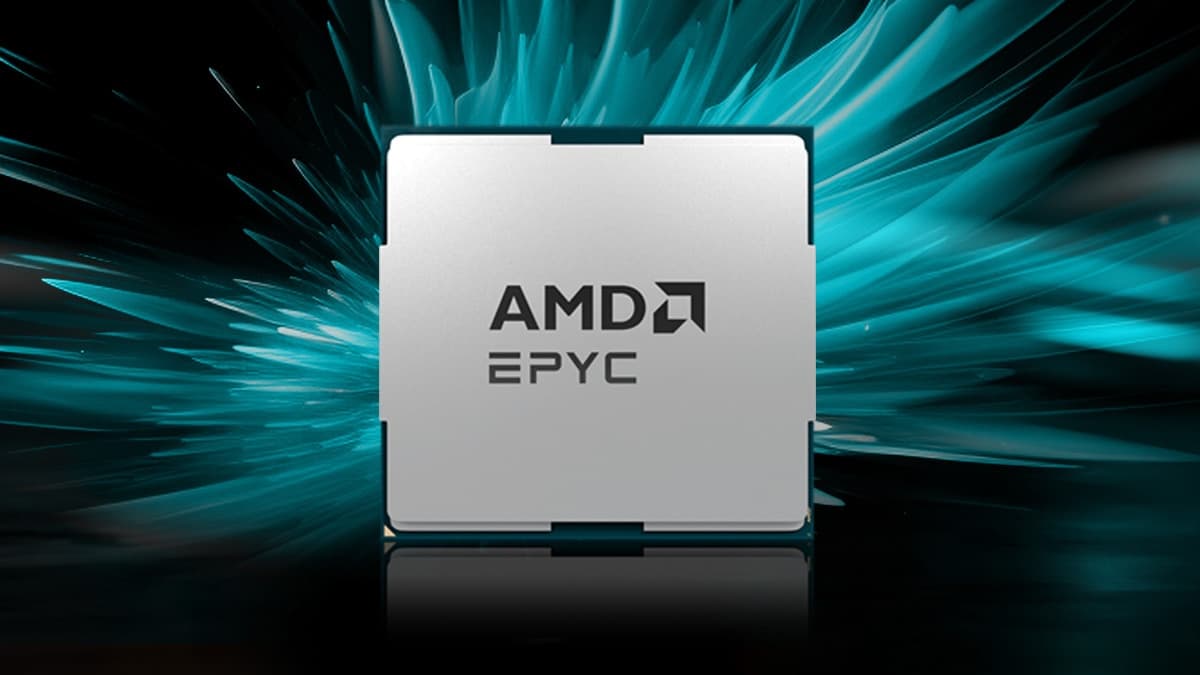
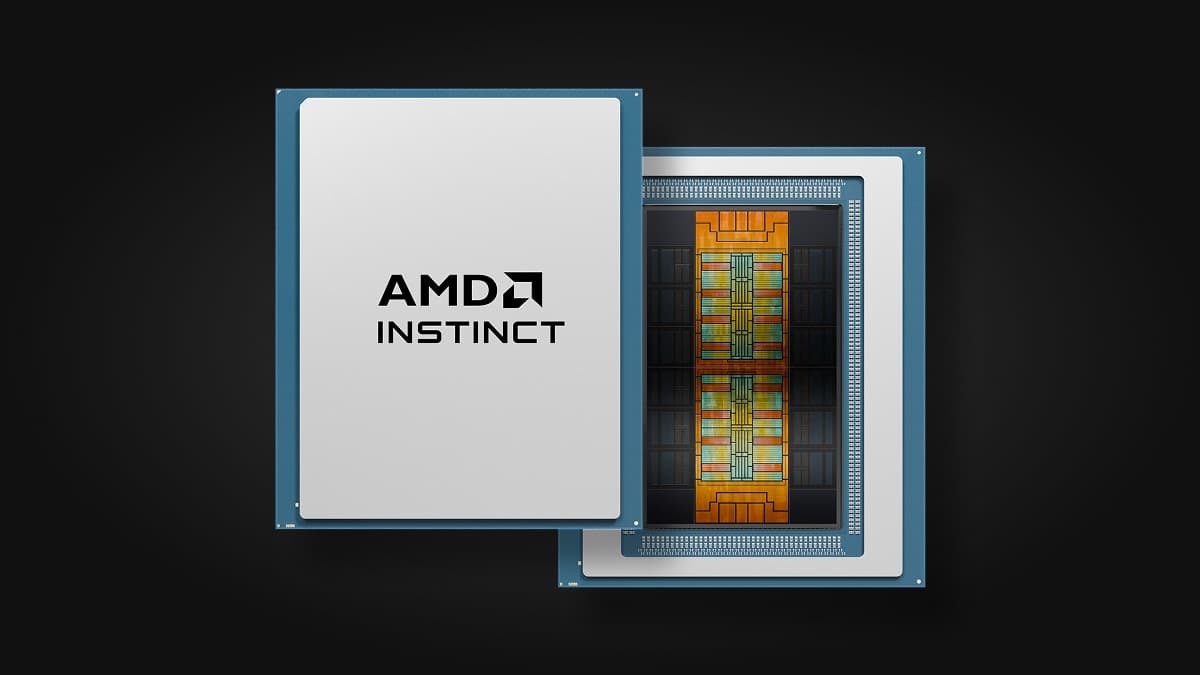
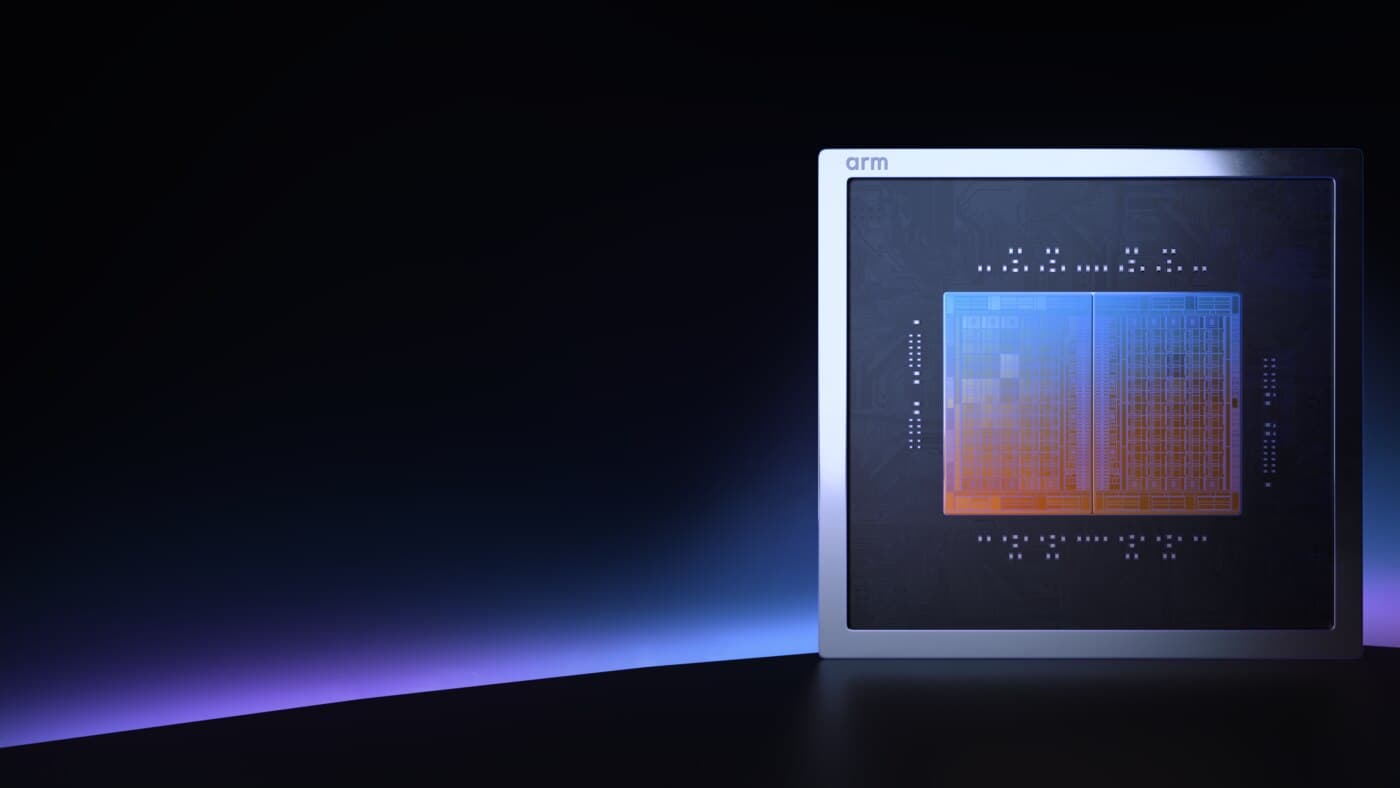
AMD's EPYC 9005 server CPU as shown on AMD's product page. The Venice generation in the story has no official photo yet.
Image: AMD
Source · Press image from the AMD website, used for news reporting.
AMD told investors on its Nov. 3 earnings call that it expects server CPU revenue to double in 2027, raised from the more than 70% growth it guided 90 days earlier, with data center AI revenue growing faster still and company-wide revenue up more than 80%.
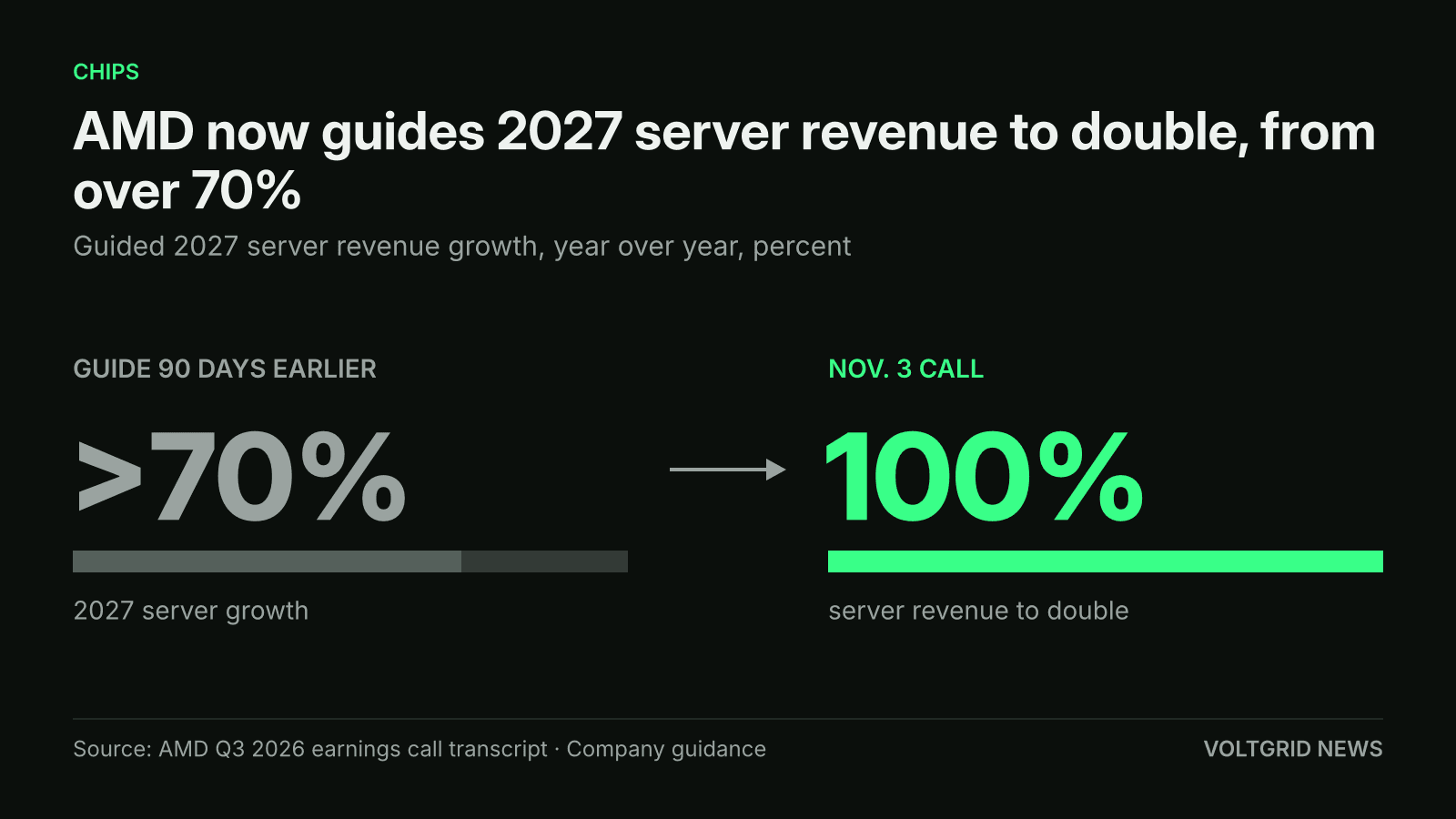
AMD now guides 2027 server revenue to double, up from the more than 70% growth it guided 90 days earlier, per the Nov. 3 call.
Illustration (AI-generated)
CEO Lisa Su said on the call, according to the transcript, that customers have expanded their EPYC and Instinct deployment plans since the last call and that AMD has secured more supply. Su told a Barclays analyst the server business will "approximately double from a fairly high point in 2026," and that data center AI will "significantly more than double." AMD gave no dollar figure for 2027; the base is 2026 revenue. TheElec carried the same figures in its Nov. 5 report.
Why the Supply Claim Matters
Su said demand is higher than supply, and that AMD has "worked across our supply chain to secure the wafers, substrates, advanced packaging, memory and other key components" for the growth. For data-center buyers, that is the number to test: an 80% revenue year needs far more wafers, packaging capacity and memory than AMD ships today, and Su herself said demand currently exceeds supply. AMD CFO Jean Hu said the company will keep investing in inventory and capacity for 2027, and that data center AI revenue should pass server CPU revenue for the first time in the fourth quarter, according to TheElec.
AMD also said data center should exceed 80% of its total 2027 revenue, a separate "more than 80%" figure from the growth rate. It described 80% growth as more than twice the long-term financial model it set at its Financial Analyst Day last November. The company said data center will be the largest contributor, driven by expanding Helios rack deployments and continued EPYC share gains.
What Sits Behind the Server CPU Doubling
AMD said its 6th Gen EPYC "Venice" began revenue shipments in the third quarter, that partners have committed more than 240 Venice platforms (20% more than for the prior Turin generation), and that cloud providers plan instances for early 2027. TheElec reports that most of the server growth should come from volume, with prices rising somewhat as Venice adds cores per chip. Oracle's coming OCI E7 tier, which Voltgrid covered on Oct. 29, is one of the first public Venice deployments.
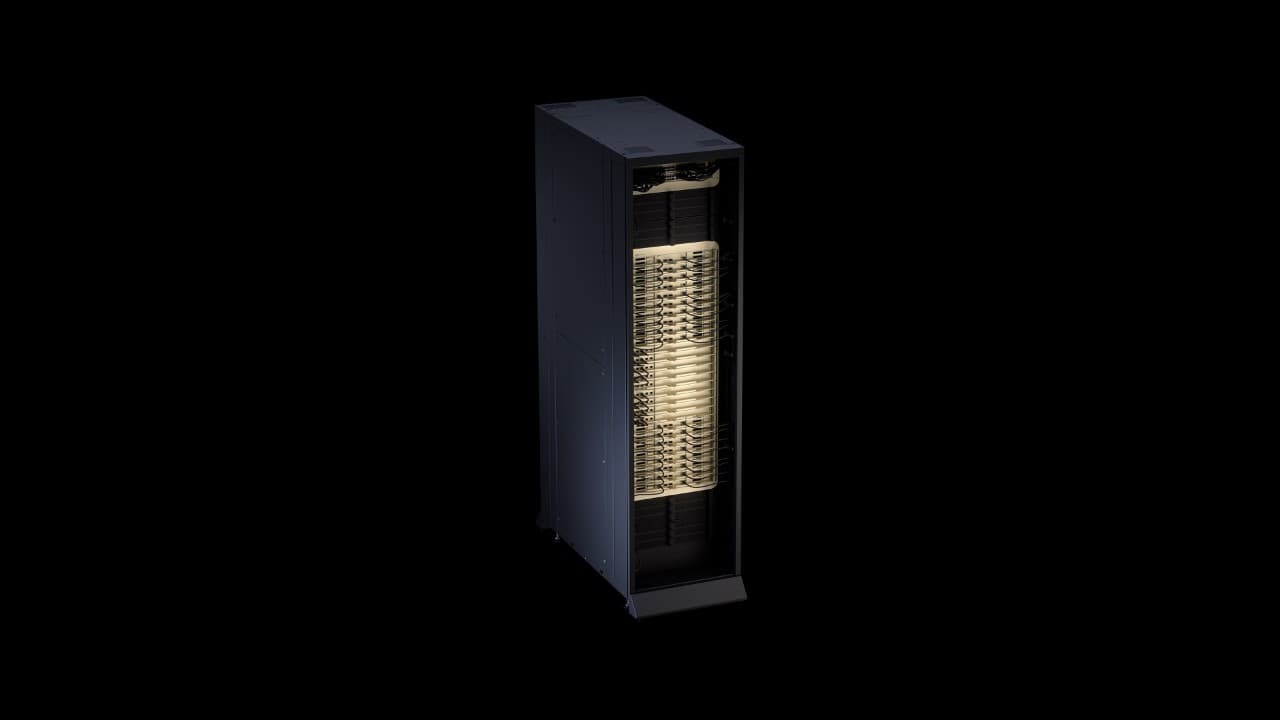
The AI side rests on Helios, AMD's rack-scale system built on the MI450 Series. Third quarter was the first in which AMD shipped MI455X and Helios racks for revenue, Su said, with a big step up in the fourth quarter and a continued ramp through 2027. The fourth-quarter guide of about $17 billion, plus or minus 3%, is the first test, which Voltgrid examined on Nov. 3. Third-quarter revenue was $13.4 billion, up 45%, and data center revenue rose 97% to $8.5 billion.
The outlook does not lift everything. AMD is planning for PC unit shipments to fall by a double-digit percentage in 2027, as Voltgrid reported on Nov. 4, and Su said AMD's supply chain is fungible between PC and data center products. Analysts had modeled 2027 growth of 77%, per Reuters.
What Is Not Confirmed Yet
The 80% figure is a forecast "based on our current visibility," in Su's words, not a contract total, and AMD has not said how much of it is booked. AMD gave no 2027 figures by segment beyond the server and AI markers, which Su asked analysts to treat as markers. Watch AMD's fourth-quarter report in early 2027 for whether Helios shipments and Venice volumes landed as planned, and the supplier side for any sign that packaging or HBM allocation caps the ramp.