AMDXDNA Driver Hits 1.0, Adds NPU10 and NPU11, Queued for Linux 7.5
AMD's AMDXDNA Ryzen AI NPU driver reaches 1.0 with AIE4 support in the Nov. 19 pull for Linux 7.5, but AMD has named no product for NPU10 or NPU11. The Zen 6 link is Phoronix's view.
3 min read
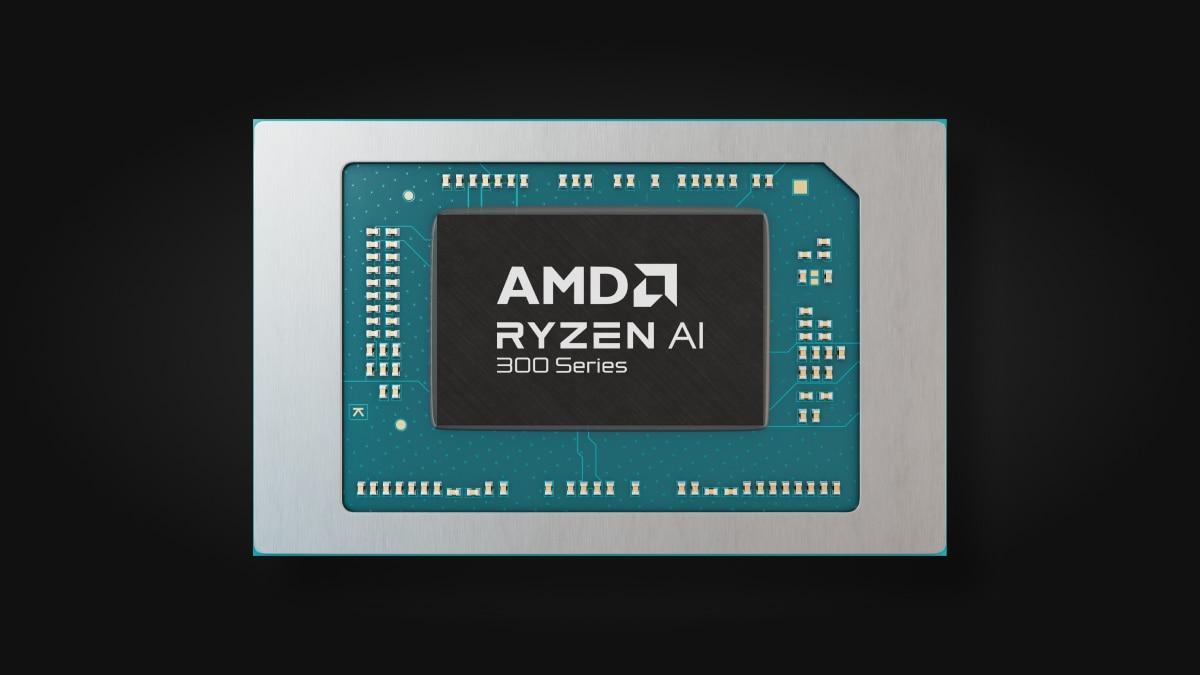
An AMD Ryzen AI 300 Series processor, an earlier Ryzen AI part; AMD has not said which products use NPU10 or NPU11.
Image: AMD
Source · Press image from the AMD website, used for news reporting.
AMD's AMDXDNA driver, the in-kernel driver for its Ryzen AI neural processing units (NPUs), moves from version 0.10 to 1.0 and gains two new devices, NPU10 and NPU11, in a drm-misc-next pull dated Nov. 19 for Linux 7.5.
The drm-misc-next tag lists both changes among its driver updates. The patches behind them were written by AMD engineer David Zhang, reviewed by AMD's Lizhi Hou and committed on Nov. 13. The version note in the driver source calls 1.0 the official release with support for AI Engine 4 (AIE4) devices. The NPU10 and NPU11 patch, 106 added lines across three files, describes them as NPU3 revisions 0x14 and 0x15 with their own firmware files, and otherwise reuses the NPU3 settings. Phoronix, which reported the change on Nov. 20, expects the Linux 7.5 merge window to open at the end of December and the release to follow in the first quarter of 2027.
The version number is mostly a label. The substance is that AMD is putting kernel support for a new NPU generation into mainline Linux before it has named the chips that carry it. Since Oct. 21, the same branch has taken a run of AIE4 work for the driver, covering command submission, power-mode and clock queries, suspend and resume, firmware logging and support for firmware 6.0. For anyone planning to run local AI models on a Ryzen AI laptop under Linux, that is the order that matters: the driver lands in a stock kernel first, then distributions ship it, then applications can rely on it.
Driver 1.0 sits in the Nov 19 pull; the Linux 7.5 merge window (end of December) and release (Q1 2027) are Phoronix's expectations.
Graphic: Voltgrid News
What the patches do and do not say
Phoronix believes AIE4 is the NPU block in AMD's coming Zen 6 Ryzen AI client chips. AMD's patches do not say so. They name no product, no launch date and no performance figure. Phoronix also says the products behind NPU10 and NPU11 are unnamed and presumes they are new Zen 5 derivatives; that, too, is a guess, and the patch text offers nothing beyond the revision numbers. What the code does show is that the driver handles NPU3 and both new revisions through its AIE4 code path. The patch gives each revision separate classic, PF (physical function) and VF (virtual function) entries, the last two used for virtualization, and binds them to the aie4_classic, aie4_pf and aie4_vf operations.
How Linux Learns New NPU Revisions
A kernel driver finds hardware by the PCI vendor, device and revision numbers it has been taught. That is how NPU10 and NPU11 arrive in the driver: as new revisions of the NPU3 family, each pointed at its own firmware files.
The names matter less than the order. The kernel can recognize a new NPU before AMD names the chip that carries it, and the chip still needs firmware to run. Anyone relying on the NPU under Linux needs a kernel with the driver, such as the 7.0 or newer Unsloth requires today, plus current firmware.
Why the AMDXDNA Driver Matters for Local AI
User-space software is already leaning on this driver. Unsloth Desktop's new NPU mode needs kernel 7.0 or newer with AMDXDNA, or the out-of-tree amdxdna-dkms package on older kernels, plus updated NPU firmware, as Voltgrid reported on Nov. 19. That support covers today's XDNA 2 chips. A 1.0 driver with AIE4 support in Linux 7.5 suggests the next generation could use the in-kernel driver without a separate package, if its first laptops ship with a kernel that carries the 7.5 driver or a backport. That is an expectation, not a plan AMD has stated. It is a different layer from AMD's GPU compute stack, where ROCm 10.2 added 18 Ryzen APUs but listed WSL2 failures on Strix Halo, as Voltgrid reported.
What is not confirmed yet
AMD has not said which products use NPU10 or NPU11, or confirmed that AIE4 is the Zen 6 client NPU. The Linux 7.5 dates are Phoronix's expectation, not a fixed schedule. The patches carry no performance figure and AMD has named no AIE4 product, so no AIE4 NPU results are known to exist. The next markers are the 7.5 merge window at the end of December and AMD's next client chip launch.
Sources
- 01drm-misc-next-2026-11-19: drm-misc-next pull for Linux v7.5drm-misc (freedesktop.org)gitlab.freedesktop.org
- 02AMDXDNA Driver Reaches Version 1.0, Ryzen AI NPU10 & NPU11 Coming To Linux 7.5Phoronixphoronix.com
- 03accel/amdxdna: Add NPU10 and NPU11 devicesdrm-misc (freedesktop.org)gitlab.freedesktop.org
- Published
- Sources
- 3 cited