ASUS NUC 16 Pro Price: $559 to $2,799 at US Store, Arc Builds 32 GB Only
The ASUS NUC 16 Pro now lists eight US configurations on ASUS's store, six marked purchasable. The top X9 378H costs $1,799 without an SSD and has no independent test yet.
4 min read
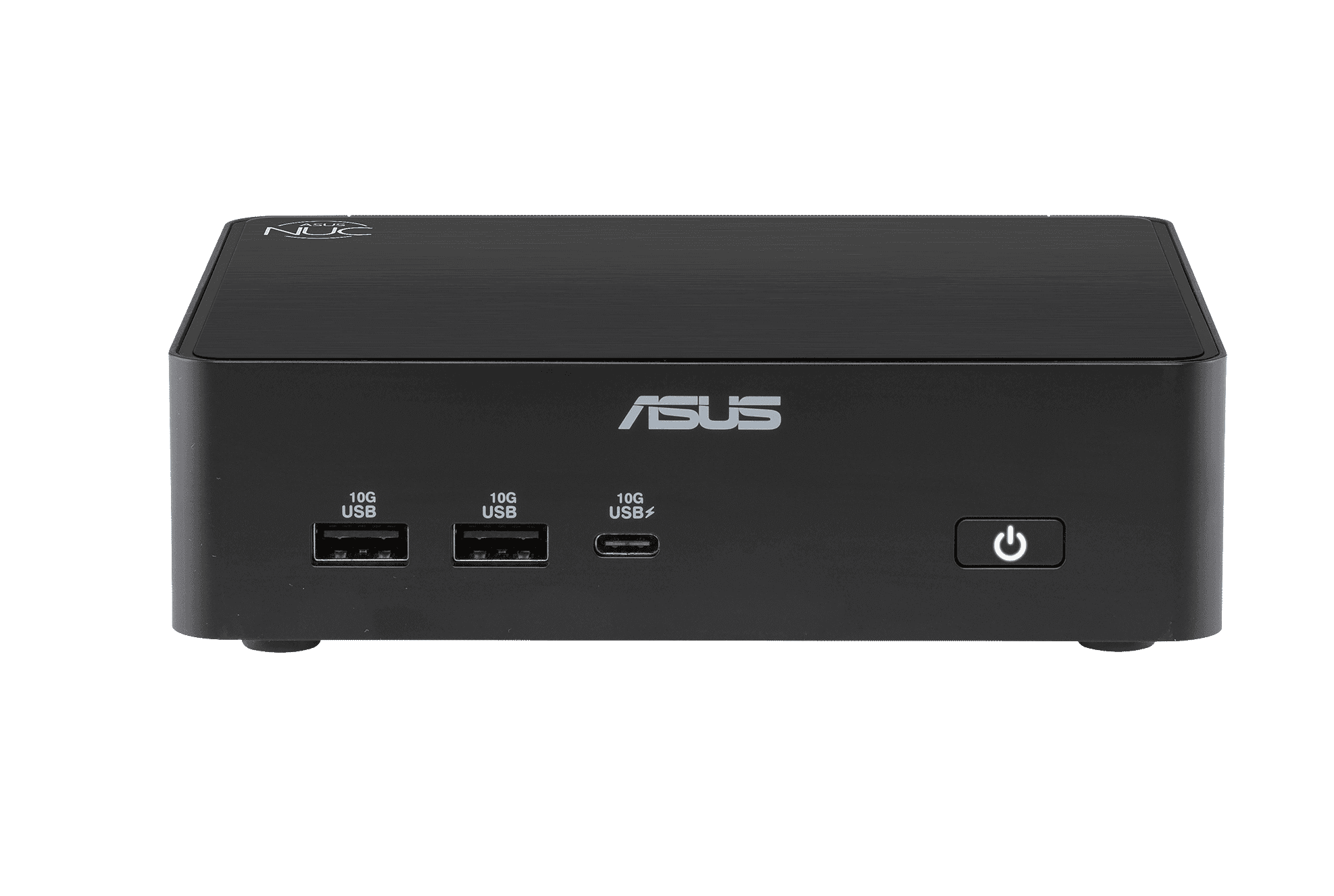
The ASUS NUC 16 Pro, front view, in ASUS's press image.
Image: ASUS
Source · Press image from the ASUS press room, used for news reporting.
The ASUS NUC 16 Pro mini PC is now sold with every Intel Panther Lake processor option on ASUS's US online store, Notebookcheck reported on Nov. 29, and the NUC 16 Pro price on the store's own listing runs from $559 to $2,799.
The top Core Ultra X9 378H comes with 32 GB of LPDDR5X memory and no SSD or operating system for $1,799, and the Core Ultra X7 358H in the same form costs $1,699. Those are the two chips with Intel's Arc B390 integrated graphics. Barebone kits with no memory or storage cost less: the store's configurator lists the Core Ultra 5 325 at $559 and the Core Ultra 7 356H at $699, the reverse of the order Notebookcheck gave. With Windows 11 Pro and an SSD included, ASUS asks $1,399 for the Ultra 5, $1,549 for the Ultra 7, $2,749 for the X9 with 512 GB and $2,799 for the X7 with 1 TB.
The memory decision is made at checkout and stays made. On the Arc models ASUS solders LPDDR5X-8533 to the board, and StorageReview found no SO-DIMM sockets on that board, so there is no upgrade path. The US store offers those models with 32 GB only. ASUS's spec sheet also lists a 64 GB build, and its March press release claims up to 96 GB, while the store page gives 96 GB at 9,600 MT/s; the ASUS pages do not agree, and neither larger build is on sale in the US. Intel lists 96 GB of LPDDR5X at up to 9,600 MT/s as the X9 378H's platform limit. The Ultra 5 and Ultra 7 kits take two CSO-DIMM DDR5 modules, up to 128 GB according to ASUS, but carry plain Intel Graphics instead of the B390.
ASUS NUC 16 Pro price: the $1,100 gap and the B&H listing
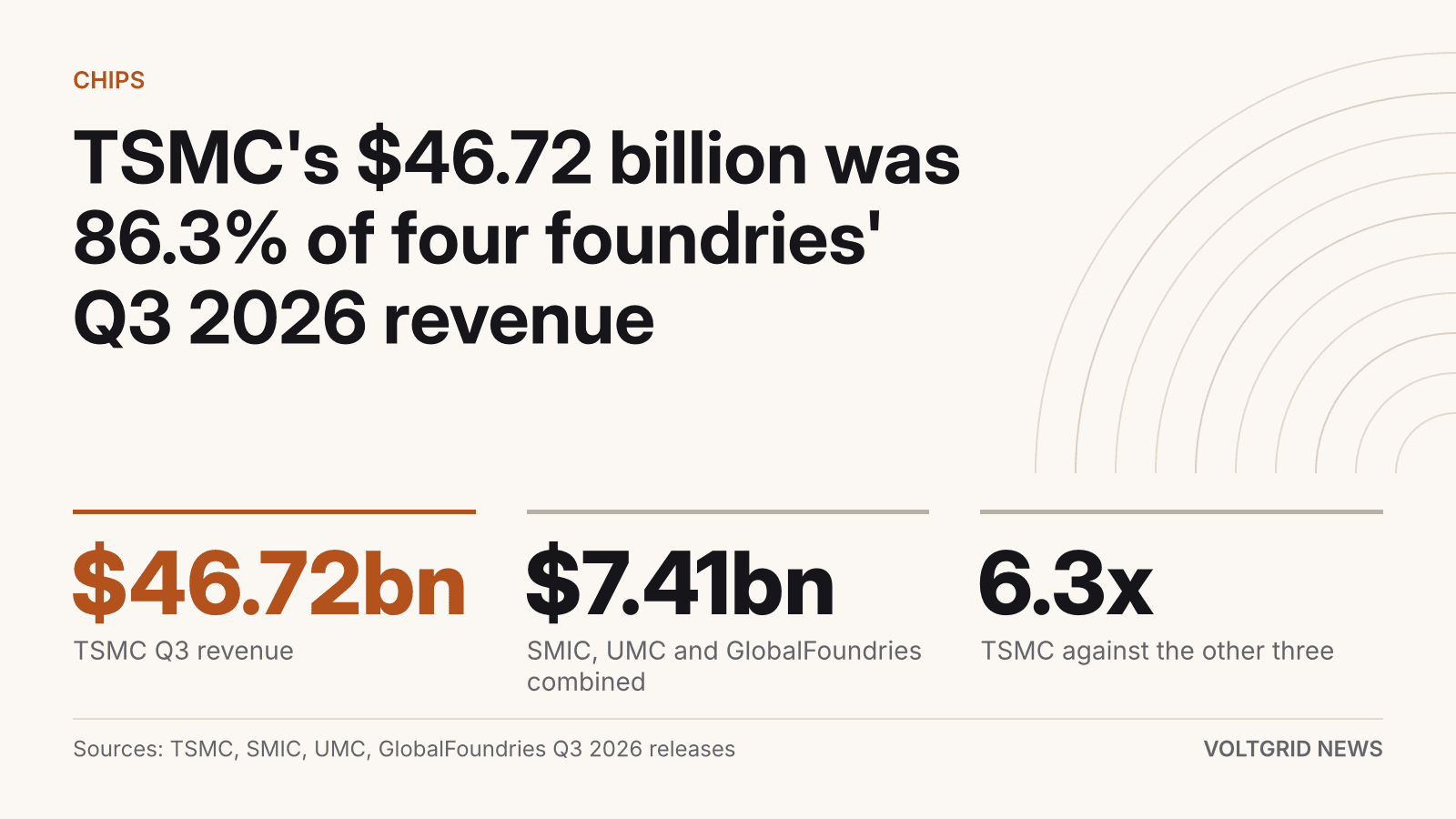
StorageReview, reviewing the machine on Oct. 7, priced the 32 GB, 1 TB configuration (part RNUC16GDKX76C4NU) at $2,699 at B&H. ASUS's store lists the same part at $2,799. Set against ASUS's own $1,699 X7 kit with the same chip and memory, the $1,100 difference, computed from the two store prices, covers the 1 TB PCIe 4.0 SSD and Windows 11 Pro, which ASUS does not price separately. The store's page data on Nov. 29 also marked only six of the eight configurations as purchasable; the $1,799 X9 kit and the $699 Ultra 7 kit were not among them.
ASUS's X7 358H 1 TB build costs $1,100 more than its $1,699 X7 kit; B&H listed the same build at $2,699, as reported by StorageReview.
Graphic: Voltgrid News
Specs: a 65 W power budget and what StorageReview measured
ASUS rates the X9 378H, the X7 358H and the Ultra 7 chips at a 65 W configurable TDP (cTDP) in this 144 x 117 x 42 mm box, and the Ultra 5 325 at 45 W. Its spec sheet lists a 120 W and a 150 W adapter without saying which configuration gets which; StorageReview's X7 unit came with the 150 W brick. That sustained budget is the point of the chassis. On Linux, a Dell XPS 14 laptop with Panther Lake averaged 23 W of CPU draw and peaked at 65 W, as Voltgrid reported. ASUS also lists Ubuntu 24.04 LTS and Red Hat Enterprise Linux 10.0 as supported.
StorageReview tested an X7 358H with 64 GB of LPDDR5X-8533, a 1 TB Gen5 SSD and Windows 11 Pro on the Best Performance power plan. It measured a 3DMark Time Spy graphics score of 7,085, 5% ahead of a Lenovo Yoga Mini with the same chip, and 4,741 in Cinebench 2026 multi-thread, 6% ahead. On the X7 358H's Arc B390 through OpenVINO, it measured 46.24 tokens per second on Phi in UL's Procyon text benchmark, with a first token in 0.305 seconds. It did not report wall power under load. Its 64 GB unit is a configuration ASUS does not sell in the US.
NPU TOPS versus platform TOPS
TOPS counts trillions of integer operations per second, and the figure depends on which engine is counted. Intel rates the NPU in the Core Ultra X9 378H at 50 TOPS (INT8) and its Arc B390 graphics at up to 122 TOPS (INT8). ASUS's press release adds a separate platform figure of up to 180 TOPS, which neither ASUS's pages nor Intel's spec page break down.
The 50 TOPS NPU figure is the number tied to Windows Copilot+ features, so it is the one to compare with other chips' NPUs. The 180 platform figure is a vendor total, not an NPU rating, and it cannot be set beside a 50 TOPS NPU.
What is not confirmed yet for the X9 378H
No independent test of the Core Ultra X9 378H configuration has been published, so the $100 premium over the X7 kit, computed from the two store prices, rests on Intel's and ASUS's specifications alone. ASUS's 50 TOPS NPU and up to 180 platform TOPS are its own claims. StorageReview's review calls the top chip X9 388H; ASUS's spec sheet and store and Intel's own spec page say Core Ultra X9 378H. The next things to watch are a first X9 review and a US listing for a 64 GB LPDDR5X build.
Sources
- 01Intel Core Ultra X9 Processor 378H specificationsIntelintel.comas read on Nov 29, 2026
- 02ASUS NUC 16 Pro - Tech SpecsASUSasus.comas read on Nov 29, 2026
- 03Buy ASUS NUC 16 Pro Mini PC | ASUS eShop USAASUS eShopeshop.asus.comas read on Nov 29, 2026
- 04ASUS Announces New-Gen NUC 16 Pro Mini PCASUSpress.asus.com
- 05ASUS NUC 16 Pro Review: A 65W Core Ultra X7 358H, Dual M.2, and Dual 2.5GbE in 0.71 LitersStorageReviewstoragereview.com
- 06Panther Lake-equipped Asus NUC 16 Pro with up to Arc B390 iGPU gets expanded availabilityNotebookchecknotebookcheck.net
- Published
- Sources
- 6 cited