CATL Sets 6,000 Choco Swap Station Target for 2027, From 2,520
CATL's Nov. 13 statement targets 6,000 passenger-car Choco swap stations in 297 cities in 2027, against 2,520 on Sept. 29. CnEVPost says that could pass Nio's 4,254.
3 min read
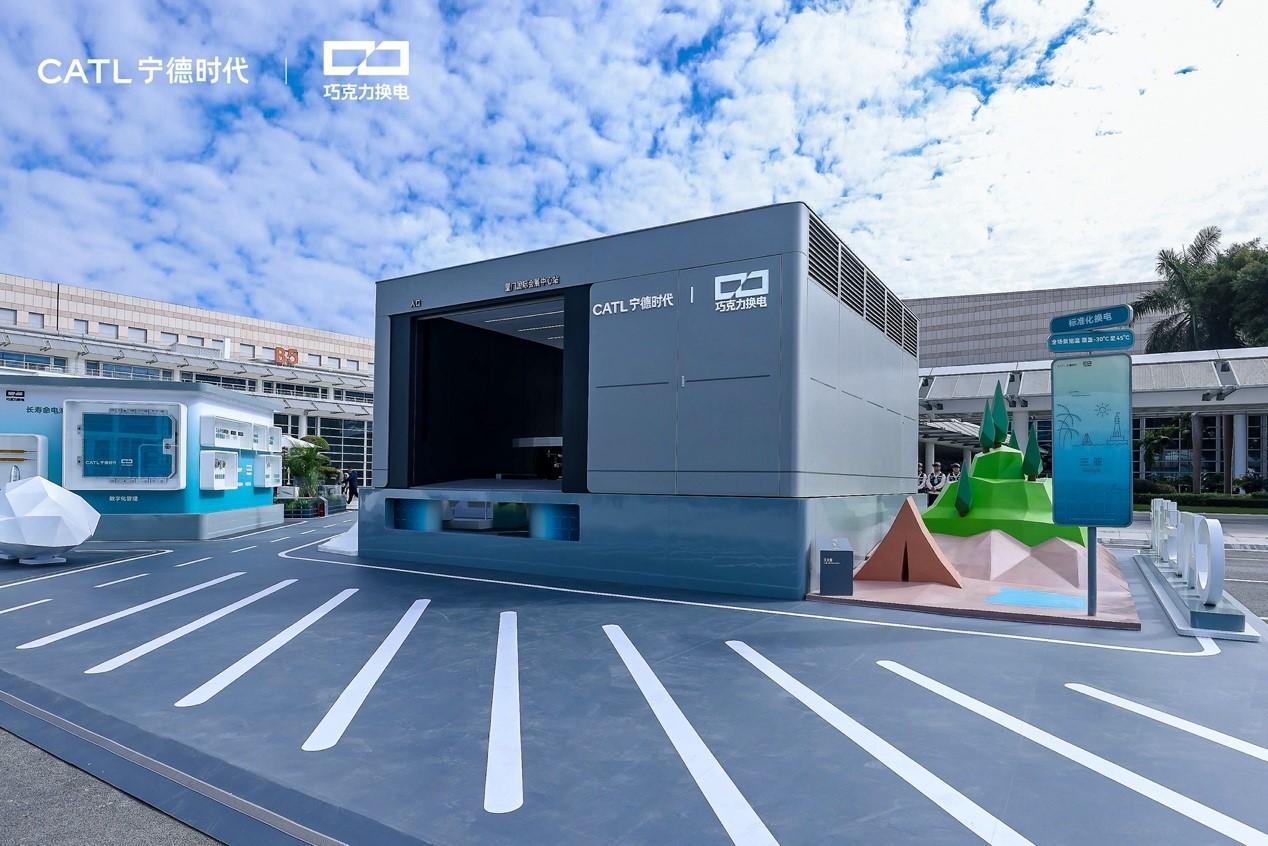
A CATL Choco-Swap station on display, from an earlier CATL newsroom release; the photo predates the Nov. 13 announcement.
Image: CATL
Source · Press image from the CATL newsroom, used for news reporting.
CATL said in a statement on Nov. 13, 2026 that it plans to grow its Choco passenger-car battery swap network to 6,000 stations across 297 Chinese cities in 2027, CnEVPost reported.
The plan splits into 5,000 urban stations, designed to put a swap within a 10-minute reach in core city areas, and 1,000 highway stations, according to CnEVPost. The highway stations would form a grid of 11 north-south and 9 east-west routes. CATL said the network would reach every prefecture-level city and directly administered municipality in China except Sansha. Gasgoo, which covered the same Nov. 13 announcement, also gives 6,000 stations across 297 cities by 2027.
How far CATL has to go
CATL had 1,020 Choco swap stations at the end of 2025, 2,000 in July 2026 and 2,520 on Sept. 29, according to CnEVPost. The company had earlier said it would have more than 3,000 passenger-car stations by the end of 2026. By Voltgrid's arithmetic, 6,000 is 3,480 more than the Sept. 29 count, and the network added 1,500 stations between the end of 2025 and Sept. 29. CnEVPost describes the 6,000 target as roughly twice the year-end 2026 level.
CATL's 6,000-station target for 2027 compares with 2,520 stations on Sept. 29; Nio's 4,254 is a count from Nov. 13, a different date.
Graphic: Voltgrid News
The 5,000-station urban layer is where a driver decides whether a swappable car is practical, and the 1,000 highway stations decide whether it can make long trips. The sources do not say how many of the 2,520 existing stations are on highways.
Nio is the benchmark
CnEVPost wrote that the plan could let CATL overtake Nio to become China's largest battery swap network operator. That is the outlet's own extrapolation, not a CATL claim. Nio had 4,254 stations in China as of Nov. 13, including 1,081 along highways, according to real-time data from Nio Power as cited by CnEVPost. CnEVPost's reasoning is that if Nio keeps adding about 1,000 stations a year and CATL hits its target, CATL could pass it in 2027. Nio added 679 stations in 2024 and 681 in 2025, per CnEVPost's own tally. The two counts are also not like-for-like in date: CATL's last published figure is from Sept. 29, Nio's from Nov. 13. We found no newer CATL count.
Car makers and the swap service
CATL's network depends on car makers building swappable models. Voltgrid reported that Huawei's car unit Yinwang signed a framework deal to make cars with Huawei's Qiankun driving systems work with the Choco stations, and that BAIC signed a deal in October to link models from several brands to the network and open its dealers to station builds. CnEVPost says BAIC and CATL aim for an ecosystem serving 1 million vehicles but have given no timeline.
On Nov. 13, BAIC's Arcfox brand launched a swap version of the Beta T1 on CATL's Choco batteries. Gasgoo reports it uses a 54 kWh Choco pack, a 530 km range and a 99-second automated swap, sold from 52,000 yuan without the battery. Buyers can rent the battery for 399 yuan a month with a 5,000 km quota or 599 yuan with unlimited mileage, according to Gasgoo.
At the same event CATL introduced a Choco battery management service. CnEVPost says it runs 53 on-board checks and 13 more during each swap, covering insulation, thermal runaway risk and voltage differences, with lifetime monitoring and free repair or replacement for batteries in the network, according to CATL.
What is not confirmed yet
The 6,000 figure is a target, and the sources give no capital cost, power rating or battery inventory per station. They do not say how many of the 6,000 stations will serve the Huawei or BAIC models, and we found no CATL station count newer than Sept. 29. Whether CATL passes Nio depends on both companies' construction progress, as CnEVPost notes.
Sources
- 01ARCFOX Launches Battery-Swap Ecosystem; Two Models Start at 52,000 Yuan With Battery RentalGasgooautonews.gasgoo.com
- 02Choco-Swap Builds Over 2,520 Stations Nationwide, Covering 31 Provinces and 200 CitiesGasgooautonews.gasgoo.com
- 03CATL targets 6,000 passenger car battery swap stations in 2027, potentially overtaking NioCnEVPostcnevpost.com
- Published
- Sources
- 3 cited