Dell Pro Precision GB10 Review: Dell.com Lists 128GB Box at $8,103
Dell.com listed the 128 GB Dell Pro Precision with GB10 at $8,103 on Nov. 2, up from $6,593 on Oct. 30. StorageReview and HotHardware found its speed level with other GB10 boxes.
Local AI DeskEdited by Ege Erten
8 min readAI-assisted
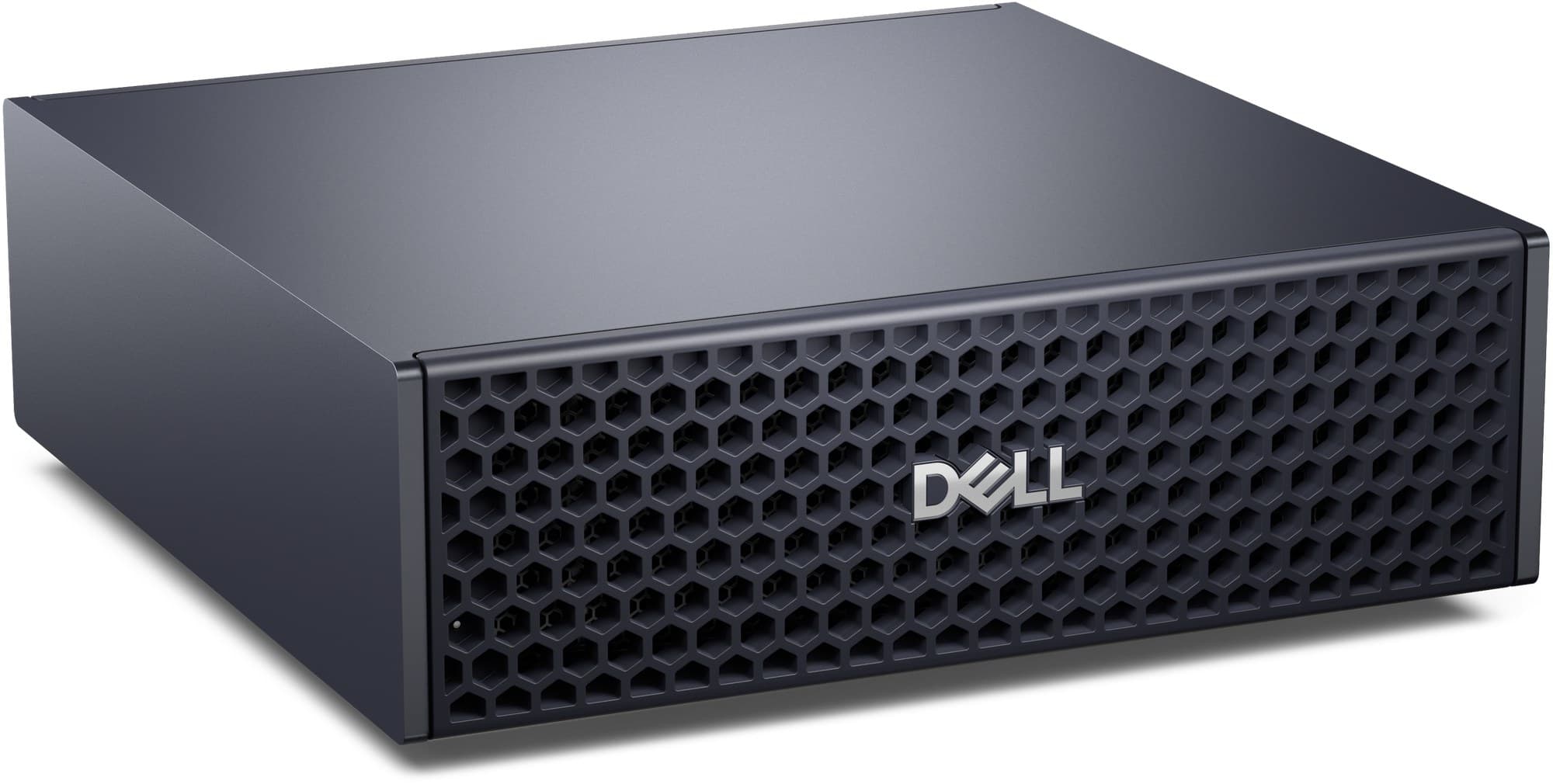
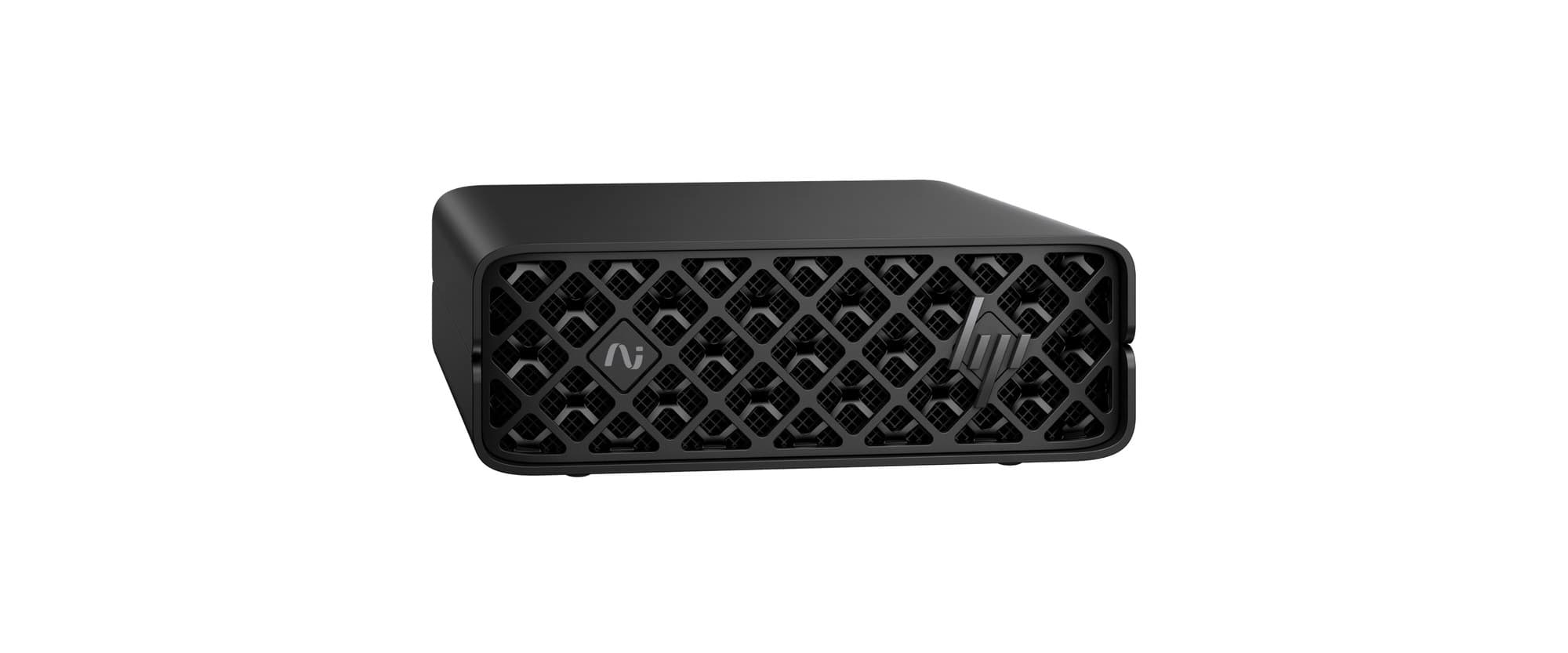
The Dell Pro Precision with GB10 (model FCM1253), launched as the Dell Pro Max with GB10. Dell's product photo.
Image: Dell Technologies
Source · Press image from the Dell product page, used for news reporting.
Dell.com listed the Dell Pro Precision with GB10 at $8,103 on Nov. 2 for 128 GB of memory and a 2 TB SSD, against $6,593 for the same configuration on Oct. 30 and $5,903 when TechRadar checked on Oct. 21.
Dell has announced no price change, so these are the prices its store showed on those dates, not a declared increase. The $8,103 figure makes Dell's version of NVIDIA's GB10 box $1,153 dearer than the 128 GB DGX Spark that NVIDIA's marketplace listed at $6,950 with a 4 TB drive on Oct. 31 (Voltgrid arithmetic). That reverses TechRadar's finding of Oct. 21, when it reported Dell undercutting NVIDIA by about $1,000. Performance has not moved: StorageReview and HotHardware found the Dell level with other GB10 machines, and Phoronix measured it against an AMD box rather than another GB10. This review sets Dell's specifications against what those outlets measured. Voltgrid did not test the machine.
What's New in the Dell Pro Precision With GB10
The hardware is NVIDIA's GB10 Grace Blackwell Superchip in Dell's own chassis. Dell's store lists 128 GB of LPDDR5x at up to 8533 MT/s, a ConnectX-7 network card with two 200 Gbps QSFP ports, 10 Gigabit Ethernet, three USB-C ports and HDMI 2.1b, in a case 150 mm square, 51 mm high at its peak and 1.31 kg. HotHardware reported the same 256-bit memory bus and 273 GB/s of bandwidth as the DGX Spark, and a GPU with 6,144 CUDA cores rated at up to 1 petaFLOP of sparse FP4.
The name is new. Dell launched the box as the Dell Pro Max with GB10 and now sells it as the Dell Pro Precision with GB10, under the same FCM1253 model number. StorageReview, HotHardware and Phoronix tested it under the earlier name.
The differences from NVIDIA's reference design are in the box around the chip. Dell ships a 280 W USB-C power adapter, larger than the one in the Founders Edition and other partner designs, StorageReview noted. The front is an open honeycomb bezel, StorageReview noted, and HotHardware described the cooling as a blower fan. The storage slot takes short M.2 2230 or 2242 drives, and Dell offers only PCIe Gen4 SSDs.
The software is NVIDIA's. Dell ships a lightly reskinned DGX OS 7, built on Ubuntu 24.04 LTS, that pulls updates from NVIDIA's repository, and NVIDIA's DGX Spark playbooks ran on it unchanged, according to HotHardware.
What It Solves: 120B Models on a Desk
Memory sets the largest model a box can hold, and 128 GB holds gpt-oss-120b, the open 120-billion-parameter model StorageReview served with vLLM. Bandwidth sets how fast each new token arrives, because every token reads the active weights from memory. At 273 GB/s, the GB10's limit is the same in every brand of box, which is why the measured results cluster.
The second thing it solves is scale beyond one box. HotHardware linked two Dell units with one QSFP cable and measured 24.5 to 25 GB/s between them with NVIDIA's NCCL test, on a 200 Gbps ConnectX-7 link (NVIDIA's spec). Qwen 3.5 122B in FP8 needed more than the 102.4 GB a single unit could give it, so it would not run on one box, but it ran across two. On the smaller Qwen 3.5 27B in FP8, the pair produced about 50% more tokens per second and cut time to first token roughly in half, HotHardware found.
Why 273 GB/s Caps Local AI Speed
A local model generates one token at a time, and each token needs the model's active weights read from memory again. So the speed of the memory, not the number of math units, sets how fast text appears. The GB10 chip in the Dell has 128 GB of LPDDR5X on a 256-bit bus with 273 GB/s of bandwidth, the same as the DGX Spark, according to HotHardware. Every GB10 box therefore hits the same ceiling, which is why StorageReview found throughput tightly grouped.
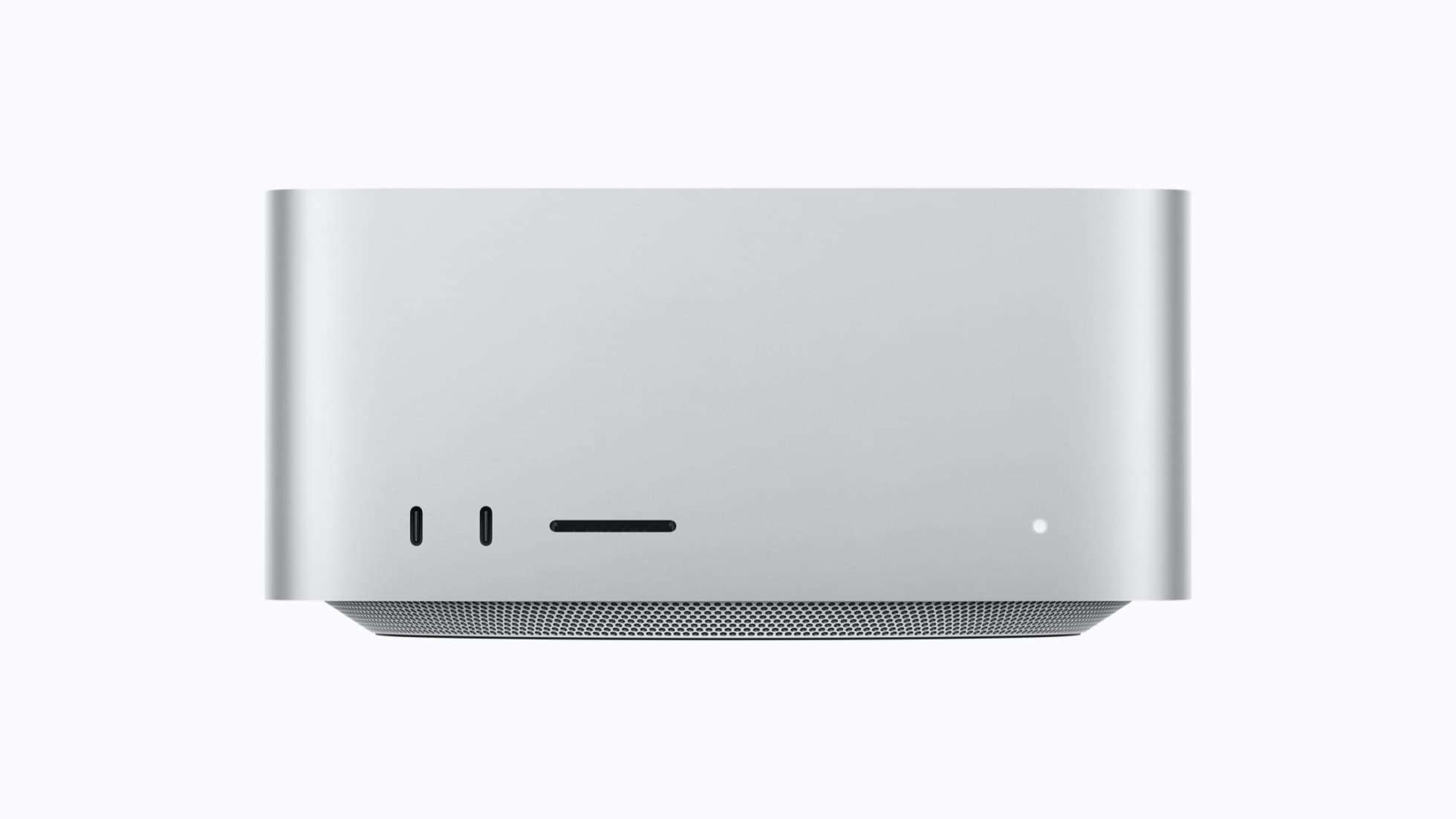
Capacity decides what fits and bandwidth decides how quickly it answers. The 128 GB holds a 120-billion-parameter model, but a 31B model reads its weights for every token, so it is memory-bound: HotHardware measured 10.65 tok/s on the Dell and 21.9 tok/s on a 2025 Mac Studio with M4 Max in LM Studio. The 1 petaFLOP figure NVIDIA quotes is sparse FP4 and does not raise that ceiling.
Pros and Cons
The prices come from Dell.com, read on Oct. 30 and again at 11:31 UTC on Nov. 2. StorageReview ran the vLLM online serving benchmark on a Dell unit with a 4 TB Phison Gen4 drive in March. On gpt-oss-120b it measured 68.57 tok/s at batch 1 rising to 670.83 tok/s at batch 64 with equal input and output lengths, which StorageReview called the middle of the field. With prefill-heavy prompts it rose from 298.60 to 2,707.15 tok/s, and with decode-heavy work from 37.74 to 273.54 tok/s. StorageReview's GPUDirect Storage runs found Dell ahead at small 16K blocks with few threads, but plateauing at about 5.5 GiB/s on 1 MB reads and 3.1 to 3.3 GiB/s on writes, while Acer's and Gigabyte's Gen5 units continued past 11 GiB/s on reads. It judged the storage choices disappointing and warned that the QLC drive in the 2 TB model would likely do worse than the drive it tested.
StorageReview's heat logs showed the Dell CPU peaking near 87.7 °C and the GPU near 80 °C during prefill bursts, then settling at 80 to 83 °C and 68 to 71 °C in sustained decoding, with no throttling. HotHardware measured the chassis at 115 to 120 °F toward the back after about two hours of load, 160 W at the wall and 46 dBA at 12 inches. In LM Studio with Gemma 4 31B Instruct in Q4_K_M at a 16K context, HotHardware measured 10.65 tok/s on the Dell and 21.9 tok/s on a 2025 Mac Studio with M4 Max, though the Dell reached its first token sooner, at 0.77 seconds against 0.97.
Who Should Buy the Dell Pro Precision GB10
It fits a developer building for NVIDIA's data-center stack who wants CUDA, DGX OS and NVIDIA's playbooks on a desk, and who needs 128 GB to load a 70B to 120B model. HotHardware's verdict was that the machine is a development tool for work headed to data-center GPUs rather than a fast personal chatbot.
It fits a small team that will pair two units. A 122B model in FP8 runs across two boxes, HotHardware showed, and the second QSFP cable costs $50 on Dell.com. At the Nov. 2 price, two 128 GB units come to $16,206 before tax (Voltgrid arithmetic).
It also fits a buyer who must purchase through Dell, for its support contracts or procurement, and who accepts paying more for the same chip. Dell's 64 GB option, at $5,953 on Nov. 2 (Voltgrid arithmetic from the configurator's $2,150 reduction), holds models up to about 100B parameters by NVIDIA's guidance for 64 GB GB10 systems, though no outlet has tested Dell's 64 GB unit.
It does not fit a single user who mostly chats with mid-sized models. HotHardware's Mac Studio was twice as fast on Gemma 4 31B. Nor does it fit anyone who moves large datasets from local disk to the GPU, given StorageReview's Gen4 results.
Dell Pro Precision GB10 vs DGX Spark, ASUS and AMD
Against NVIDIA's own DGX Spark, the Dell has the same chip, memory and bandwidth, and costs $1,153 more for half the storage at the Oct. 31 and Nov. 2 prices. StorageReview's Spark result on the same gpt-oss-120b test was 701 tok/s at batch 64, measured in July, four months after its Dell run, so software versions may differ.
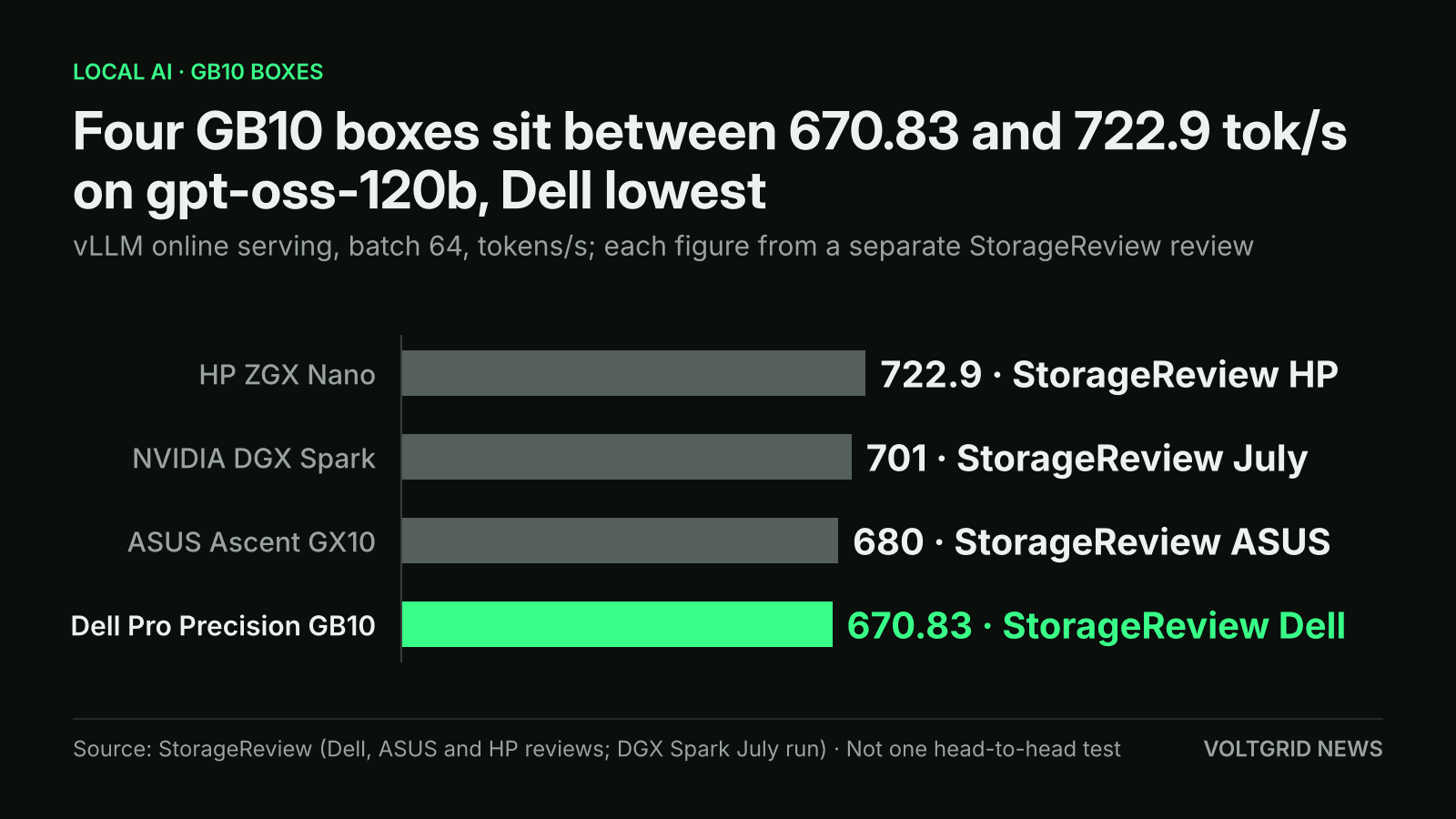
Dell's 670.83 tok/s is the lowest of four GB10 boxes, each measured in a separate StorageReview review.
Illustration (AI-generated)
The ASUS Ascent GX10 measured 680 tok/s on the same StorageReview benchmark in a separate review (March) and listed at $5,999 for 128 GB and 1 TB on ASUS's U.S. store on Oct. 30, but out of stock. HP's ZGX Nano measured 722.9 tok/s on the same benchmark in StorageReview's separate April review. HotHardware found the HP enclosure at about 98 °F under load against about 115 °F for the Dell, with slightly louder fans, and listed the HP at $5,749 as of Oct. 1. Among the Dell, ASUS, DGX Spark and HP batch-64 results quoted here, the spread is under 8% (Voltgrid arithmetic, separate runs from March to July), which supports StorageReview's conclusion that the brands differ in implementation, not compute.
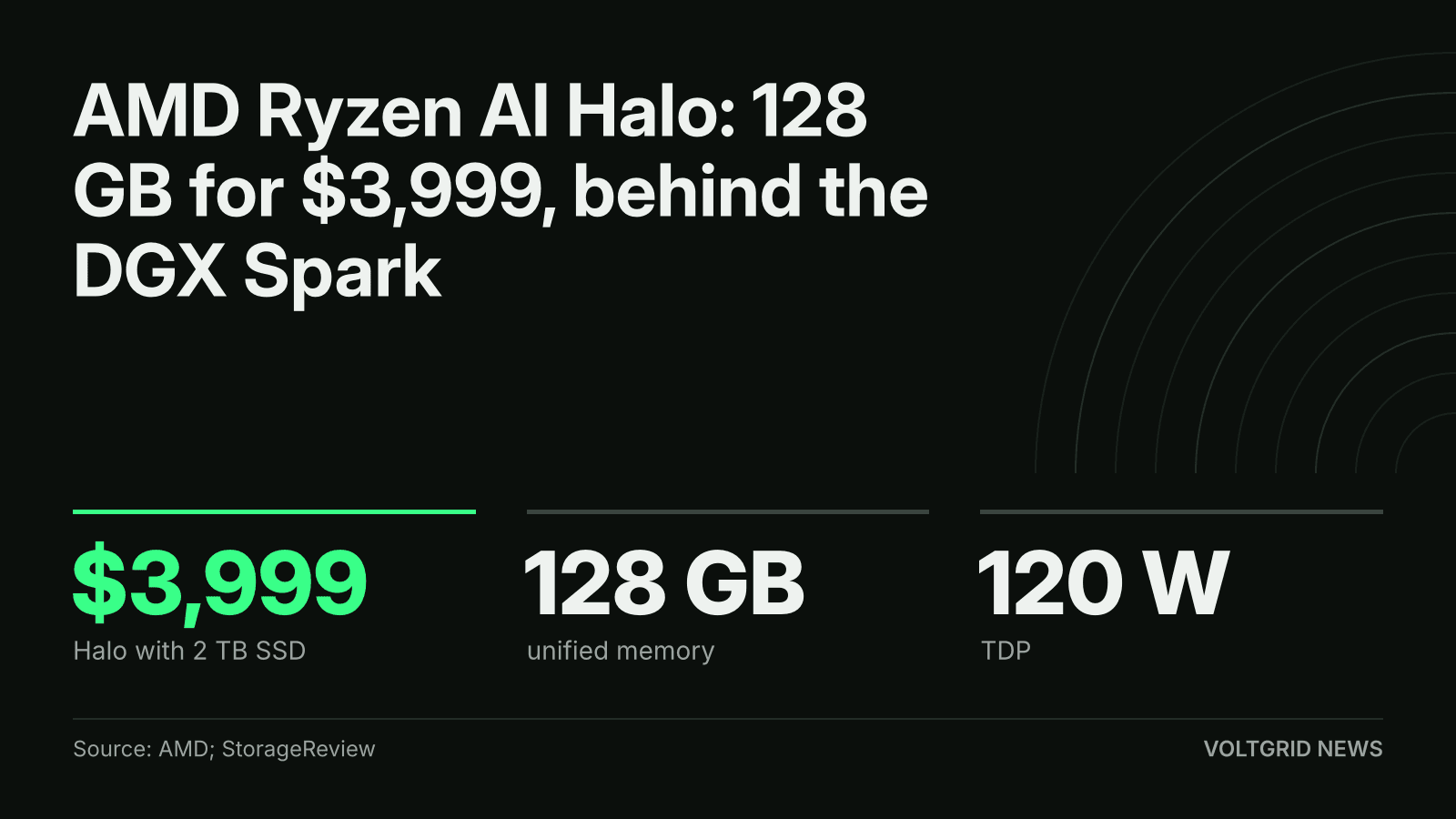
Against AMD's Ryzen AI Halo, which has 128 GB at 256 GB/s for $3,999 with 2 TB, the Dell costs about twice as much (Voltgrid arithmetic; the Halo price dates from July). It is also much faster on AI work. StorageReview's July review measured the Halo at 222 tok/s on gpt-oss-120b at batch 64, against the Dell's 670.83 in a separate run, about three times the Halo (Voltgrid arithmetic). Phoronix, testing the Dell against a Framework Desktop with the same Ryzen AI Max+ 395 chip as the Halo, measured 2.25 times the Framework's geometric-mean llama.cpp performance. The Dell drew 155 W on average and 198 W at peak at the wall against 128 W and 144 W for the Framework, and still led on performance per watt, Phoronix found.
The table under this review lists each machine's sourced memory, bandwidth, price and benchmark. Read with the Nov. 2 price, it shows the Dell matching the other GB10 boxes on speed while costing the most of them on Dell.com that day.
What to Watch for the Dell Pro Precision GB10
The price is the open question. The Dell.com list for the 128 GB, 2 TB configuration has moved through at least three figures since Oct. 21: $5,903, $6,593 and $8,103. Reviewers' earlier figures were lower still: Phoronix cited a $4,600 list price in January, and HotHardware cited $5,780 in April, up from a $4,000 original retail price, which it blamed on the component shortage. Dell has not explained the moves, and while the page data flagged the item as in stock, the add-to-cart button showed a technical error on Nov. 2, so stock could not be confirmed.
Two measurements are missing: any independent test of Dell's 64 GB configuration, and a test of the 2 TB QLC drive that StorageReview expects to trail the drive it tested. NVIDIA holds its third-quarter fiscal 2027 results call on Nov. 17. Voltgrid will update this review when Dell's price or either measurement changes.
How it compares
Full table| Product | Memory | Bandwidth | AI compute | Measured speed | Price |
|---|---|---|---|---|---|
| HP ZGX Fury AI StationHP | 252 GB HBM3e GPU + 496 GB LPDDR5x CPU (4x 128 GB SOCAMM); 748 GB unified[1] | 7.1 TB/s (GPU HBM3e); 396 GB/s (CPU LPDDR5x)[1] | — | Two-unit cluster with an ASUS ET900N G3 over two 400G DACs: GLM-5.3 NVFP4 5,018 output tok/s at 256 streams, 512/512, vLLM 0.27.1 TP2 with MTP (StorageReview); no single-unit HP result[2] | Japan list price from 28,490,000 yen incl. tax (sales from Oct 27, 2026); no US list price published[3] |
| NVIDIA DGX StationNVIDIA (systems built by ASUS, Dell, GIGABYTE, HP, MSI, Supermicro and Exxact) | 748 GB coherent: 252 GB HBM3e (GPU) + 496 GB LPDDR5X (CPU)[4] | GPU HBM3e 7.1 TB/s; CPU LPDDR5X 396 GB/s; NVLink-C2C 900 GB/s between them[4] | 15 PFLOPS FP4 (without sparsity)[4] | Over 26,000 output tokens/s aggregate on Qwen3.6-35B-A3B NVFP4 at 512 concurrent users (24-30-token input, 1,024-token output), Gigabyte W775-V10-L01; idle never below 250 W.[5] | No NVIDIA list price; first public US OEM list price is Dell Pro Precision with GB300 at $160,195 default config (Dell.com, read Nov 1, 2026); ServeTheHome had heard about $100K[6] |
| NVIDIA RTX PRO 6000 Blackwell Workstation EditionNVIDIA (sold through PNY, TD SYNNEX and workstation makers) | 96 GB[7] | 1,792 GB/s[7] | 4,000 AI TOPS (FP4, with sparsity) (sparse)[7] | LM Studio: Mistral Small (26 GB) at 42.4 tokens/s vs 17 on an RTX 5090; Gemma 3 27B at 29 vs 5; tied with the RTX 5090 at about 81 tokens/s on DeepSeek Llama 8B Distil, where VRAM does not limit.[8] | $16,000 on NVIDIA's US marketplace (Workstation Edition), listed out of stock[9] |
| Apple Mac Studio (M5 Ultra)Apple | up to 512 GB unified (96 GB on 30-core M5 Ultra; 256 GB or 512 GB on 36-core/80-core M5 Ultra)[10] | 1.2 TB/s[10] | — | Qwen 3.8 27B 4-bit MLX in LM Studio: about 55 tok/s on M5 Ultra (36-core, 256 GB) vs about 40 on M3 Ultra (BGR)[11] | $22,299 minimum with 512 GB ($6,799 36-core CPU/80-core GPU M5 Ultra config plus $15,500 memory upgrade; Oct 28, 2026)[12] |
| NVIDIA RTX Spark (N1X) PCsNVIDIA (MediaTek collaborated on the custom CPU design) | Up to 128 GB LPDDR5X (20-core CPU / 6,144-core GPU version); up to 64 GB (18-core / 5,120-core laptop version)[13] | Up to 300 GB/s: LPDDR5X-9400 on a 256-bit bus (NVIDIA's product page lists no bandwidth)[14] | — | gpt-oss:20b via Ollama in a Codex CLI coding agent, 64K context: 58.5 tok/s generation, 3 of 4 tasks passed (Dell XPS 16, 20-core N1X, 64 GB; StorageReview)[15] | Laptops from $2,599; pricing and configurations vary by region[16] |
| Dell Pro Precision with GB10 (model FCM1253; launched as Dell Pro Max with GB10)DellThis story | 128 GB LPDDR5x up to 8533 MT/s onboard (64 GB option also listed)[17] | 273 GB/s (128 GB LPDDR5x, 256-bit)[18] | — | gpt-oss-120b, vLLM online serving, equal ISL/OSL: 68.57 tok/s at batch 1 rising to 670.83 tok/s aggregate at batch 64 (StorageReview)[19] | $8,103 (128 GB, 2 TB Gen4 QLC SSD default config, in stock, no discount, Dell.com US, read Nov 2, 2026)[17] |
| Framework Desktop (Ryzen AI Max+ PRO 495, 192 GB)Framework | 192 GB LPDDR5X-8533 soldered[20] | 273 GB/s (256-bit)[20] | — | — | from $6,799 (DIY Edition pre-order, Oct 30, 2026)[21] |
| GMKtec EVO-X5 Pro AI Mini PCGMKtec | 192 GB LPDDR5X-8533 onboard (8 x 24 GB, non-upgradeable); up to 160 GB allocatable as VRAM[22] | 273 GB/s[23] | — | — | $6,799 (192 GB/2 TB) and $7,099 (192 GB/4 TB), GMKtec US store, Nov 2, 2026[22] |
| HP ZGX Nano AI Station (G1n)HP | 128 GB coherent unified system memory[24] | 273 GB/s (128 GB LPDDR5x)[25] | GB10: up to 1 PFLOP FP4, theoretical, using the sparsity feature; HP and reviewers list 1,000 TOPS FP4 (sparse)[26] | gpt-oss-120b, vLLM online serving, equal ISL/OSL: 69.6 tok/s at batch 1 rising to 722.9 tok/s aggregate at batch 64 (StorageReview)[27] | $7,399.00 at the HP Store for the 4 TB model; $4,759 on Amazon (Notebookcheck, review updated Oct 5, 2026)[28] |
| Lenovo ThinkStation PGXLenovo | 128 GB LPDDR5X unified (256-bit)[29] | 273 GB/s[29] | — | — | about $4,100 for the 1 TB configuration (Mar 2026)[30] |
| MSI EdgeXpert (MS-C931)MSI | 64 GB or 128 GB LPDDR5x unified (256-bit)[31] | 273 GB/s[31] | 1 PFLOPS FP4 (sparse)[31] | — | No list price; MSI sells via quote (Get a quote)[31] |
| NVIDIA DGX SparkNVIDIA (partner GB10 systems from Acer, ASUS, Dell, GIGABYTE, HP, Lenovo and MSI) | 128 GB; a 64 GB configuration is sold only through OEM partners[26] | 273 GB/s[26] | Up to 1 PFLOP FP4 (theoretical, using the sparsity feature) (sparse)[26] | Qwen 3.8 27B (dense) with multi-token prediction: decode of about 20 tokens/s, with time-to-first-token staying interactive out to the full 262K context.[32] | $6,950.00 (128 GB, 4 TB) on NVIDIA's enterprise marketplace with an Add To Cart button in a copy cached 07:59 UTC on 2026-10-31; stock unverified (listed out of stock on 2026-10-21); 64 GB partner systems from $4,999[33] |
| NVIDIA DGX Spark 64 GBNVIDIA (sold by Acer, ASUS, Dell, Gigabyte, HP and MSI) | 64 GB LPDDR5X unified (two units pool 128 GB over ConnectX-7)[34] | 273 GB/s (256-bit; NVIDIA spec table covers both 64 GB and 128 GB)[26] | 1 PFLOPS FP4 (sparse; NVIDIA spec table covers both memory configurations)[26] | — | from $4,999 (partner systems, Oct 2026; no Founders Edition)[34] |
| AMD Ryzen AI Halo Developer PlatformAMD | 128 GB LPDDR5x-8000 unified[35] | 256 GB/s[35] | — | gpt-oss-120b, vLLM online serving, equal ISL/OSL 256/256: 222 tok/s aggregate at batch 64 vs 701 on DGX Spark (StorageReview)[36] | $3,999 with 2 TB SSD (Jul 2026)[36] |
| Framework Desktop (Ryzen AI Max+ 395)Framework | 128 GB LPDDR5x-8000 soldered (32 GB and 64 GB options)[37] | 256 GB/s[38] | — | — | $3,449 (DIY Edition, Max+ 395 with 128 GB, Oct 30, 2026)[21] |
| Acer Veriton GN100 AI Mini WorkstationAcer | 128 GB LPDDR5x coherent unified[39] | — | — | gpt-oss-120b, vLLM online serving, equal ISL/OSL: 69.65 tok/s at batch 1 rising to 713.18 tok/s aggregate at batch 64 (StorageReview)[40] | from $3,999 in North America (announced Sep 3, 2025; prices vary by region)[39] |
| ASRock Industrial AI BOX-A395ASRock Industrial | 128 GB LPDDR5X-8000 soldered[41] | — | — | AgentSTH V7, 32 threads: 15% ahead of the next-closest Ryzen AI Max+ 395 box (single-core within 1%); estimated SPEC CPU2026 int rate: top of a 44% spread across four 395 systems; measured by ServeTheHome, Ubuntu 26.04[42] | — |
| ASUS Ascent GX10ASUS | 64 GB or 128 GB LPDDR5X-8533 unified[43] | — | — | gpt-oss-120b, vLLM online serving, equal ISL/OSL: 70 tok/s at batch 1 rising to 680 tok/s aggregate at batch 64 (StorageReview)[44] | $5,999 (128 GB, 1 TB, GX10-GG0010BN, ASUS eShop US, Oct 30, 2026)[45] |
| Dell Pro Precision with GB300 (model FCT6263; announced as Dell Pro Max with GB300)Dell | 252 GB HBM3e GPU + 496 GB LPDDR5X CPU[6] | — | — | — | $160,195 (Dell.com US default config with RTX PRO 2000 display GPU and 16 TB SSD, read Nov 1, 2026)[6] |
| GIGABYTE AI TOP ATOMGIGABYTE | 128 GB unified system memory[46] | — | — | gpt-oss-120b, vLLM online serving, equal ISL/OSL: 60.71 tok/s at batch 1 rising to 649.62 tok/s aggregate at batch 64 (StorageReview)[47] | — |
| GMKtec EVO-X2 AI Mini PCGMKtec | 64 GB or 128 GB onboard LPDDR5X-8000 (non-upgradeable)[48] | — | — | — | $3,499.99 (128 GB/1 TB, GMKtec US store, Oct 30, 2026; listed against $3,999.99)[48] |
| HP Z2 Mini G1a WorkstationHP | up to 128 GB unified, up to 96 GB assignable to the GPU, up to 8000 MT/s[49] | — | — | gpt-oss-120b GGUF (63.39 GB, full GPU offload) in LM Studio: close to 40 tok/s (StorageReview)[50] | — |
| Microsoft Surface RTX Spark Dev BoxMicrosoft | 128 GB unified memory[51] | — | up to 1 PFLOP of AI compute (Microsoft; precision and sparsity not stated on the page) (sparse)[51] | — | From $5,999.99 (Microsoft Store US, pre-order, read Nov 1, 2026)[51] |
| MSI XpertStation WS300MSI (NVIDIA DGX Station platform) | 252 GB HBM3e GPU + 496 GB LPDDR5X CPU (748 GB coherent)[52] | — | — | GPT-OSS-120B MXFP4, vLLM, 512/512 ISL/OSL, concurrency sweep to 128: peak 9,294 output tok/s vs 3,384 on an RTX PRO 6000 and 500 on DGX Spark (StorageReview, MSI-hosted unit, no add-in GPU)[52] | ServeTheHome calls it a $100K+ system; no MSI list price given[53] |
| Tenstorrent TT-QuietBox 2 (Blackhole)Tenstorrent | 128 GB GDDR6 on the accelerators + 256 GB DDR5-5600 system memory[54] | — | — | — | $9,999 (Oct 30, 2026)[54] |
| WiCi One (RTX 5060 Ti edition)WiCi | 16 GB GDDR7 VRAM; 1 TB NVMe 4 SSD for TurboStream weight paging (WiCi's claim: NVMe used as working VRAM). System RAM not stated[55] | — | — | — | $2,599 list (WiCi shop, Oct 2026); a $600-off code (WICIWELCOME) is applied at checkout. Early-access price was $1,999 (Notebookcheck, Engadget, Sep 2026)[55] |
| WiCi One (RTX 5090 edition)WiCi | 32 GB GDDR7 VRAM; 4 TB NVMe 5 SSD for TurboStream weight paging (WiCi's claim: NVMe used as working VRAM). System RAM not stated[55] | — | — | — | $9,999 list (WiCi shop, Oct 2026); a $600-off code (WICIWELCOME) is applied at checkout[55] |
Italic values are reported by an outlet or measured by an independent lab; the rest come from the maker. Measured speeds use different models, quantizations and tools, so read each with its source rather than against the others. Voltgrid News does not test hardware itself.
Sources (55)
- [1] HP
- [2] StorageReview
- [3] HP Japan
- [4] NVIDIA
- [5] ServeTheHome
- [6] Dell
- [7] NVIDIA
- [8] Gamers Nexus
- [9] NVIDIA
- [10] Apple
- [11] BGR
- [12] MacRumors
- [13] NVIDIA
- [14] ServeTheHome
- [15] StorageReview
- [16] NVIDIA
- [17] Dell
- [18] HotHardware
- [19] StorageReview
- [20] Framework Blog
- [21] Framework
- [22] GMKtec
- [23] GMKtec
- [24] HP
- [25] HotHardware
- [26] NVIDIA
- [27] StorageReview
- [28] Notebookcheck
- [29] Lenovo PSREF
- [30] ServeTheHome
- [31] MSI
- [32] Tom's Hardware
- [33] NVIDIA Marketplace
- [34] NVIDIA Blog
- [35] AMD
- [36] StorageReview
- [37] Framework
- [38] Framework Blog
- [39] Acer
- [40] StorageReview
- [41] ServeTheHome
- [42] ServeTheHome
- [43] ASUS
- [44] StorageReview
- [45] ASUS eShop
- [46] GIGABYTE (PR Newswire)
- [47] StorageReview
- [48] GMKtec
- [49] HP
- [50] StorageReview
- [51] Microsoft
- [52] StorageReview
- [53] ServeTheHome
- [54] Tenstorrent
- [55] WiCi
Sources
- 01HP ZGX Nano G1n Review: GB10 Mini PC Runs Local Qwen Coding AgentHotHardware · hothardware.com
- 02Dell Pro Max GB10 Review: NVIDIA's Mini AI Supercomputer TestedHotHardware · hothardware.com
- 03Dell Pro Max with GB10 ReviewStorageReview · storagereview.com
- 04Dell Pro Precision with GB10Dell · dell.com
- 05Dell Pro Max GB10 vs. AMD Ryzen AI Max+ Framework Desktop For Llama.cpp, OpenCL & Vulkan ComputePhoronix · phoronix.com
- 06Dell put Nvidia DGX Spark silicon into its Pro Precision workstation and undercut it by $1,000TechRadar · techradar.com