Intel Q4 Revenue Guidance of $15-16 Billion Trails $17.07 Billion Estimate
Intel's fourth-quarter revenue guidance trails LSEG consensus as PC demand weakens. Intel's CFO told Reuters a Kiryat Gat fab outage cuts about $300 million, a figure not in Intel's release.
3 min readAI-assisted
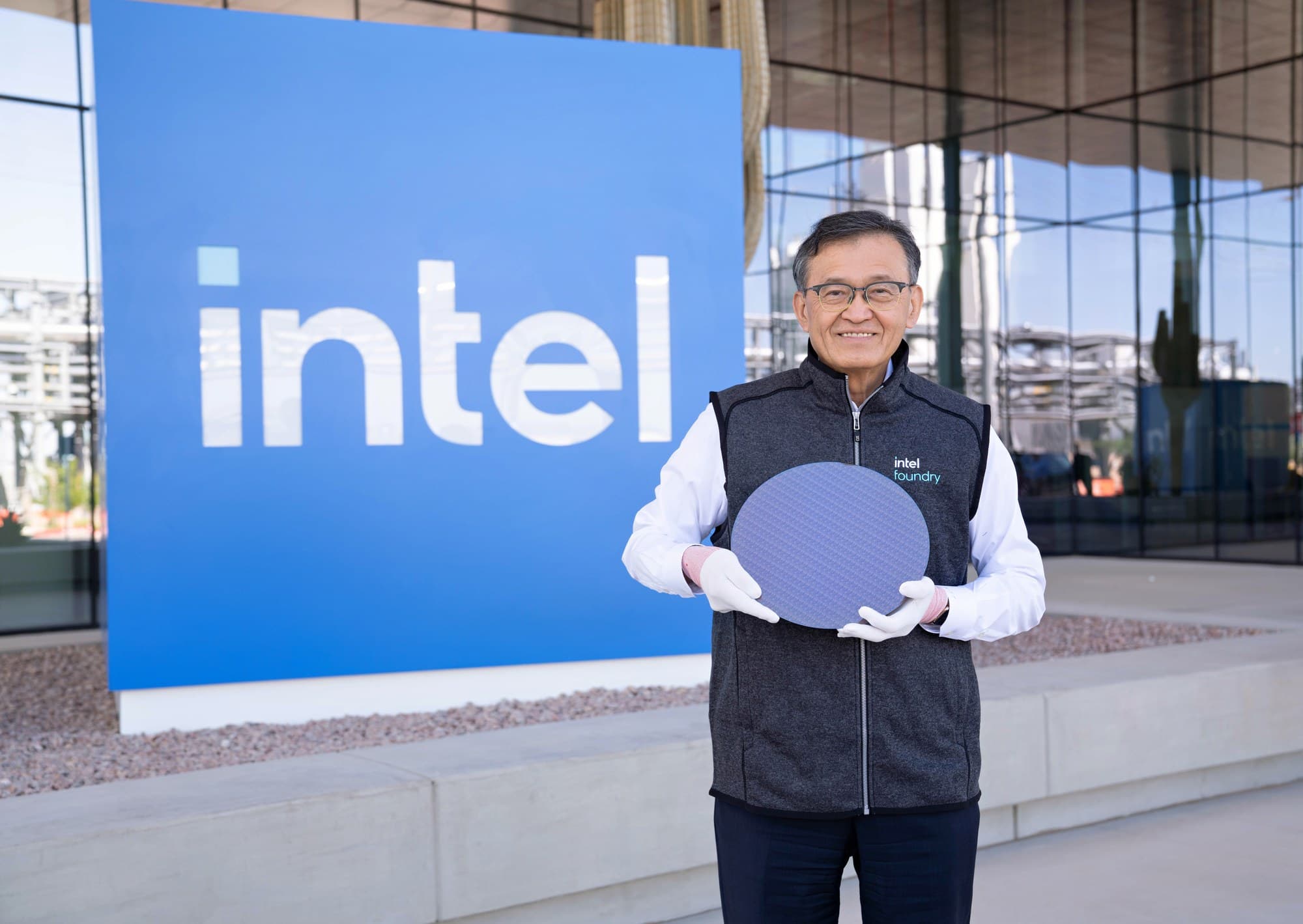
Intel CEO Lip-Bu Tan with a wafer at an Intel site, in an Intel newsroom file photo; it is not from the Q3 2026 results release.
Image: Intel
Source · Press image from the Intel newsroom, used for news reporting.
Intel on Oct. 29 issued fourth-quarter 2026 revenue guidance of $15.0 billion to $16.0 billion, below the $17.07 billion analysts expected according to LSEG data cited by Reuters, and its shares fell more than 20% in extended trading.
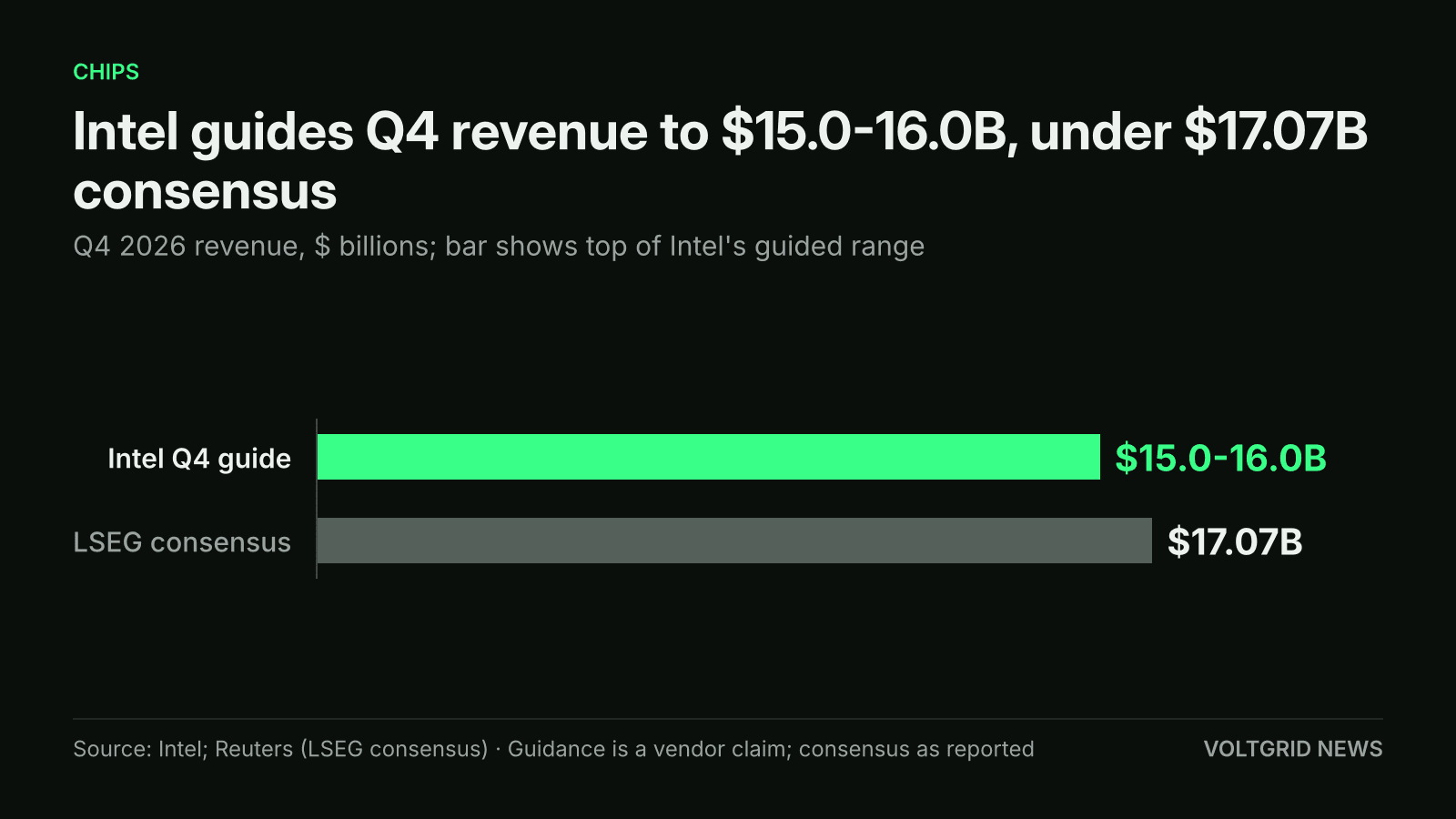
Intel's Q4 revenue guidance of $15.0-16.0 billion sits below the $17.07 billion LSEG consensus; the bar marks the top of the range.
Illustration (AI-generated)
The outlook overshadowed a third quarter that beat Intel's own guidance. Revenue rose 21% to $16.5 billion, non-GAAP gross margin was 44.1% and non-GAAP earnings were $0.52 a share, the company said. Data Center and AI (DCAI) revenue jumped 78% to $7.3 billion, which chief financial officer David Zinsner called the strongest data-center growth in 15 years. The Client Computing and Physical AI Group, Intel's PC chip unit, fell 5% to $8.1 billion; Reuters said analysts had expected $8.98 billion. For the fourth quarter, Intel guides non-GAAP gross margin to 38.0% and non-GAAP earnings to $0.25 a share at the midpoint, against an LSEG estimate of $0.43.
Two different shortages
The quarter shows Intel short of supply in servers and short of demand in PCs at the same time. Chief executive Lip-Bu Tan said the immediate priority is to unlock more supply for Xeon to meet what he called extraordinary demand. Intel's earnings slides blame industry-wide memory shortages for shrinking the PC market, and Zinsner expects the PC slowdown to last at least through the first half of 2027.
The Kiryat Gat explosion lands on the server side. Zinsner told Reuters the October blast at the Israeli fab cuts about $300 million from the fourth-quarter revenue outlook and about 200 basis points from gross margin, with a similar revenue hit expected in the first quarter. The fab, which Reuters reported mainly makes data-center chips on the Intel 10 process, was down for two weeks, Reuters reported. Intel is still sorting which wafers can be used and planned to restart the ramp by the end of this week. Intel's release does not put a number on the outage.
For data-center buyers, the order of events matters: Tan named Xeon supply as the priority before the outage was disclosed. DCAI's segment operating margin reached 41.5% in the quarter against 28.2% for the PC unit, Intel's slides show.
Foundry and 18A
Intel Foundry revenue, which includes sales to Intel's own product groups, rose 58% to $6.7 billion. The segment's operating loss narrowed to $1.9 billion, a margin of minus 27.7%, from $2.3 billion a year earlier. Intel credits better yields and shorter cycle times for lowering wafer costs. Its slides list Intel 3 and 18A yields and 18A-P in the fourth quarter, without yield figures. Intel's slides also say demand for Wildcat Lake, a PC chip built on 18A, is strong. Intel released the 0.9 process design kit for 14A in October and announced a High-NA EUV collaboration with ASML.
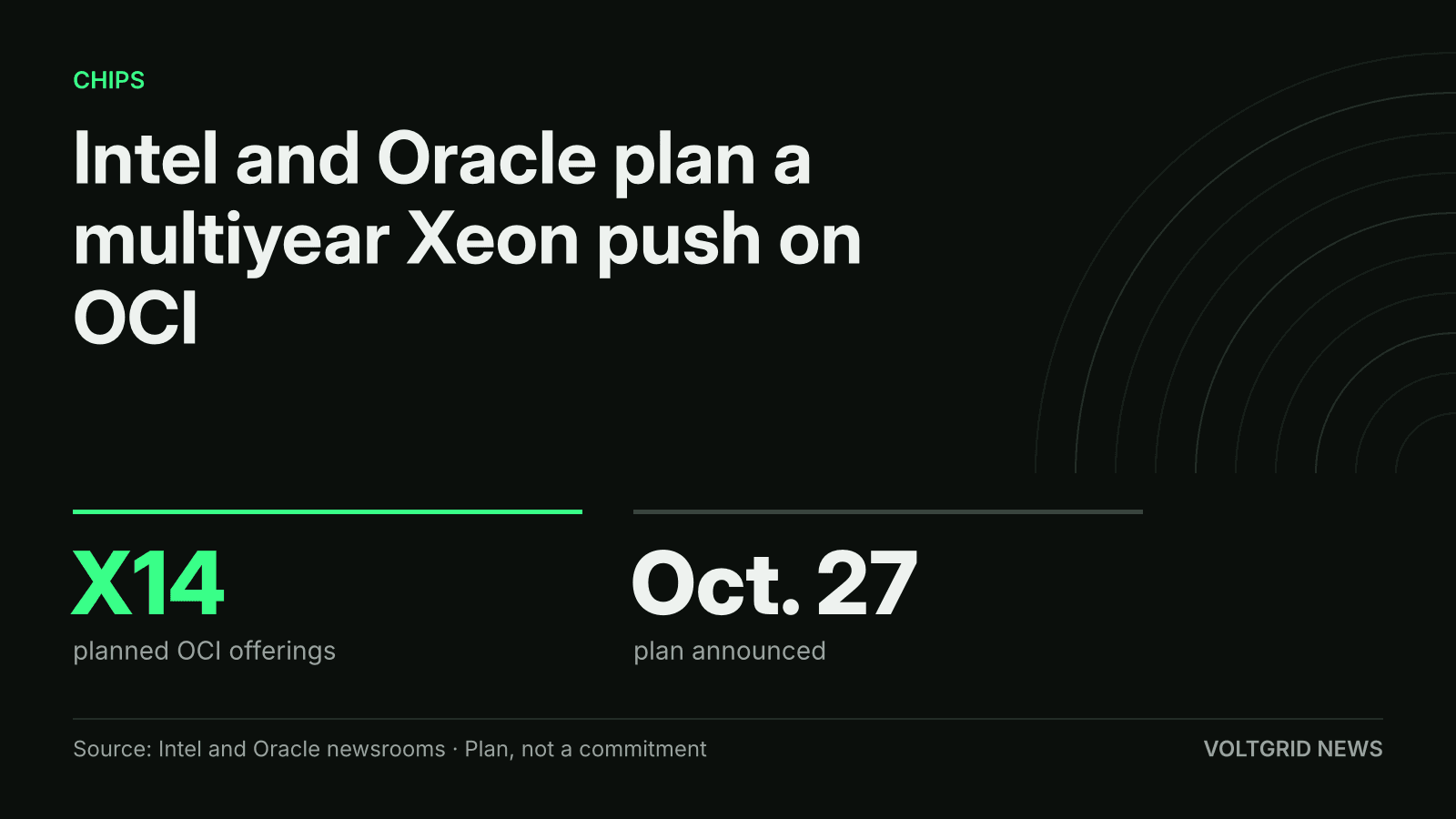
Spending keeps rising. Intel lifted its 2026 capital spending forecast to $20 billion from $18 billion in July and said 2027 spending would rise significantly, Reuters reported, after raising $23 billion in an August share sale. Tool work is under way at sites such as Fab 62 in Arizona, and Intel has lined up demand like its multiyear Xeon plan with Oracle.
What Intel's 14A Design Kit Signals
A process design kit (PDK) is the set of design rules and models that chip designers use to lay out a chip for one manufacturing process. Intel released the 0.9 version for 14A in October, its earnings release says. 14A follows 18A, which Intel says gives up to 15% better performance per watt and 30% better chip density than Intel 3.
For 14A, Intel's own analysis from April 2025 expects 15-20% better performance per watt and 1.3X chip density than 18A. These are Intel's claims, not measured results. Intel Foundry still lost $1.9 billion in the quarter, Intel's slides show, so customer designs on 14A and 18A are what Foundry needs to fill its fabs.
What is not confirmed yet
The Kiryat Gat figures come only from Zinsner's interview with Reuters. Intel has not said how many wafers are lost or whether the damage reaches past the first quarter. Intel has given no 18A yield numbers, and its earnings call, scheduled after the release, may add detail on 18A and Xeon supply.