NVIDIA RTX Spark Laptops Start at $2,599, 128GB Models in Stock
NVIDIA said on Oct. 28 that RTX Spark laptops from ASUS, Dell, HP, Lenovo, Microsoft and MSI are on sale, with 128GB models in stock. Acer and Gigabyte are still missing.

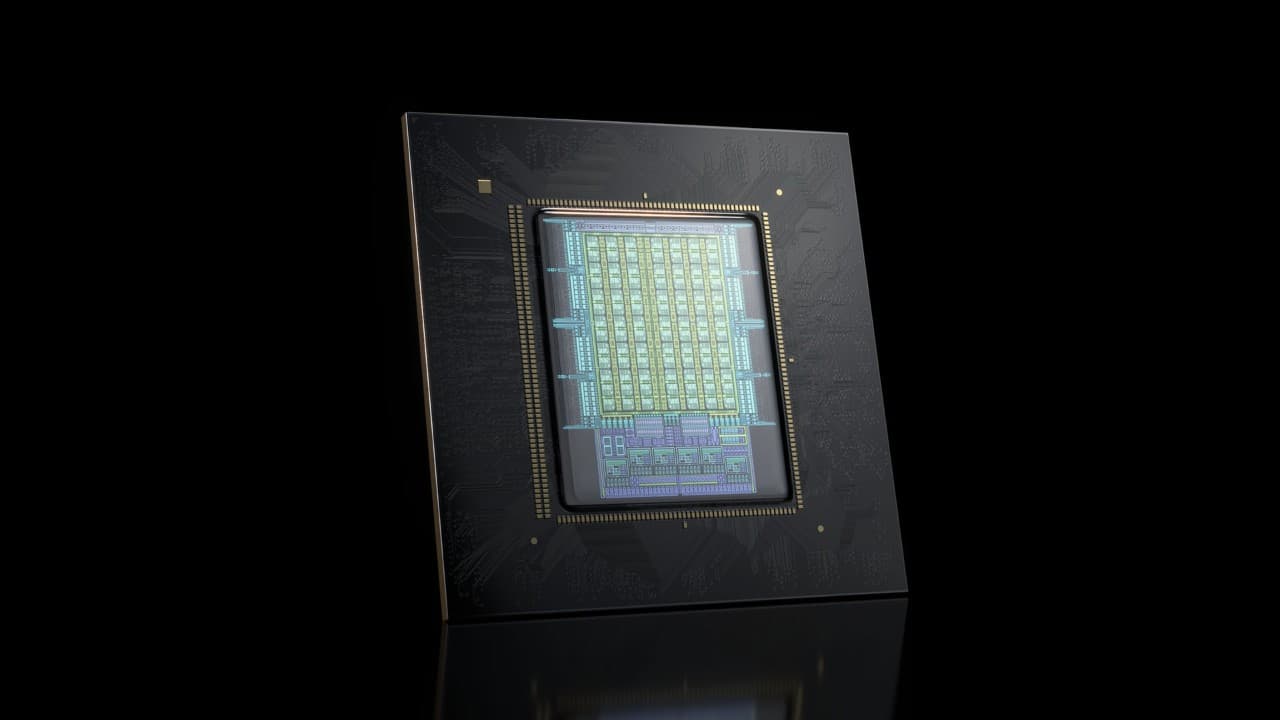
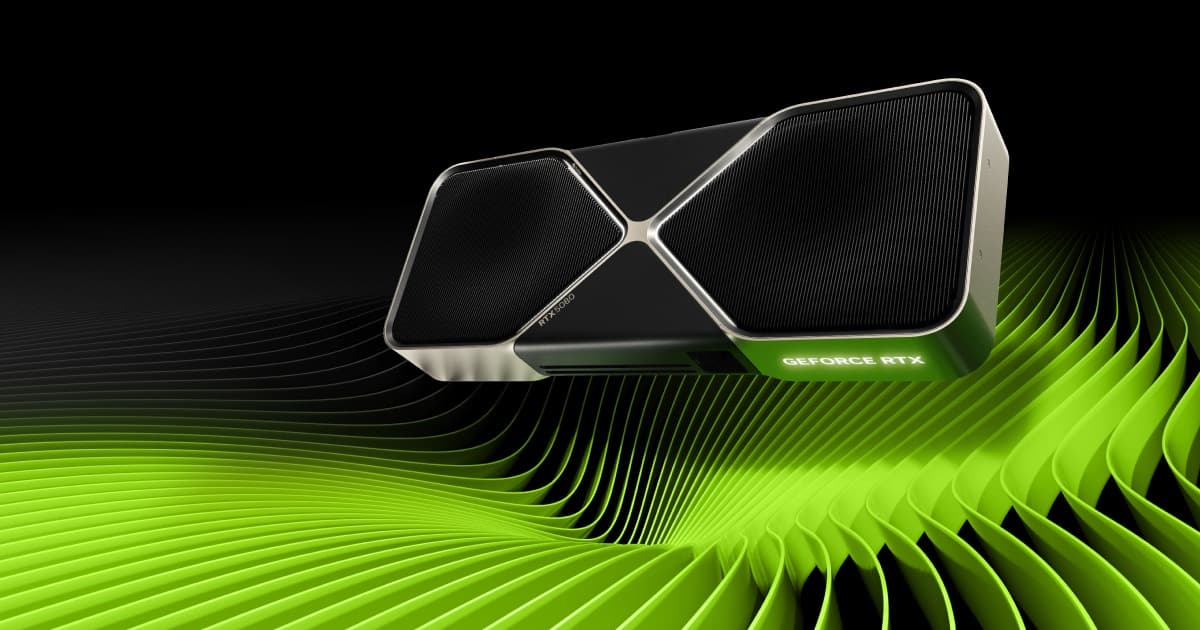
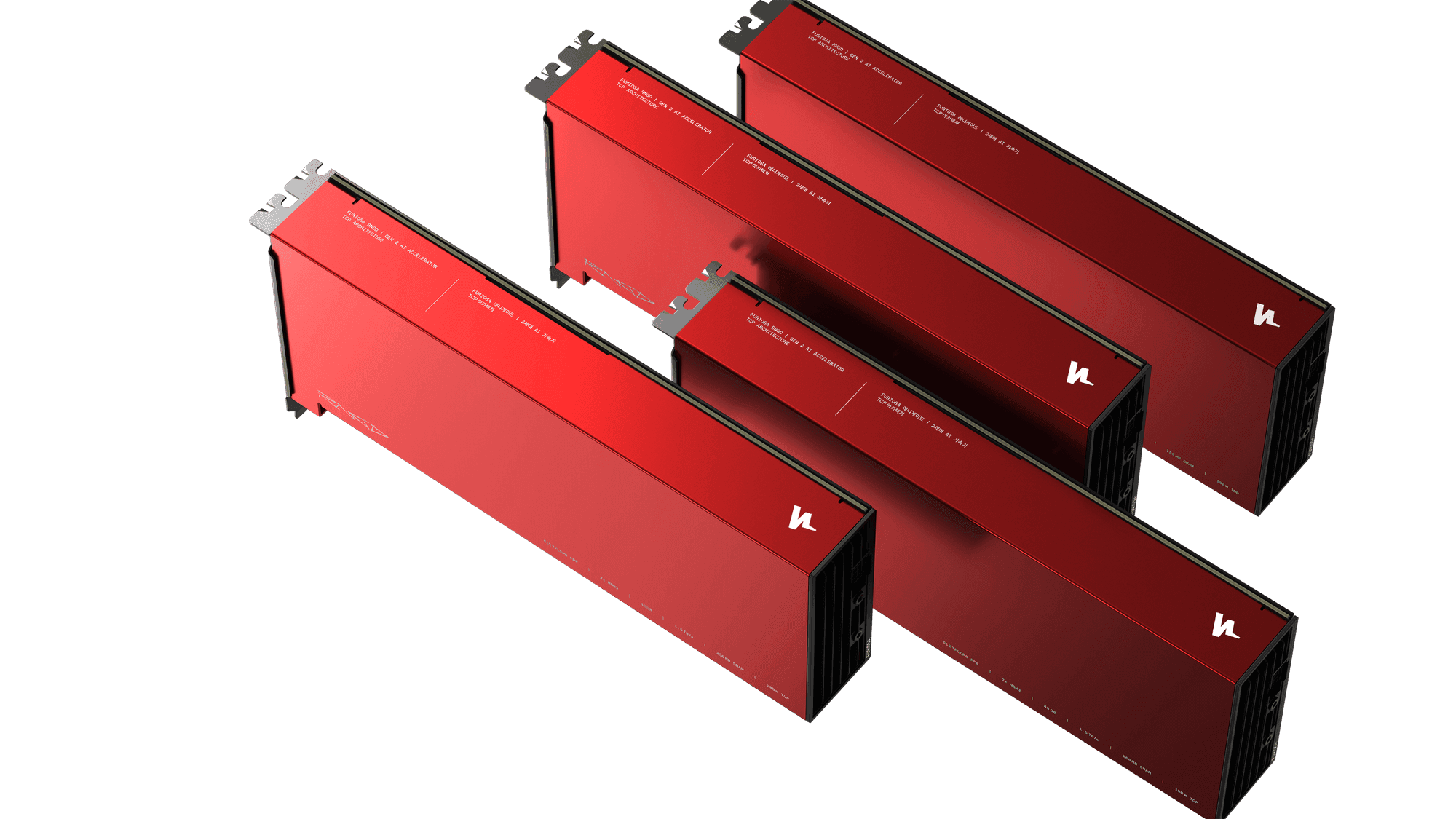
NVIDIA's official RTX Spark product-page image; a rendering of the laptop platform, not a photo of a specific model.
Image: NVIDIA
Source · Press image from the NVIDIA website, used for news reporting.
NVIDIA said on Oct. 28 that RTX Spark laptops, with up to 128 GB of unified memory, are now sold by six PC makers from $2,599, with 128 GB models on shelves.
RTX Spark is for people who want to run AI models and agents on a laptop instead of renting cloud GPUs, and who need NVIDIA's CUDA software to do it. NVIDIA first brought the chip to Windows laptops on Oct. 16, and Voltgrid has since rounded up reviews of the ASUS ProArt P16 and the Surface Laptop Ultra. The Oct. 28 update changes three things. All six launch brands, ASUS, Dell, HP, Lenovo, Microsoft and MSI, are now selling, and the largest memory tier is in stock rather than promised. NVIDIA also added a control in the NVIDIA App that lets users give GPU resources to the app on screen or to an agent running in the background. Acer and Gigabyte, named as partners on Oct. 7, are still missing from the laptop list; NVIDIA said in July, as PC Gamer reported, that their models would follow.
Inside the RTX Spark N1X
NVIDIA's spec table lists two laptop versions under the name RTX Spark N1X. The top one pairs a 20-core Grace CPU with a 6,144-core Blackwell RTX GPU and up to 128 GB of LPDDR5X. The lower one has 18 CPU cores, 5,120 GPU cores and up to 64 GB. Both are rated at 45-80 W, and a compact desktop version is rated at 140 W. NVIDIA claims up to 1 petaflop of FP4 AI performance and does not say whether that figure assumes sparsity. Its whitepaper for the related GB10 chip states the same 1 petaflop as a sparse NVFP4 number.
HotHardware reports that the chip is two TSMC 3 nm chiplets: a Blackwell GPU and a CPU and I/O die designed by MediaTek, joined by a 600 GB/s link. The top CPU has 10 Arm Cortex-X925 cores at up to 4.1 GHz and 10 Cortex-A725 cores at up to 2.8 GHz. Memory is LPDDR5X-9400 on a 256-bit bus, which HotHardware and Notebookcheck both put at 300 GB/s. NVIDIA's own product page lists no bandwidth figure.
The one idea that matters is unified memory. The CPU and GPU share one pool instead of the GPU holding its own small graphics memory. Capacity decides which model fits: NVIDIA claims 128 GB runs models of up to 120 billion parameters. Bandwidth decides how fast the model answers, because every generated token rereads the weights. At about 300 GB/s as reported, RTX Spark can hold far larger models than a laptop graphics card with its own dedicated memory, but streams them more slowly.
How RTX Spark Compares With Apple's M5 Pro and AMD's Ryzen AI Max+
RTX Spark has no earlier RTX Spark to replace. Its nearest NVIDIA relative is GB10, the chip in the DGX Spark desktop. NVIDIA's documents give GB10 the same 10-plus-10 CPU core layout, the same 6,144 CUDA cores and 128 GB, but 273 GB/s as configured in DGX Spark and a 140 W typical chip power. NVIDIA never calls RTX Spark a GB10. The laptop part runs Windows at 45-80 W instead of NVIDIA's DGX OS at 140 W.
Apple's M5 Pro is the closest premium laptop rival on memory speed. Apple lists 307GB/s and at most 64GB. On capacity, AMD's Ryzen AI Max+ 395 is closer. AMD lists up to 128 GB of 256-bit LPDDR5x-8000 on TSMC 4nm with a 55 W default TDP, and says in a blog that up to 96 GB can be set as video memory.
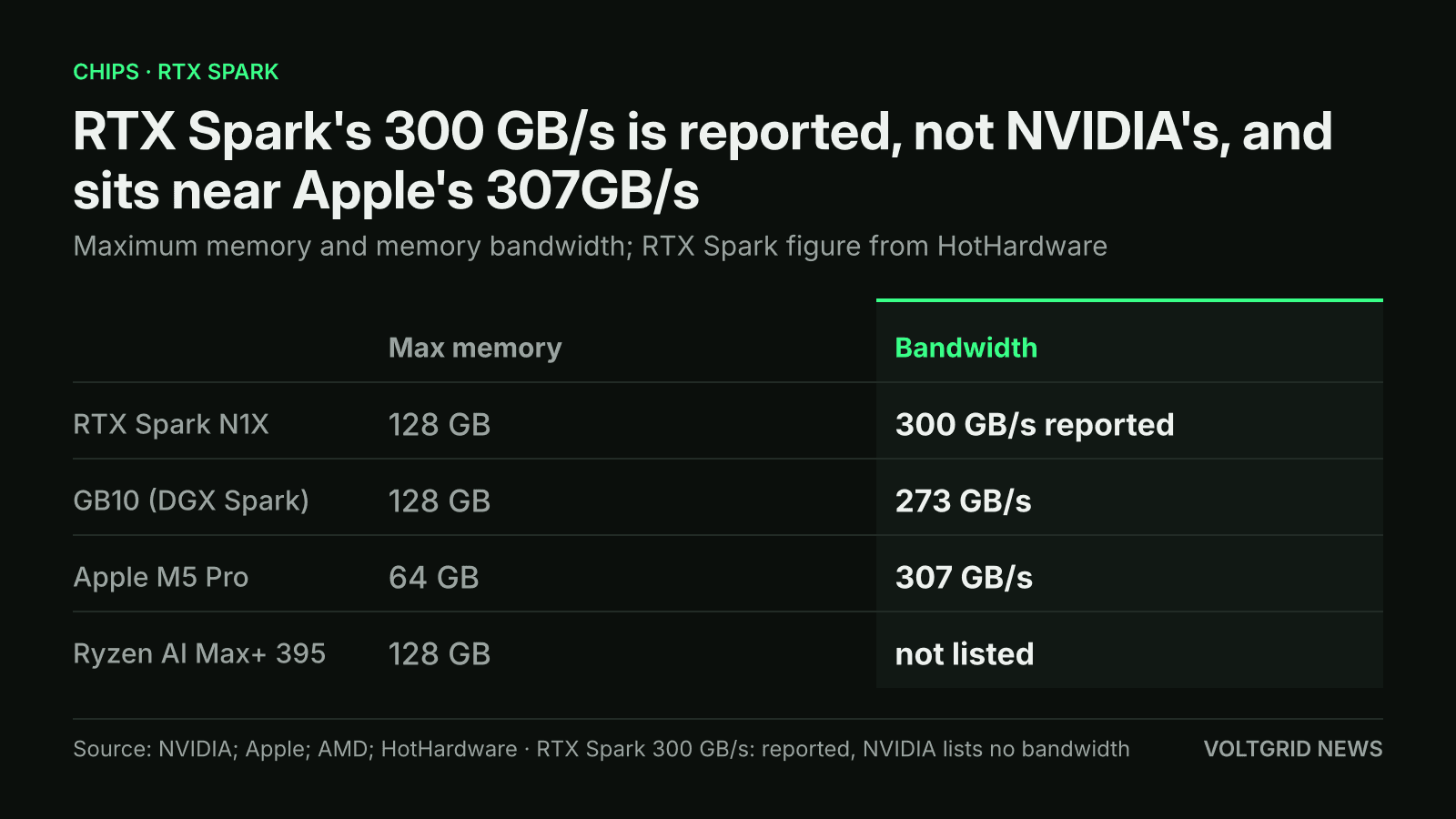
HotHardware reports 300 GB/s for RTX Spark; NVIDIA lists no bandwidth, and AMD's figure is not listed here.
Illustration (AI-generated)
Notebookcheck's tables set its RTX Spark results beside Apple and AMD laptops from its own records, on the same benchmarks, with whole-system power measured on an external monitor. Its RTX Spark unit was a ProArt P16 with the 20-core chip and 64 GB, in Performance mode. In Cinebench 2024 multi-core it scored 1,726, against 2,347 for an 18-core M5 Pro, 2,490 for an M5 Max and 1,648-1,673 for two Ryzen AI Max+ 395 laptops. Single-core it scored 130, against 201 for the M5 Pro and about 116 for the AMD chips. In 3DMark Steel Nomad it scored 3,134, against 2,323 for the M5 Pro, 4,386 for the M5 Max and 1,874-2,019 for AMD's Radeon 8060S.
On local AI, Notebookcheck's MLPerf Client 2.0 GPU test ran Qwen 3 8B at 53.8 tokens/s on the ProArt and 54.8 on a Surface Laptop Ultra, against 52.3 on the M5 Pro. In Voltgrid's reading, the near tie fits the similar memory bandwidths, 300 GB/s as reported and 307GB/s from Apple, though Notebookcheck does not draw that link. An RTX 5090 laptop reached 123.7 tokens/s on Llama 3.1 8B, against 55.8 for the ProArt. Notebookcheck did not state the precision.
What reviewers measured so far
The CPU costs power. In Notebookcheck's multi-core run the ProArt averaged 127.1 W at the system level, against 102 W for the M5 Pro, for 13.6 points per watt against 23. The Ryzen AI Max+ 395 laptops scored 14.7-15.1. Notebookcheck saw the chip itself draw up to 85 W before settling at 70 W. HotHardware, on its test system with a 140 W power brick, saw whole-system peaks around 138 W with display brightness turned well down.
Battery life holds up in light work. HotHardware measured 14 h 35 min of video playback on its test system against Microsoft's 15-hour claim. Unplugged, it lost about 18% in the Speedometer browser test but held virtually all of its Cinebench 2026 performance; HotHardware notes this is one system and more are coming. Software is the weak point. HotHardware found The Talos Principle II, running under Microsoft's Prism x86 emulation, slower than on AMD's Radeon 8060S. Notebookcheck says titles such as F1 25 and Battlefield 6 are known to be incompatible with Windows on Arm from its Snapdragon experience, though it saw F1 25 working at Gamescom; it did not report running them on RTX Spark. Voltgrid did not test any RTX Spark laptop; every measured figure here belongs to the outlet named.
RTX Spark Laptop Price, Availability and Software
NVIDIA's starting price is $2,599. The 128 GB tier costs far more: Windows Central listed the 128 GB ProArt P16 at $6,999.99 in the U.S., and PCWorld put the top Surface Laptop Ultra at $5,899.99, as Voltgrid's roundups reported. The 128 GB option comes only with the 20-core, 6,144-core chip. Buyers of the 18-core version are capped at 64 GB under the same name.
The stack is CUDA, TensorRT and NVFP4. NVIDIA says the same software runs unchanged on NVIDIA GPUs anywhere, so code built locally can move to the cloud. The new resource control sits in the NVIDIA App under System > Advanced and needs hardware-accelerated GPU scheduling switched on in Windows. NVIDIA says Adobe Photoshop and Premiere offer native RTX Spark support through beta releases. HotHardware reports that EA's anti-cheat is not yet Arm-compatible and says NVIDIA told it a fix is in the works. NVIDIA shipped hotfix driver 621.12 on Oct. 27 for video freezes on RTX Spark and RTX 50 GPUs.
What to watch
The compact RTX Spark desktops, rated at 140 W, are due on sale in November, and NVIDIA has not given their prices. AMD reports third-quarter results on Nov. 3, including the client segment that sells Ryzen AI Max. The reviews read here cover ASUS and Microsoft machines only, so independent tests of the Dell, HP, Lenovo and MSI models are still to come. No source read for this file has tested NVIDIA's 120-billion-parameter claim, measured tokens/s on a large model across RTX Spark laptops, or measured wall power under a sustained AI load. Acer and Gigabyte have no dates yet.
Sources
- 01NVIDIA RTX Spark Windows Laptops Gain New Models, Agent Tools and GamesNVIDIA Newsroom · blogs.nvidia.com
- 02Nvidia RTX Spark Analysis: Finally an answer to Apple's M5 Pro & M5 Max?Notebookcheck · notebookcheck.net
- 03NVIDIA RTX Spark N1X Laptop Benchmarks: The Results Are InHotHardware · hothardware.com