NVIDIA Sync Model Launcher Beta Runs Qwen3.8 27B on 1-4 DGX Sparks
NVIDIA Sync 0.148.0 adds a beta Model Launcher for DGX Spark clusters and a single DGX Station, per docs updated Oct. 30. The 1.7x two-unit claim is untested; LAN mode serves plain HTTP.
Chips & Power DeskEdited by Ege Erten
2 min readAI-assisted
Follows our story: NVIDIA DGX Spark Review: 128GB GB10 Box Now Lists at $6,950
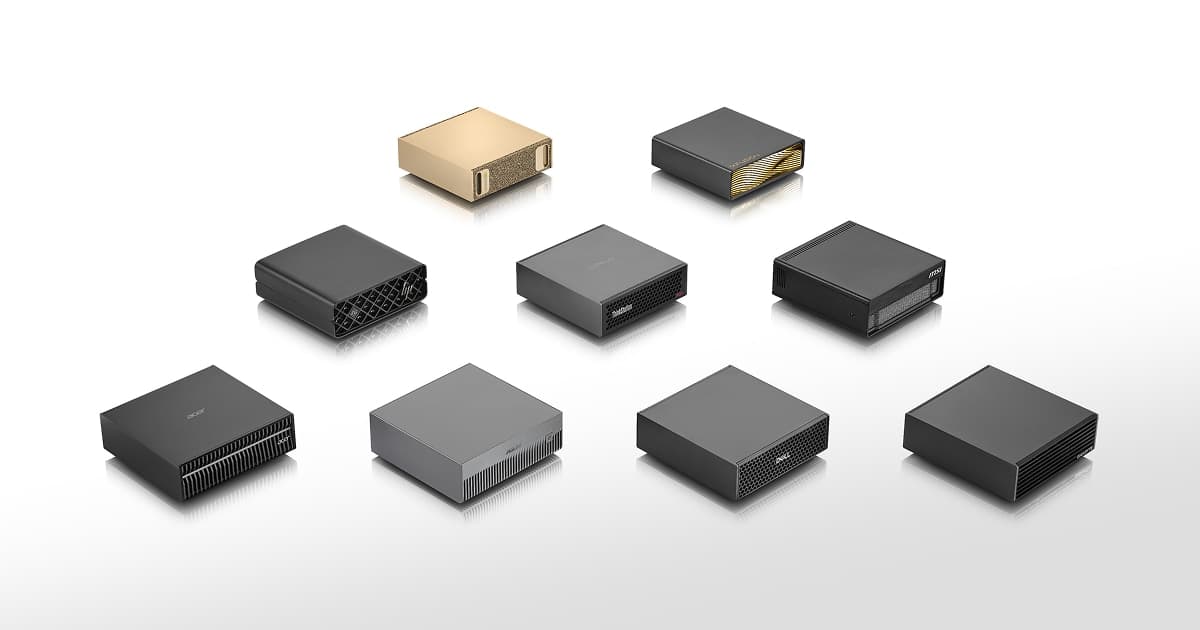
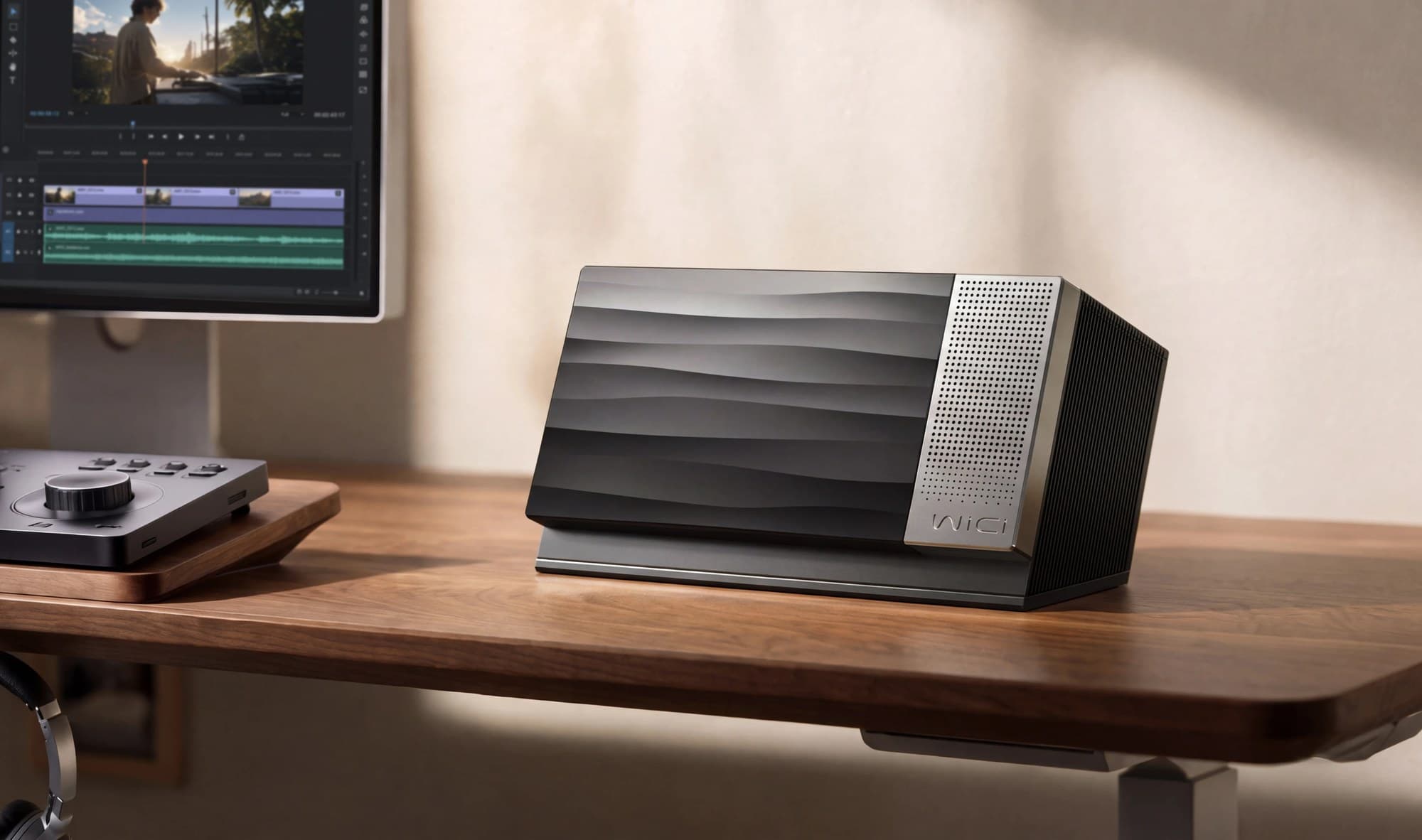
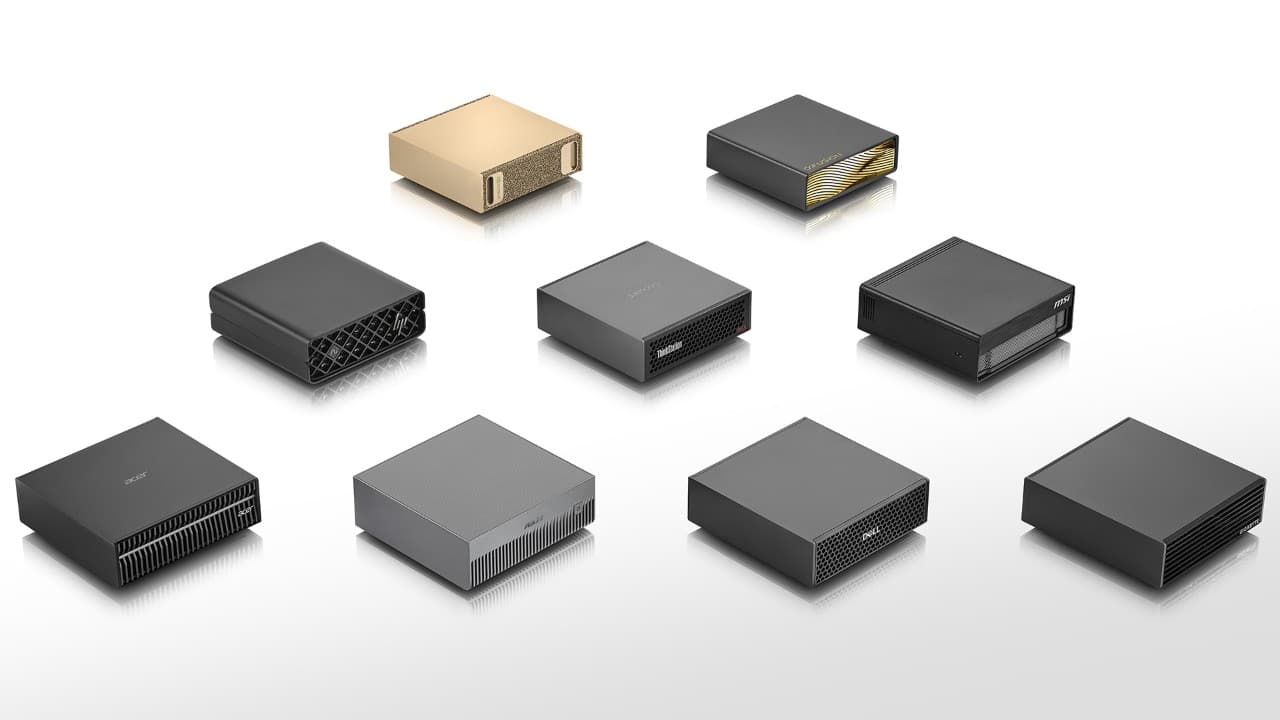
NVIDIA's DGX Spark family, including partner-built systems. The image shows the product line, not the Sync Model Launcher software.
Image: NVIDIA
Source · Press image from the NVIDIA website, used for news reporting.
NVIDIA Sync 0.148.0-153 adds Model Launcher, a beta tool that sets up a local model on one to four DGX Sparks or a single DGX Station, which Sync then starts, stops and checks, according to NVIDIA's release notes, last updated Oct. 30.
The launcher was the first dated item in Voltgrid's DGX Spark review roundup, which listed it as promised for the end of October and not yet confirmed. It has now arrived on that schedule and with a wider scope than announced: NVIDIA's Oct. 2 post, covered in our story on the 64GB model, described Qwen3.8 27B on one Spark or a cluster and did not mention the DGX Station. NVIDIA gives no separate release date; both the release notes and the launcher guide were last updated on Oct. 30.
What the launcher sets up
On a DGX Spark, alone or clustered, the beta runs Qwen3.8 27B in NVIDIA's 4-bit NVFP4 format with the eugr/spark-vllm:nightly-20261002 container image, according to NVIDIA's Model Launcher guide. On a single DGX Station it runs GLM 5.3 Flash NVFP4 with the eugr/spark-vllm:station-20261001 image. Both 64 GB and 128 GB Sparks are supported, alone or in clusters of two, three or four units.
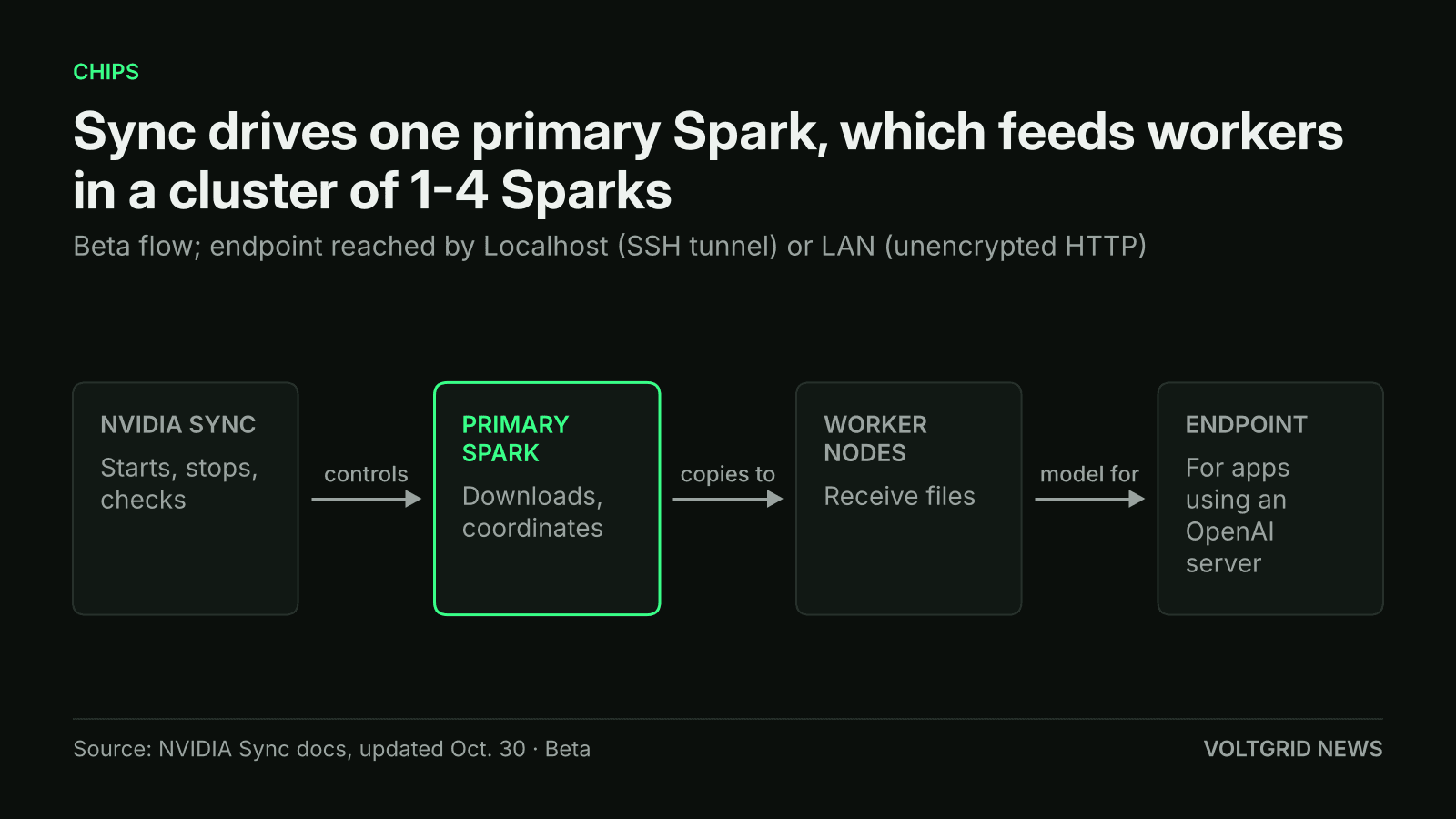
Model Launcher flow in beta: Sync sets up a primary Spark that coordinates the workers; the endpoint is reached by Localhost or LAN.
Illustration (AI-generated)
A cluster has to be built first with NVIDIA's Cluster Assistant. The user then picks one Spark as the primary node, which downloads the files, copies them to the worker nodes and coordinates the model. Setup fetches the model and a container for vLLM, the inference server, and installs OpenCode, an open-source coding harness, wired to the local model as a Sync custom app. Sync then starts, stops and checks the model, and any app that talks to an OpenAI-compatible server can use its endpoint. For other models, NVIDIA points users to its Playbooks and Local AI Inference Recipes sites.
That matters most for the 64 GB Spark, which NVIDIA lists from $4,999 through six partners and pitches in pairs that pool 128 GB of memory. The beta turns that pitch into a scripted setup path for one pre-selected model per device type. Whether the second box is worth its price still depends on throughput nobody outside NVIDIA has measured.
Security and what is unproven
The launcher offers two access modes. Localhost keeps the endpoint behind Sync's SSH tunnel to the user's computer. LAN mode listens on every network the device is connected to, VPNs included, and NVIDIA's guide warns that anyone who can reach it can use it unless an API key is set. It also states that LAN traffic is unencrypted HTTP even with a key, which controls access but does not encrypt requests or replies. The same release can ask to add the Sync user to the device's existing docker group, a step the user confirms or skips; NVIDIA notes that membership can grant root-level control of the device.
Every detail above comes from NVIDIA's own documents, and the feature is labelled beta. No independent outlet has yet published tokens-per-second results through Model Launcher on any Spark or Station. NVIDIA's Oct. 2 claim that two clustered 64 GB Sparks delivered up to 1.7x the performance of one system in its Qwen 3.8 27B test remains a vendor figure, given without a metric or test conditions. The next milestone is the first independent measurement of the 64 GB Spark, alone and as a pair.