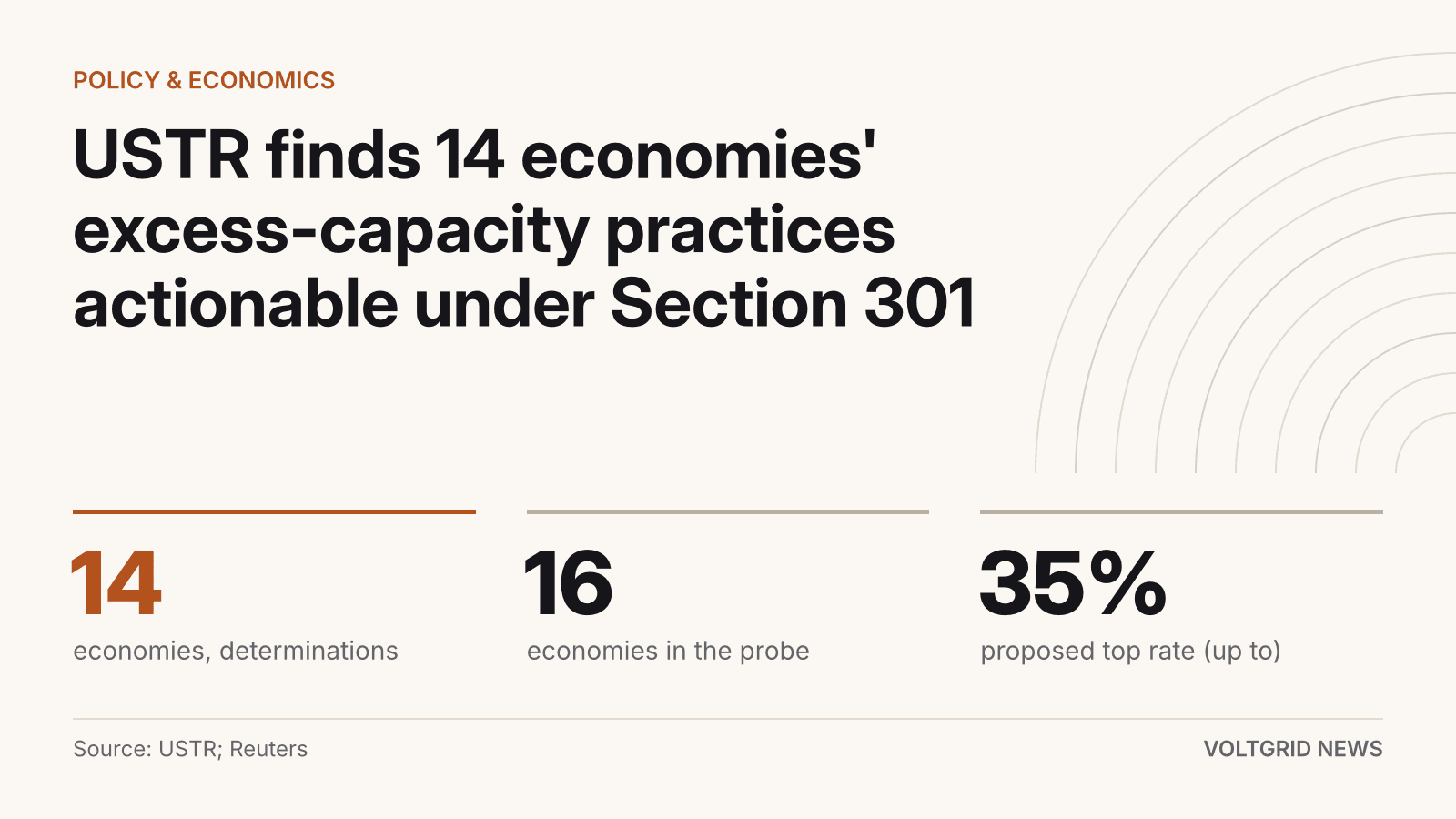
Ofgem Lifts UK Price Cap 26% to £2,166 a Year From Jan. 1
Ofgem raised Britain’s default energy price cap 26% for Jan. 1 to March 31, 2027, driven by wholesale gas that has roughly tripled, with a £100 payment and electricity VAT cut offsetting part of it.
3 min read
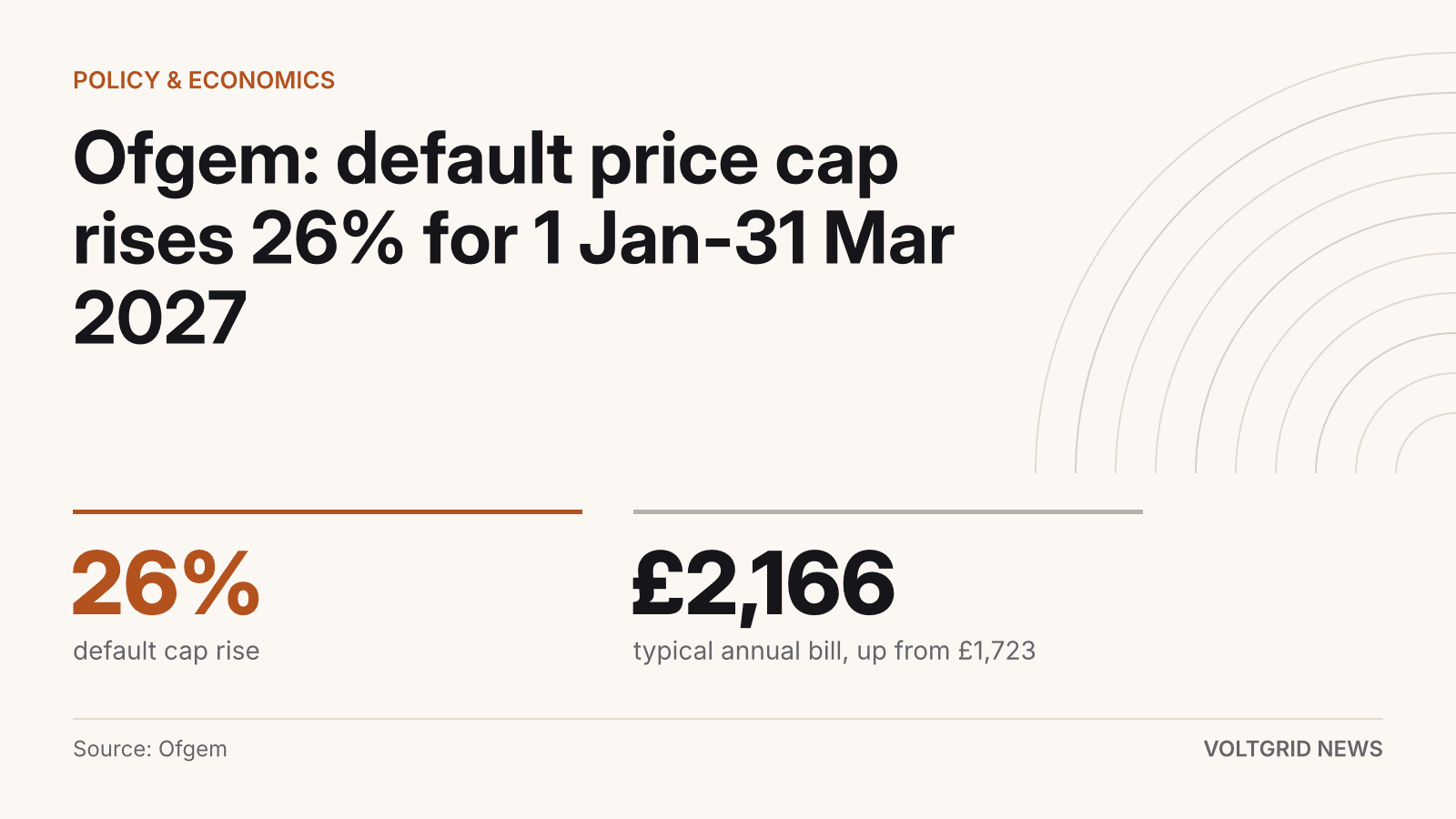
Ofgem's default price cap rises 26% for 1 Jan-31 Mar 2027.
Graphic: Voltgrid News
Ofgem, Britain's energy regulator, said on Nov. 25, 2026 that its default price cap will rise 26% for Jan. 1 to March 31, 2027, taking the annualised bill for a typical dual-fuel Direct Debit household from £1,723 to £2,166.
Ofgem's cap lifts the typical annual bill from £1,723 to £2,166 for 1 Jan-31 Mar 2027.
Graphic: Voltgrid News
Ofgem attributes the increase to the continuing conflict in the Middle East, which it says has pushed up international gas prices. In its notes to the announcement, it says wholesale gas prices have roughly tripled since the conflict began, including in recent months. The cap affects around 20 million households on standard variable tariffs; around 10 million households on fixed deals are not affected while those deals last.
What the new cap sets
The cap limits unit rates and standing charges, not the total bill, so actual costs depend on use. Ofgem's average Direct Debit rates for Jan. 1 to March 31 are 32.69 pence per kilowatt hour (kWh) for electricity, with a standing charge of 54.77 pence a day, and 10.96 pence per kWh for gas, with 29.65 pence a day. MoneySavingExpert, which reported the same rates, lists the previous gas unit rate as 7.97 pence and the electricity rate as 26.32 pence, increases of 37.5% and 24.2%. Standing charges barely moved, down 0.1% each.
Measured against the October cap, Ofgem says gas bills rise 33% and electricity bills 19%. It says electricity rises less because gas-fired generation is a shrinking share of supply as renewables grow. The January cap is also 31.8% higher than the same period in 2026 once inflation is taken out, Ofgem says. MoneySavingExpert says the cap uses wholesale prices averaged from Aug. 19 to Nov. 17.
Two policy measures soften part of the rise. Ofgem says the UK government has removed VAT from electricity bills for the cap periods from Oct. 1, 2026 to June 30, 2027, while gas keeps 5% VAT, and that costs cannot be compared directly with earlier periods because of this change. The government has also announced that around 20 million households will receive £100 towards their energy bill from January. MoneySavingExpert reports that, for a household on typical usage, the £100 covers under two-thirds of the rise over the three months to March. That is MoneySavingExpert's estimate, not Ofgem's.
What it means beyond Britain
For readers outside the UK, the useful signal is the pass-through. Britain sets a capped retail price every three months from wholesale costs, so the cap is a quick read on how fast gas prices reach a household. Ofgem says gas prices also lift electricity prices because gas remains a key part of power generation. As the cap runs on a lag, the January price reflects wholesale costs through mid-November, not today's market.
That lag matters for anyone pricing European power or gas exposure. Both sources tie the rise to wholesale gas, and MoneySavingExpert quotes analyst forecasts for the April cap of about 2.6% above January, followed by falls in July and October that would still leave bills well above the current level. Those are forecasts from analysts cited by MoneySavingExpert, not Ofgem figures. Europe's gas supply rules are also shifting; as Voltgrid reported, the EU methane rules for gas importers were delayed two years to Jan. 1, 2029.
What is not confirmed yet
Ofgem says it will publish the cap for April 1 to June 30, 2027 by Feb. 23, 2027, and may publish earlier if external reasons require it. The gas standing charge is also under review: Ofgem says the government has asked to remove standing charges from gas bills in 2027 or soon after, and that it will share details later. Ofgem's £2,166 and £1,723 figures use its updated typical-use values from July; on the 2023 basis, the same cap would be £2,451, up from £1,935.
Sources
- Published
- Sources
- 3 cited