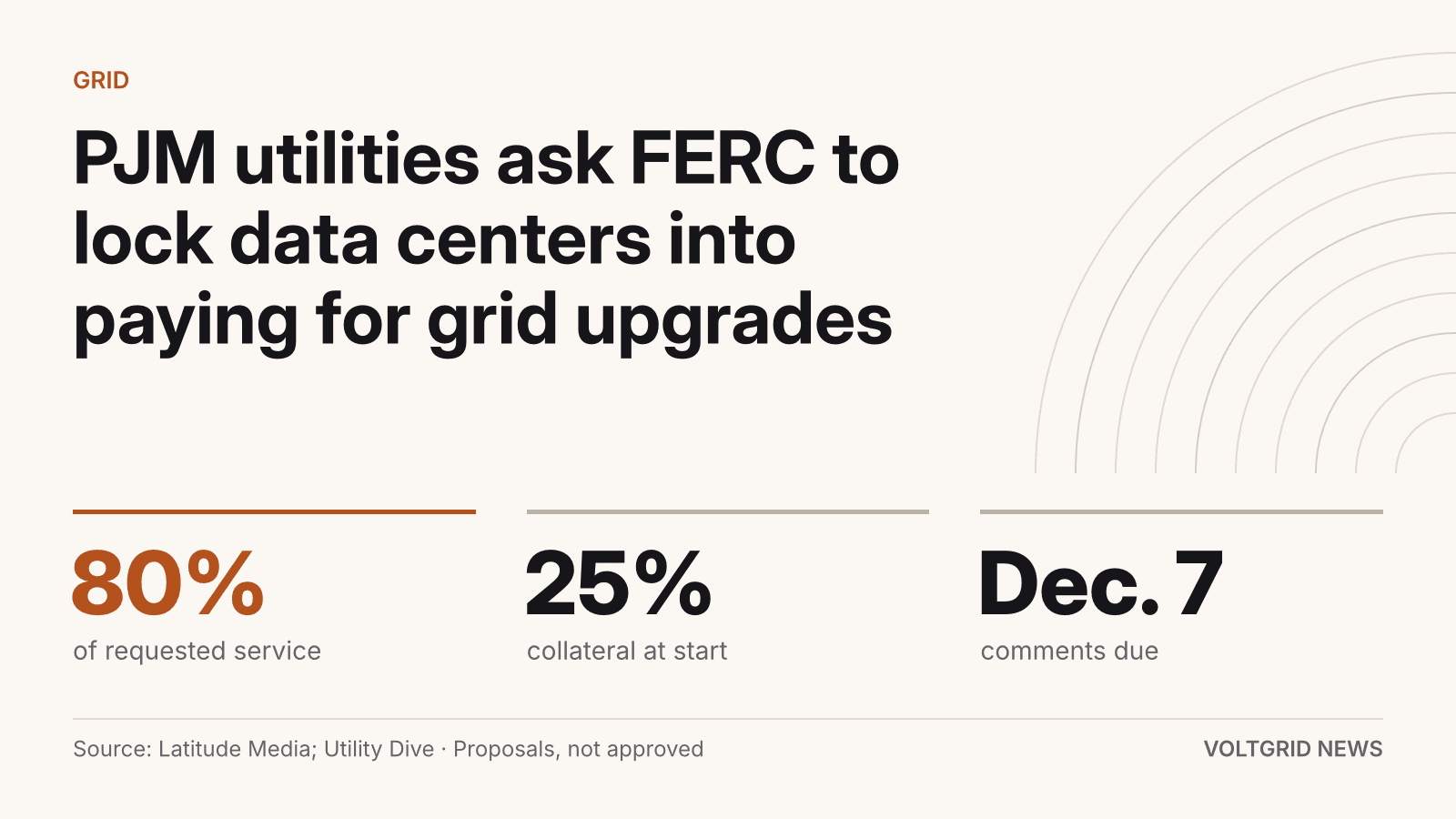
Senate Permitting Bill (BAAJA) Passes 62-33; Data Centers Face FERC Rule
The Senate passed the BAAJA permitting bill on Nov. 19, with 14 Democrats and one independent in favor. FERC would have 90 days after enactment to propose a data center cost rule; the House must act before Jan. 3.
3 min read
Follows Senate Permitting Bill: Data Centers Would Pay an Estimated $55B
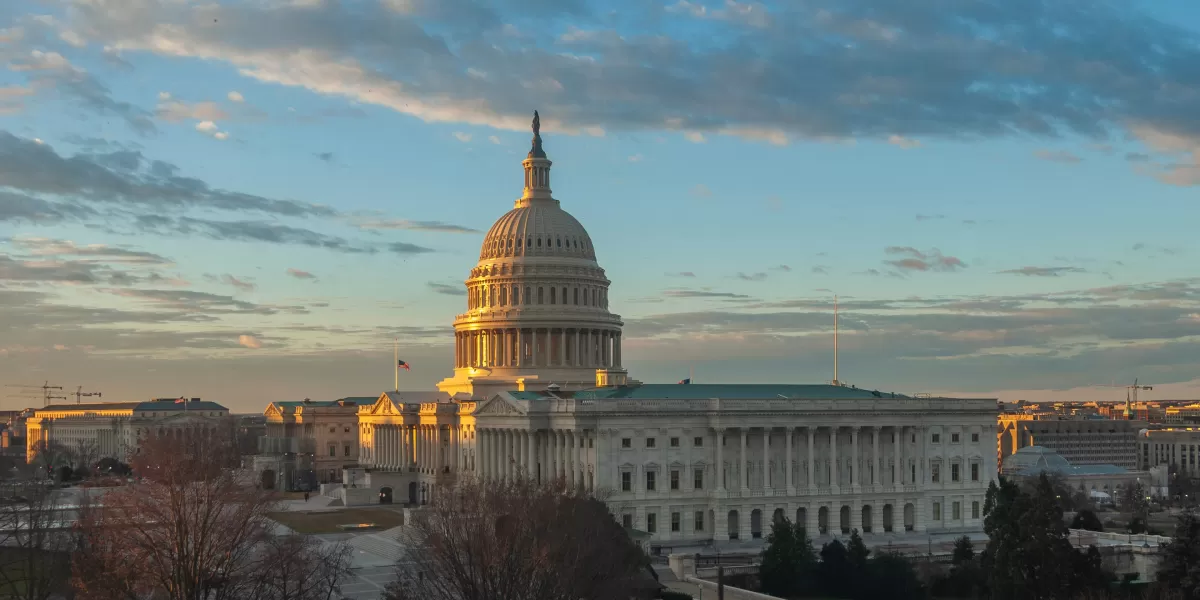
The U.S. Capitol, where the Senate passed the BAAJA permitting bill 62-33 on Nov. 19. Generic file photo of the building, not of the vote.
Image: Architect of the Capitol
Source · U.S. federal government work, public domain; Architect of the Capitol image terms ask for the credit line Architect of the Capitol. · License
The Senate passed its permitting reform bill, known as BAAJA, by 62-33 on Nov. 19, leaving the House to act before a new Congress starts on Jan. 3, according to Agri-Pulse.
Senate Environment and Public Works Chairman Shelley Moore Capito (R-W.Va.) said in a release that evening that she hopes House leaders will pass the Bipartisan American Affordability and Jobs Act "expeditiously." The Senate Record lists the vote as roll call 270 on H.R. 2347 as amended. Agri-Pulse reports that 14 Democrats and one independent joined Republicans in backing it. South Dakota Public Broadcasting names Sens. Mike Rounds (R-S.D.) and Josh Hawley (R-Mo.) as the only Republicans who voted no.
Where the Permitting Bill Stands in the House
No House vote is scheduled in the sources we read. Speaker Mike Johnson (R-La.) wrote to Republicans on Nov. 20 that passage will need every Republican present, Agri-Pulse reported, and President Donald Trump said the same day that the bill should pass. Rep. Jared Huffman (D-Calif.) argues that Democrats can write a better bill next year, when they control Congress. The House must act before the new term begins on Jan. 3.
What the BAAJA Data Center Cost Rule Does
The text the Senate adopted on Nov. 18, Senate Amendment 6883, passed 69-27 and has no megawatt cutoff, unlike the bill as introduced on Sept. 30. Section 2107 applies to any "computational load site": buildings at one location that mainly house servers for software services, AI training or delivery, or cryptocurrency mining, and that connect to the bulk power system.
Under subsection (a), the Federal Energy Regulatory Commission (FERC) has 90 days after enactment to revise its 1994 transmission pricing policy. Data centers would pay the embedded cost of transmission plus a "reasonable assessment" of the incremental cost, and FERC must propose a rule in the same window. The final rule is due within one year of that proposal, according to the printed text in the Congressional Record.
FERC's clock starts only at enactment: 90 days to propose the data center cost rule, then up to 1 year to finalize it.
Graphic: Voltgrid News
Subsection (b) adds Section 229 to the Federal Power Act. It bars shifting a data center's retail incremental cost onto other customers, keeps recovery going if the operator leaves a contract early, and requires financial assurances before a utility builds to serve the site. States may charge more and credit the surplus to other customers. Sen. Mike Lee (R-Utah) described the section on the floor as a federal floor, and Deseret News quotes him saying household bills "will not go up" because of a data center.
Amendments, Tribal Objections and the $55B Estimate
Amendments from Sens. Ron Wyden (D-Ore.) and Jeff Merkley (D-Ore.), including Wyden's ban on data centers on public lands, never received a vote, according to Deseret News and the Record. After passage, a senator from Hawaii asked to add a bipartisan managers' amendment, SA 7030, as an enrollment correction. Merkley objected, citing a statement from the Affiliated Tribes of Northwest Indians that the changes still fell short.
Deseret News adds that Title III rewrites Section 106 of the National Historic Preservation Act with a 30-day comment period. Rounds said the bill would send contested transmission siting cases to FERC if not resolved within 12 months.
Deseret News cites independent analyses of about $55 billion in data-center contributions to transmission costs over 10 years. The figure matches the Grid Strategies estimate dated Nov. 2 that Voltgrid News reported on Nov. 16, but Deseret does not name its source, and we have not matched it line by line to the adopted text.
Voltgrid News compared five governments' data center power rules on Nov. 12; only the Senate bill here is still pending. Any change by the House would send the bill back to the Senate. Watch for a House schedule and for any FERC action within 90 days of enactment.
No House date, committee plan or changes to the text have been announced in the reports we read. We found no later change to SA 6883 after its adoption, but the enrolled text was not yet available to check.
Sources
- 01Rounds votes no, Thune votes yes as Senate passes permitting reform billSouth Dakota Public Broadcastingsdpb.org
- 02BAAJA heads to House with Democrats split and clock running outAgri-Pulseagri-pulse.com
- 03Permitting bill passes through the Senate despite some oppositionDeseret Newsdeseret.com
- 04Congressional Record, Senate, Nov. 19, 2026: passage of H.R. 2347 (BAAJA), roll call 270Congressional Record (GovInfo)govinfo.gov
- 05Congressional Record, Senate, Nov 10 (SA 6883)U.S. Senategovinfo.gov
- 06Senate Passes Capito’s Bipartisan American Affordability and Jobs ActU.S. Senate Committee on Environment and Public Worksepw.senate.gov
- Published
- Sources
- 6 cited